
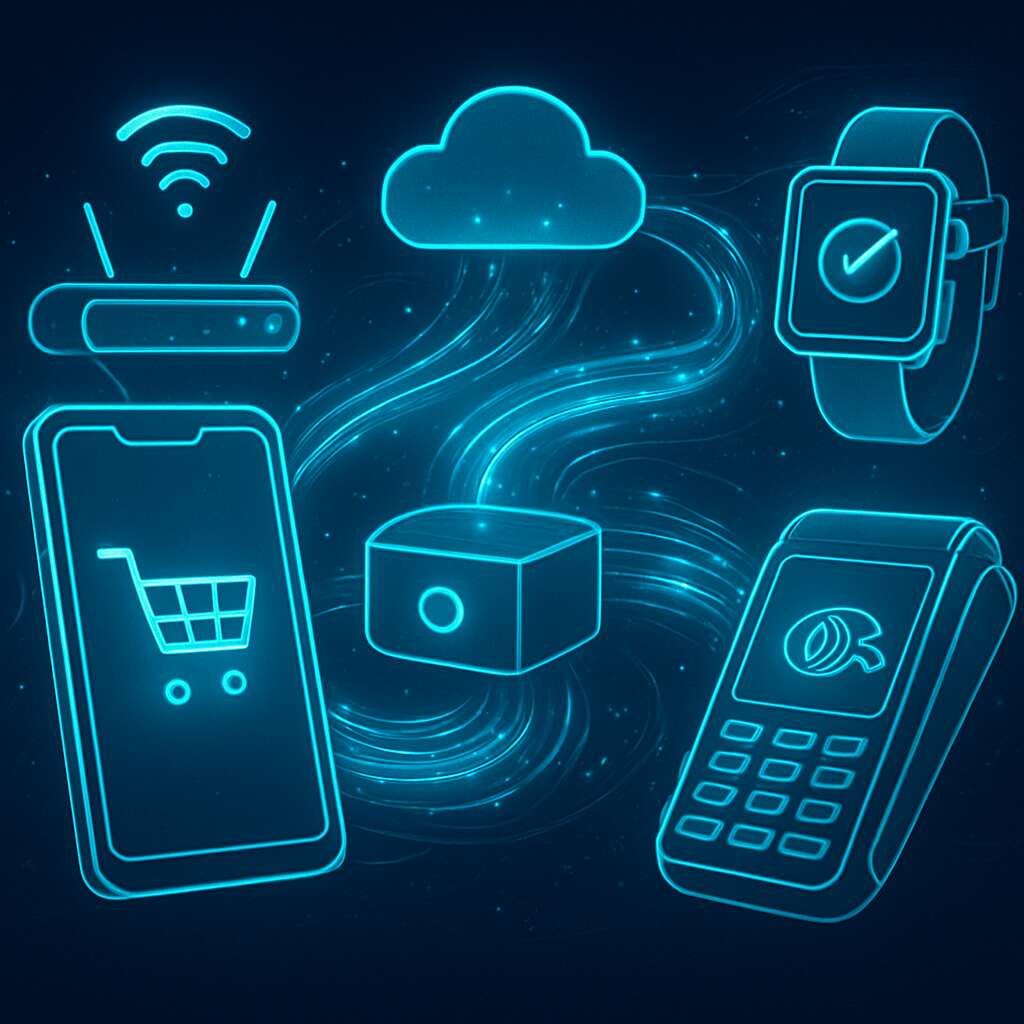
Understanding Machine-to-Machine Payment Systems
Overview and Definition – Defining M2M Payment Systems and their purpose
In the silent pulse of modern connectivity, Machine-to-Machine Payment Systems emerge as the unseen arteries powering autonomous transactions. These sophisticated systems facilitate seamless, instant exchanges between devices—beyond human intervention, in a dance of digital harmony. Imagine a network where a sensor detecting a shift in environmental factors automatically authorizes a payment, weaving efficiency into the fabric of everyday life. The purpose of machine-to-machine payment systems isn’t merely transactional; it’s about creating a world where machines communicate, collaborate, and transact at the speed of thought.
At its core, a machine-to-machine payment system is a conduit enabling autonomous financial exchanges without human oversight. It operates via encrypted protocols and smart contracts, ensuring security and transparency with every digital handshake. These systems are designed for a spectrum of applications, from IoT devices managing smart cities to automated vending machines, fostering an ecosystem of perpetual, frictionless commerce.
- Automated Billing
- Real-time Settlement
- Secure Data Exchange
Historical Development – Evolution of automated payment solutions
The evolution of Machine-to-Machine Payment Systems traces a fascinating journey—one that mirrors the relentless march of technology itself. Long before the phrase gained popularity, early efforts to automate financial exchanges between devices were mere experiments, often hampered by limited connectivity and primitive encryption methods. It wasn’t until the rise of cloud computing and the widespread proliferation of the Internet of Things that these systems truly began to take shape.
In the 2000s, the advent of embedded sensors and smarter networks set the stage for more sophisticated solutions. The natural progression led to the adoption of encrypted protocols and smart contracts, making automated billing and real-time settlement more reliable and secure. As the digital landscape expanded, organizations sought seamless solutions capable of facilitating frictionless commerce between devices—ushering in what we now recognize as modern Machine-to-Machine Payment Systems. Their development is an ongoing dance of technological refinement rooted in an insatiable desire for instant, secure, and autonomous transaction capabilities.
Core Components and Technologies – Key elements such as IoT, APIs, and secure protocols
At the heart of Machine-to-Machine Payment Systems lies a dizzying web of core components and technologies that make this digital symphony possible. Think of IoT—Internet of Things—as the nervous system, connecting countless devices in a seamless dance of data exchange. These interconnected devices communicate through advanced APIs, acting as digital messengers that facilitate real-time transactions without missing a beat. It’s this harmonious interplay that allows M2M payment solutions to operate smoothly, even in the face of chaotic networks.
Secure protocols are the guardians at the gate, ensuring that every payment is encrypted, authenticated, and tamper-proof. Whenever a device needs to pay or be paid, these protocols invoke encryption standards reminiscent of ancient secrets—only much faster and more reliable. Additionally, smart contracts have emerged as the digital escrow, automatically executing agreements based on pre-defined conditions—no middlemen, no delays. This automation exemplifies the elegance of Machine-to-Machine Payment Systems, where complex tasks are handled autonomously, swiftly, and securely.
When it comes to embracing the technology behind Machine-to-Machine Payment Systems, certain elements stand out:
- IoT sensors that detect and trigger payments based on environmental cues
- RESTful APIs that enable developers to craft seamless integrations
- Encrypted communication channels that safeguard transactional integrity
- Smart contracts that automate settlement and billing processes
Types of Machine-to-Machine Payment Systems
Banking and Financial Institutions – Automated payments between banks and financial entities
In the vast, interconnected web of modern finance, banking and financial institutions have embraced the silent symphony of Machine-to-Machine Payment Systems. These systems facilitate automated payments between banks and financial entities with such subtlety that users often forget they are witnessing the future unfolding behind the scenes. Imagine a network where transactions occur seamlessly—funds flowing from one account to another without human intervention—like an unceasing dance choreographed by technology’s unseen hand.
Within this realm, several types of Machine-to-Machine Payment Systems emerge as the backbone of institutional automation. Some systems leverage real-time settlement protocols ensuring instantaneous transfer of funds, transforming the pace of traditional banking. Others use batch processing, handling multiple payments in one grand sweep to optimise efficiency. Key among these are automated clearing houses and blockchain-based ledgers, which enhance transparency and security in financial exchanges. The underlying purpose? To create an ecosystem where money moves with the ease of thought, freeing institutions from manual reconciliation and bureaucratic delays.
In the world of banking and financial institutions, the seamless operation of Machine-to-Machine Payment Systems is vital. They enable institutional payments to be not only faster but also more secure, reducing vulnerabilities that previously hampered traditional systems. As banks evolve into fully digitized entities, these automated systems weave a fabric of trust and operational excellence—magnificently invisible yet fundamentally transformative. This stunning orchestration of digital payments ensures financial institutions remain agile and resilient, navigating the complexities of modern finance with an almost mystical precision.
Retail and Commerce – Payments facilitating vending machines, retail IoT devices
In retail and commerce, Machine-to-Machine Payment Systems are quietly revolutionizing the way transactions occur behind the scenes. These automated systems enable seamless payments between connected devices, from vending machines to IoT-enabled retail outlets. With the proliferation of smart devices, the landscape of payments has shifted from manual cash exchanges to intelligent, frictionless exchanges that seem almost invisible to the end-user.
A prime example of this innovation is the deployment of vending machines that automatically process payments through integrated M2M payment systems. This allows customers to select their snacks and beverages effortlessly, with the machines handling the transaction—no cash or card required. Retail IoT devices further extend this concept by monitoring inventory levels and initiating payments automatically as stock diminishes, creating a continuous flow of commerce that is both efficient and intuitive.
Consider this: the most effective Machine-to-Machine Payment Systems often employ encrypted APIs and secure protocols, ensuring that each digital transaction remains protected against vulnerabilities. To fully grasp their potential, picture a network where:
- Smart fridges reorder groceries as supplies run low
- Automated checkout systems eliminate queues in supermarkets
- Connected parking meters handle payments without human intervention
These examples illustrate how M2M payment systems are transforming everyday retail interactions into intelligent, autonomous processes. Their integration underscores a future where convenience and security intertwine, shaping a retail environment that’s responsive to consumers’ needs while maintaining the integrity of digital transactions.
Supply Chain and Logistics – Automated settlement and invoicing systems
In the fast-moving world of supply chain and logistics, efficiency is everything. Automated settlement and invoicing systems are transforming how companies handle transactions. These systems use Machine-to-Machine Payment Systems to facilitate real-time, secure exchanges between connected devices. No more manual entry or delayed payments—just seamless, digital automation that keeps goods flowing without interruptions.
Think about how connected fleet vehicles or smart warehouses process payments. They rely on encrypted APIs and secure protocols to execute instant transactions. Some systems even incorporate a numbered list to outline their core advantages:
- Reduced processing time, speeding up supply chain cycles
- Lower administrative costs through automation
- Enhanced accuracy and reconciliation via digital records
Many companies turn to automated invoicing and settlement solutions built around Machine-to-Machine Payment Systems. These systems not only improve cash flow management but also bolster transparency. As supply chains become more complex, these automated payment networks serve as a backbone for operational agility. With robust security and real-time data exchange, they reduce vulnerabilities and support scalable logistics operations across the UK and beyond.
IoT Device Payments – Payments between connected devices and service providers
In the shadowed corridors of a digital underworld, where the hum of unseen processes whispers secrets, Machine-to-Machine Payment Systems emerge as the silent arbiters of an unseen economy. Among the most enigmatic forms of these systems are IoT device payments — the unseen transactions that ripple through the connected fabric of modern commerce. These digital murmurs facilitate payments between smart devices and service providers, binding the physical and virtual worlds in a web of automated exchange.
Imagine a fleet of autonomous vehicles, their sensors communing in an eerie symphony, executing instant payments for fuel or tolls without human intervention. Such transactions rely on encrypted APIs, ensuring every exchange is cloaked in digital secrecy. As systems evolve, the range of IoT device payments expands, encompassing vending machines dispensing snacks on command or smart meters settling their utility bills seamlessly.
- The spectral dance of real-time payments
- Secure, encrypted transactions in the dark
- Automated, frictionless commerce with no human touch
In this domain, Machine-to-Machine Payment Systems forge a realm where efficiency becomes an unstoppable tide, driven by invisible currents of code and cryptography. They propel the relentless movement of goods and services through silent, digital corridors—transforming the very pulse of modern infrastructure into a living, breathing machine.
Peer-to-Peer Machine Payments – Direct payments between M2M devices without intermediaries
Among the fascinating varieties of Machine-to-Machine Payment Systems, peer-to-peer machine payments stand out as the purest form of autonomous exchange. These systems enable direct transactions between two devices, without the need for an intermediary—imagine a network of smart appliances negotiating and settling payments silently behind the scenes. This seamless interaction is especially transformative in environments where speed and privacy are paramount.
In such systems, the devices communicate through encrypted APIs, ensuring that each transaction remains secure from prying eyes. The setup is often powered by emerging technologies such as blockchain or distributed ledgers, which provide cryptographic guarantees alongside transparency. Devices in a smart city, for instance, might pay each other for shared services or data exchange in real time, streamlining the flow of information and resources.
In practical terms, peer-to-peer machine payments often include:
- Autonomous utility meters settling bills on behalf of consumers
- Smart vehicles paying tolls or charging stations automatically
- Connected home appliances managing their own upkeep costs
By reducing human intervention and automating routine financial exchanges, peer-to-peer systems exemplify the elegant efficiency at the heart of modern Machine-to-Machine Payment Systems. This effortless choreography of digital transactions signals an era where devices truly talk—and pay—on their own terms, opening new avenues for revenue and service automation across industries.
Benefits and Challenges of M2M Payment Systems
Efficiency and Speed – Reducing transaction times and automating processes
In an era where seconds matter, the efficiency and speed of Machine-to-Machine Payment Systems have become a silent revolution. These systems automate transactions seamlessly, eliminating manual interventions and drastically reducing transaction times. Imagine a vending machine autonomously making micropayments to a payment gateway—without human oversight! The automation embedded within Machine-to-Machine Payment Systems not only accelerates processes but also reduces human error, leading to more reliable and accurate financial exchanges.
When speed becomes the backbone of business operations, the benefits are undeniable. Companies can streamline invoicing, settle accounts faster, and enhance customer experiences through near-instantaneous payments. At the same time, the persistent challenge lies in maintaining security and ensuring system resilience under load. Innovations like encrypted APIs and secure communication protocols are critical, yet integrating these features into existing infrastructures can be complex. Striking the right balance between automation and control proves essential in harnessing the full potential of Machine-to-Machine Payment Systems’ efficiency and speed.
Cost Savings – Lower operational costs through automation
Cost savings are a compelling reason many industries turn to Machine-to-Machine Payment Systems. Automating financial transactions reduces the need for manual oversight, cutting down on administrative labour and associated expenses. Companies no longer need to allocate dedicated personnel to process routine payments; instead, these systems handle the workload silently in the background.
This automation not only decreases labour costs but also minimises errors, which can be costly in terms of both time and money. Furthermore, faster transaction processing means less idle capital tied up in pending payments, providing a leaner financial cycle.
- Lower transaction fees thanks to reduced manual processing
- Decreased error-related costs, safeguarding reputation and accuracy
- Reduced administrative overhead, freeing resources for core activities
For businesses, embracing Machine-to-Machine Payment Systems translates into tangible cost savings that can be reinvested into growth initiatives. As these systems automate more aspects of financial exchanges, companies can operate with heightened efficiency and agility—all while maintaining the security integrity necessary for today’s digital economy.
Security and Fraud Prevention – Ensuring safe transactions with encryption and authentication
Security and Fraud Prevention in Machine-to-Machine Payment Systems weave a magical fabric of trust around automated transactions. These systems rely heavily on encryption and authentication to safeguard delicate data streams passing between devices. As this digital ballet unfolds, cryptographic protocols act as invisible guardians, thwarting prying eyes and malicious interference.
With the proliferation of interconnected devices, the challenge lies in maintaining the integrity of each transaction. Implementing multi-factor authentication and real-time anomaly detection acts as a fortress, preventing fraudulent activities before they seep through the defenses.
- Encryption protocols to protect data confidentiality
- Device authentication to verify legitimacy
- Continuous monitoring for suspicious activity
Transparency in these security measures reassures users and operators alike, fostering confidence in Machine-to-Machine Payment Systems. The labyrinth of algorithms and safeguards, when woven with care and precision, transforms the realm of automation into a secure frontier, where transactions flow seamlessly yet safeguarded—an elegant dance of trust and technology.
Data Privacy Concerns – Managing sensitive information and compliance issues
The orchestration of Machine-to-Machine Payment Systems introduces a paradox of intimacy and scrutiny. While these systems promise rapid automation and heightened efficiency, they also grapple with the delicate matter of data privacy concerns. As sensitive information traverses the digital corridors between devices, the likelihood of vulnerabilities becomes a shadow that demands vigilant management.
Controlling the privacy of transaction data involves strict compliance with legislative frameworks such as GDPR, alongside sophisticated encryption methods. Ensuring data confidentiality is paramount—it’s the silent guardian of consumer trust in an era dominated by connectivity. Many organisations adopt layered security protocols, including multi-factor authentication and continuous anomaly monitoring, to safeguard against breaches that could erode confidence.
Managing sensitive data within Machine-to-Machine Payment Systems requires a nuanced approach. It involves not only technological safeguards but also transparent practices that reassure users and regulators alike. Protecting privacy, while facilitating seamless transactions, remains a complex dance—one where meticulous attention to detail transforms potential vulnerabilities into resilient lines of defence.
Standardization and Compatibility – Achieving interoperability across different devices and platforms
Achieving interoperability across diverse devices and platforms remains one of the most intricate yet rewarding pursuits in the realm of Machine-to-Machine Payment Systems. While the promise of seamless connections sparks excitement, the path to standardization is riddled with hurdles. The challenge lies in creating shared protocols that reconcile differing hardware specifications, software architectures, and security measures, all while maintaining the integrity of each system.
The beauty of standardization is evident when considering the many benefits it unlocks. Imagine a vending machine swiftly transmitting payment details to a cloud platform or connected car paying automatically for tolls without any human intervention. To achieve this harmony, some industry leaders advocate for adopting universal frameworks and open APIs, which promote compatibility and foster innovation.
An unordered list of what makes standardization a game changer illustrates its layered advantages:
- Enhanced interoperability among devices and platforms
- Accelerated deployment of new IoT payment solutions
- Simplified integration processes, reducing time-to-market
- Improved user experience through consistent transaction flows
Yet, with these advantages come certain challenges. Fragmented technical standards and proprietary protocols can hinder compatibility, creating silos that inhibit the full potential of Machine-to-Machine Payment Systems. Synchronising security standards and ensuring robust encryption across different devices also demand meticulous coordination. Thus, industry alliances and regulatory bodies play an instrumental role in shaping a cohesive ecosystem—one where devices, platforms, and services work together harmoniously, paving the way for a future defined by interconnected automation.
Regulatory and Legal Considerations – Navigating legal frameworks and compliance challenges
Navigating the regulatory and legal landscape of Machine-to-Machine Payment Systems often feels like threading a needle through a maze of evolving standards and distinct jurisdictional frameworks. The pace of technological advancement sparks innovation, yet it also introduces a labyrinth of compliance challenges that can threaten to stymie growth. As these systems operate across borders, understanding the nuances of data privacy and security laws becomes paramount.
The crux of legal stability in Machine-to-Machine Payment Systems lies in harmonising standards that safeguard consumer data while fostering interoperability. Industries grapple with aligning security measures such as encryption protocols and authentication processes, which are often subject to regional regulations.
- Adapting to the General Data Protection Regulation (GDPR) in the UK fundamentally influences how data is handled, stored, and transferred across M2M systems.
- Securing cross-border transactions demands adherence to anti-fraud measures and compliance with financial conduct authority (FCA) guidelines.
Balancing innovation with regulatory compliance demands a nuanced understanding of the legal architecture—missteps can lead to hefty fines or reputational damage. Such challenges underscore the importance of industry alliances and collaboration with regulatory bodies working to establish cohesive legal frameworks. These collaborations are essential, as they promote transparency, streamline standards, and ultimately enable seamless and secure payments between interconnected devices. Staying ahead in this landscape requires continual adaptation to legal developments that shape the way Machine-to-Machine Payment Systems evolve on a global stage.
Future Trends and Innovations in Machine-to-Machine Payments
Integration with Blockchain and Cryptocurrencies – Using decentralized ledgers for secure transactions
From the advent of cashless transactions to the digital age, Machine-to-Machine Payment Systems are approaching a transformative juncture, especially with the advent of blockchain technology. The future of secure transactions hinges on decentralized ledgers that promise unprecedented levels of integrity and transparency. Unlike traditional payment networks, blockchain-enabled M2M payments offer a decentralised, tamper-proof record, making fraud a virtual anachronism.
Emerging innovations are paving the way for seamless currency exchanges and real-time settlement processes, reducing the latency historically associated with inter-device payments. As cryptocurrencies become mainstream, the integration within M2M Payment Systems heralds an era where connected devices perform autonomous peer-to-peer transactions. A handful of groundbreaking developments include:
- Smart contracts automating complex conditions without human intervention
- Leveraging cryptographic algorithms for end-to-end security and privacy assurance
- Interoperability protocols ensuring smooth migration across diverse blockchain platforms
In this brave new world, the combination of IoT and blockchain not only elevates transaction speed but also opens avenues for innovative business models. Imagine a future where a fleet of autonomous vehicles—or even household appliances—can pay for services or energy consumption from each other with minimal human oversight. Such innovations underpin the evolution of Machine-to-Machine Payment Systems, making them both more resilient and incredibly efficient for the interconnected society of tomorrow.
Artificial Intelligence and Machine Learning – Enhancing automation and fraud detection
In an era where automation is no longer a luxury but a necessity, Artificial Intelligence and Machine Learning are redefining the boundaries of Machine-to-Machine Payment Systems. These technologies are no longer confined to data analysis; they are embedding intelligence into the very fabric of digital transactions, enabling systems that evolve and adapt with minimal human intervention.
One of the most compelling trends is the use of AI-driven algorithms to enhance fraud detection within M2M Payment Systems. By continuously monitoring transaction patterns and employing predictive analytics, these systems can identify anomalies long before they escalate into breaches, creating a fortress of security that adapts dynamically to emerging threats. This capacity for real-time vigilance reduces false positives while sharpening the efficacy of security protocols.
Machine Learning further amplifies automation, allowing payment systems to refine their decision-making processes based on cumulative data. Imagine an interconnected network of IoT devices—autonomous vehicles, smart appliances, and industrial machinery—all performing peer-to-peer payments seamlessly without human oversight. This orchestrated dance of automation is reminiscent of a symphony where each instrument understands its role precisely, yet the harmony depends on intelligent, adaptive algorithms that anticipate and respond to changing conditions.
- Enhanced Transaction Speed: AI algorithms sift through vast data, making instant decisions that cut transaction latency to a whisper.
- Predictive Maintenance: AI-powered analytics forecast device or system failures, preemptively adjusting payment flows for uninterrupted operation.
- Behavioral Customization: Advanced machine learning models tailor transaction parameters based on device usage patterns, elevating both security and efficiency.
Integration of these cognitive capabilities reveals a future where machine-to-machine interactions transcend simple automation, instead becoming portals of intelligent, autonomous commerce. As these systems deepen their understanding of contextual cues and exhibit a form of digital intuition, the art of M2M payment systems emerges as an intricate ballet of efficiency and resilience. This confluence of AI, machine learning, and connected devices is orchestrating a new symphony—one that promises a future where seamless, secure, and intelligent payments underpin the interconnected society of tomorrow.
Edge Computing and 5G Connectivity – Improving latency and real-time processing capabilities
Imagine a future where decisions are made at the speed of thought, unrestrained by latency or sluggish data processing. That’s the promise heralded by advances in edge computing and 5G connectivity, the twin catalysts transforming Machine-to-Machine Payment Systems. These innovations are not merely incremental; they are tectonic shifts that redefine real-time processing in a landscape demanding unparalleled speed and security.
Edge computing decentralizes data processing, shifting heavy computation away from centralized clouds directly to the network’s periphery. In the context of machine-to-machine payment systems, this means transactions happen near the source—be it autonomous vehicles, smart factories, or retail devices—eliminating delays and ensuring near-instant settlement. This localized processing paired with 5G’s lightning-fast speeds creates a scenario where payment systems can respond to dynamic conditions at a moment’s notice.
- Reduced latency for seamless microtransactions between IoT devices.
- Enhanced reliability through distributed processing, reducing risk of bottlenecks.
- Real-time analytics that adapt payment flows based on contextual cues.
This convergence of edge computing and 5G isn’t just a technological upgrade; it’s an enabler for new business models. The rapid, dependable transfer of data unlocks features like predictive maintenance payments, autonomous invoicing, and instant peer-to-peer transactions—all integral components of futuristic machine-to-machine payment systems. The race towards these innovations underscores a core truth: in the realm of digital commerce, every millisecond matters.
Expanding Industry Applications – New sectors adopting M2M payment solutions
As industries continue to break free from traditional boundaries, new horizons await with Machine-to-Machine Payment Systems expanding into previously unimagined sectors. The seamless flow of autonomous transactions is reshaping the fabric of commerce, logistics, and even public services. From electric vehicle charging stations to smart infrastructure, the scope of these payments reaches far beyond what most consider possible.
One notable shift involves the integration of M2M payment systems into modular manufacturing facilities, where robots coordinate their operations via instant, autonomous settlements. This not only streamlines production but minimizes downtime caused by manual financial processes. Similarly, smart city initiatives are leveraging machine-to-machine payment solutions for efficient resource management—allowing for real-time payments for electricity, water, or public transportation without human interference.
The rapidly evolving landscape prompts us to consider how adoption may accelerate in less obvious sectors. For instance, agritech solutions deploying connected sensors could automatically settle micro-payments for crop monitoring or water usage, illustrating how embedded automation will redefine industry standards. As these realms embrace innovation, the ability for varied devices and systems to communicate flawlessly through standardised platforms becomes more than a convenience—it’s an imperative.
This intersection of diverse applications underscores a broader truth: as machine-to-machine payment systems penetrate these sectors, they transform not just transaction speed, but the overall ethos of operational efficiency. It becomes less about individual payments and more about cultivating a networked ecosystem built on trust, precision, and relentless automation. The future persists in a delicate dance—where human oversight may give way to a silent yet profoundly intelligent choreography of machines, orchestrating economic flows with an artistry once confined to human hands.
Standardization Initiatives – Efforts to unify protocols and standards for broader adoption
As automation permeates every facet of our lives, the pursuit of standardization within Machine-to-Machine Payment Systems reveals a fascinating dance of convergence and divergence. Imagine a realm where incompatible protocols are a thing of the past, and devices from myriad manufacturers communicate seamlessly—this is the promise of evolving standardization initiatives. These efforts aim to unify protocols, creating a universal language that allows diverse systems to interact efficiently.
Within this intricate web of connectivity, efforts such as establishing common frameworks and open APIs foster interoperability. Stakeholders from across industries are collaborating to develop global standards that transcend geographic and technological boundaries. This move towards harmonization not only accelerates widespread adoption but also ensures that security and privacy are preserved amidst growing complexity.
A glimpse into the future shows possibilities like the implementation of unified protocols that facilitate plug-and-play integration—an innovation that could reduce development costs and limit fragmentation. As the deployment of Machine-to-Machine Payment Systems expands, the emphasis on standardization will become more pronounced, shaping a landscape where devices from smart cities to autonomous vehicles communicate with precision and confidence. The harmony created through these efforts hints at a future where robust interoperability isn’t an aspiration but a fundamental characteristic of machine-driven commerce.