
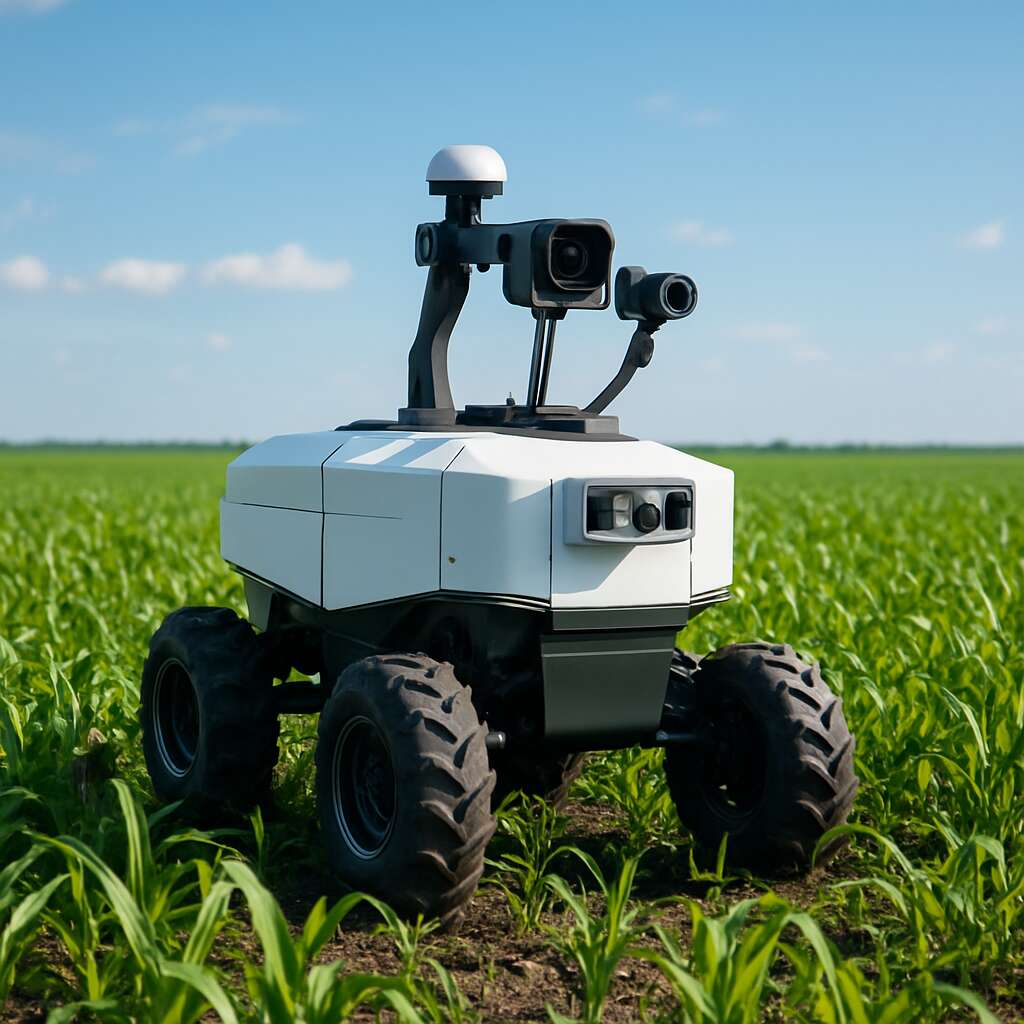
Overview of AI-Powered Farming Robots
Introduction to Agricultural Automation – Historical development and evolution of farming technology
The story of agricultural innovation is a tapestry woven with centuries of human ingenuity, gradually evolving from simple tools to sophisticated systems. Today, AI-Powered Farming Robots stand at the forefront of this evolution, embodying the tantalizing possibility of a new era in agricultural automation. These robots harness the power of artificial intelligence to perform complex tasks such as planting, harvesting, and pest control with unparalleled precision. Their emergence signals not just technological progress but a philosophical shift—moving towards a sustainable, data-driven approach to farming that respects both the environment and the farmer’s intuition.
Historical development in farming technology has often been a quest for efficiency and sustainability. From the advent of mechanical ploughs to GPS-guided tractors, each iteration reflects a desire to harmonize human effort with machine precision. Today, the evolution continues with AI-Powered Farming Robots, which integrate machine learning algorithms to adapt to changing conditions in real time. They operate under a carefully designed framework that prioritizes resource management and crop health, revolutionising traditional practices. The journey from manual labour to autonomous operation underscores a fundamental truth: innovation is rooted in the relentless pursuit of harmony between nature and technology.
How AI Enhances Robotic Capabilities – Machine learning, computer vision, and sensor integration in agriculture
AI-Powered Farming Robots are transforming fields into hubs of precision agriculture, blending human ingenuity with technological mastery. These machines are equipped with advanced sensor integration that allows them to respond intuitively to their environment, making decisions that once required a farmer’s keen eye and experience. With every scan of a crop row or soil sample, they gather vital data that fuels their machine learning algorithms, enabling constant refinement of their tasks.
At the heart of their prowess lies computer vision—an astonishing technology that allows these robots to distinguish weeds from crops, identify pests, and assess crop maturity with remarkable accuracy. This visual intelligence turns once labor-intensive tasks into swift, gentle operations that minimise resource waste and eliminate guesswork. Integrating these capabilities, AI-Powered Farming Robots are not just tools—they are an extension of the farmer’s intuition, delivering precision where it matters most.
- Real-time data analysis
- Adaptive decision-making
- Seamless integration of multiple sensors
All these features work together to create a symphony of efficiency, ensuring crops are monitored and tended to with care and accuracy. This technological harmony is shaping a future where farming is increasingly sustainable and connected, driven by the intelligent automation of AI-Powered Farming Robots. As these machines learn and evolve, they redefine what farmers can achieve, fostering resilience and innovation in the heart of rural life.
Types of Farming Robots Using AI – Autonomous harvesters, seeders, weeders, crop monitors
Across the rolling fields of the United Kingdom, AI-Powered Farming Robots are transforming traditional agriculture into a realm of technological wonder. These innovative machines fall into several captivating categories, each designed to excel in specific tasks and redefine the farming landscape. Imagine autonomous harvesters subtly gliding through crop rows, sensing precisely when fruits and vegetables are perfectly ripe, or seeders meticulously planting with laser-guided accuracy.
Among the most prominent are AI-driven weeders, which employ advanced computer vision to identify invasive plants and remove them with gentle precision. Crop monitors, equipped with sensor arrays and real-time data analysis, keep a vigilant eye on soil health and plant vitality, ensuring optimal growth conditions. The versatility of AI-Powered Farming Robots means farmers can deploy targeted actions seamlessly, minimizing resource waste while maximizing yield.
- Autonomous harvesters that harvest at peak ripeness with minimal human intervention.
- Seeders and planters programmed to distribute seeds uniformly across uneven terrains.
- Weeders utilizing AI-enabled computer vision to differentiate weeds from crops, minimizing chemical use.
- Crop monitors that analyze real-time data from integrated sensors to inform decision-making.
As these examples illustrate, AI-Powered Farming Robots are not merely tools—they’re partners in the quest for sustainable, efficient agriculture that adapts to the ever-changing demands of modern farming. Their ability to perform specialized roles with precision highlights a future where technology and nature work hand in hand to nourish the nation’s fields.
Key Technologies Behind AI Farming Robots
Artificial Intelligence and Machine Learning – Role of AI algorithms in decision-making processes
At the heart of AI-Powered Farming Robots lies a confluence of sophisticated algorithms that redefine how decisions are made on the field. These robots don’t just operate blindly; instead, they leverage advanced artificial intelligence to interpret the sprawling complexities of agricultural environments. Machine learning, for instance, forms the backbone of adaptive decision-making—constantly evolving as the system gathers more data, refining its understanding with each planting season.
The role of these AI algorithms extends beyond mere automation; they shape the very consciousness of the robot’s actions. With computer vision, robots can analyze color spectrums of healthy crops versus pests or diseases—a process crucial for autonomous harvesters and crop monitors. Sensors provide minute details about soil health, moisture levels, and plant growth stages, feeding this information into decision-making processes that optimize every action.
- Crop health assessment
- Weed detection
- Resource allocation
—these are just slices of what AI-powered farming robots can achieve through intelligent algorithmic integration. The capability to automatically assess and adapt ensures that each decision enhances productivity while safeguarding the environment, making these machines a testament to technological moral responsibility in agriculture.
Sensors and Data Collection – Soil analysis, weather data, crop health monitoring
Behind every successful AI-powered farming robot lies a sophisticated web of sensors and data collection systems, turning raw environmental information into actionable insights. These sensors act as the robot’s senses, tirelessly collecting data that paints a detailed picture of the agricultural landscape—vital for making precise decisions.
Soil analysis sensors play a pivotal role by measuring moisture levels, pH balance, and nutrient content, ensuring crops receive exactly what they need for optimal growth. Weather data sensors monitor atmospheric conditions in real-time, helping the robot adapt to changing environmental factors that influence planting and harvesting schedules.
Crop health monitoring is elevated through advanced imaging and spectral analysis, which identify signs of disease or pest infestation early enough for targeted intervention. To streamline data handling, many AI-powered farming robots utilize integrated systems that aggregate the information into one seamless platform, enabling accurate and timely decision-making. This high level of sensor integration and data collection propels AI-powered farming robots into a new era of precision agriculture—where every decision is backed by reliable, actionable insights, and operational efficiency reaches unprecedented heights.
Robotics and Automation Hardware – Design and engineering of autonomous movement systems
Behind the silent march of AI-Powered Farming Robots lies a marvel of engineering—an intricate dance of robotics and automation hardware that transforms ambitious visions into tangible realities. These autonomous marvels require movement systems that are both elegant and resilient, capable of navigating uneven terrain with precision and grace. Think of their design as the backbone of smooth operation, where every joint, sensor, and actuator communicates in harmony to mimic the intuition of a seasoned farmer.
The engineering of autonomous movement involves a seamless integration of wheels, tracks, or legs, tailored to the agricultural landscape. Traction, stability, and energy efficiency become the dance steps guiding each movement, while sophisticated control algorithms ensure they adapt to changing environments with near-human agility. An understanding of terrain mapping and obstacle avoidance imbues these robots with the ability to traverse fields without a hitch—whether ploughing through loose soil or skirting around rocks and crop obstacles.
At the heart of this advanced hardware lie a series of innovations—such as differential steering, GPS-guided navigation, and real-time sensor feedback—that lend these machines their almost sentient mobility. Some models incorporate
- ultra-responsive drivetrain systems
- adaptive suspension technology
- real-time obstacle detection sensors
—all working in concert to ensure each step is deliberate, safe, and exactly aligned with farming needs. The result is a harmony of engineering brilliance that enables AI-Powered Farming Robots to operate tirelessly across sprawling fields, revolutionising the very fabric of modern agriculture.
Data Analytics and Cloud Computing – Real-time processing and remote management of farm data
Behind every thriving modern farm lies a digital backbone—one powered by data analytics and cloud computing—transforming traditional agriculture into a realm of precision and insight. AI-Powered Farming Robots rely on real-time processing of vast streams of data, enabling farmers to receive instant updates about soil health, weather patterns, and crop conditions. This continuous flow of information is the lifeblood of intelligent decision-making, fostering an environment where data-driven actions replace guesswork.
Remote management of farm operations becomes seamless, thanks to cloud computing platforms that connect AI-Powered Farming Robots with centralized systems. This connectivity allows for a dynamic overview of multiple fields, providing tailored recommendations and adjustments without the need for physical presence on-site. Such integration ensures that farmers can fine-tune their strategies, optimize resource use, and respond swiftly to unexpected weather shifts or pest outbreaks.
- Automated data collection from soil sensors
- Weather forecasting integrations for proactive planning
- Continuous evaluation of crop health via high-resolution imaging
The sophistication of AI algorithms enhances decision-making, enabling robots to adapt their operations based on live data. For example, a farming robot can alter its seeding pattern in response to soil moisture levels or pause its activity during a sudden downpour. This harmony between sensors, AI-driven analytics, and cloud management creates a future where farms operate more efficiently, sustainably, and with remarkable autonomy—pioneering a new era of agricultural innovation driven by AI-Powered Farming Robots.
Applications and Benefits of AI-Powered Farming Robots
Precision Agriculture – Targeted application of water, fertilizers, and pesticides
The future of agriculture lies in the intricate dance between nature and innovation, choreographed seamlessly by AI-Powered Farming Robots. Their ability to perform precision agriculture transforms traditional farming from a labor-intensive craft into a science of exactitude. These robots excel at targeted application of water, fertilizers, and pesticides, offering a bespoke approach to crop management that minimizes waste and maximizes yield.
Imagine fields where each drop of water is carefully delivered, nutrients are precisely calibrated to meet the plants’ needs, and pesticides are only sprayed where pests threaten. This level of finesse reduces environmental impact and enhances crop health. Through advanced sensors and sophisticated algorithms, AI-Powered Farming Robots analyze soil moisture levels, nutrient content, and weather conditions in real time. This data-driven precision results in healthier crops, lower operational costs, and a more sustainable approach to farming. In doing so, these intelligent machines help farmers nurture the land while respecting the delicate balance of our ecosystem — an elegant testament to how technology can serve the enduring promise of agriculture.
Labor Efficiency and Cost Reduction – Automation of manual tasks and reduction in workforce needs
Farming isn’t just about hard work anymore; it’s about precision, efficiency, and smart automation. AI-Powered Farming Robots are transforming the way we approach agriculture, especially when it comes to labour efficiency and cost reduction. By automating manual tasks such as planting, weeding, and harvesting, these intelligent machines significantly reduce the need for a large workforce. This shift not only cuts labour costs but also mitigates the challenges of seasonal labour shortages—a persistent issue in agriculture across the UK.
These robots excel at performing repetitive or physically demanding tasks with remarkable accuracy, freeing farmers to focus on strategic management rather than manual labour. A typical AI-powered farm employs a combination of autonomous harvesters, seeders, and weeders, streamlining operations while maintaining high standards of quality. Such automation helps farms operate with fewer personnel, making them more adaptable to changing economic conditions.
Implementing AI-Powered Farming Robots results in measurable cost savings. Reduced personnel needs lower wages, insurance, and training expenses, while increased efficiency means faster turnaround times from planting to harvest. In the end, this allows farms to operate more sustainably, balancing operational costs with the goal of producing healthy crops. It’s a practical step toward a more resilient and economically viable agricultural sector.
Yield Optimization – Monitoring and managing crop health for higher productivity
Imagine a future where crop failures are minimized and yields are maximized, all while labour costs plummet. That’s the promise held by AI-Powered Farming Robots—an innovation reshaping agriculture across the United Kingdom. These advanced machines go beyond simple automation; they utilize sophisticated crop monitoring systems to precisely detect early signs of disease, pest infestation, or nutrient deficiencies. Such vigilant monitoring ensures farmers can intervene at the optimal moment, safeguarding crop health and boosting productivity.
At the heart of these robots lies a suite of sensors and data collection technologies that tirelessly gather soil conditions, weather patterns, and plant health metrics. This real-time data feeds into intelligent algorithms, enabling AI-Powered Farming Robots to make nuanced decisions—like adjusting irrigation or applying targeted pesticides. This level of precision not only enhances crop quality but also significantly reduces waste, fulfilling the demand for sustainable farming practices in today’s environmentally conscious market.
- Harnessing detailed crop health insights, farmers can fine-tune resource application, conserving water and fertilisers.
- Early detection of stressors minimizes crop loss and ensures optimal harvest timings.
- Continual monitoring helps maintain uniformity across fields, improving the overall farm’s output.
In that constant dance of growth and seasonality, AI-Powered Farming Robots bring a new level of control and foresight, transforming traditional fields into precision-driven landscapes. Their ability to seamlessly integrate data analytics and automation creates a compelling narrative of productivity—one where every seedling, every leaf, is under the watchful eye of intelligent machinery geared towards maximum yield and sustainability.
Sustainability and Environmental Impact – Reduced resource usage and minimized environmental harm
AI-Powered Farming Robots are transforming sustainable agriculture across the United Kingdom. They significantly reduce resource usage, such as water and fertilizers, by applying inputs precisely where needed. This not only conserves vital environmental resources but also minimizes runoff and pollution, safeguarding local ecosystems.
Taking a holistic view, these robots employ environmental sensors that continuously track soil health, weather conditions, and crop stress signals. This granular data allows for targeted interventions, ensuring no resource is wasted on unnecessary application of chemicals or water. Such deliberate resource management directly correlates with lowered carbon footprints and reduced environmental harm.
Farmers adopting AI-Powered Farming Robots report a dramatic drop in chemical usage, aligning agriculture with sustainability goals. The precise application helps preserve biodiversity while maintaining high crop quality. Sustainable farming practices powered by AI at length support the UK’s commitment to environmental stewardship and resilient food systems.
Challenges and Limitations – High initial costs, technical barriers, and scalability issues
The promise of AI-Powered Farming Robots comes with a steep barrier: high initial costs. While these advanced machines can revolutionize agriculture, the upfront investment can be daunting for many farmers in the UK. Many see it as a risky spend before reaping the long-term benefits.
Scaling these systems across diverse farms presents another challenge. Different field sizes, crop types, and soil conditions require customized solutions — not always straightforward to implement at scale. Technical barriers, including complex installation and the need for ongoing maintenance, can further slow adoption.
A few pain points stand out:
- High capital expenditure
- Technical expertise requirements
- Limited infrastructure for remote or rural farms
Despite these hurdles, the industry keeps pushing forward. With continued innovation, costs are expected to decline, making AI-Powered Farming Robots more accessible. Still, a careful evaluation of expenses versus benefits remains crucial for sustainable integration into UK farms.
Future Trends and Developments in AI Farming Robots
Integration with IoT and Big Data – Enhanced connectivity and data-driven agriculture
The future of agriculture hinges on the seamless integration of AI-Powered Farming Robots with IoT and Big Data. As farms become smarter, Connectivity transforms from a buzzword into a tangible backbone of modern agriculture. Enhanced IoT networks enable these robots to collect and exchange real-time data, creating a web of interconnected devices working harmoniously to optimize resource use and crop management. This interconnected system allows AI algorithms to analyze vast data streams—ranging from soil health metrics to weather patterns—resulting in unparalleled precision. It’s reminiscent of an orchestra, where every instrument contributes to the symphony of sustainable farming.
As the fusion of these technologies matures, we see layers of complexity unfold. For example,
- Real-time soil analysis informs targeted fertilizer application
- Weather forecasts adjust irrigation schedules dynamically
- Crop health data guides automatic pest control measures
Such developments foster a new paradigm of data-driven agriculture, where AI-Powered Farming Robots become less like machines and more like intuitive partners in the field. With the exponential growth of Big Data analytics and cloud computing, the possibilities for scaling these innovations across large agricultural landscapes are increasingly within reach, promising a future where farming is both sustainable and profoundly intelligent.
Advances in Robotics and AI Algorithms – Improved precision, autonomy, and adaptability
Advances in robotics and AI algorithms promise a future where AI-Powered Farming Robots become ever more autonomous, precise, and adaptable. As these systems evolve, they won’t just perform repetitive tasks—they will anticipate needs, learning from their environment with a kind of quiet intelligence that borders on intuition.
In this pursuit, innovations are focusing on multi-layered AI algorithms capable of making complex decisions in real-time. For instance, some robots are now equipped with sophisticated computer vision to identify crop diseases with unprecedented accuracy, or sensors that adjust their activity based on soil moisture levels without human intervention.
Through a continual refinement of hardware design and the integration of machine learning, these robots are pushing the boundaries of what automated machinery can accomplish. It’s not merely about mechanical precision but about creating machines that can navigate unpredictable terrains and adapt to the unique needs of each field—an ongoing dance of technology and nature.
Implementation of layered AI systems involves prioritising versatility and resilience. The use of deep learning techniques allows AI-Powered Farming Robots to evolve their strategies through exposure to diverse scenarios, increasing their reliability in the field.
What excites many is the possibility of embedding these advanced algorithms into farming robots that are capable of executing multiple tasks—harvesting, planting, weed control, and pest management—without switching equipment or requiring extensive manual oversight.
An ongoing shift towards hyper-specialised AI algorithms further enhances the precision of these machines. They can perform targeted pesticide applications, adjust seed dispersal based on real-time environmental feedback, and even analyse plant growth patterns during the day and night, seamlessly blending technology with seasonal rhythms.
While these advancements do not erase the need for human skill, they redefine it—transforming farmers into strategic overseers, orchestrating a symphony of high-tech tools that work symbiotically across expansive landscapes. The evolution of AI-Powered Farming Robots reflects a deeper understanding that automation is not merely about replacing labor but about cultivating a more sustainable, efficient, and humane relationship with the land.
Market Growth and Adoption Trends – Increasing investments and farmer acceptance
As investment in agricultural technology reaches staggering heights, the AI farming robot market is experiencing an undeniable surge. Farm managers and tech entrepreneurs alike are clamoring to integrate AI-Powered Farming Robots into their operations, driven by the promise of increased efficiency and sustainability. Recent surveys suggest that by 2030, over 60% of large-scale farms in the UK could be operating at least one autonomous robot—talk about a green revolution powered by algorithms!
Adoption isn’t just about shiny new gadgets; it’s rooted in real-world benefits. Farmers are beginning to see AI-Powered Farming Robots as indispensable allies in navigating unpredictable weather patterns, soil variability, and pest pressures. The staggered growth reflects a wider acceptance of automation, especially as these robots demonstrate versatility—performing multiple tasks from planting to pest management without breaking a sweat.
Progressive developments include layered AI systems that learn and adapt in real time, making each robot smarter and more precise. This combination of increasing hardware resilience and sophisticated machine learning Taylor’s robots to specific fields, turning them into indispensable partners rather than mere tools.
What’s next? A clutch of innovations poised to keep the market expanding. The UK’s agricultural scene is witnessing an array of emerging AI-Powered Farming Robots equipped with sensors capable of measuring soil health, weather fluctuations, and crop vitality—all relayed via cloud computing for instant analysis. As these systems become more adaptable and affordable, their adoption will accelerate with a natural momentum. No longer an experiment, AI-powered agribots are steadily becoming the backbone of modern cultivation.
- Growing investment in smart farm solutions
- Enhanced farmer acceptance due to demonstrable efficiency
- Versatile AI algorithms enabling multi-tasking capabilities
- Reduction in manual labor costs without sacrificing productivity
- Increasing integration with IoT and big data platforms
These trends underscore that the future of agricultural automation isn’t just about replacing human effort but reimagining farming through intelligent, data-driven collaboration. With each new iteration, AI-Powered Farming Robots inch closer to becoming an essential staple in the farmer’s arsenal—proving that sometimes, a well-programmed robot truly is better at managing the land than good old fashioned guesswork.
Regulatory and Ethical Considerations – Policy frameworks, data privacy, and safety standards
Predicting the trajectory of AI-Powered Farming Robots beyond the horizon, one encounters the intricate labyrinth of regulatory and ethical considerations that shape this new frontier. As the mechanical minds of these robots become more sophisticated, questions of policy frameworks ascend from distant murmurs to urgent summons. Governments across the United Kingdom are carefully constructing standards that ensure safety, accountability, and transparency, vital to fostering trust in this burgeoning landscape.
Data privacy emerges as a vital thread woven into the fabric of agricultural automation. The vast streams of soil analysis, weather data, and crop health information collected by AI-Powered Farming Robots must be protected from breaches and misuse. An unbreakable shield of cybersecurity measures and clear data ownership policies will be essential as farmers entrust these intelligent entities with their most precious information. To navigate this evolving protected zone, some consensus on the following points is forming:
- Clear guidelines for responsible data collection and sharing
- Strict safety standards for autonomous operations
- International cooperation on technological oversight
Moreover, the ethical deployment of AI-Powered Farming Robots extends into questions of economic fairness and labor displacement. Human workers find themselves at the crossroads of innovation, demanding that policies stipulate fair transitions and community support. As these intelligent machines become commonplace, the safeguard of transparency and accountability in decision-making processes will be crucial to maintain societal harmony.
Safety standards must also evolve alongside technological advancements, ensuring that the integration of robotics does not compromise the physical or environmental integrity of the land. The future of AI farming hinges on a delicate balance: fostering innovation while upholding the societal values embedded deep within the fabric of traditional agriculture. This ongoing dialogue promises to lead the way toward an era where AI-Powered Farming Robots serve not just productivity but also uphold the ethical standards that define responsible farming in the modern world.
Potential for Global Food Security – How AI robots can address food demands in a changing climate
In a world where climate change turns the soil into a guessing game, AI-Powered Farming Robots emerge as the gold standard for tackling food security. As extreme weather patterns threaten crops across the UK, these intelligent devices promise a new chapter of agricultural resilience. They can analyse soil health, monitor weather fluctuations, and adapt in real-time—acting as digital farmers with a knack for precision.
Future developments could see these robots autonomously adjusting irrigation schedules or deploying exactly the right amount of fertilizer—no more overwatering or nutrient wastage. Imagine a fleet of AI-Powered Farming Robots working tirelessly to meet the rising demand for sustainable, high-yield crops in a changing climate.
Potential solutions include:
- Integrating AI with weather forecasting models to preemptively respond to droughts or floods
- Using AI algorithms to predict pest outbreaks and trigger targeted interventions
- Deploying newer sensor technology that can detect nutrient deficiencies with exceptional nuance
Such advancements not only promise to secure food supplies but also ensure resource efficiency on an unprecedented scale. As AI-Powered Farming Robots become more sophisticated, some predict a future where food production is as adaptable as it is automated—an essential trait when the climate throws curveballs. These robots could hold the key to feeding a growing population while reducing environmental strain, truly transforming agriculture into a technologically driven safeguard of global food security.