
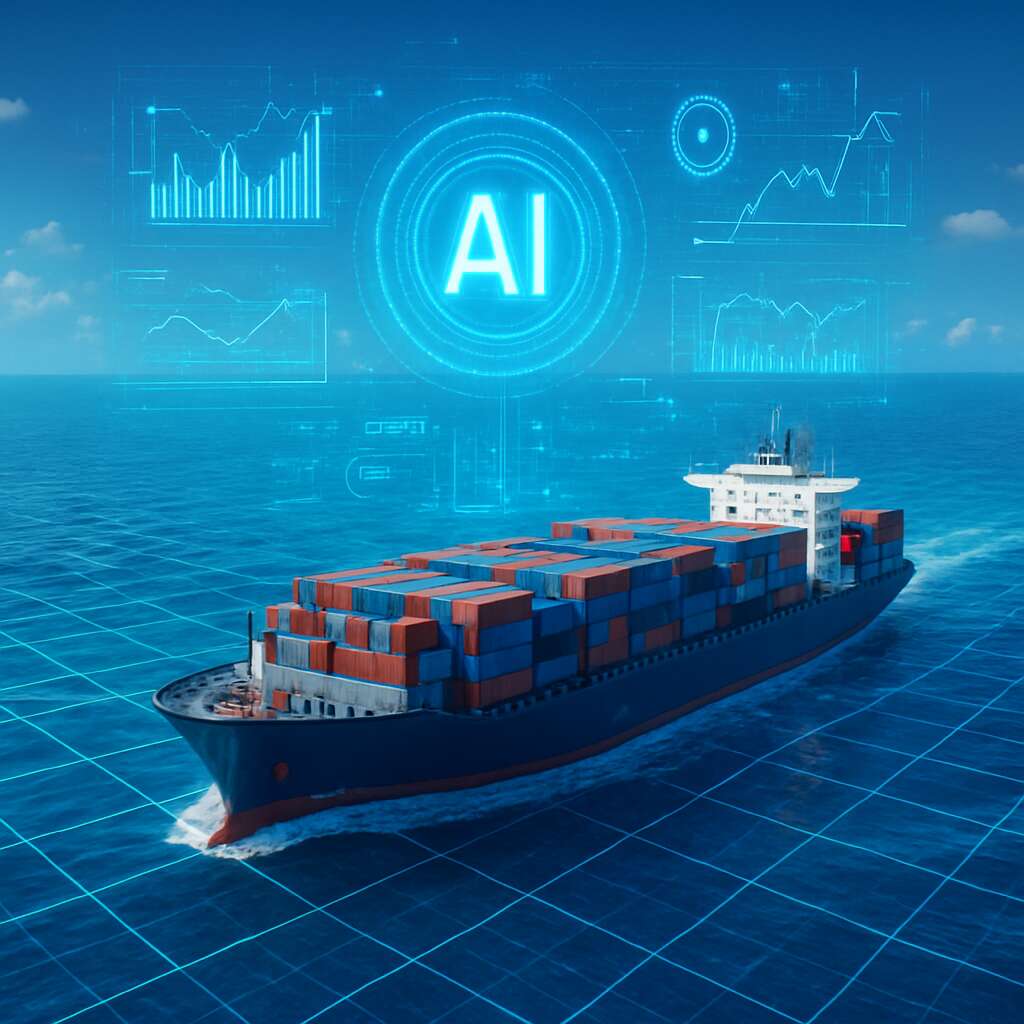
Advancements in Maritime Shipping Through Artificial Intelligence
Integration of AI in Navigation and Routing – How AI algorithms optimize maritime routes for efficiency and safety
Artificial intelligence is reshaping global trade, with AI-Powered Maritime Shipping leading the charge toward smarter, safer navigation. Recent advancements in route optimisation algorithms allow ships to traverse the most efficient paths, reducing fuel consumption and emissions. These AI-driven systems continually analyse weather data, ocean currents, and vessel conditions to adapt routes in real-time, enhancing safety and operational effectiveness.
By integrating AI in navigation, shipping companies can avoid hazards, such as adverse weather, and optimise transit times. This technology uses machine learning models that not only improve with more data but also provide a dynamic response to unpredictable maritime environments. An intelligent routing system might generate a list like this for a given journey:
- Assess weather forecasts
- Analyse current ocean conditions
- Evaluate vessel-specific parameters
- Determine the most energy-efficient route
The real benefit of AI-powered maritime shipping lies in its ability to continuously learn and adapt. As these systems evolve, they offer the promise of safer, more sustainable, and cost-effective maritime logistics, fitting seamlessly into the broader push for digital transformation in shipping management. The integration of AI algorithms into navigation and routing marks a new era for maritime transport—one driven by data, precision, and optimized decision-making.
Predictive Maintenance and Repair – Utilizing AI for proactive vessel maintenance and reducing downtime
In the vast, relentless expanse of the ocean, a silent revolution is unfolding—one driven by the relentless pulse of AI-Powered Maritime Shipping. Ships are no longer solely at the mercy of unpredictable machinery; instead, they are becoming entities of precision, adapting proactively to their environment. Predictive maintenance is transforming the age-old challenge of unexpected failures, anchoring safety in the steady rhythm of artificial intelligence.
By analysing vast amounts of sensor data, AI systems forecast wear and tear before it manifests physically. This foresight allows operators to schedule repairs during optimal windows, significantly reducing costly downtime. The complex dance between engine health, hull integrity, and mechanical systems is now choreographed by AI, turning potential disasters into manageable glitches. It’s a shift from reactive repairs to strategic endurance, heralding an era where vessels operate smoother and safer than ever before.
For example, systems might utilize a list such as:
- Monitoring vibration patterns for early signs of mechanical fatigue
- Assessing corrosion levels through sensor data analysis
- Predicting engine component failures weeks in advance
- Scheduling maintenance during optimal sea conditions to minimise disruption
This approach not only preserves vessel integrity but also significantly enhances the operational lifespan of maritime assets. As AI-Powered Maritime Shipping continues to evolve, the lines between maintenance and innovation blur, allowing shipping companies to navigate through uncertainty with unprecedented confidence. The vessel of tomorrow isn’t just a machine—it’s a digital organism, learning, adapting, and enduring, all thanks to the relentless logic of artificial intelligence.
Automation of Cargo Handling – Implementing AI-driven systems for efficient loading and unloading processes
In the bustling world of global commerce, AI-Powered Maritime Shipping is quietly revolutionising how cargo makes its way across the oceans. One of the most captivating developments? AI-driven automation of cargo handling. Gone are the days of hulking containers waiting patiently for human operators to manhandle them into place. Instead, intelligent systems coordinate seamless, swift, and accurate loading and unloading operations that would make even the most seasoned dockworkers look on in envy.
By employing AI-powered systems, maritime operators can predict exactly how much cargo should be loaded, synchronized with vessel stability calculations, and orchestrated with pinpoint precision. This isn’t just about speed — it’s about transforming a chaotic logistical ballet into a well-rehearsed performance. For those curious, here are ways that AI-driven cargo handling is quietly transforming the scene:
- Automated cranes that learn from past data to optimise lifting sequences
- Sensors that monitor cargo weight and position in real time, preventing mishaps
- Machine learning algorithms that adapt to varying port conditions for smoother operations
- Robotic systems efficiently stacking containers, minimising human error and labour costs
The result? Quicker turnaround times at ports, reduced risk of damage, and an overall enhancement to the efficiency of AI-Powered Maritime Shipping. As these digital brains continue to evolve, the ships of tomorrow will handle cargo with unparalleled finesse, turning what once was an arduous dance into a streamlined symphony of automation and intelligence.
AI in Maritime Safety and Risk Management – Enhancing safety protocols through intelligent monitoring and alerts
Amidst the vast and unpredictable wilderness of the oceans, the steady dawn of AI-Powered Maritime Shipping is transforming safety protocols with a quiet, almost mystical precision. Imagine a guardian cloud, ever-watchful, silently monitoring every vessel’s heartbeat and the treacherous whispers of hidden dangers lurking beneath the waves. That’s the promise of AI in maritime safety and risk management—an invisible force orchestrating a symphony of alerts and insights that keep ships and crews safer than ever before.
At the core of this revolution lie intelligent monitoring systems that interpret data from a constellation of sensors spread across ships and ports. These systems generate timely notifications—alerting crew members to potential hazards such as shifting cargo, turbulent weather, or mechanical anomalies. It’s a digital watchtower, quietly standing guard amid the chaos of the shipping world. To make this orchestration even more elegant, many AI-Powered Maritime Shipping platforms now incorporate
- automatic hazard detection
- real-time risk analysis
- predictive alerts for developing issues
—ensuring rapid responses and preemptive action before small problems escalate into catastrophic events.
With deployments spanning entire fleets, these advancements create an interconnected web of safety that continually learns and adapts. From anomaly detection that flags unusual engine vibrations to environmental sensors that anticipate shifting weather patterns, this symphony of AI-driven insights radically minimizes human error and enhances decision-making. The result is an operational environment where safety isn’t just a protocol but an innate, ever-evolving aspect of the voyage itself—an irreplaceable facet of AI-Powered Maritime Shipping that heralds a new era of maritime resilience.
Operational Efficiency and Cost Reduction with AI
Fuel Consumption Optimization – Using AI models to minimize fuel usage and emissions
In an era where efficiency often delineates the boundary between profit and peril, AI-Powered Maritime Shipping emerges as a beacon of transformation. Recent studies reveal that vessels equipped with AI-driven fuel consumption optimization systems can reduce fuel use by up to 15%, translating to both economic savings and lower emissions—a testament to how technology can reconcile sustainability with profitability.
Leveraging AI models to analyze real-time data allows shipping operators to fine-tune engine performance, weather responses, and route choices, all aimed at minimizing fuel consumption. This intelligent approach doesn’t simply cut costs; it elevates operational excellence. For the shipping industry, where margins are razor-thin, every reduction in fuel use ripples through to a more resilient, environmentally conscious fleet.
- Advanced AI algorithms continuously monitor vessel parameters
- Machine learning predicts optimal speed and fuel mix
- Dynamic adjustments mitigate unnecessary emissions
By integrating these AI-powered solutions, maritime companies can navigate towards greater economic efficiency while championing sustainable practices—creating a future where innovation and responsibility sail harmoniously side by side.
Real-time Data Analytics for Decision Making – Leveraging live data for smarter operations and resource allocation
In the shadowed corridors of the maritime world, where every second counts and the ocean’s secrets are whispered only to the bold, AI-Powered Maritime Shipping anchors itself as the silent harbinger of change. Harnessing real-time data analytics, this technological marvel allows vessels to navigate not just through treacherous waters, but through the labyrinth of operational efficiency and cost reduction.
Imagine a vessel that breathes with the rhythm of the sea, adjusting its course and resource allocation with a consciousness born of machine learning. Live data streams—weather patterns, engine health, cargo metrics—are continuously analysed, enabling smarter decisions in an ocean of uncertainty. This dynamic decision-making process transforms the ship’s operations into a ballet of precision, where resources are allocated with almost poetic accuracy.
- Real-time vessel performance data fuels predictive insights, preempting issues before they manifest.
- Resource management becomes a fluid exchange, with AI algorithms orchestrating optimal fuel use and crew deployment.
- Smart monitoring systems anticipate disruptions, reducing downtime and elevating maritime safety to new heights.
By weaving advanced AI analytics into their fabric, maritime companies are creating fleets that are not only more cost-efficient but also resilient against the unpredictable vagaries of the open sea. AI-Powered Maritime Shipping doesn’t just optimise operations; it transforms them into a dark, poetic symphony of technology and human ingenuity, where every decision is a brushstroke on a vast canvas of resilience and sustainability.
Supply Chain Coordination – AI-enabled synchronization between ports, shipping lines, and logistics providers
In the silent dance of maritime logistics, where time and precision intertwine, AI-Powered Maritime Shipping emerges as a transformative force that harmonizes the chaotic symphony of global trade. Central to this evolution is AI supply chain coordination—an intricate web that captures the pulse of port activities, shipping lines, and logistics providers, weaving their operations into a seamless, synchronized flow. This orchestration not only elevates operational efficiency but also distills the chaos of maritime logistics into a fluid ballet of interconnected processes.
Through sophisticated AI algorithms, real-time coordination enables vessels to synchronize their arrivals and departures with pinpoint accuracy. Ports become more than mere stops; they transform into nodes of predictive harmony, where cargo handling employs AI-driven systems that anticipate peak periods, adjusting resource allocation in real time. This continual adjustment reduces idle times, accelerates turnaround, and minimizes costly delays—each moment lost a silent enemy to efficiency.
In practical terms, the complex ballet can be represented through a simple yet profound list:
- AI-enabled notifications for port congestion, preventing bottlenecks before they occur
- Dynamic scheduling that adjusts loading and unloading sequences based on live data streams
- Optimized vessel routing, considering port logistics, weather conditions, and sea traffic
The result is a fleet that operates with an almost conscious awareness, intuitively adjusting to the ebbs and flows of maritime traffic. This is not merely automation; it is a strategic symphony of intelligence guiding each decision with calculated finesse—a true testament to how AI-Powered Maritime Shipping can redefine resource management. Fuel consumption becomes more than a matter of saving; it morphs into an art form, with AI algorithms orchestrating precise deployment, reducing emissions while maintaining fleet vitality.
Supply chain synchronization reached through AI-enabled platforms transforms the entire maritime landscape into an interconnected entity, where every stakeholder acts with clarity, speed, and agility. The intricate dance of logistics, once fraught with delays and uncertainties, now gleams with the precision of a masterful conductor guiding a complex ensemble—each movement deliberate, each decision a stroke on the vast canvas of maritime resilience. In this new epoch of AI-powered navigation, the maritime domain is no longer a wild sea but a carefully calibrated symphony, echoing the enduring human quest for mastery over the waters.
Automated Scheduling and Crew Management – Streamlining crew assignments and vessel scheduling with AI tools
In the bustling world of maritime logistics, operational efficiency can make the difference between a delay that costs millions and a seamless voyage that inflies confidence. AI-Powered Maritime Shipping has become a game-changer by transforming crew management and vessel scheduling into a finely tuned operation. Automated scheduling handles the complex task of assigning crews based on skill levels, hours of service, and regulatory compliance, often in seconds rather than hours or days.
Vessel scheduling, once an arduous puzzle of manual adjustments, now benefits from AI’s ability to analyse countless variables—weather forecasts, port congestion, cargo prioritisation—and generate optimised itineraries. This streamlining minimizes idle time and ensures ships are deployed precisely when and where they are needed. To illustrate, some companies employ AI tools that generate daily schedules, allowing crews to focus on operational excellence rather than intricate planning. This level of automation enhances safety and crew satisfaction, while also reducing harbour turnaround times.
For small fleets or large shipping conglomerates alike, integrating AI in maritime operations can be summarised through tasks such as:
- Seamless crew assignment automation, respecting labour laws and qualifications
- Dynamic vessel scheduling that adapts to real-time port activity and sea conditions
- Pre-emptive resource allocation for fuel and maintenance needs based on predictive analytics
Optimising these components not only reduces operational costs but also enhances the agility of fleet deployment. The result? A fleet that is not merely functioning but thriving with an almost intuitive grasp of its environment. In the realm of AI-Powered Maritime Shipping, this strategic approach to scheduling and crew management results in a resilient, cost-effective, and environmentally conscious operation—an essential pillar of modern maritime excellence.
AI-Driven Innovations Transforming Maritime Industry
Autonomous Ships and Remote Operations – Development and deployment of unmanned vessels with AI navigation systems
As ships navigate the unpredictable vastness of the ocean, the concept of fully autonomous vessels becomes more tangible than ever before. AI-Powered Maritime Shipping is pushing the boundaries with unmanned vessels that can operate seamlessly through sophisticated AI navigation systems. These smart ships are designed to adapt to changing weather conditions, avoid hazards, and optimize their routes without human intervention, marking a significant leap toward autonomous ships that reimagine maritime logistics.
Remote operations stand at the forefront of this technological revolution, allowing vessels to be monitored and controlled from thousands of miles away. This evolution not only enhances safety but also reduces human error and operational costs. The development and deployment of AI-driven unmanned ships involve integrating extensive sensor networks, machine learning algorithms, and real-time data streams—making the ships smarter and more responsive with each voyage.
- The capacity for AI to interpret complex maritime environments
- Continuous learning from vast datasets for improved navigation accuracy
- Remote command centers coordinating fleet movements with precision
This wave of innovation is transforming the industry’s landscape, paving the way for more efficient, safer, and environmentally-friendly AI-powered maritime shipping solutions. Autonomous ships with AI navigation systems are poised to redefine the maritime industry’s future, hinting at a world where human oversight is complemented—and sometimes replaced—by intelligent machines that better anticipate and react to the unpredictable nature of the seas. Such advancements herald a new era in maritime logistics—one driven by innovation, innovation that is becoming the norm in AI-powered maritime shipping.
Smart Ports and Infrastructure – Implementing AI-powered logistics hubs to facilitate seamless cargo transfer
Amid a landscape where efficiency and innovation collide, AI-Powered Maritime Shipping is transforming the way ports and infrastructure operate. Imagine a bustling logistics hub where every movement is orchestrated by intelligent machines, turning chaos into a harmonious symphony of movement. These AI-powered logistics hubs are not just about automated cargo transfer; they’re about creating a seamless flow of goods, elevating port operations to a new realm of precision and speed.
Implementing AI in these critical nodes means cargo transfer becomes faster, safer, and more reliable. From predictive analytics guiding container handling to real-time data streams optimizing dock assignments, the integration of AI makes every step smarter. Ports are now equipped with intelligent systems that monitor vessel arrivals, automate clearance procedures, and coordinate seamless cargo exchanges — weaving a web of connectivity that enhances overall supply chain agility.
- AI-driven sensor networks track cargo containers with pinpoint accuracy, reducing delays and misplaced freight.
- Automated guided vehicles (AGVs) navigate port yards with grace and agility, minimizing human interference and human error.
- Machine learning algorithms forecast peak periods, enabling dynamic resource allocation—keeping everything fluid and responsive.
These advancements paint a picture of a future where maritime logistics are no longer bottlenecked by traditional processes, but rather propelled forward by intelligent automation. As AI-Powered Maritime Shipping continues to flourish, the fusion of smart infrastructure and advanced data analytics promises a transport ecosystem that is faster, safer, and more sustainable—transforming global trade into a ballet of efficiency and technological wonder.
Enhanced Cargo Security and Tracking – Real-time monitoring using AI to prevent theft and losses
Amid the relentless march of technological advancement, AI-Powered Maritime Shipping emerges as a sentinel of security and precision, fundamentally transforming how goods traverse the globe. With a growing volume of maritime trade—over 80% of world commerce transported via sea—protecting cargo and maintaining accountability becomes paramount. AI-driven innovations forge a new frontier in enhanced cargo security and tracking, weaving complex data streams into an intricate web of real-time monitoring.
Advanced sensor networks, coupled with machine learning algorithms, provide an enduring vigil against theft, tampering, and cargo loss. Intelligent systems track containers with extraordinary accuracy, enabling immediate alerts if anomalies arise—whether a container deviates from its course or the environment within alters unexpectedly. This perceptive vigilance diminishes delays and fortifies the supply chain’s integrity in ways previously deemed unimaginable.
- Real-time alerts initiate swift response protocols to disturbances,
- autonomous tracking systems verify container integrity continuously,
- and data analytics forecast potential vulnerabilities before they escalate.
Such capabilities are not merely abstract technological feats but integral to the safety and reliability of AI-Powered Maritime Shipping operations. As cybersecurity and physical security converge at sea, intelligent analytics serve as the guardian ensuring vessels and cargo withstand both natural and malicious threats. The synergy between automated monitoring and predictive insights elevates industry standards, setting a new bar for security in maritime logistics.
Environmental Monitoring and Compliance – Utilizing AI to track emissions and ensure regulatory adherence
As the maritime industry navigates the turbulent waters of environmental regulations and mounting emission standards, AI-Powered Maritime Shipping emerges as a game-changing force in environmental monitoring and compliance. With over 80% of global trade carried by sea, the stakes for maintaining eco-friendly operations have never been higher. Innovative AI systems now seamlessly track vessel emissions and operational parameters, ensuring ships adhere to stringent regulatory frameworks across the globe.
By harnessing advanced data analytics, AI-powered solutions continuously analyse real-time environmental data, allowing shipping companies to identify potential violations before they occur. One notable aspect is how AI models can predict emissions patterns based on engine performance, weather conditions, and cargo load, enabling proactive adjustments. This predictive capability minimizes environmental impact and helps vessels meet evolving legal standards while safeguarding oceanic ecosystems.
Integrating AI-driven environmental monitoring within the maritime ecosystem also involves streamlining reporting processes. Tools automatically compile compliance reports, reducing manual effort and human error. As regulations tighten, transparency becomes paramount—AI-powered maritime shipping ensures that every vessel can provide accurate, verifiable data during audits, bolstering corporate responsibility and sustainability credentials.
To put it simply, AI not only detects environmental anomalies but also guides ships toward operational decisions that reduce emissions—such as optimal speed adjustments or fuel selection. These intelligent systems, equipped with specialized algorithms, transform the traditional shipping landscape into an environmentally conscious domain, elevating industry standards and setting a new benchmark for sustainable maritime operations.
Challenges and Future Prospects of AI in Maritime Shipping
Regulatory and Ethical Considerations – Navigating legal frameworks and safety standards for AI integration
As AI-Powered Maritime Shipping advances at a remarkable pace, the challenge of navigating complex regulatory and ethical considerations becomes ever more pressing. Ensuring that AI integration complies with international safety standards requires a delicate balance between innovation and responsibility. Regulators across global waters grapple with establishing harmonized legal frameworks, often struggling to keep pace with rapid technological developments.
The future promises a landscape where legal standards evolve alongside AI capabilities, but this evolution demands rigorous safety protocols and transparent accountability. Ethical concerns—such as decision-making autonomy and data privacy—must remain central in shaping AI-Powered Maritime Shipping policies. A practical step is creating unified guidelines that address risk mitigation, crew safety, and environmental impacts.
Considering these aspects early on can prevent potential conflicts and foster a maritime environment where trust and safety are preserved amid automation. As the industry chart’s a course forward, it’s clear that collaborative efforts on both legal and ethical fronts are essential to harness AI’s transformative potential responsibly.
Cybersecurity and Data Privacy – Protecting AI systems from threats and ensuring data security
The vast seas of AI-Powered Maritime Shipping are not just charting a course of technological marvels but also unveiling shadowy whirlpools lurking in the digital depths. The challenge of cybersecurity and data privacy for these sophisticated systems mimics guarding a hidden treasure—one that, if compromised, could unleash chaos across global trade lanes. The stakes are high, and so too are the threats from cyber adversaries seeking to exploit vulnerabilities in vessel control systems or the treasure trove of sensitive data.
Guarding these virtual ports of entry demands relentless vigilance. Implementing layered security protocols—such as encryption, intrusion detection systems, and rigorous access controls—becomes paramount. A breach could not only threaten safety but also cripple fleet operations, unleashing cascading effects that ripple across supply chains. As maritime companies pursue the promise of AI-powered automation, balancing open data sharing with airtight security becomes a delicate dance.
- Embedding AI in cybersecurity measures that adapt and evolve against emerging threats, transforming reactive defense into proactive shield.
Data privacy poses an equally formidable challenge. Ships and ports operate as sprawling digital ecosystems, constantly exchanging information, from cargo manifests to navigational data. Ensuring this torrent of information remains private and intact requires advanced data governance and compliance—especially within the tightly regulated corridors of the United Kingdom. Protecting sensitive data not only preserves operational integrity but also fosters trust among industry stakeholders.
As the horizon of AI in maritime domains expands, so does the importance of developing resilient architectures capable of withstanding cyber onslaughts. In this unfolding saga, the integration of AI-driven cybersecurity with core operational systems forms the backbone of sustainable, secure AI-Powered Maritime Shipping—a promise of safer seas and smarter ports. The voyage ahead is fraught with challenges, yet bursting with possibilities for those daring enough to navigate these murky waters with prudence and foresight.
Technology Adoption and Workforce Impact – Addressing the shift in employment and skill requirements
The dawn of AI-powered maritime shipping signals a transformative shift for the industry—yet it also raises pressing questions about how we adapt our workforce and navigate the path forward. As ships become increasingly automated, the traditional roles of crew and operators are evolving rapidly. This shift isn’t just about technology; it’s about redefining skill requirements across the board.
Workers now face a steep learning curve, needing proficiency in advanced systems like AI algorithms and cybersecurity protocols. As automation takes over routine tasks, maritime professionals are tasked with managing sophisticated AI-driven tools and ensuring seamless integration. This means investing in training programs focused on data analysis, machine learning, and digital infrastructure. Without this, companies risk falling behind—and workers risk obsolescence.
The adoption of AI-Powered Maritime Shipping unearths a set of challenges that extend beyond technology. Resistance from staff hesitant to embrace change, coupled with a shortage of qualified personnel adept in AI and automation, complicates the transition. Some estimates suggest that up to 30% of current maritime jobs could be reshaped or phased out within the next decade.
For the maritime sector to thrive amidst these sweeping changes, a nuanced approach to workforce transition is vital. There’s a growing recognition that reshaping employment patterns should go hand-in-hand with robust training initiatives. This not only mitigates job losses but also positions the industry to harness AI’s full potential.
As we look toward the future, collaboration between industry stakeholders, educational institutions, and policymakers will be essential in navigating the impacts of AI. It’s about creating an ecosystem where innovation and human expertise coexist—propelling AI-Powered Maritime Shipping toward a sustainable and resilient horizon.
Innovation Roadmap and Industry Collaboration – Fostering partnerships for sustainable AI development in maritime sectors
As AI-Powered Maritime Shipping accelerates, industry leaders face a pivotal challenge: fostering sustainable development through collaborative innovation. With the ocean’s vastness and complexity presenting unique hurdles, establishing a comprehensive innovation roadmap becomes paramount. Challenges such as integrating diverse technological systems, navigating regulatory landscapes, and ensuring cybersecurity safeguards demand concerted effort beyond individual companies.
One promising pathway lies in building industry partnerships—alliances that pool resources, expertise, and data to propel AI advancements. By working with educational institutions and government agencies, stakeholders can cultivate a thriving ecosystem that nurtures talent and promotes responsible AI deployment in maritime sectors. Open innovation platforms and shared pilot projects exemplify this collective approach, paving the way for scalable AI solutions.
To concretise these ideas, it’s helpful to consider the following:
- The creation of joint standards and safety protocols that facilitate swift, seamless adoption of AI technologies.
- Shared data repositories that enhance the precision of AI algorithms with rich, diverse inputs.
- Partnerships that incentivise research into next-generation autonomous ships and smart port infrastructure.
Long-term success hinges on frank collaboration—bridging the gap between technological possibilities and regulatory realities—ultimately ensuring that AI-Powered Maritime Shipping not only navigates the turbulent waters of innovation but charts a course toward sustainable growth and resilience.