
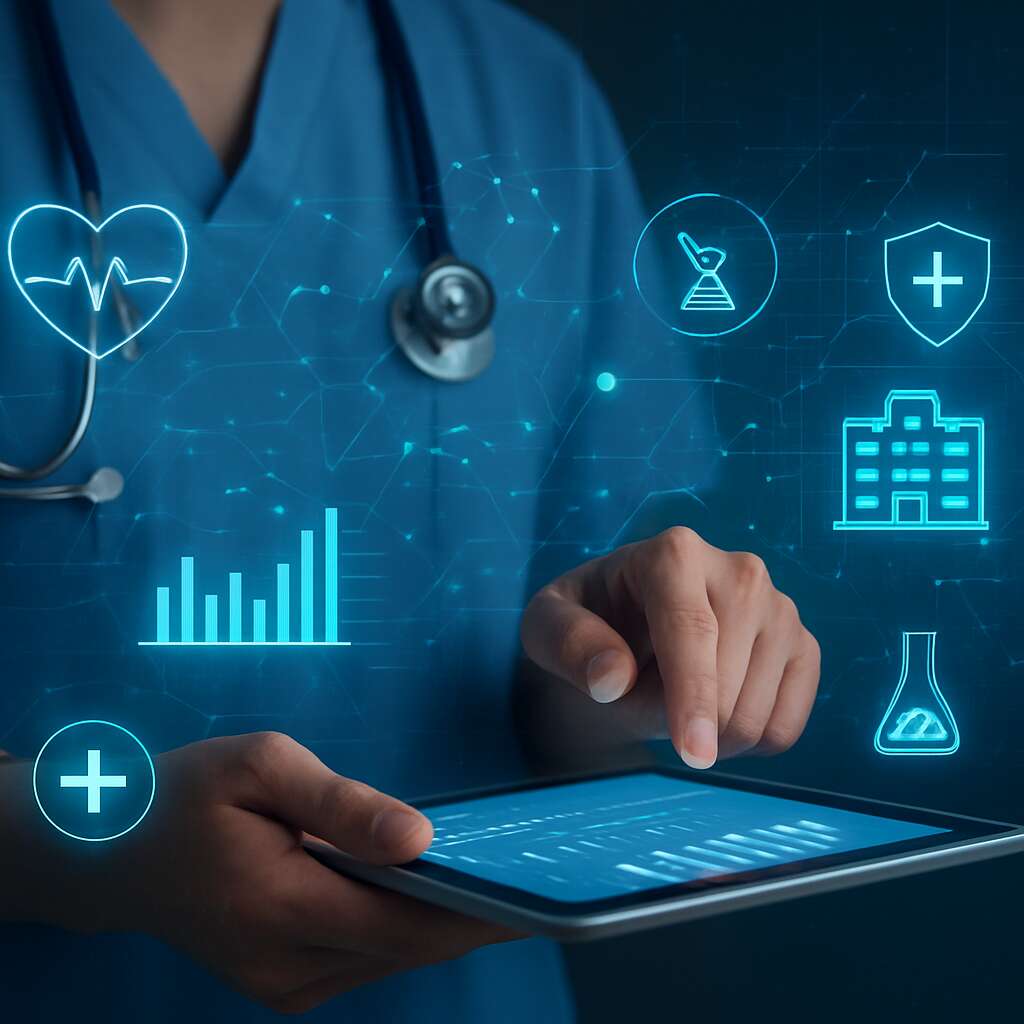
Understanding Digital Biomarkers in Healthcare
Definition and Scope – Exploring what digital biomarkers are and their roles in modern healthcare
Imagine a future where health monitoring is as seamless as checking your smartphone—this is the promise of Digital Biomarkers in Healthcare. At their core, these digital biomarkers are objective, quantifiable physiological and behavioural data collected via digital devices, offering a continuous pulse on an individual’s health status. Unlike traditional methods reliant on sporadic clinical visits, digital biomarkers enable real-time insights that can reveal subtle shifts in health long before symptoms manifest.
In scope, digital biomarkers encompass a wide array of data streams—ranging from activity levels tracked by wearables to heart rate variability captured through mobile apps. Their role in modern healthcare is transformative; they facilitate early diagnosis, inform personalized treatment plans, and enhance remote patient monitoring. As technology advances, their capacity to generate actionable insights becomes ever more refined, positioning digital biomarkers as a cornerstone of precision medicine.
To better understand their applications, consider these common types of digital biomarkers in healthcare:
- Physiological data—such as blood glucose levels, blood pressure, and oxygen saturation
- Behavioural data—like sleep patterns, physical activity, and medication adherence
- Cognitive markers—tracking changes in memory, focus, and mental health status
Types of Digital Biomarkers – Categories such as physiological, behavioral, and environmental digital biomarkers
Understanding the different categories of digital biomarkers in healthcare reveals a fascinating landscape where technology intersects with human biology. These biomarkers fall into distinct groups, each providing unique insights into health and disease progression. For instance, physiological digital biomarkers include blood glucose levels, blood pressure, and oxygen saturation—all vital signs that can now be monitored remotely and continuously through innovative devices.
Behavioral digital biomarkers offer a window into daily habits—think sleep patterns, physical activity, and medication adherence. These behavioral cues often serve as early indicators of underlying health issues and are crucial for tailoring personalized treatment plans. Additionally, environmental digital biomarkers, though less talked about, track factors like air quality or exposure to toxins—elements that can directly influence chronic disease management.
In essence, the power of digital biomarkers in healthcare lies in their ability to capture a diverse array of data streams. An ordered list of key categories might look like this:
- Physiological data – blood glucose, vital signs
- Behavioral data – sleep, activity levels
- Environmental data – air quality, pollution exposure
By harnessing these digital biometrics, healthcare providers can anticipate health trends, intervene sooner, and craft truly personalized therapeutic strategies that reflect the intricate dance between biological systems and lifestyle factors. This seamless integration of data streams is transforming healthcare into a more proactive, adaptive, and precise discipline.
Historical Development – Evolution of digital biomarkers and their integration into health monitoring
The evolution of digital biomarkers in healthcare is a compelling tale of technological ingenuity meeting human necessity. From rudimentary pulse oximeters to sophisticated wearable devices, the journey reflects a relentless pursuit of continuous, real-world health monitoring. Early strides focused on simple physiological measures, but advancements swiftly propelled the field into uncharted territories where behavioral and environmental data became equally vital. These innovations have gradually integrated into clinical workflows, transforming static assessments into dynamic, fluid insights that adapt to the complexities of individual health journeys.
Their transformation was catalyzed by a convergence of sensor technology, data analytics, and computational power. An illustrative example is the development of remote monitoring devices capable of tracking vital signs with unprecedented precision. As these digital biomarkers in healthcare matured, healthcare providers gained the ability to anticipate illnesses before they manifest clinically, thereby shifting the landscape from reactive to proactive medicine. This historical trajectory underscores an ongoing quest to extract meaningful patterns from diverse data streams, unlocking a deeper understanding of health in real-time.
- The adoption of wearable sensors for continuous blood glucose monitoring accelerated this evolution, fostering a more nuanced view of metabolic health.
- Simultaneously, ambient environmental sensors began to reveal how air quality and toxin exposure influence chronic conditions, adding depth to the biomarker mosaic.
- Alongside these technological strides, data integration platforms emerged, enabling seamless analysis of physiological, behavioral, and environmental digital biomarkers in healthcare.
As the landscape of digital biomarkers in healthcare expands, its roots in innovation serve as a testament to a relentless drive towards personalized, predictive health management—an ongoing narrative written through every new device, sensor, and insight gained from real-world data collection. This progression underscores an era where health monitoring ceases to be confined within clinical walls, opening avenues for deeper engagement with individual health trajectories at scale.
Applications in Medical Diagnostics and Monitoring
Chronic Disease Management – Utilizing digital biomarkers to monitor conditions like diabetes, cardiovascular diseases, and Parkinson’s
Monitoring chronic diseases like diabetes, cardiovascular conditions, and Parkinson’s has become more precise thanks to digital biomarkers in healthcare. These subtle indicators, collected continuously through wearable devices or smartphone apps, reveal real-time changes in health status. For example, fluctuations in blood glucose levels or heart rate variability can alert healthcare providers to potential issues before symptoms emerge.
Digital biomarkers in healthcare are transforming disease management. They enable personalized treatment plans by providing detailed data on patient responses to therapy. With such granular insights, clinicians can refine interventions and improve patient outcomes.
In practice, digital biomarkers are used in various ways:
- Tracking glucose levels in diabetic patients
- Monitoring heart rhythm in cardiovascular diseases
- Assessing motor function in Parkinson’s patients
This technology fosters a new era of continuous, non-invasive health monitoring, more accurately predicting health trajectories and streamlining chronic disease management.
Remote Patient Monitoring – Role of digital biomarkers in telehealth and virtual care settings
Digital biomarkers in healthcare have begun to revolutionise how we monitor and diagnose health conditions remotely. In clinical settings, these subtle indicators—captured through wearable devices and smartphone apps—serve as a modern-day crystal ball, offering glimpses into a patient’s real-time health status. This technology allows clinicians to track changes in vital signs and behavioural patterns with unprecedented accuracy, all from a distance.
In telehealth and virtual care environments, digital biomarkers in healthcare enable seamless remote patient monitoring. Patients no longer need to be tethered to clinic walls; instead, continuous data collection informs clinicians immediately when something’s amiss. This proactive approach means early intervention becomes possible—sometimes even before patients notice symptoms. Listeners are often surprised to learn just how much predictive power lies within these tiny data points:
- Fluctuations in blood pressure or heart rate variability
- Changes in activity levels or sleep patterns
- Variations in speech or motor functions
By integrating digital biomarkers into telehealth platforms, healthcare providers can generate detailed health trajectories that inform personalized treatment strategies. The ability to diagnose, track, and respond swiftly transforms the landscape of healthcare—making remote monitoring more than a convenience, but a safeguard in today’s digitally connected world.
Personalized Treatment Plans – Enhancing treatment customization through continuous digital data collection
Digital biomarkers in healthcare are transforming the way clinicians approach diagnosis and treatment. Continuous digital data collection provides a richer, more detailed picture of a patient’s health, enabling highly personalised treatment plans. For chronic disease management—such as diabetes, cardiovascular conditions, and Parkinson’s—this approach ensures that interventions can be precisely tailored to individual needs.
These tiny data points—like fluctuations in blood pressure or subtle changes in sleep patterns—offer predictive insights that often go unnoticed through traditional methods. By monitoring behavioral and physiological digital biomarkers in real-time, healthcare providers can identify early warning signs and respond proactively. This not only improves health outcomes but also saves valuable time and resources by preventing unnecessary hospital visits.
Incorporating digital biomarkers into diagnostic processes creates a new standard of care, turning routine monitoring into an active, guided journey towards optimal health. Whether through wearable devices or smartphone apps, the integration of digital biomarkers in healthcare refines treatment customization in ways previously unimaginable.
Early Detection and Predictive Analytics – Using digital biomarkers to forecast health events and prevent escalation
In a world where early intervention can mean the difference between life and lasting impairment, digital biomarkers in healthcare offer a glimpse into an entirely new realm of predictive medicine. These tiny data points—captured seamlessly through wearable devices, smartphones, and other digital tools—are revolutionising diagnostic capabilities. By harnessing real-time information such as heart rate variability or subtle cognitive shifts, clinicians can forecast health events long before symptoms become apparent.
This anticipatory approach is transforming how we navigate complex health landscapes. For instance, monitoring behavioral and physiological digital biomarkers enables proactive alerts—signaling potential deterioration in chronic conditions or the onset of acute episodes. This isn’t just about data collection; it’s about unlocking predictive analytics that turn mere numbers into actionable insights, allowing healthcare providers to intervene early and prevent escalation.
- Determining the subtle signs that precede health crises.
- Utilising continuous data streams to refine early detection methods.
- Applying advanced algorithms to forecast disease progression with uncanny precision.
In the realm of telehealth and remote patient monitoring, the importance of digital biomarkers in healthcare becomes particularly apparent. They provide an unmissable view of a patient’s health outside clinical settings, acting as silent sentinels alerting to potential risks. Whether predicting a cardiac episode or spotting irregular sleep patterns that could lead to mental health issues, these biomarkers refine the art of early detection and predictive analytics, making preventative care smarter and more targeted than ever before.
Technologies Enabling Digital Biomarkers
Wearable Devices and Sensors – Types of wearables that collect digital biomarker data
In the symphony of modern medicine, wearable devices and sensors compose the delicate notes that bring digital biomarkers in healthcare to life. These technological marvels are not just gadgets but vital organs of a new digital health ecosystem—tracking our physiological whispers and behavioral murmurs in real time. From sleek wristbands that monitor heart rhythm to advanced patches that gauge glucose levels, wearables have become the sentinels of personal health data.
The diverse landscape of wearables includes various structures, each designed to capture specific digital biomarkers seamlessly. Among them, smartwatches, fitness trackers, and implantable sensors stand out for their ability to record vital signs effortlessly. These devices create a continuous stream of actionable insights helpful in diagnosing conditions early, managing chronic diseases, and tailoring personalized treatments. The evolution of these tools marks a revolution in healthcare—transforming passive patients into active participants in their health journey.
Mobile Health Apps – Applications that facilitate real-time health data tracking
In our hyper-connected world, mobile health apps are rewriting the script for how we monitor health. These applications aren’t just glorified step counters; they’re the frontline soldiers in the fight for early detection and personalized care. By harnessing the power of digital biomarkers in healthcare, these apps serve as personal health detectives, gathering real-time data that can detect anomalies faster than you can say “doctor’s appointment”.
From tracking heart rate variability to monitoring sleep patterns, mobile health apps convert everyday devices into powerful health tools. They use embedded sensors and data analytics to analyze behavioral and physiological digital biomarkers, giving users clear insight into their health status on demand. Whether it’s an app that records your mood fluctuations or logs your exercise routine, they help transform raw data into actionable health insights—no appointment needed!
Some of the most innovative applications employ
- machine learning algorithms
- cloud connectivity
- secure data encryption
to provide a seamless, user-friendly platform. These features empower both patients and clinicians, enabling continuous health monitoring without the hassle of frequent clinic visits or invasive testing. When digital biomarkers in healthcare are integrated into mobile health apps, the potential for early diagnosis and more tailored treatments reaches new heights, creating a landscape where health management is as effortless as scrolling through your phone.
Data Analytics and Machine Learning – Techniques for processing and interpreting digital biomarker information
Behind the scenes of cutting-edge health monitoring, sophisticated data analytics and machine learning are transforming digital biomarkers in healthcare into vital tools for clinicians and patients alike. These technologies process vast volumes of real-time data collected from wearable devices, sensors, and mobile health apps, converting raw signals into meaningful insights. This transformation depends on advanced algorithms capable of discerning subtle patterns and anomalies within complex datasets, often hidden to the naked eye.
At the heart of this evolution lie techniques such as supervised and unsupervised learning, deep neural networks, and anomaly detection systems. These methods sift through digital biomarkers—whether measuring heart rate variability, gait disturbances, or sleep irregularities—and identify early warning signs of deteriorating health. To make sense of this deluge of information, data scientists leverage tools like natural language processing and clustering methods, which help clinicians interpret physiological and behavioral digital biomarkers with greater precision.
- Automated pattern recognition algorithms that learn from historical health data to improve diagnostic accuracy over time.
- Predictive models that forecast potential health events, enabling preemptive intervention and avoiding costly hospital admissions.
- Real-time analytics platforms that aggregate sensor data, delivering instant feedback to users and healthcare providers, fostering proactive care strategies.
These technological advancements in processing and interpreting digital biomarkers in healthcare not only enhance diagnostic capabilities but also pave the way for truly personalised medicine. As machine learning models evolve, so does our ability to anticipate health fluctuations, tailor treatments, and ultimately, improve patient outcomes—all driven by the unseen power of intelligent data analytics embedded within digital health solutions.
Data Security and Privacy – Ensuring patient confidentiality in digital biomarker data collection
In the realm of digital biomarkers in healthcare, safeguarding patient confidentiality is both an art and a science—an intricate dance that ensures the trustworthiness of health data while respecting individual privacy. As these sensitive streams of physiological and behavioral signals flow across interconnected devices, the boundary between innovation and confidentiality must be carefully maintained. The sophistication of data security technologies encourages a sense of security, essential for widespread adoption and meaningful clinical integration.
Encrypting data during transmission and storage forms the backbone of digital biomarkers in healthcare security protocols. Techniques such as end-to-end encryption and secure authentication methods shield digital health data from prying eyes. Additionally, anonymisation methods strip identifiable information, enabling data to serve research and clinical purposes without compromising privacy. The implementation of robust access controls plays a crucial role—granting permission only to authorised personnel—helping prevent unauthorised breaches.
- Advanced blockchain systems for traceable, tamper-proof data exchanges
- Artificial intelligence-driven anomaly detection to identify suspicious data access or tampering
- Compliance with strict data protection standards, like GDPR in the UK, ensures ethical stewardship of digital health data
The seamless integration of these security measures engenders a foundation of trust, allowing digital biomarkers in healthcare to flourish with confidence. As technology evolves, so too does the necessity for vigilant data privacy frameworks—transforming digital health innovations into guardians of both wellness and confidentiality.
Challenges and Future Outlook
Standardization and Validation – Need for universally accepted methods for digital biomarker measurement
As digital health innovations surge forward, there’s a growing chorus about the challenges in standardizing digital biomarkers in healthcare. Unlike traditional lab tests with established protocols, digital biomarkers in healthcare are a wild west—varied devices, inconsistent data collection, and diverse measurement methods make it tricky to sit everyone at the same table. Without a universally accepted measurement approach, comparing data across different platforms feels like trying to swap a Fitbit for a smartwatch and expecting the data to match perfectly. This inconsistency hampers clinical validation and stifles widespread adoption.
To quell the chaos, industry bodies and regulators are calling for rigorous validation standards—think of it as a hygiene inspection for digital data collection. Harmonized frameworks, open data standards, and interoperability are the future, enabling healthcare providers to trust digital biomarkers in healthcare as they do traditional diagnostics. The challenge is significant, but if achieved, it paves the way for more reliable remote patient monitoring and consistent personalisation of treatments. A future where digital biomarkers in healthcare are as standardised as a blood pressure cuff seems tantalisingly within reach, provided these validation hurdles are cleared with clarity and precision.
Regulatory Hurdles – Legal considerations and approval pathways for digital biomarker tools
As the realm of digital biomarkers in healthcare continues to evolve, the path toward regulatory approval remains one of the most formidable hurdles. Legal considerations surrounding data security and patient privacy must be navigated with careful finesse, ensuring that digital health tools abide by the intricate web of legislation. Yet, even the most innovative digital biomarkers face the labyrinth of approval pathways, with each country offering its distinct regulatory maze.
In the United Kingdom, for instance, gaining a CE mark or MHRA approval for digital biomarker tools involves demonstrating safety, efficacy, and reliability—a process that can feel as delicate as threading a needle in a storm. The challenge often lies in aligning novel digital health solutions with existing medical device regulations, which were not initially designed with digital biomarkers in mind. To ease this transition, industry players are calling for clearer, harmonized standards that bridge the gap between innovation and regulation. Without this clarity, widespread adoption risks being slowed to a crawl.
For digital biomarkers in healthcare to truly flourish, establishing robust legal pathways is paramount. Criteria that streamline approval processes while safeguarding patient interests will be the cornerstone of future breakthroughs. As these legal hurdles are gradually surmounted, a landscape where digital biomarkers serve seamlessly within clinical practice draws tantalisingly closer. The promise of digital biomarkers transforming healthcare hinges on a regulatory environment that values both innovation and safety—an intriguing dance of regulation and discovery.
Integration with Healthcare Systems – Challenges in incorporating digital biomarkers into existing clinical workflows
Integration of digital biomarkers in healthcare faces a labyrinth of challenges that test the resilience and adaptability of current clinical workflows. Many healthcare providers find themselves at the crossroads, fumbling to incorporate continuous digital data streams without disrupting established routines. The fragmentation across different systems and the lack of standardized protocols threaten to turn what should be a symphony of innovation into a cacophony of disjointed efforts.
One obstacle lies in ensuring compatibility with existing electronic health records (EHRs), which often operate in silos. Without seamless interoperability, digital biomarkers risk becoming isolated data points rather than integral elements of patient care. To navigate these hurdles, some organizations are adopting modular solutions that allow gradual integration, accompanied by a focused effort on training staff to interpret new data types authentically.
- Aligning digital health tools with clinical decision-making processes
- Addressing digital literacy gaps among healthcare professionals
- Adjusting workflows to accommodate real-time data inflow
The future of integrating digital biomarkers in healthcare depends on overcoming these hurdles through collaborative standards, better data architecture, and fostering a culture receptive to continuous digital health innovation. Only then can the promise of digital biomarkers in healthcare truly unfold, weaving seamlessly into the fabric of daily clinical practice.
Emerging Trends and Innovations – Future advancements, including AI integration and patient empowerment
As technology continues to weave itself into the fabric of healthcare, the horizon of digital biomarkers in healthcare gleams with promise—and challenge. The future of this field is poised for revolutionary shifts driven by artificial intelligence integration and an empowering shift towards patient-centric models. Imagine AI algorithms that not only interpret vast streams of real-time health data but also predict health events before symptoms even surface. This convergence opens avenues for advanced predictive analytics, transforming how clinicians monitor and preempt chronic conditions.
Emerging trends
are steering toward a landscape where wearable devices and sensors play a pivotal role. With the advent of next-generation wearables, digital biomarkers in healthcare will become more precise, seamless, and less intrusive—blurring the line between daily routine and health surveillance. Meanwhile, modular solutions and standardized protocols aim to whip system fragmentation into shape, paving the way for a unified data architecture. This evolution promises more cohesive integration into clinical workflows and, ultimately, a more holistic approach to patient care.
Patients themselves are becoming active collaborators, facilitated by mobile health apps that offer personalized insights and foster a proactive stance on health management. The push for regulatory clarity and validation processes continues, as innovations like AI-driven decision support and adaptive algorithms gain footholds in clinical environments. As these technologies mature, interdisciplinary collaboration and a shared commitment to data security will be vital. Together, these developments herald a future where digital biomarkers in healthcare are not just tools— they are the cornerstone of precision, prevention, and participatory medicine.