
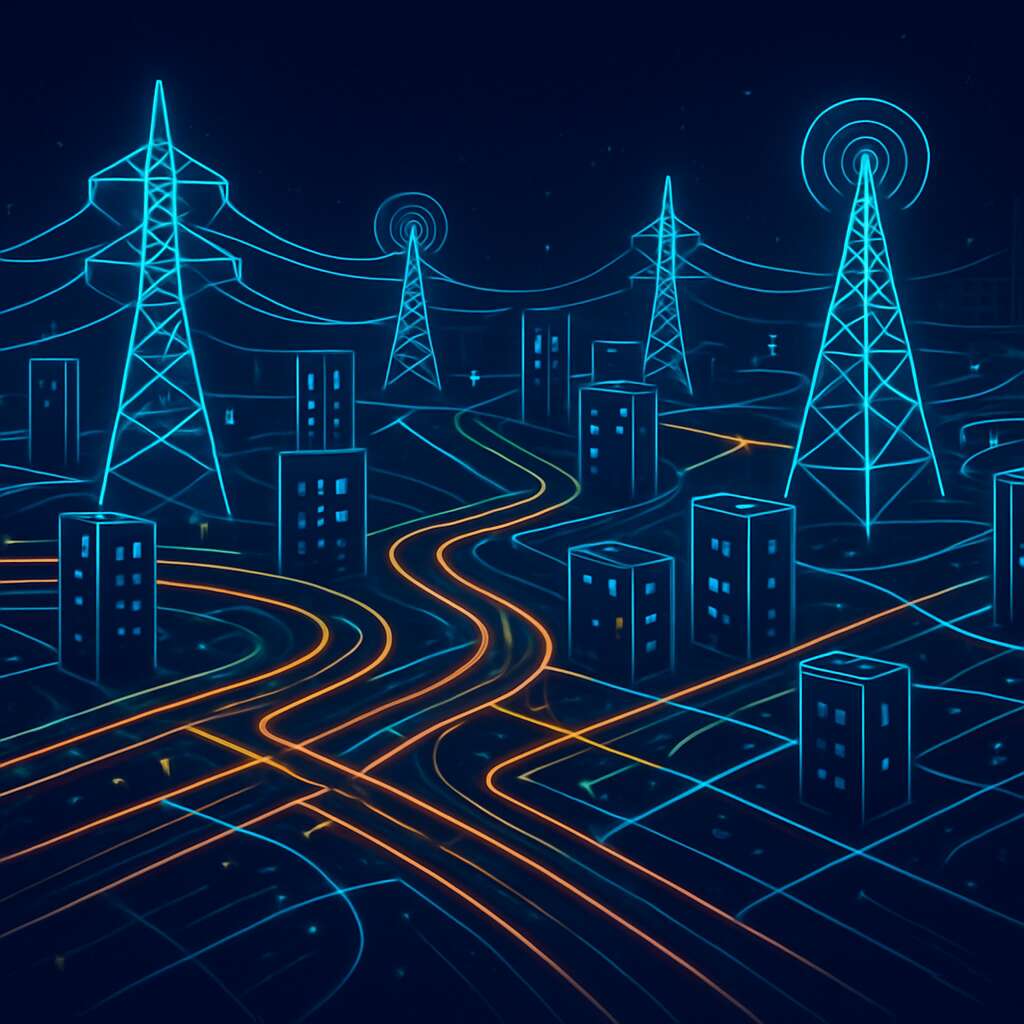
Understanding Decentralized Physical Infrastructure Networks
Introduction to Decentralized Physical Infrastructure – Defining decentralized physical infrastructure and its core principles
Decentralized physical infrastructure networks are transforming how communities share resources and maintain systems that are vital for daily life. Unlike traditional models relying on central authority or single points of failure, these networks operate on the principle of distributed control, where equipment and services are interconnected across multiple locations. This decentralization fosters resilience, ensuring that disruptions in one part of the network do not halt the entire system.
At the heart of Decentralized Physical Infrastructure Networks is the idea of empowering local stakeholders while reducing dependency on large corporations or government agencies. This shift creates a more democratic and transparent environment. By leveraging peer-to-peer collaboration, these networks can dynamically adapt to changing needs—whether supporting rural areas or urban communities—without the constraints of centralized governance.
Building on core principles, Decentralized Physical Infrastructure Networks often utilize:
- Distributed data management
- Local resource sharing
- Open participation models
In essence, they represent an innovative approach to creating sustainable, flexible, and community-driven infrastructure systems that challenge existing paradigms of physical resource distribution.
Components and Architecture – Key components such as nodes, sensors, and hardware, along with architectural design
Understanding the intricate components that form Decentralized Physical Infrastructure Networks reveals a fascinating mosaic of interconnected elements working in harmony. At the core are nodes, which serve as the vital points of data exchange and resource sharing—think of them as the bustling hubs in a sprawling urban map. These nodes are supported by sensors, tiny yet powerful devices that continuously feed real-time information into the network, enabling it to respond dynamically to changing conditions. Hardware components are equally pivotal; robust equipment such as routers, switches, and controllers form the backbone of the entire infrastructure, ensuring seamless connectivity across diverse physical locations.
Architecturally, Decentralized Physical Infrastructure Networks prioritise resilience and scalability. Their design often employs a distributed approach that eliminates single points of failure, making the system inherently resistant to disruptions. This modular architecture supports the integration of local resource sharing—where communities can deploy and manage resources independently, fostering a democratic model of infrastructure management.
This architecture often includes
- distributed data management systems
- interconnected hardware nodes
- embedded sensors for real-time monitoring
to facilitate continuous operation and transparency. Such components work in concert, forming a cohesive ecosystem that empowers communities to operate sustainable, adaptable, and community-driven infrastructure systems. For Decentralized Physical Infrastructure Networks, the careful selection and placement of these core components ensure a resilient and efficient network—ready to thrive amid rapid technological and environmental changes.
Comparison with Traditional Infrastructure – Differences between centralized and decentralized models, highlighting advantages and limitations
Decentralized Physical Infrastructure Networks stand in stark contrast to traditional, centralized systems—reminiscent of a city’s sprawling grid versus a single, towering skyscraper. While centralized infrastructure relies on a core hub controlling data flow and resource distribution, decentralized models distribute authority across multiple nodes. This shift not only enhances resilience—reducing the vulnerability to single points of failure—it also champions local empowerment.
One of the standout advantages of Decentralized Physical Infrastructure Networks is their adaptability. Unlike rigid, top-heavy systems, these networks are inherently flexible, capable of dynamically responding to environmental or technological changes. Yet, they aren’t without limitations—such as the complexity of managing interconnected components and ensuring consistent data integrity across dispersed nodes. When carefully designed, however, the decentralized approach fosters innovation and democratizes access to infrastructure.
- Resilience through distributed control
- Enhanced community engagement
- Reduced dependency on central authorities
This comparison accentuates how Decentralized Physical Infrastructure Networks are not just a technological evolution but a social shift—particularly in an era where adaptability and local autonomy matter more than ever. While traditional systems excel in simplicity, the decentralized model offers a nuanced balance between complexity and resilience, making it a compelling blueprint for future infrastructure developments.
Historical Evolution and Trends – Evolution of infrastructure networks leading to decentralization, current industry trends
The evolution of infrastructure networks reveals a clear shift towards decentralization, driven by technological advancements and the need for greater resilience. Historically, large-scale centralized systems dominated, providing uniformity but often risking single points of failure. As industries recognised these vulnerabilities, the movement toward Decentralized Physical Infrastructure Networks gained momentum. Today’s industry trends reflect a focus on distributed control, with innovations like blockchain and distributed sensors enabling real-time coordination across multiple nodes.
Decentralized Physical Infrastructure Networks are becoming more prevalent in sectors such as energy, telecommunications, and smart cities. These networks promote local autonomy and create more resilient systems capable of adapting quickly to environmental or technological changes. Companies are investing heavily in components that allow for decentralised decision-making and resource management. A typical trend includes:
- Integration of IoT devices for real-time data collection
- Use of blockchain for secure, transparent operations
- Distributed energy resources to decentralize power generation
Such trends point toward a future where Decentralized Physical Infrastructure Networks are not just an alternative but a standard, transforming how communities and industries manage their most vital resources. As decentralization becomes a defining feature of modern infrastructure, the industry is witnessing a paradigm shift—one focused on resilience, efficiency, and local empowerment.
Key Technologies Enabling Decentralization
Blockchain and Distributed Ledger Technologies – Role of blockchain in ensuring transparency, security, and trust
In an era where trust and transparency are paramount, blockchain and distributed ledger technologies serve as the backbone for Decentralized Physical Infrastructure Networks. These innovations introduce a new paradigm for managing physical assets that was once governed solely by centralized authorities. By providing an immutable record of transactions and interactions, blockchain ensures that every data point is tamper-proof, fostering an environment of security that is difficult to breach.
The distributed nature of these technologies means that no single entity has complete control; instead, a network of nodes collaboratively verifies and records information. This decentralization mitigates risks associated with single points of failure, enhancing resilience across physical infrastructure components. For instance, a decentralized ledger can track the lifecycle of hardware within an infrastructure network, ensuring authenticity and accountability.
A typical architecture for Decentralized Physical Infrastructure Networks might include sensors, hardware, and smart contracts that automate processes—all interconnected through blockchain protocols. This layered approach facilitates transparent operations, streamlined decision-making, and an overall trust-infused ecosystem. As the landscape evolves, blockchain remains instrumental in embedding security and transparency into the very essence of decentralized infrastructure.
Internet of Things (IoT) Devices – Integration of IoT for real-time monitoring and management
In the realm of Decentralized Physical Infrastructure Networks, nothing is as transformative as the seamless integration of Internet of Things (IoT) devices. These miniature sentinels, spread across sprawling networks, serve as the vigilant eyes and ears, constantly surveilling the environment and relaying real-time data. Imagine a city where every turn, every bridge, and every power grid is connected through an intricate web of sensors that communicate autonomously, forging a living, breathing infrastructure. This symphony of interconnected devices transforms traditional management by making it more dynamic and resilient.
At the heart of these networks, IoT devices enable a level of monitoring and management that was once unimaginable. They collect crucial data—temperature, humidity, load levels, machinery health—and transmit it securely through blockchain protocols. This creates an immutable ledger of operational states, ensuring accountability and transparency across the entire infrastructure. Whether it’s tracking hardware life cycles or verifying the authenticity of components, IoT integration fortifies each node within Decentralized Physical Infrastructure Networks.
Implementation often involves the use of
- smart sensors embedded into hardware
- connected actuator devices
- automated control systems driven by blockchain-based smart contracts
allowing decentralized decision-making to flourish. This layered setup not only enhances security but also promotes a more resilient infrastructure by distributing control among multiple nodes, reducing susceptibility to single points of failure. As the technology matures, IoT devices remain the pulsating heart, empowering Decentralized Physical Infrastructure Networks to operate efficiently and transparently amidst an ever-changing environment.
Edge Computing and Distributed Data Processing – Decentralized data processing to reduce latency and improve efficiency
Edge computing and distributed data processing are revolutionizing how Decentralized Physical Infrastructure Networks operate in the modern era. By shifting data processing closer to the source—where the action happens—these networks cut through the latency that once hampered real-time decision-making. Instead of funneling every byte of information to a distant data centre, local nodes handle the heavy lifting, creating a seamless flow of operational intelligence.
This approach enables faster responses, reduced reliance on centralized servers, and a resilient fabric that adapts swiftly to environmental changes. It’s as if the infrastructure breathes with a pulse—each node making autonomous decisions based on immediate data, yet still part of a larger, transparent ecosystem. Such decentralization not only accelerates operational efficiency but also diminishes vulnerabilities—a critical advantage in maintaining system integrity.
- Distributed data processing reduces bottlenecks.
- It enhances system efficiency through localized computation.
- And it fosters a resilient infrastructure, resistant to single points of failure.
By integrating this layered data architecture, Decentralized Physical Infrastructure Networks amplify their capacity to adapt dynamically—almost intuitively—carving a future where infrastructure is both intelligent and self-sustaining. The evolution toward decentralization signals a new chapter—one where agility and transparency reign, powered by the silent, constant flow of data processed right at the edge.
Security Protocols and Privacy Measures – Ensuring secure communication and protecting sensitive data across decentralized nodes
Security protocols and privacy measures are the backbone of Decentralized Physical Infrastructure Networks. As these networks expand, safeguarding data and maintaining secure communication become more complex—and more critical. Innovative encryption methods and continuous authentication protocols help ensure that sensitive information remains protected, even as data travels across multiple nodes.
A layered approach to security reduces vulnerabilities. This includes the use of blockchain technology, which creates a transparent, tamper-proof record of transactions. Blockchain’s decentralised ledger enhances trust, supports auditability, and diminishes the risk of cyberattacks—vital features for the integrity of decentralized networks.
For privacy, deploying zero-knowledge proofs and data anonymization techniques helps keep individual data secure while still enabling meaningful analysis. Such measures uphold privacy standards and compliance, preventing sensitive information from exposure.
- End-to-end encryption ensures data remains confidential across all nodes.
- Decentralized identity solutions verify authenticity without compromising privacy.
- Distributed ledger technology provides transparency and trust at every step.
Through these layers of security and privacy, Decentralized Physical Infrastructure Networks can operate with confidence, safeguarding user data and maintaining operational resilience in an increasingly interconnected world.
Applications and Use Cases of Decentralized Infrastructure Networks
Smart City Infrastructure – Management of urban utilities, traffic systems, and public services
Decentralized Physical Infrastructure Networks are transforming how cities operate, offering innovative solutions for urban management. These networks integrate IoT devices and sensors to create a resilient and adaptive system, capable of managing utilities, traffic, and public services more efficiently. Unlike traditional models, decentralized infrastructure empowers local nodes to autonomously process data, reducing reliance on central authorities and enhancing overall responsiveness.
In smart city applications, this means improved utility management—such as water, electricity, and waste systems—delivered with a level of precision that maximizes resource efficiency. Traffic systems benefit from real-time data sharing among decentralized nodes, helping reduce congestion and pollution. Public services, including emergency response and sanitation, become more agile when managed through an interconnected network of smart devices.
By embedding blockchain technology into decentralized physical infrastructure, municipalities can ensure the security, transparency, and trust necessary for sensitive operations. The decentralized approach also enables scalable, flexible solutions that evolve alongside urban growth and technological advancements, exemplifying how Decentralized Physical Infrastructure Networks can reimagine city landscapes for the future.
Energy Grid Management – Decentralized control of renewable energy sources and smart grids
In a world yearning for resilient energy systems, Decentralized Physical Infrastructure Networks emerge as a shimmering beacon of hope, transforming how we harness and distribute power. Imagine a grid where renewable sources—solar panels, wind turbines, and microgrids—are interconnected through decentralized control, creating a symphony of autonomous energy management. This decentralization reduces vulnerabilities inherent in traditional, centrally controlled grids, empowering communities to become active participants rather than passive consumers.
These networks facilitate real-time balancing of supply and demand, seamlessly integrating diverse energy sources. Smart meters and IoT devices communicate across decentralized nodes, enabling granular control over energy flows that adapt to weather patterns and consumption habits. A distributed ledger ensures transparency and security, fostering trust among stakeholders. The result? An efficient, responsive energy ecosystem that evolves in harmony with technological advances and environmental imperatives. In essence, Decentralized Physical Infrastructure Networks redefine our relationship with energy, shaping a sustainable future rooted in innovation and collaboration.
Supply Chain and Logistics – Enhanced tracking, transparency, and resilience in supply chains
Transforming Supply Chains with Decentralized Physical Infrastructure Networks
In an era where supply chains are the heartbeat of our global economy, a seismic shift is unfolding. Decentralized Physical Infrastructure Networks are orchestrating a new wave of transparency, resilience, and efficiency. Imagine a logistics ecosystem where each parcel, container, or vehicle is meticulously tracked through a web of interconnected nodes, sensors, and distributed ledgers—each working in harmony without reliance on a single point of failure. This decentralization acts as an invisible guardian, safeguarding against disruptions and fostering trust at every stage of the journey.
One of the most remarkable applications of Decentralized Physical Infrastructure Networks in supply chain management lies in enhanced tracking capabilities. By integrating IoT devices across transportation fleets and storage facilities, stakeholders gain real-time insights into cargo location, environmental conditions, and shipment status. This granular visibility slashes delays, reduces theft, and mitigates losses, transforming how goods move across borders.
Resilience becomes a natural byproduct of decentralization. Instead of a central database vulnerable to cyberattacks or system failures, distributed ledgers provide an immutable record of every transaction—ensuring data integrity and fostering stakeholder trust. Here’s how these networks reshape logistics:
- Decentralized nodes enable seamless coordination between suppliers, carriers, and retailers.
- Smart contracts automate payment release upon delivery verification, reducing administrative overhead.
- Blockchain-backed provenance ensures product authenticity and compliance with regulations.
Decentralized Physical Infrastructure Networks redefine the very fabric of supply chain and logistics operations. They empower industries to adapt swiftly to disruptions, maintain unbreakable supply lines, and foster transparency that inspires consumer confidence worldwide. As technology continues to evolve, harnessing decentralization will become the cornerstone of resilient, intelligent supply chains in the United Kingdom and beyond.
Environmental Monitoring – Distributed sensors for climate data, pollution tracking, and resource management
In a world where environmental crises seem to escalate faster than a toddler on sugar, deploying resilient and transparent systems for climate data collection isn’t just clever — it’s necessary. Decentralized Physical Infrastructure Networks have emerged as an avant-garde approach to environmental monitoring, transforming how we track pollution, weather patterns, and resource usage. With distributed sensors scattered across urban centres, remote regions, and even the oceans, these networks create a tapestry of real-time data that would make even the most obsessive weather nerd swoon.
Imagine a web of interconnected sensors tirelessly gathering data on air quality, water purity, and biodiversity health — all backed by the security and transparency that blockchain technology offers. This isn’t science fiction; it’s the backbone of modern environmental management. These decentralized networks enable the aggregation of environmental data at a granular level, making pollution spikes and climate anomalies easily identifiable and trackable.
- Distributed sensors that relay environmental variables continuously, giving stakeholders an accurate pulse on local and global ecosystems.
- Blockchain integration to secure data provenance, proving that pollution levels haven’t been rigged or manipulated — because trust matters, even in environmental science.
- Edge computing devices that process data locally, reducing latency and ensuring rapid response times for hazards like chemical leaks or wildfires.
Decentralized Physical Infrastructure Networks make resource management more intuitive by informing sustainable practices and policy decisions with reliable data streams. Whether it’s monitoring urban air quality or tracking deforestation in remote forests, these networks provide an immutable record that can be audited and shared securely. The potential to harness this technology not only supports environmental protection but also empowers communities and governments to act swiftly on climate challenges without waiting for centralized authorities to catch up. All in a day’s work for the marvel that is the decentralized infrastructure revolution!
Telecommunications and Network Connectivity – Distributed networks for improved coverage, redundancy, and resilience
Decentralized Physical Infrastructure Networks are transforming the way telecommunications and network connectivity operate in the United Kingdom. Imagine a web of interconnected nodes, each acting as a mini powerhouse of data relay, creating a mesh that is far more resilient than traditional systems. This setup allows for improved coverage across urban areas, rural communities, and even challenging terrains like the Scottish Highlands or remote coastal regions.
What makes these networks stand out? It’s their innate redundancy. Should one node falter—be it due to weather, technical failure, or sabotage—the network seamlessly reroutes data through alternative pathways. This not only keeps connectivity uninterrupted but also boosts the security of data transmission. This isn’t a cookie-cutter solution; it’s a living, breathing ecosystem designed to withstand disruptions and deliver consistent, high-speed internet—crucial in today’s hyper-connected world.
- Enhanced resilience against outages and cyber threats
- Greater flexibility in deploying infrastructure in hard-to-reach areas
- Faster response times during emergencies or network overloads
The decentralization heralds a new era where communities and businesses no longer depend solely on mega-servers or centralized hubs. Instead, decentralized Physical Infrastructure Networks craft a tapestry of connectivity that adapts dynamically, serving the UK’s diverse landscape with unwavering reliability. As the roll-out of 5G accelerates and IoT devices become the norm, such resilient networks evolve from an innovation to an absolute necessity in maintaining the pulse of modern life.
Challenges and Future Outlook
Technical and Operational Challenges – Interoperability, scalability, and maintenance hurdles
The promise of Decentralized Physical Infrastructure Networks unfurls like a tapestry woven with innovation and resilience. Yet, amid this burgeoning landscape, there lurk formidable technical and operational challenges that threaten to impede its evolution. Interoperability woes often cast shadows over seamless communication among diverse nodes, sensors, and hardware, demanding sophisticated solutions that transcend traditional boundaries. Scalability remains a delicate dance, as expanding networks risk exponential complexity if not carefully managed, straining resources and protocols with each addition. Maintenance hurdles are equally daunting; decentralized systems, by their very nature, require meticulous upkeep across dispersed nodes, demanding new paradigms of oversight.
Addressing these hurdles involves harnessing advanced protocols and standards to harmonize disparate components. The future of Decentralized Physical Infrastructure Networks hinges on overcoming these intricacies—fostering adaptable ecosystems capable of scaling gracefully and maintaining integrity. Amidst these trials, innovation persists, shaping networks capable of transforming urban landscapes, energy grids, and supply chains into resilient, transparent systems. Balancing operational agility with technical robustness is the inevitable voyage upon which the future of decentralized infrastructure ventures forth.
Regulatory and Legal Considerations – Compliance, jurisdictional issues, and policy frameworks
Regulation and legal frameworks often resemble labyrinths—entwined with jurisdictional ambiguities and layered policies that challenge even the most vigilant operators. The sprawling landscape of Decentralized Physical Infrastructure Networks (DPINs) must navigate these complex terrains with finesse. As decentralized models grow increasingly common, questions of compliance emerge, demanding that systems adhere not just to national standards, but also to a shifting mosaic of regional policies.
A pertinent facet of this challenge involves jurisdictional conflicts—whose legal authority prevails when infrastructure components span borders or fall under multiple regulatory regimes? The answer lies in developing comprehensive policy frameworks that balance innovation with accountability. Such protocols must be adaptable, capable of addressing the multifaceted realities that characterize decentralized systems, yet firm enough to safeguard stakeholders’ interests.
To augment harmony across these networks, an unordered list of regulatory considerations often surfaces:
- Data sovereignty and privacy laws
- Environmental standards applying to distributed sensors
- Liability and accountability in decentralized decision-making
- Standards for interoperability and compatibility
The future of Decentralized Physical Infrastructure Networks relies on creating resilient legal architectures that foster trust while supporting innovation’s unencumbered march. As the landscape evolves, legislation will need to keep pace with technological advancements, ensuring these intricate, interconnected systems do not become ensnared by legal stagnation. With clarity in policy and clarity in purpose, DPINs can flourish, offering unprecedented transparency, security, and efficiency across urban utilitites, energy grids, and environmental monitoring.
Economic Impacts – Cost, investment requirements, and economic incentives
The promise of Decentralized Physical Infrastructure Networks holds a tantalizing glimpse into a future where resilience is baked into the very fabric of our urban environments. Yet, as with all revolutionary shifts, the path forward is strewn with economic obstacles that demand serious contemplation. Investment requirements for establishing these networks are significant—hardware, sensors, and the necessary cybersecurity measures demand upfront spending that often surpasses traditional infrastructure projects. The question becomes: who will finance this colossal transformation?
Cost remains a relentless barrier, but the allure of long-term savings—via energy efficiency and operational agility—continues to entice stakeholders. Governments and private enterprises must find compelling economic incentives, such as value-based tariffs for services or innovative funding models, to ignite initial enthusiasm. Without concrete financial backing, the development of Decentralized Physical Infrastructure Networks risks stagnation amid prevailing resistance from entrenched interests.
The economic impacts stretch far beyond construction costs. As these networks mature, they create new markets and employment opportunities, especially within emerging sectors of IoT devices and distributed ledger technologies. Scale, however, is a double-edged sword, with
- high investment thresholds
- potential for economic divergence
raising questions about equitable access and long-term viability. Balancing these perspectives becomes critical; the future of decentralized systems hinges on layered incentives that foster sustainable growth and widespread adoption.
Emerging Trends and Innovations – Future advancements, integration with AI, and potential in new sectors
As innovation marches forward, the realm of Decentralized Physical Infrastructure Networks (DPINs) emerges as a tantalizing foreshadowing of urban resilience reimagined. Yet, the horizon is dotted with challenges that could very well deter even the most ardent advocates. Future advancements, particularly in AI integration, promise to enhance the sophistication of these networks, enabling real-time decision-making and autonomous management. The union of AI with DPINs could revolutionize sectors like traffic control, energy distribution, and environmental monitoring, where rapid adaptations are vital.
Innovations are also sprouting in blockchain technology, which continues to weave its way into the fabric of decentralized infrastructure, ensuring trust and transparency across nodes. Meanwhile, edge computing is reducing latency, allowing the networks to process data closer to its source—vital for sectors with critical real-time requirements. Some emerging trends include blockchain-dirigible smart contracts, enhancing operational autonomy, and IoT devices that facilitate seamless data exchange across sprawling urban landscapes.
Multiple sectors stand poised to benefit from these futuristic developments. For example:
- Distributed energy grids leveraging renewable sources
- Urban transportation systems relying on decentralized data feeds
- Supply chains incorporating distributed ledger to ensure resilience in logistics
These sectors embody the future potential of DPINs, simplifying management while fostering transparency. Yet, with such rapid innovation, questions about scalability and interoperability—especially across borders—remain pressing. The investment in these nascent yet promising structures is not trivial, but the promise of adaptable, resilient infrastructure keeps the conversation lively among technologists and policymakers alike.
Strategies for Adoption – Best practices, stakeholder collaboration, and implementation roadmaps
Dealing with nascent technology, such as Decentralized Physical Infrastructure Networks, presents both promising opportunities and notable challenges. Scaling these networks requires a carefully orchestrated approach; without it, they risk fragmenting or becoming incompatible across regions. Standardised protocols and open standards can serve as a cornerstone in fostering interoperability among different nodes and sectors, thus enabling seamless integration.
Stakeholder collaboration remains vital. When governments, private sector actors, and community entities share a common vision, the hurdles of adoption become less daunting. Creating clear implementation roadmaps helps align expectations and resources, setting the stage for consistent growth.
Some practical best practices include phased rollouts—testing in controlled environments before broader deployment—and involving local communities early to address concerns about privacy and security. These steps help mitigate the potential for miscommunication and resistance, which often hinder new infrastructure projects.
The future for Decentralized Physical Infrastructure Networks looks increasingly bright, but no one can ignore the importance of strategic planning and stakeholder cooperation. Policymakers need to craft supportive regulations, while technologists focus on creating resilient, scalable solutions that can evolve alongside emerging standards. Only through collective effort can these innovations transform urban landscapes into smarter, more adaptable ecosystems.