
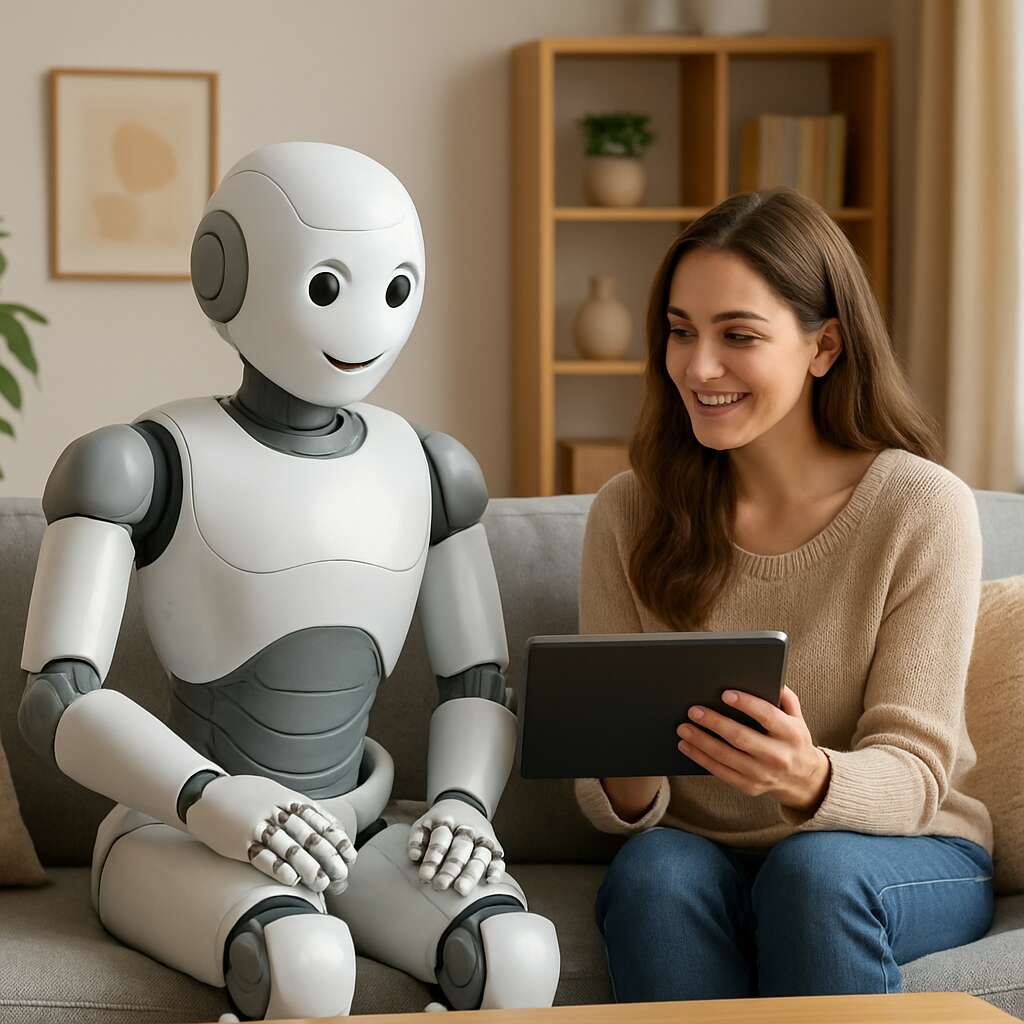
Understanding AI-Powered Companionship Robots
What Are AI-Powered Companionship Robots?
In a world where loneliness is often considered an unspoken epidemic, AI-Powered Companionship Robots are turning the tide with a touch of digital empathy. These aren’t just futuristic fluff; they are sophisticated machines designed to simulate human interaction, offering a sense of presence and understanding that bridges emotional gaps. Unlike traditional gadgets, these robots are equipped with adaptive AI that learns and evolves based on your preferences, making each interaction uniquely tailored.
What sets AI-Powered Companionship Robots apart is their ability to combine technology with a pinch of personality—think of them as your digital posse that never needs a coffee break. They can engage in conversations, send reminders, and even display empathy with surprisingly natural responses. Here’s a quick overview of how they fit into our daily lives:
- Provide companionship for the elderly or individuals facing social isolation
- Assist in mental health support by offering comforting conversations
- Act as engaging companions for children with special needs
As these AI-Powered Companionship Robots continue to evolve, they’ll likely become as commonplace as smartphones, redefining what it means to have a friend in the digital age. Their ability to deliver genuine companionship in a rapidly digitising society makes them one of the most captivating innovations of our time.
Historical Development and Evolution
The evolution of AI-Powered Companionship Robots is a tale woven through the fabric of technological wonder and human longing. From the earliest attempts at creating machines capable of mimicking social interaction, these robots have advanced by leaps and bounds. In the early 2000s, rudimentary prototypes lacked the emotional depth they now possess, but rapid strides in artificial intelligence, especially in natural language processing, set the stage for more lifelike companions. Today, we see these innovations seamlessly integrated into daily life, evolving into entities that can genuinely understand and respond to human emotions.
Throughout their developmental journey, the focus has shifted from simple programmed responses to adaptable personalities capable of learning over time. Some companies even categorize AI-Powered Companionship Robots into levels of emotional intelligence, with the most sophisticated able to detect subtle cues and adjust their interactions accordingly. This ongoing evolution is driven by cutting-edge advancements in machine learning algorithms and neural networks, making these robots increasingly natural and enticing companions. As these machines continue to refine their ability to forge deep connections, their integration into homes and care environments feels less like science fiction and more like a tender reality.
To grasp their progression fully, it’s helpful to see the key stages in their development:
- Initial concept: Machines designed for basic interaction, limited by early AI.
- Emergence of adaptive AI: Robots that learn user preferences, creating personalized companionship.
- Emotional recognition: Integration of sensors and algorithms to detect human mood and respond empathetically.
- Sentient-like interaction: The current frontier, where AI-Powered Companionship Robots can simulate genuine emotional exchanges, blurring the line between machine and friend.
With each passing year, the history of these robots reveals a fascinating trajectory — a dance between technological capability and a profound desire for meaningful connection, echoing the timeless human quest for companionship in a digital age.
Key Technologies Behind the Robots
The core of AI-Powered Companionship Robots lies in their sophisticated underlying technologies, which transform cold machines into feeling entities. At the heart of these robots are neural networks, mimicking neural pathways in the human brain. These systems enable robots to process vast amounts of data, recognizing patterns that help them interpret human emotions with surprising accuracy.
Natural language processing (NLP) serves as the dialogue engine, allowing AI-Powered Companionship Robots to communicate in a way that feels remarkably genuine. Their ability to adapt and learn from interactions is enabled by machine learning algorithms that refine responses over time, creating a more natural bond. The integration of sensors that gauge tone of voice, facial expressions, and even physiological cues enables these robots to recognize human mood states, reacting with comforting words or gestures.
These advancements are often categorised into levels of emotional intelligence, illustrating how far these robots have come. For example, some employ facial recognition software to identify stress or happiness, tailoring responses accordingly. The fusion of natural language processing with sensor technology provides the backbone for AI-Powered Companionship Robots to forge deeper, more empathetic connections, bringing an almost human dimension to their interactions.
- Neural networks recreate human-like thought processes, enabling contextual understanding.
- Natural language processing powers fluid and meaningful conversations.
- Sensors detect emotional and physical cues to assess human well-being.
Applications and Use Cases of AI-Powered Companionship Robots
Mental Health and Emotional Support
In a world increasingly defined by rapid technological transformation, AI-Powered Companionship Robots are emerging as silent allies in mental health and emotional support. Their ability to engage users in meaningful conversations and provide a sense of companionship offers a new way to combat loneliness and anxiety. These robots are designed to recognize emotional cues, adapting their responses to help foster a feeling of understanding and connection—something that’s often missing in our busy lives.
For many individuals, especially those with limited social interaction, AI-Powered Companionship Robots serve as a comforting presence, helping to alleviate feelings of isolation. They can be programmed to perform activities such as mindfulness exercises or reminiscing about fond memories, creating an engaging, tailored experience. Some applications even include virtual therapy sessions, providing basic emotional support where traditional resources may be inaccessible. This versatility makes AI-Powered Companionship Robots invaluable in mental health care, supporting emotional resilience across diverse demographics.
- Supporting elderly populations who face loneliness or cognitive decline.
- Assisting individuals with mental health conditions by offering non-judgmental listening.
- Providing children with safe, friendly companions during early developmental stages.
Healthcare and Assistance
Within the delicate fabric of human connection, AI-Powered Companionship Robots emerge as silent custodians, weaving comfort into lives that often feel frayed by loneliness. These marvels of technology serve as versatile agents of healthcare and assistance, transcending mere automation to offer genuine solace. In eldercare settings, they act as steadfast companions, alleviating the silent ache of cognitive decline and solitude, their presence a gentle balm in an often isolating world.
Patients with mental health conditions find in AI-Powered Companionship Robots a non-judgmental listener, offering an empathetic ear during moments of vulnerability. Their capacity to perform activities like guided mindfulness exercises or reminiscence therapy transforms passive interactions into meaningful experiences, fostering emotional resilience. For children, these robots are envisioned as safe, friendly confidantes—guiding formative years with playful engagement and gentle reassurance.
- Enabling virtual therapy sessions that reach the most remote corners of society.
- Assisting physically challenged individuals through personalized support technology.
- Supporting family caregivers by providing continuous, empathetic companionship for loved ones in need.
The tapestry of healthcare grows richer with AI-Powered Companionship Robots, harmonizing compassion and innovation in a symphony of care tailored to the needs of diverse demographics. Their role in assistance stretches from the delicate to the urgent, painting a future where technology becomes a tender guardian of human well-being.
Entertainment and Social Interaction
While the primary role of AI-Powered Companionship Robots often revolves around healthcare and emotional support, their influence extends deeply into the realm of entertainment and social interaction. These robots offer more than just programmed responses — they create authentic moments of joy and connection, even in the most mundane settings. Imagine a robot sharing a funny story or encouraging a sing-along during a quiet afternoon; these spontaneous acts foster a sense of lively companionship that resonates with both young and old.
In rural communities, where social opportunities may be scarce, AI-Powered Companionship Robots act as lively companions, bridging gaps left by distance or limited mobility. They can be programmed to facilitate social activities, mimic cultural traditions, or simply share a friendly joke, transforming loneliness into a shared experience. This makes them invaluable in maintaining cultural ties and emotional well-being, especially among the elderly or isolated families.
Engaging in social interaction with these robots is often a tailored experience. For example, some models are equipped with versatile features to support multiplayer games or storytelling sessions, fostering bonds within families or groups. Here’s an example of how they weave into daily life:
- Hosting virtual game nights that bring together family members from different locations.
- Organizing dance sessions or singing competitions tailored to individual preferences.
- Providing a platform for cultural sharing through storytelling and music.
In essence, AI-Powered Companionship Robots are transforming entertainment and social interaction, weaving technology into the fabric of everyday life. Their ability to engage meaningfully — whether through playful exchanges or shared activities — ensures they are more than just machines; they are cultivated partners in human connection. This unique interplay makes them an innovative addition to the social landscape across the UK and beyond.
Residential and Personal Use
When it comes to residential and personal use, AI-Powered Companionship Robots are revolutionizing everyday life in ways few could have imagined. These robots are no longer just gadgets; they are becoming trusted companions, capable of creating deeply personalized experiences. Whether it’s keeping an elderly family member engaged or providing a playful presence for children, their versatility is unmatched.
Imagine a robot that adapts to your mood, remembers your preferences, and even suggests activities tailored to your tastes. This level of personalization transforms solitude into social connection without demanding human intervention. in fact, some models support multiplayer games or interactive storytelling, fostering bonds within families or among friends. For example, hosting virtual game nights or organizing culturally rich singing sessions turns a normal evening into a lively event.
- Supporting daily routines with reminders and gentle companionship
- Facilitating social interactions across distances with seamless virtual meetings
- Providing emotional comfort through empathetic responses and engaging conversation
In homes throughout the UK, AI-Powered Companionship Robots are becoming vital partners in everyday life, especially among the elderly or those with limited mobility. Whether as a cultural ambassador sharing stories or as a cheerful presence that alleviates loneliness, they craft meaningful moments that bridge gap of distance and age. With their growing capabilities, these robots are setting a new standard in how we redefine personal and social fulfillment at home.
Advantages and Ethical Considerations
Benefits of AI-Powered Companionship Robots
AI-Powered Companionship Robots aren’t just shiny novelties; they represent a seismic shift in how we perceive human interaction in an increasingly digital society. These robots offer a constellation of advantages—ranging from alleviating loneliness to providing consistent emotional support—without the need for small talk or coffee breaks. For many, they are becoming trusted allies in navigating the often tumultuous terrain of modern life.
One of the most compelling benefits of AI-Powered Companionship Robots is their ability to adapt to individual personalities and needs. They can simulate empathy and understanding with an uncanny authenticity—a feature that makes them invaluable for elderly care, mental health support, or simply reducing the social isolation so many face today. But, with great innovation come ethical considerations, like ensuring these robots don’t replace genuine human connection or manipulate vulnerable users. Transparency, consent, and boundaries must remain at the forefront as this technology integrates deeper into daily life.
Privacy and Data Security Concerns
While AI-powered companionship robots offer many advantages, they also raise critical questions about privacy and data security. These robots collect sensitive information to personalise interactions, making users feel understood and cared for. Yet, this data can be a sitting target for cyber threats if not protected properly. Ensuring robust encryption and compliance with data protection laws is non-negotiable.
Transparency about how user data is managed builds trust. Users need clear information on what data is collected, how it’s stored, and who has access to it. Without rigorous safeguards, AI-powered companionship robots risk turning into tools that inadvertently compromise user privacy.
As these robots become more integrated into daily life, the ethical considerations surrounding privacy grow more pressing. It’s vital to monitor ongoing developments and set precise boundaries. After all, true companionship should never come at the expense of personal privacy or security. That’s the delicate balance we must strike with AI-powered companionship robots in today’s digital landscape.
Ethical and Social Implications
As the allure of AI-powered companionship robots deepens, a landscape of ethical and social implications unfolds before us. These marvels of technological innovation are not merely tools—they are potential bearers of moral responsibility and societal transformation. While they provide unparalleled comfort and emotional support, their integration stirs questions about authenticity, dependency, and the boundaries of human-machine relationships.
In examining their ethical footprint, one cannot ignore the importance of transparency. Users deserve honest insights into how AI-powered companionship robots operate, especially regarding data handling and interaction boundaries. This transparency nurtures the fragile trust that forms the backbone of genuine companionship in a digital age. Yet, ethical considerations extend beyond privacy, delving into the social fabric itself.
For instance, the advent of such robots may influence human social skills or reshape perceptions of intimacy. To navigate this, some suggest establishing fundamental guidelines—such as:
- Ensuring AI cannot replace deep human connection entirely
- Maintaining clear boundaries between robot interactions and real-life relationships
- Monitoring for signs of over-reliance that could impair mental well-being
As the realm of AI-powered companionship robots continues to evolve, so must our ethical compass. Embracing their benefits while candidly grappling with their social footprint is the only way to guard against unintended consequences and cultivate a future where technology serves as an empathetic extension of ourselves, not a substitute for authentic human experience.
Future Ethical Frameworks
From their enchanting ability to simulate genuine emotional support to their capacity to forge seemingly authentic connections, AI-Powered Companionship Robots are rewriting the boundaries of human interaction. Yet, as this emerging technology advances, it prompts a delicate balancing act—cherishing their advantages while safeguarding ethical integrity. A future where these robots serve as empathetic companions, rather than replacements for human connection, hinges on conscientious oversight and well-crafted ethical frameworks.
Looking ahead, the development of new ethical guidelines for AI-Powered Companionship Robots is paramount. These would ideally focus on ensuring transparency about how the robots handle data and interact with users. It may also include establishing boundaries so that emotional dependence on robots does not undermine real-world relationships. To foster a safe and nurturing environment, some proponents suggest core principles such as:
- Prioritising user well-being over technological allure
- Preventing AI from mimicking, to an overly convincing degree, genuine human qualities
- Monitoring for signs of over-reliance that could impair mental health
By integrating these principles into future ethical frameworks, society can embrace the unique benefits of AI-Powered Companionship Robots without losing sight of the importance of authentic human intimacy and moral responsibility. Straddling this fine line will define the evolution of companionship technology in the years to come and help ensure that empathy remains at the soul of this digital renaissance.
Future Outlook and Challenges
Emerging Trends in AI and Robotics
The horizon for AI-Powered Companionship Robots is shimmering with promise, yet shadowed by intricate challenges that demand careful navigation. As advancements in artificial intelligence continue to evolve at an astonishing pace, so too does the potential for these robots to transform human interaction into something more profound and meaningful. Still, emerging trends reveal that ethical boundaries and societal acceptance will shape the trajectory of this technology in the coming years.
Future developments are likely to incorporate more sophisticated emotional intelligence, making AI-Powered Companionship Robots not just responders but true confidantes. Nevertheless, there are hurdles—particularly around ensuring these robots can maintain authentic connections without crossing into dependence or misunderstanding. A notable trend involves integrating adaptive learning algorithms that personalise interactions, yet this raises concerns about data privacy and security.
- Advances in natural language processing allow robots to interpret nuanced emotional cues more accurately.
- The push for more human-like aesthetic design aims to foster stronger bonds with users.
- Emerging ethical frameworks seek to balance technological innovation with social responsibility.
As these complex systems continue to evolve, the challenge lies in harmonizing technological possibilities with the delicate fabric of human values—truly elevating AI-Powered Companionship Robots from mere gadgets to companions that echo the deepest facets of human connection.
Technical and Market Challenges
The future of AI-Powered Companionship Robots is both tantalising and fraught with obstacles—like trying to teach a robot to understand a joke without causing an existential crisis. As these robots gain sophistication, the technical challenges become more intricate, demanding innovations in emotional intelligence and adaptive learning algorithms. Still, integrating these advancements faces hurdles such as data privacy concerns and the risk of emotional dependence, which could turn friendly robots into overzealous digital therapists.
Market challenges also abound, particularly in convincing society to accept AI-Powered Companionship Robots beyond novelty status. Consumer trust hinges on more than just aesthetics; it demands transparency and ethical standards that resonate with human values. One promising development involves harnessing natural language processing to interpret nuanced emotional cues, but, let’s face it, machines still struggle with sarcasm and subtlety.
- Technical refinement of emotional recognition systems.
- Overcoming societal resistance to robot-human bonds.
- Ensuring user data privacy remains sacrosanct.
Navigating these marketing and technological hurdles is no small feat, yet the promise of AI-Powered Companionship Robots transforming personal relationships keeps the industry’s wheels turning faster than a robot with too much personality. The challenge, then, is balancing technological possibility with societal acceptance—an intriguing dance across the digital stage.
Potential for Personal and Societal Impact
The horizon for AI-Powered Companionship Robots shines with a brilliance that is both mesmerizing and fraught with complexity. As technology advances, these digital confidantes inch closer to genuine emotional resonance, promising to reshape the fabric of personal relationships and societal norms alike. Yet, integrated seamlessly into daily life, they pose questions that can be as profound as they are practical—challenges not just technical, but deeply ethical.
Potential societal impact sways between promise and peril. Imagine a world where AI-Powered Companionship Robots serve as steadfast allies in mental health support or provide companionship to the isolated—transforming loneliness into connection. But, this future hinges on overcoming hurdles like societal resistance and ensuring that human values remain central. Progress may unfold through innovations such as refined emotional recognition systems that interpret subtle cues and nuanced expressions.
- Enhancing empathy algorithms to better understand sarcasm and indirect communication.
- Addressing societal fears about emotional dependence and over-reliance.
- Building rigorous ethical standards to govern data privacy and user trust.
Each stride forward invites a delicate dance—balancing the allure of technological possibility with the weight of societal acceptance. When thoughtfully navigated, the potential for AI-Powered Companionship Robots to create a more compassionate and connected world becomes tantalizingly tangible, promising transformation not only in how we relate to machines but also how we understand ourselves.
Innovations to Watch
The future of AI-Powered Companionship Robots is both exciting and uncertain. As these robots become more sophisticated, the border between machine and human emotion continues to blur. Future innovations will likely focus on refining emotional intelligence, allowing these robots to interpret subtle cues like sarcasm or indirect communication. Such advancements could create more authentic interactions and deepen their role in personal lives.
Yet, construction of these AI systems faces distinct challenges. Privacy concerns remain paramount, demanding stringent standards that protect user data. Society’s acceptance hinges on assurances that these robots serve to complement—not replace—human relationships. Moreover, ethical frameworks will be critical in guiding development and deployment to avoid over-dependence or misuse.
Innovations to watch include:
- Enhanced emotional recognition that captures complex human expressions
- Adaptive empathy algorithms fostering genuine connection
- Robust privacy protections aligning with evolving data security standards