
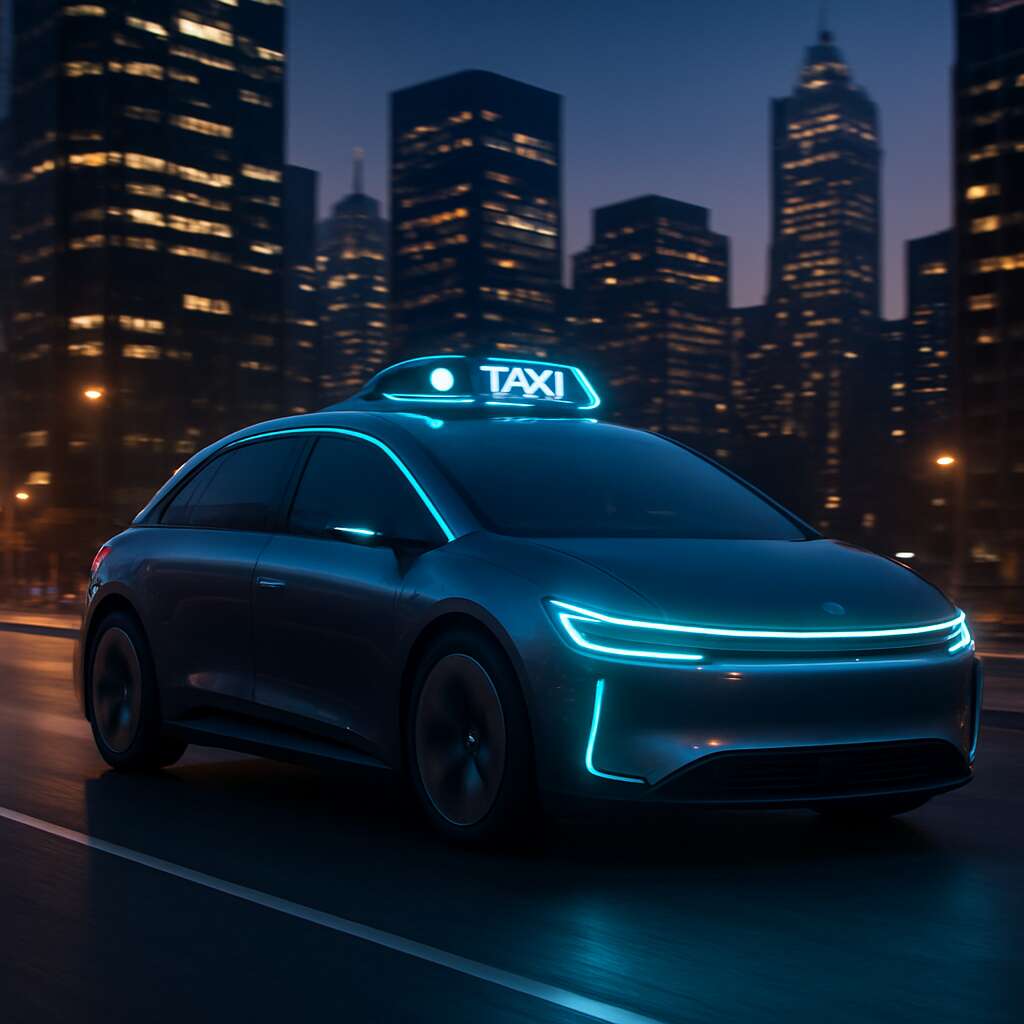
Overview of AI-Powered Autonomous Taxis in Dual-Use Mobility
Introduction to Autonomous Taxis – Definition and core features of AI-driven autonomous taxis
In the rapidly evolving world of urban transportation, AI-Powered Autonomous Taxis (dual-use mobility) are reshaping how we navigate city streets. These vehicles operate without human drivers, leveraging sophisticated machine learning algorithms, deep neural networks, and real-time data processing to navigate complex environments. What makes them truly fascinating is their potential to serve multiple functions—both as commercial taxis and as part of emergency response systems—blurring the boundaries between public service and private transportation.
At their core, autonomous taxis are equipped with an array of sensors, cameras, and lidar systems that constantly feed data into AI systems, enabling precise decision-making. This dual-use mobility approach is more than just convenience; it challenges traditional notions of transportation safety, efficiency, and human interaction on the road. Such vehicles can adapt to demand fluctuations, optimize routes dynamically, and improve overall traffic flow.
- Seamless integration with existing transport infrastructure
- Advanced safety features driven by AI algorithms
- Flexibility to shift between commercial transport and emergency response roles
Understanding Dual-Use Mobility – Explanation of dual-use applications for passenger and goods transportation
Understanding dual-use mobility opens up a world of possibilities beyond traditional transportation. AI-Powered Autonomous Taxis (dual-use mobility) are not solely designed for passenger delivery; they also serve critical functions in goods transportation and emergency response. This versatility allows cities to maximise fleet utility, especially in times of crisis or high demand. For example, during a public health emergency, these vehicles can swiftly transition from daily commute roles to delivering essential supplies or providing rapid emergency support.
In practical terms, dual-use applications mean a single AI-powered autonomous taxi fleet can enhance urban resilience by supporting both commercial mobility and public safety. Some innovations include:
- Transporting goods safely and efficiently during off-peak hours
- Supporting emergency services with rapid deployment capabilities
- Providing flexible response options for various urban challenges
This elasticity makes AI-powered autonomous taxis (dual-use mobility) especially appealing for forward-thinking cities eager to improve both everyday transit and emergency preparedness, all while reducing congestion and emissions.
Historical Development – Evolution of autonomous vehicle technology and early taxi prototypes
The evolution of autonomous vehicle technology has come a long way since its earliest prototypes in the late 2000s. Initial efforts focused on basic driver-assist systems, but these quickly progressed towards full autonomy. Early taxi prototypes, built around the concept of automated ride-hailing, demonstrated the potential of AI-Powered Autonomous Taxis (dual-use mobility). These vehicles initially served passenger transportation, but their design also allowed for versatile applications such as goods delivery and emergency response.
By integrating sensors, AI navigation algorithms, and advanced machine learning, developers created autonomous taxis capable of adapting to different urban needs. During their development phase, many prototypes were tested in controlled environments—often within limited city zones—to refine their dual-use capabilities. As technology advanced, these vehicles began to support both passenger mobility and goods transportation, setting the stage for a new era of flexible urban transit systems.
- Early trials highlighted the importance of safe, reliable AI navigation systems.
- Testing also revealed the potential for these taxis to serve as mobile logistics platforms in congested areas.
- Progressive iterations aimed at enhancing vehicle resilience, efficiency, and safety for dual-use applications.
Technologies Enabling AI-Powered Autonomous Taxis
Artificial Intelligence and Machine Learning – Role of AI in decision-making, navigation, and safety systems
Behind the sleek façade of AI-powered autonomous taxis (dual-use mobility), lies a symphony of advanced technologies that redefine urban transit. At the heart of this revolution are sophisticated artificial intelligence and machine learning systems, guiding these vehicles through the labyrinth of city streets with uncanny precision. AI empowers these taxis with decision-making capabilities that adapt to ever-changing road conditions, pedestrian movements, and unpredictable weather patterns—making safety systems not just reactive, but predictive.
In these intelligent vehicles, decision-making is a seamless blend of complex algorithms and real-time data analysis. AI facilitates navigation by constantly recalculating routes, avoiding obstacles, and optimizing energy consumption. The safety systems integrated into AI-powered autonomous taxis (dual-use mobility) use sensor fusion—combining lidar, radar, and cameras—to create a three-dimensional map of the environment, allowing the vehicle to anticipate and respond to hazards long before they manifest. This technological choreography makes urban mobility both safer and more efficient, heralding a new era of seamless mobility solutions.
Sensor and Perception Technologies – Use of lidar, radar, cameras, and other sensors for environment awareness
At the core of AI-powered autonomous taxis (dual-use mobility) lies a remarkable convergence of sensor and perception technologies that transform raw data into awareness. This symphony of tools—lidar, radar, cameras, and other sensors—serves as the vehicle’s senses, creating a living map of the surrounding environment. Unlike human drivers, these systems process information at a speed and precision that border on the uncanny.
For environment awareness, sensor fusion is the secret sauce. Lidar generates a high-resolution 3D scan, capturing subtle nuances in spatial positioning. Radar helps detect objects at greater distances and in adverse weather, while cameras provide contextual understanding—reading signs, recognizing pedestrians, and distinguishing vehicles. These elements blend seamlessly:
- Lidar for depth perception in all lighting conditions
- Radar for velocity measurement and obstacle detection
- Cameras for object recognition and scene interpretation
This multi-modal perception system allows AI-powered autonomous taxis (dual-use mobility) to anticipate hazards with almost prescient accuracy, even before human eyes could notice them. With these advanced sensors at their disposal, the vehicles are equipped to navigate complex urban environments safely and fluidly, transforming human-centric transit into an intelligent, responsive experience.
Connectivity and IoT Integration – V2X communications, cloud services, and data sharing for operational efficiency
Within the realm of smart mobility, connectivity and the Internet of Things (IoT) lay the groundwork for truly intelligent autonomous taxis. The integration of V2X (vehicle-to-everything) communications allows these vehicles to interact seamlessly with traffic infrastructure, other vehicles, and even pedestrians. This interconnected web creates an ecosystem where data flows continuously, fueling real-time decision-making and operational efficiency.
Cloud services serve as the brain behind AI-powered autonomous taxis (dual-use mobility), centralising vast amounts of data collected from sensors and enabling swift processing. Through sophisticated data sharing protocols, these taxis can exchange crucial information, such as traffic patterns or accident alerts, with a broader network. This connectivity not only optimises routing and reduces congestion but also enhances safety for passengers and pedestrians alike.
- Real-time traffic updates
- Cooperative manoeuvres with nearby vehicles
- Remote diagnostics and system upgrades
By harnessing V2X communications and cloud-based platforms, autonomous taxis transform urban transit into a symphony of synchronized movements. Such networked intelligence makes dual-use mobility a reality—offering efficient passenger transport while supporting goods delivery — all while navigating the intricacies of the modern cityscape with precision and foresight. This fusion of connectivity and IoT integration redefines how autonomous taxis operate, making them an indispensable part of future mobility ecosystems. The seamless sharing of operational data not only sharpens safety but also ensures that each journey is as smooth and responsive as human intuition, amplified by technology’s relentless memory and speed.
Hardware Infrastructure – Onboard computing units, mapping systems, and charging stations
In the shadowed halls of innovation, the backbone of AI-powered autonomous taxis (dual-use mobility) stands hidden—yet its infrastructure hums with silent complexity. This hardware infrastructure forms the arteries and veins of the modern city’s heartbeat, sustaining the seamless flow of digital consciousness. At its core lie onboard computing units—powerful, yet unseen, orchestrating the myriad calculations that allow these vehicles to navigate the labyrinthine streets with uncanny precision.
Mapping systems, with their ghostly precision, chart urban landscapes with a clarity that borders on the metaphysical. These advanced navigation matrices are continuously refined through layers of sensor data, creating an ever-evolving tapestry of environmental awareness. Charging stations for electric autonomous taxis are the modern cathedrals of energy, strategically placed to sustain this fleet of dual-use mobility. They serve as sanctuaries for these electric wanderers, fueling their ceaseless journeys through cityscapes that never sleep.
Within this intricate web, a carefully curated selection of hardware peripherals plays a pivotal role:
- High-performance onboard computing units
- Advanced mapping and localization systems
- Widespread charging stations integrated into urban infrastructure
Every element within this hardware infrastructure is designed to function as a part of a grand cathedral of automation, where each sensor, processor, and station contributes to the symphony of synchronized movement. As the dual-use mobility system transforms city streets into living arteries of transportation, it is these silent sentinels—embedded in the core of AI-powered autonomous taxis—that make this ballet possible, with steadfast reliability and precise execution.
Operational Aspects and Dual-Use Applications
Passenger Transportation – Efficient route management, customer experience, and ride-hailing services
Operational aspects of AI-Powered Autonomous Taxis extend beyond simply navigating city streets; they transform passenger transportation into a finely tuned system. Efficient route management plays a critical role in minimizing travel time and fuel consumption, leveraging real-time data to adapt dynamically to traffic conditions. This adaptive capability improves the customer experience by reducing wait times and providing smoother rides. Moreover, the integration of AI-powered autonomous taxis into existing urban transport networks facilitates seamless ride-hailing services, making mobility more accessible and reliable.
Dual-use applications introduce additional layers of complexity and opportunity. These vehicles can simultaneously serve passengers and deliver goods, creating a more versatile transport ecosystem. For instance, some autonomous taxis are equipped to carry parcels during off-peak hours, maximising operational efficiency. In some cases, an ordered list of operational priorities emerges:
- Optimal route planning based on traffic analytics
- Real-time passenger pickup and drop-off management
- Integration with local logistics systems for dual-use delivery
This dual-purpose functionality enhances the economic viability of AI-powered autonomous taxis, making them an increasingly integral part of the future mobility landscape.
Freight and Goods Delivery – Automated parcel delivery, logistics support, and fleet management
Picture a city where the hum of traffic is harmonised by intelligent vehicles seamlessly managing freight and passenger needs—this is the promise of AI-Powered Autonomous Taxis (dual-use mobility). Their operational finesse extends beyond navigation; they act as the backbone of modern logistics. These vehicles utilize sophisticated fleet management systems that prioritize delivery routes while adapting dynamically to urban congestion. The ability to coordinate pickups, drop-offs, and parcel deliveries on the fly translates into a marvel of efficiency and responsiveness.
In many cases, dual-use autonomous taxis operate under a structured hierarchy of operational priorities. These include:
- Optimal route planning based on real-time traffic analytics
- Efficient management of passenger pickups and deliveries
- Integration with local logistics systems to facilitate parcel transport during off-peak hours
Autonomous fleet operators leverage these priorities to maximise throughput, reduce idle time, and streamline last-mile logistics. The importance of sensor and perception technology cannot be overstated, with lidar, radar, and cameras playing pivotal roles in environment awareness. Such systems allow the autonomous taxis to navigate complex urban landscapes quietly and safely, whether ferrying passengers or parcels. By connecting with cloud platforms and employing V2X communications, these taxis continually share data, enhance decision-making, and improve overall operational efficiency across the entire supply chain. When it comes to dual-use mobility, the harmony between passenger transport and goods delivery is not just about utility, but about creating an interconnected, intelligent transport ecosystem—powered by AI-Powered Autonomous Taxis that redefine urban mobility’s future landscape.
Safety and Regulation Compliance – Standards, safety protocols, and legal considerations for autonomous taxis
The realm of AI-powered autonomous taxis (dual-use mobility) extends beyond mere innovation; it demands rigorous safety and regulatory frameworks to navigate the fine line between technological marvel and public trust. As these vehicles weave through the urban tapestry, they must adhere to strict safety protocols that represent the collective commitment to passenger and pedestrian security. The challenge lies in harmonising cutting-edge AI decision-making with real-world legal standards, to forge a path that is both pioneering and compliant.
Safety standards for autonomous taxis encompass comprehensive measures — from sensor accuracy to cybersecurity protections. These standards ensure that the autonomous fleet can detect and respond to unpredictable situations, mitigating risks before they escalate. Operators diligently incorporate layered safety protocols, including emergency stop functions and fail-safe redundancies, which are critical in maintaining operational integrity. It is a delicate ballet, where each component plays a role in the orchestra of urban mobility.
- Regulatory compliance involving certification processes that validate AI algorithms and sensor reliability.
- Legal considerations covering data privacy, liability in case of incidents, and passenger rights during dual-use operations.
- Standards set by transport authorities to regulate operational parameters, including speed limits and geographic boundaries.
As the capabilities of AI-powered autonomous taxis (dual-use mobility) evolve, cooperation between industry stakeholders and regulatory bodies remains pivotal. Establishing clear guidelines not only fosters public confidence but also accelerates adoption by ensuring a universally understood safety culture. In a landscape where technology and legislation intertwine, balanced regulation transforms the promise of autonomous taxis into a tangible reality—steered by vigilance, innovation, and unwavering standards of safety.
Deployment Models – Fleet ownership, partnerships, urban vs. rural deployment scenarios
As the rollout of AI-Powered Autonomous Taxis (dual-use mobility) accelerates across UK cities, one thing is clear: deploying these vehicles isn’t just a matter of technology, but strategic operational planning. Fleet ownership models vary widely—from traditional taxi firms to tech startups, or even city councils exploring public-private partnerships. These partnerships often serve as a testing ground for innovative deployment models, balancing risk and reward in a dance as delicate as a choreographed ballet.
Urban deployment shines a spotlight on dense areas where demand for quick, reliable mobility solutions is highest. Conversely, rural settings present a different set of challenges—less congestion, longer routes, and different infrastructure demands. AI-Powered Autonomous Taxis (dual-use mobility) fit into these scenarios via tailored models: some operate under centralized fleet management, while others rely on decentralized, on-demand services that adapt to their environment with agility and flair.
- Shared fleet ownership or leasing models to reduce upfront costs
- Strategic partnerships with logistics firms for dual-use deployment—passenger and goods transport
- Hybrid models combining private ownership with public service contracts
In rural regions, the focus often shifts to infrastructure readiness and connectivity, requiring different deployment approaches from city-centric operations. As models evolve, so does the need for flexible deployment strategies—capable of scaling up or down depending on geographic and demographic factors. This adaptability is the lifeblood of successful AI-Powered Autonomous Taxis (dual-use mobility), paving the way for smarter, more integrated urban-rural mobility ecosystems that can meet the diverse needs of Britain’s residents.
Challenges and Future Perspectives
Technical and Infrastructure Barriers – Limitations in AI accuracy, sensor reliability, and connectivity issues
As promising as AI-Powered Autonomous Taxis (dual-use mobility) are, the journey toward seamless implementation is riddled with technical and infrastructure challenges that cannot be dismissed. At the heart of these hurdles lies the nanosecond precision needed for sensor accuracy—something that current lidar, radar, and camera systems still strive to perfect. Sensor reliability, in particular, remains an Achilles’ heel, especially when dealing with adverse weather conditions or unpredictable urban environments. The AI systems that govern these taxis depend heavily on stable connectivity; any disruption in V2X communication or cloud synchronization could, at best, cause delays and, at worst, jeopardise passenger safety.
Limited AI accuracy is another persistent obstacle that hampers real-world deployment. Autonomous systems must make split-second decisions, often navigating complex scenarios involving pedestrians, cyclists, or unexpected roadworks. On top of this, the infrastructure required to support autonomous taxis—like dedicated charging stations and high-definition mapping—are still sparse in many regions. The integration of these components must evolve in tandem with the vehicles themselves. For AI-powered autonomous taxis (dual-use mobility) to truly realise their potential, a future where sensor technologies are foolproof and connectivity is infallible is indispensable. Until then, growing pains are an unavoidable feature of this transformative technology.
Ethical and Social Considerations – Privacy concerns, job impacts, and public acceptance
As the allure of AI-Powered Autonomous Taxis (dual-use mobility) grows, so too do the ethical and social dilemmas they bring into sharp focus. The very fabric of trust that enables us to step into a vehicle and relinquish control is being woven from threads of privacy, job stability, and societal acceptance.
Privacy concerns loom large as these taxis collect vast amounts of personal data—location histories, user preferences, and behavioral patterns. This trove of information raises questions about data security and the potential for misuse. Public apprehension often stems from fears that mass surveillance could become inevitable, eroding individual freedoms in subtle but meaningful ways. The challenge lies in balancing technological innovation with stringent data protection measures, ensuring passenger confidentiality while maintaining operational efficiency.
Equally compelling are job impacts, as automation threatens to displace traditional taxi drivers and related sectors. For some, this evolution feels like a threat to livelihood, sparking resistance and skepticism. Yet, it also opens a dialogue about a new economy—one where humans could find roles in overseeing autonomous fleets or managing AI systems. Adoption of this technology must heed societal values, fostering inclusivity rather than alienation.
- Public acceptance hinges on trust in AI systems—how transparent they are, how safely they operate, and how well they address moral questions about decision-making in ethical grey zones.
Integrating AI-powered autonomous taxis (dual-use mobility) into everyday life demands more than engineering breakthroughs; it calls for societal introspection. While the promise of safer, more efficient urban transport beckons, it is intertwined with deep-seated human concerns about autonomy, employment, and privacy. The future of this innovation will rest on its ability to navigate these complex moral terrains with integrity and sensitivity.
Market Adoption and Scalability – Factors influencing widespread deployment and commercialization
As the momentum towards widespread deployment of AI-powered autonomous taxis (dual-use mobility) accelerates, critical questions loom over their future scalability and market adoption. Despite the technological marvels, these vehicles face formidable hurdles—ranging from regulatory frameworks to infrastructure requirements—that can slow progress on both urban and rural terrains.
One of the primary challenges remains the need for comprehensive connectivity and IoT integration. For autonomous taxis to operate seamlessly in diverse environments, robust sensor technologies and reliable communication channels are indispensable. Deployment models must adapt to varied ownership structures—whether fleet management through partnerships or public-private collaborations—yet, this complexity often demands significant initial capital investment and regulatory alignment. These factors influence the pace at which autonomous taxis become a fixture on our streets.
With consumer acceptance hinging on safety, transparency, and data privacy, each step toward full-market integration requires meticulous attention to social acceptance. Bridging the gap between pioneering innovation and public trust involves rigorous safety standards and a transparent ethical framework. As technology evolves, scaling AI-powered autonomous taxis (dual-use mobility) hinges on addressing these multifaceted barriers—a process demanding patience, cooperation, and forward-thinking policies.
Emerging Trends and Innovations – Advances in AI algorithms, hybrid vehicle models, and integration with smart city initiatives
As AI-driven technology progresses at an unprecedented pace, the landscape of dual-use mobility is poised for transformation. Yet, the horizon also reveals a tapestry of challenges and emerging innovations that could redefine the future of AI-powered autonomous taxis. Advances in AI algorithms are pushing the boundaries of decision-making, allowing these vehicles to better interpret complex environments—crucial for navigating diverse terrains with minimal human intervention.
Meanwhile, hybrid vehicle models are gaining traction as they offer a pragmatic pathway to merge electric propulsion with autonomous systems. These models are not only more sustainable but also more adaptable within the evolving smart city initiatives. Integration with smart infrastructure—such as 5G connectivity and IoT-enabled sensors—further amplifies operational efficiency, creating a seamless flow of data for ride management and logistics support.
Nonetheless, technical barriers persist. Sensor accuracy in varying weather conditions and reliability in network connectivity remain hurdles that need ongoing refinement. Manufacturers are exploring solutions like multisensor fusion and edge computing to mitigate these issues without compromising safety standards. A varied landscape of deployment strategies is emerging, too, including partnership models that foster urban pilot programs and rural outreach. Such diversification is vital as it reflects the nuanced demands of different environments.
- Emerging trends suggest that the future of AI-powered autonomous taxis (dual-use mobility) will be increasingly intertwined with smart city infrastructure, creating corridors of interconnected transport networks that adapt dynamically to urban demands.
- Innovation in data sharing and V2X communication protocols aims to synchronize vehicle movements with city utilities, enhancing efficiency while ensuring safety and compliance.
- In tandem, the development of more sophisticated AI algorithms facilitates better predictive analytics, enabling vehicles to anticipate hazards and optimize route planning in real time—an advancement that’s steadily eroding the lines of uncertainty in autonomous operations.
As these trends unfold, the evolution of safety standards and regulatory frameworks will play a pivotal role in shaping public perception. Trust in AI-powered autonomous taxis (dual-use mobility) hinges on transparency, ethical AI development, and comprehensive data privacy safeguards. This complex interplay between technological innovation and social acceptance underscores an intriguing paradox—while these vehicles promise unparalleled convenience, their widespread adoption will inevitably depend on societal confidence and collaborative policymaking.
Regulatory and Policy Development – Legislation, safety standards, and international cooperation
As the promise of AI-Powered Autonomous Taxis (dual-use mobility) edge closer to tangible reality, the conversation inevitably shifts to the labyrinth of challenges that lie ahead—particularly in the realm of regulation and policy. These vehicles, integral to the fabric of tomorrow’s cities and rural corridors alike, demand a regulatory framework as nuanced as their own technology. Crafting legislation that addresses safety standards, liability, and operational parameters is no small feat, especially considering the rapid pace of innovation.
International cooperation becomes a linchpin in this complex puzzle. Autonomous taxis transcend borders; a patchwork of diverse legal regimes risks creating a fractured deployment landscape. Harmonising safety protocols and certification processes across nations could pave the way for seamless, safer integration into daily life. Governments and industry stakeholders are now exploring multilateral agreements that articulate shared standards, reducing ambiguity and fostering trust among users and operators.
Yet, the creeping influence of these vehicles on society’s moral fabric cannot be ignored. The paradox of widespread adoption hinges on societal confidence—trust in technology, data privacy safeguards, and the assurance that regulation is both flexible and stringent enough to respond to unforeseen challenges. A scenario where policy frameworks lag behind technological advancements might not only slow deployment but erode public trust—an intangible yet powerful barrier to reaching the true potential of AI-Powered Autonomous Taxis (dual-use mobility).
- Develop adaptable safety standards that can evolve with technological advances.
- Foster international dialogue to create cohesive legal frameworks.
- Implement transparent regulatory processes to build public confidence.
These are the delicate threads pulling together the fabric of the autonomous taxi revolution, woven with care and foresight. The dialogue between technological capability and societal acceptance will ultimately sculpt the trajectory of AI-powered dual-use mobility from abstract promise to everyday reality.