
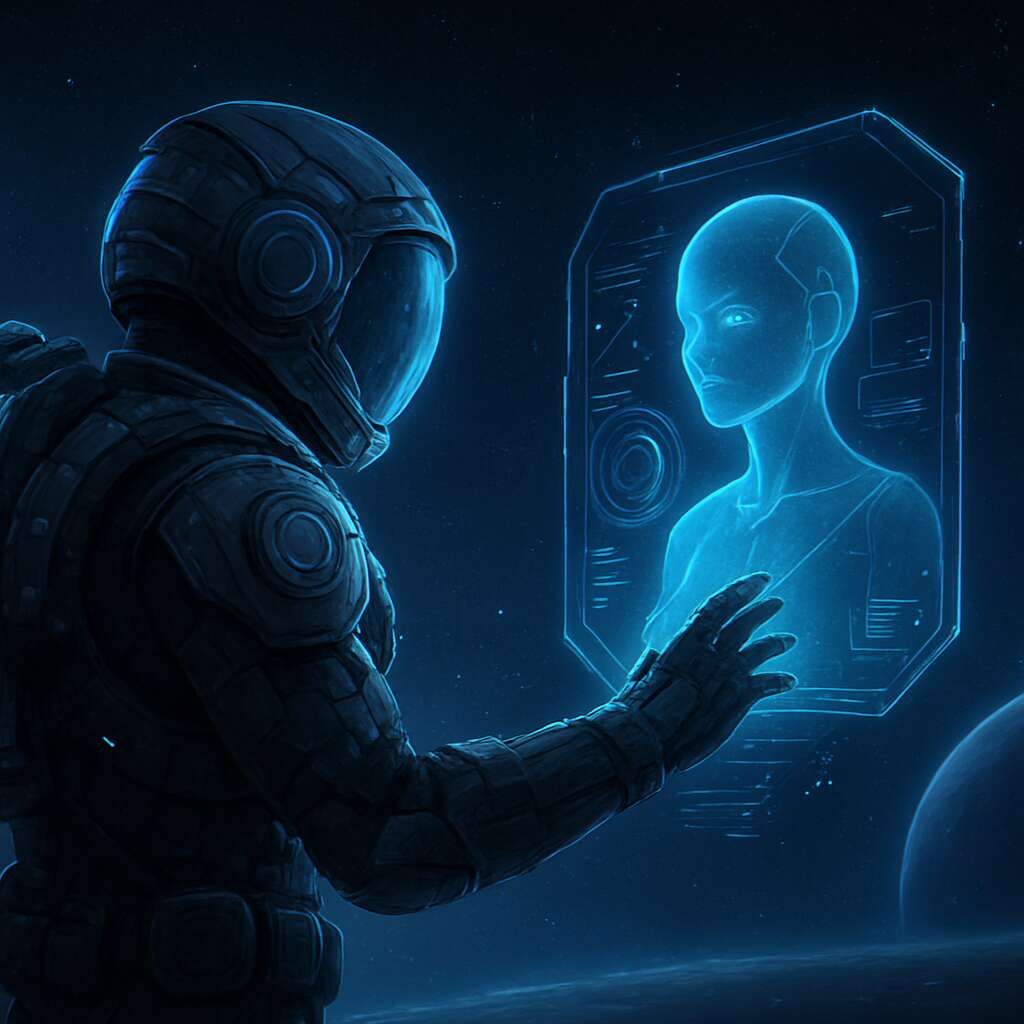
Current Challenges in Space Missions and the Need for AI Assistance
Understanding Astronaut Workload and Safety Risks
Space missions today face an array of intricate challenges that demand precise coordination and real-time decision-making. The mental and physical workload placed on astronauts can be overwhelming, especially during long-duration expeditions where the margin for error narrows dramatically. Safety risks such as cabin depressurization, equipment failures, or unexpected environmental hazards require rapid responses, often under immense pressure.
Enter AI-Powered Astronaut Assistants—an innovative solution designed to navigate these complexities with finesse. By understanding astronaut workload and monitoring safety risks through advanced algorithms, these AI assistants can prioritize tasks, provide critical data insights, and even predict potential emergencies before they escalate. This technological leap ensures that astronauts are supported not just as crew members, but as individuals whose safety and efficiency are continually safeguarded by intelligent systems that adapt to the unpredictable nature of space exploration.
Limitations of Human-Centered Systems
Space missions today grapple with an intricate tapestry woven from unpredictable variables and relentless pressure. Human endurance is finite, and the limitations of human-centered systems become glaringly apparent when faced with the vast, unforgiving expanse of space. The natural cognitive and physical boundaries of astronauts can become their greatest obstacle, especially as mission complexity escalates.
Traditional systems, rooted in manual monitoring and reactive decision-making, are often insufficient for the high-stakes environment of space exploration. They lack the agility to adapt swiftly to emergent hazards or to anticipate crises before they unfold. As the demands on astronauts intensify, the need for a technological partner—an AI-Powered Astronaut Assistant—becomes undeniable. These intelligent entities are designed to transcend human limitations, seamlessly integrating into the harsh environment of space to offer real-time insights, task prioritisation, and emergency predictions.
Without such advanced systems, the risks of miscalculations and oversight grow exponentially. The challenge lies in crafting a solution that complements astronaut expertise while addressing the inherent fragility of human-centered systems. The future belongs to AI-Powered Astronaut Assistants—an essential evolution in safeguarding human explorers amid the infinite promise and peril of space.
Risks of Human Error in Space Environments
Space missions operate within a crucible of dangers—where even a moment’s oversight can escalate into catastrophe. The intricacies of space, with its unpredictable variables and unpredictable environments, render human decision-making perilously fragile. When faced with the vastness of space, the risks of human error become painfully evident; cognitive overload and physical exhaustion can cloud judgment just when clarity is most desperately needed.
Traditional systems, anchored in manual operation and reactive protocols, often falter at critical junctures. They lack the agility to pre-empt hazards or adapt swiftly to emergent crises. Enter the era of AI-Powered Astronaut Assistants: a technological marvel capable of bridging these gaps. These intelligent entities can perform in-depth analysis, predict potential malfunctions, and even aid in complex decision-making processes—tasks that are far beyond the reach of human cognitive limits.
- Rapid hazard detection and real-time alerts.
- Optimisation of task prioritisation, reducing mission fatigue.
- Accurate emergency prediction, preventing costly mistakes.
In the harsh environment of space, where every second counts, the integration of AI-Powered Astronaut Assistants transforms a fragile human reliance into an intricate dance of symbiotic intelligence. This technological evolution is no longer a mere luxury but a necessity—an advanced safeguard guarding our human explorers against the perilous unknown.
The Complexity of Data Management in Space Missions
Space missions generate vast amounts of data, presenting a formidable challenge for astronauts and mission control alike. The sheer volume and complexity of real-time information—ranging from sensor feedback to environmental conditions—demand a level of management that exceeds human capacity. Without effective data processing tools, critical anomalies can go unnoticed, increasing the risk of mission failure.
Traditional systems, based on manual analysis and delayed reporting, are simply too slow in such high-stakes environments. AI-Powered Astronaut Assistants address this challenge by providing rapid hazard detection and real-time alerts. These AI-driven systems can sift through data streams, identify patterns, and flag potential issues before they escalate. With an ability to handle complex datasets efficiently, they alleviate cognitive overload and help astronauts make more informed decisions in the face of mounting pressures. As space exploration becomes more ambitious, the need for these intelligent assistants becomes increasingly apparent.
Communication Delays and Decision-Making Challenges
In the shadowed theater of space, communication delays cast a long, ominous silence that can turn seconds into peril. With the vast void stretching between Earth and distant spacecraft, commanding quick, decisive actions becomes an exercise in patience. Yet, the ticking clock of real-time decision-making grows louder every day.
Spaceships, by their very nature, are labyrinths of complexity, where critical data flows like ghostly whispers. Without innovative solutions, vital moments slip away, and risks escalate into nightmares. The need for AI-Powered Astronaut Assistants emerges from this darkness—champions capable of sifting through torrents of high-stakes data faster than the human mind can tremble.
These systems act as sentinels, alerting astronauts to anomalies before they manifest into catastrophic failures. As we push ever further into the abyss, the integration of AI-Powered Astronaut Assistants becomes not just wise but imperative—saving lives in the unyielding silence of space.
Core Functionalities of AI-Powered Astronaut Assistants
Real-Time Data Analysis and Monitoring
In the vast expanse of space, where every second counts and precision is paramount, AI-Powered Astronaut Assistants emerge as celestial guides, illuminating the darkness with their unparalleled capabilities. At the heart of their core functionalities lies real-time data analysis and monitoring, transforming how astronauts navigate the cosmic frontier. These digital sentinels tirelessly sift through streams of sensor data, identifying anomalies before humans might catch them, akin to an all-seeing oracle scanning the universe’s whispers.
With their ability to process enormous volumes of information instantaneously, AI-Powered Astronaut Assistants facilitate swift decision-making amid the unpredictable vicissitudes of space. This continuous influx of insights ensures mission safety, operational efficiency, and situational awareness—transforming what once was an overwhelming flood of data into a manageable, almost magical, flow of actionable knowledge.
In essence, their role is akin to having a vigilant cosmic steward—balancing the complex dance of data and design, always in harmony with the needs of the brave explorers they serve.
Autonomous Decision Support Systems
At the heart of space exploration lies the demand for autonomous systems capable of making split-second decisions. AI-Powered Astronaut Assistants excel as decision support systems, seamlessly integrating into the complex fabric of celestial missions. These assistants are designed to analyze patterns, interpret sensor inputs, and suggest optimal courses of action, often faster than human reflexes can react. Their ability to provide actionable insights transforms the way astronauts manage unpredictable scenarios in the void of space.
For instance, their core functionalities include evaluating multiple variables concurrently, allowing them to recommend solutions with a level of precision previously unimaginable. Such systems operate through advanced algorithms that simulate real-time decision processes, ensuring that astronauts can focus on their primary objectives while digital copilots handle critical operational duties. A typical AI-Powered Astronaut Assistant might:
- Assess environmental data and identify potential hazards;
- Prioritize safety protocols amidst unforeseen challenges;
- Coordinate operational responses based on mission parameters;
These functions make AI-Powered Astronaut Assistants indispensable companions, transforming spacecraft into intelligent, self-regulating entities capable of navigating the vastness with unwavering reliability. In essence, they serve as digital co-pilots whose keen perception and swift judgment amplify human ingenuity, illuminating the path toward safer, smarter space missions.
Predictive Maintenance and Fault Detection
In the high-stakes realm of space exploration, ensuring spacecraft integrity becomes a mission-critical task. AI-Powered Astronaut Assistants excel in predictive maintenance and fault detection, transforming how crews respond to emerging threats. These digital copilots analyze vast streams of environmental and operational data, hunting for patterns that could indicate component degradation or system anomalies.
By continuously monitoring systems, AI-Powered Astronaut Assistants can preemptively identify potential failures before they escalate. This proactive approach not only safeguards hardware but also helps in avoiding costly delays. With their ability to evaluate multiple variables simultaneously, these AI assistants utilize advanced algorithms to forecast faults with uncanny accuracy—often even before physical symptoms manifest.
In practice, the system might employ an ordered list of core functionalities:
- Assess real-time sensor feeds to detect unusual fluctuations;
- Predict when machinery might require maintenance based on usage patterns;
- Alert crew members to imminent failures, enabling swift interventions;
- Recommend targeted diagnostic procedures for deeper analysis.
Such capabilities make AI-Powered Astronaut Assistants indispensable tools for maintaining spacecraft resilience. Their predictive insights not only extend equipment lifespan but also reduce downtime, ensuring continuous mission activity with unwavering precision. As digital assistants, they illuminate the complexity of space systems, transforming potential chaos into manageable, calculated responses—hallmarks of truly intelligent space missions.
Enhanced Communication and Human-AI Interaction
Clear, effective communication forms the backbone of any successful space mission — even more so when AI-Powered Astronaut Assistants enter the scene. These sophisticated digital copilots go beyond simple data relay, transforming human-AI interaction into a seamless partnership that enhances operational efficiency. Their interface capabilities are designed to translate complex system diagnostics and environmental data into intuitive, actionable insights, fostering a dialogue that transcends traditional command lines.
With natural language processing at their core, AI-Powered Astronaut Assistants enable astronauts to communicate as they would with a colleague—asking questions, receiving detailed explanations, or issuing commands effortlessly. This dynamic interaction reduces cognitive load and accelerates decision-making, especially under tight time constraints. Additionally, these systems are equipped with adaptive interfaces that learn and anticipate astronaut needs, making the digital assistant feel more like a trusted companion in the vacuum of space.
An integral aspect of their core functionalities lies in providing real-time, human-readable status updates, often through visual dashboards or voice alerts. This fosters faster recognition of anomalies and streamlines responses. As the astronauts’ digital partners, AI-Powered Astronaut Assistants can even recommend tailored diagnostic procedures or maintenance checks, ensuring the crew remains well-informed regardless of the complexity of system variables at play.
- Enhanced communication channels that facilitate natural language interaction;
- Context-aware responses that adapt based on mission priorities;
- Intuitive interfaces that accommodate varied user preferences;
- Proactive alerts and recommandations, reducing cognitive strain on crew members.
Through these core functionalities, AI-Powered Astronaut Assistants elevate the human-AI symbiosis, turning an intricate web of space systems into an accessible, manageable environment. Their ability to bridge the gap between complex data and human understanding makes them a truly indispensable component of modern space exploration missions.
Environmental Control and Resource Management
In the dark vastness of space, where every breath is a fragile victory, AI-Powered Astronaut Assistants serve as the unseen custodians of environmental harmony. These systems are not mere digital tools, but guardians that manage the delicate balance of life support systems—regulating oxygen levels, controlling temperature, and maintaining optimal humidity. Their capacity to interpret complex environmental data transforms a labyrinth of sensors into a symphony of manageable variables.
At the heart of their core functionalities lies environmental control and resource management. Leveraging sophisticated algorithms, AI-Powered Astronaut Assistants continuously monitor resource consumption, predicting shortages before they threaten the crew’s wellbeing. They oversee water recycling, waste management, and energy allocation with a precision that would make any human-mind pale in comparison.
- Real-time oversight of atmosphere composition
- Adaptive regulation of life support systems
- Predictive analysis of resource depletion
All these capabilities forge a seamless interface between human operator and machine, creating an environment where reserve crises are anticipated long before they manifest. These digital partners turn chaos into order, transforming the claustrophobic void into a sanctuary woven with precision, ensuring every breath remains as pure as an untouched star.
Technologies Driving AI for Space Exploration
Machine Learning and Deep Learning Algorithms
As space exploration pushes boundaries further than ever before, the role of AI-Powered Astronaut Assistants becomes increasingly pivotal. These sophisticated systems harness machine learning and deep learning algorithms to tackle the unpredictable nature of extraterrestrial environments. Unlike static tools, AI-driven assistants can adapt rapidly, interpreting vast streams of data to inform critical decisions, often with astonishing speed and accuracy.
The heart of this technological revolution lies in neural networks that mimic the human brain’s decision-making processes, allowing AI-Powered Astronaut Assistants to analyze complex datasets and identify patterns beyond human perception. In essence, these algorithms serve as the cerebral cortex of space missions, continuously learning and evolving to serve astronauts better. You might wonder how such AI models manage the myriad variables of space environments—here’s where the integration of advanced data management systems truly shines.
- Real-time environment monitoring
- Fault detection and predictive maintenance
- Autonomous navigation and resource management
Each of these facets exemplifies the innovation brought forth by machine learning, transforming human-AI collaboration into a seamless partnership. As these algorithms develop further, AI-Powered Astronaut Assistants promise to redefine what is achievable beyond Earth’s atmosphere, pushing the limits of human spaceflight into uncharted territories.
Natural Language Processing for Human-AI Communication
As space missions grow more intricate, the language we use to bridge the human-AI divide becomes increasingly vital. Natural language processing (NLP) is at the forefront of this evolution, transforming AI-Powered Astronaut Assistants from mere tools into intuitive companions. These systems interpret complex commands, allowing astronauts to communicate in ways that feel natural and effortless, reducing cognitive load amidst the chaos of space exploration.
Engaging with AI through spoken or written language, astronauts can issue nuanced requests, receive detailed feedback, or even conduct troubleshooting without interrupting their workflow. This fluid interaction elevates the fusion of human intent and machine intelligence, making the AI-Powered Astronaut Assistants feel less like remote machines and more like perceptive partners. The sophistication of NLP in this context paves the way for unprecedented clarity and efficiency in space missions, ensuring that aid is always just a phrase away.
What’s especially compelling is how these systems interpret context, tone, and emerging data streams—crucial factors in space where every detail matters. The potential for AI-Powered Astronaut Assistants to facilitate seamless communication hints at a future where language itself becomes a bridge to deeper understanding and operational harmony in the cosmos.
Edge Computing and Robotics Integration
As space missions grow ever more complex, the behind-the-scenes magic of AI-Powered Astronaut Assistants is transforming from novelty to necessity. One of the unsung heroes? Edge computing, enabling these systems to process data locally and swiftly—crucial when every second counts in zero gravity. Unlike conventional systems that rely on distant servers, edge computing reduces latency, allowing AI to make decisions on the spot and keeping astronauts out of data bottlenecks.
Robotics integration takes this a step further by creating a seamless orchestra of machinery and AI intelligence. Imagine robotic arms that not only execute commands but adapt in real-time—working alongside astronauts as perceptive collaborators. This dynamic collaboration hinges on advanced AI techniques, which facilitate natural interaction and autonomous task management. For example, AI-Powered Astronaut Assistants can coordinate multi-robot systems to perform routine maintenance or emergency repairs without constant human intervention.
- Onboard sensors feed continuous data streams that AI interprets instantly.
- Robotic systems handle repetitive or hazardous tasks, freeing astronauts for strategic decision-making.
- Edge computing ensures that AI responses are swift, empowering astronauts with real-time operational support.
Sensor Fusion and Data Aggregation
In the silent abyss where stars shimmer like distant dreams, the role of AI-Powered Astronaut Assistants is transforming from mere novelty into an indispensable companion. At the heart of this revolution lies sensor fusion and data aggregation—an orchestration akin to a symphony, where streams of information converge into a coherent narrative of the cosmos. These advanced systems seamlessly integrate onboard sensors, capturing environmental conditions, system health, and physiological metrics, feeding this flood of data into AI algorithms that interpret it with uncanny intuition.
Through sophisticated data aggregation, AI-Powered Astronaut Assistants can synthesize insights that might otherwise be lost amid the chaos—lighting the path for swift and precise decision-making. Imagine a digital constellation, each sensor a star, whose combined light guides the crew through complex tasks and emergency scenarios. This delicate dance of sensor fusion ensures AI systems adapt organically to the unpredictable environment of space. Ahead, tools such as structured
- multi-source data integration
- real-time environmental analysis
magnify the potential for autonomous operation and strategic planning, turning raw data into a navigational star for human and machine alike.
As space missions ascend into new frontiers, the narrative remains clear: effective data aggregation and sensor fusion are the keystones underpinning the realm of AI-Powered Astronaut Assistants. They weave a tapestry of knowledge, empowering astronauts with a clarity that transcends human limitations, and forging a partnership where technology and human ingenuity unite in harmony among the stars.
Simulation and Virtual Modeling
As humanity reaches further into the cosmos, the sophistication of simulation and virtual modeling becomes increasingly vital for AI-Powered Astronaut Assistants. These technological marvels are no longer confined to static representations; they are dynamic, living models capable of mimicking the intricacies of space environments with astonishing fidelity. Such simulation tools enable astronauts to rehearse complex procedures, anticipate potential hazards, and refine their responses in a risk-free digital realm. Through immersive virtual environment creation, AI-Powered Astronaut Assistants facilitate a deeper understanding of spacecraft systems, space habitat integrity, and extraterrestrial terrain.
Advanced algorithms, especially in the realm of machine learning, drive these simulations, allowing for continuous refinement based on real mission data. For instance, virtual modeling can incorporate environmental variability, from radiation exposure to microgravity effects, creating a comprehensive overview that enables better planning and execution. Users can interact with these models via natural language processing interfaces, engaging in a conversational exchange that amplifies situational awareness and strategic decision-making. This fusion of virtual reality and AI technology elevates the efficacy of space exploration, making AI-Powered Astronaut Assistants essential companions in navigating the boundless universe.
Tools for simulation commonly include:
- Realistic 3D virtual environments that replicate extraterrestrial landscapes.
- Predictive models for spacecraft system health and environmental conditions.
- Adaptive scenario generation based on incoming mission data.
Embracing these innovations offers not only an avenue for conducting safer and more precise missions but also enhances the astronaut experience. As the boundary between simulation and reality blurs, space explorers gain a clearer window into the unknown with each interaction—propelled by the seamless capabilities of AI-Powered Astronaut Assistants. This convergence of simulation and artificial intelligence forms the backbone of future missions, charting a course toward celestial horizons yet unseen.
Future Trends and Ethical Considerations in AI-Assisted Space Missions
Advancements in Autonomous AI Capabilities
As humanity reaches further into the cosmos, the horizon of AI-powered astronaut assistants promises to redefine our celestial encounters. The future beckons with advancements in autonomous AI capabilities that elevate space exploration into new realms of possibility. Imagine a symphony of intelligent algorithms orchestrating critical tasks, from intricate navigational calculations to delicate environmental adjustments, all without human oversight. These AI-powered astronaut assistants will transcend current limits, integrating with edge computing and robotics to anticipate challenges before they arise.
Yet, as these innovations unfold, ethical considerations naturally emerge—how do we ensure these autonomous systems align with human values and safety standards amidst the vast unknown? Focused research is now directed toward establishing transparent decision-making processes and moral boundaries. A future where AI-powered astronaut assistants serve as both partners and guardians in space is within reach, but only if we carefully weave the ethical fabric into this technological tapestry.
Ensuring AI Reliability and Safety
As humanity pushes further into the cosmos, ensuring the reliability and safety of AI-Powered Astronaut Assistants becomes more critical than ever. These intelligent systems will need to operate flawlessly amid unpredictable environments and communication delays. Future trends point toward integrating advanced safety protocols and rigorous testing standards, aiming to mitigate unforeseen failures during space missions.
One promising approach involves implementing layered redundancy within AI systems, so if one component falters, others can seamlessly take over. Safety assurance extends beyond technology—ethics now takes centre stage, guiding the development of transparent decision-making processes. An uptick in focus on moral boundaries ensures these AI-Powered Astronaut Assistants align with human values, even when operating autonomously in distant territories of space.
Progressive advancements may see the inclusion of
- fail-safe algorithms that ensure mission-critical decisions have multiple verification points,
- adaptive learning that constantly refines operational parameters,
- and real-time ethical audits to keep AI actions aligned with established safety standards.
These elements form the backbone of trustworthy AI in space, where stakes are unimaginably high. Ensuring safety isn’t just about avoiding errors—it’s about cultivating unwavering confidence in systems that, one day, may become our celestial guardians.
Addressing Privacy and Security Concerns
In the shadowed corridors of the cosmos, where whispers of technology intertwine with the silence of space, the ethical boundaries of AI-Powered Astronaut Assistants beckon a profound reckoning. As these systems extend their reach into the final frontier, safeguarding privacy and security becomes not just a matter of protocol, but a testament to human integrity amidst the abyss of the unknown. Each byte of data carries weight, each transmission potentially vulnerable to unseen eyes yearning to breach the sanctity of celestial secrets.
Future trends suggest an intricate dance of encryption and layered security, where AI-Powered Astronaut Assistants are enveloped in a fortress of digital sanctity. This includes implementing simulated breaches—ethical hacking exercises—that test the resilience of AI systems under mounting pressures. An increasing focus on developing transparent decision-making processes ensures that these machines do not merely operate statically but adapt ethically to unforeseen circumstances.
- The integration of advanced malware detection algorithms to preemptively thwart cyber intrusions
- Ensuring that autonomous systems are governed by rigorous ethical audits to align actions with human values
- Employing secure edge computing methods to minimise data exposure across vast distances
Every conflict in security or privacy must be balanced against the very essence of trust that underpins human-AI collaboration. As space missions become progressively autonomous, the moral boundaries guiding AI-Powered Astronaut Assistants crystallise into a delicate tapestry—where every decision echoes with the weight of ethical responsibility. Ensuring the safety and sanctity of sensitive information will be the linchpin for safeguarding humanity’s celestial odyssey, as we entrust these artificial aides not just with survival, but with the very conscience of our exploratory spirit.
Integrating AI with Human Teams for Mixed Operations
As humanity charts its path into the galactic expanse, the infusion of AI-Powered Astronaut Assistants into space missions heralds an era of unprecedented collaboration. These intelligent systems are not mere tools but evolving entities capable of aligning ethical considerations with operational efficiency. Future trends hint at a delicate fusion of human judgment and machine autonomy, where AI assists in navigating moral dilemmas while supporting human teams across the stars.
In the realm of mixed operations, the ethical landscape becomes increasingly intricate. Respect for human intuition, combined with the precision of AI, forms a tapestry woven with trust and transparency. Respecting the sanctity of human decision-making while leveraging AI-powered systems creates a new paradigm of coexistence—one where ethical boundaries are not blurred but clearly mapped out through ongoing layered security and ethical audits.
- Integration of adaptive machine learning algorithms to refine decision-making processes
- Development of transparent AI frameworks to foster mutual trust between humans and AI systems
- Implementation of governed protocols that ensure adherence to shared moral values in space operations
This harmonious interplay demands vigilant oversight, especially under the relentless pressure of space’s unpredictable environment. As AI-powered astronaut assistants become more autonomous, their ability to adapt ethically to unforeseen circumstances must be meticulously scrutinised. Embracing these trends ensures that the human-AI partnership remains resilient, fostering a future where exploration is guided not just by curiosity but by a steadfast commitment to integrity and responsibility in the cosmos.
Regulatory and Ethical Frameworks for AI in Space
In the shadowed corridors of space exploration, where silence whispers secrets of the cosmos, the evolution of AI-Powered Astronaut Assistants stands as a beacon of both innovation and moral intrigue. As humanity ventures farther beyond Earth’s embrace, the question of regulation and ethics becomes paramount—do we tame these luminous entities or let them drift into autonomous shadows? Future trends hint at a delicate dance where machine intelligence must be governed by frameworks that safeguard human dignity and cosmic morality.
Regulatory and ethical frameworks for AI in space are no longer mere visions but necessary constructs. They serve as celestial compasses, guiding AI-Powered Astronaut Assistants through uncharted territories of decision-making. Think of layered security protocols and transparent algorithms that map out clear moral boundaries—these are the edicts shaping our celestial partnerships. It is through such layered governance that trust is cultivated, even amidst the torment of communication delays and unpredictable environments, echoing the very mysteries that draw us into the void.