
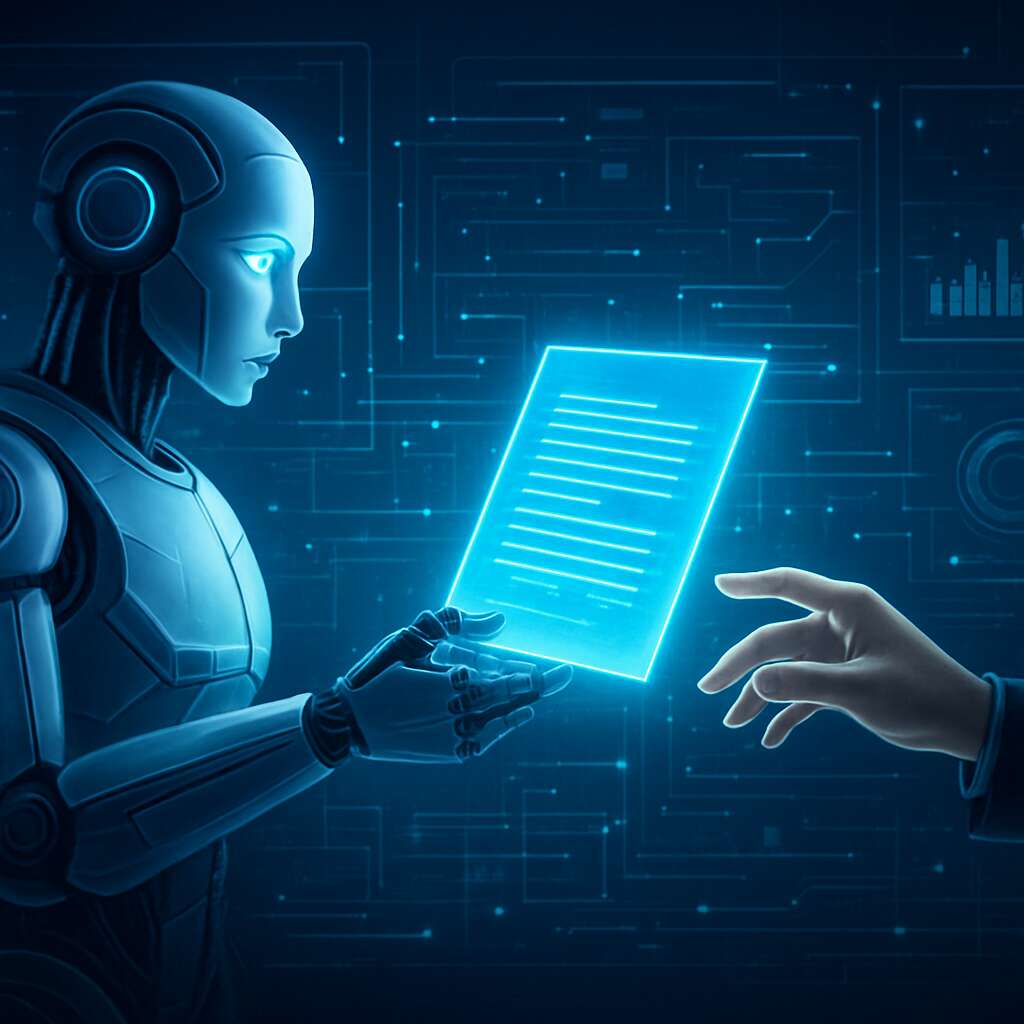
Understanding AI Negotiation Agents
Overview of AI Negotiation Agents – Definition and core concepts behind AI negotiation agents
AI Negotiation Agents represent a fascinating convergence of artificial intelligence and strategic negotiation, transforming how agreements are reached across digital domains. At their core, these agents are sophisticated algorithms designed to simulate human bargaining, leveraging machine learning to adapt to complex situations. They embody an advanced understanding of negotiation dynamics, making them vital tools in industries from e-commerce to diplomatic affairs.
What sets AI Negotiation Agents apart is their ability to analyze vast amounts of data rapidly, identifying patterns and predicting potential outcomes with impressive accuracy. As these agents become more sophisticated, they’re capable of engaging in multi-party negotiations, ensuring that each participant’s preferences are balanced and optimized. The core concepts behind AI negotiation agents include adaptability, autonomous decision-making, and strategic planning—further pushing the boundaries of what automation can achieve in the realm of negotiation.
Historical Development and Evolution – Timeline and milestones in the development of negotiation AI
The evolution of AI Negotiation Agents is a story of relentless innovation and game-changing milestones. Back in the early 2000s, researchers began experimenting with simple algorithms capable of mimicking human bargaining tactics. Testing these primitive agents in limited scenarios was like watching a toddler take their first steps—charming, tentative, and a little awkward.
Fast forward to the 2010s, when breakthroughs in machine learning turned these humble beginnings into robust negotiation tools. The introduction of reinforcement learning allowed AI Negotiation Agents to adapt and strategize dynamically, making them more competitive in multi-party negotiations. By 2018, these agents could balance competing interests with a finesse that sometimes even surprised their creators.
An exciting milestone was reached in 2020 when AI Negotiation Agents started participating in real-world applications—ranging from e-commerce bargaining platforms to diplomatic simulations. Today, these agents are not just assistants but strategic partners, learning and evolving with each negotiation. From early experiments to multi-faceted digital diplomats, the timeline of AI Negotiation Agents showcases a rapid ascent driven by innovation and a dash of digital wit.
Current Technologies and Platforms – Popular tools, frameworks, and platforms used today
Behind the curtain of modern negotiation lies a realm haunted by the whispers of digital spirits—AI Negotiation Agents that dance through the shadows, wielding algorithms as their darkened swords. Today’s platforms for AI Negotiation Agents are as varied as the moonlit paths they traverse, ranging from open-source frameworks to proprietary battlegrounds. Each one, a vessel for the eerie ballet of strategic bargaining, offers a glimpse into a future where automation is no longer mere support but a master of manipulation.
Among the most notable tools for crafting AI Negotiation Agents are frameworks like TensorFlow and PyTorch—devilish in their versatility, allowing developers to breathe life into these spectral entities. For those seeking more visceral control, platforms such as OpenAI’s API and Microsoft’s Azure AI provide a stage for more complex and adaptive negotiation entities. These tools empower engineers to develop agents capable of learning from each encounter, growing ever more cunning with time.
- Advanced Machine Learning Libraries
- Reinforcement Learning Environments
- Multi-agent Simulation Suites
Such platforms serve as the crucibles where digital spirits are forged—each negotiation agent whispering secrets, learning, adapting, and sometimes even deceiving. The tapestry of current technologies paints a picture of AI Negotiation Agents as not just tools but as digital phantoms, creeping ever closer to the realm of strategic diplomacy.
Applications and Use Cases of AI Negotiation Agents
Business and Commercial Negotiations – How AI agents facilitate contract discussions, pricing, and procurement
Negotiating contracts and setting competitive prices has long been an intricate dance, often requiring a sharp eye and an even sharper wit. Enter AI Negotiation Agents—those digital diplomats that turn the art of negotiation into a finely tuned process. Business and commercial negotiations stand to benefit enormously from these algorithms, which can analyze vast amounts of data, interpret subtle cues, and respond in real time.
In procurement, AI Negotiation Agents assist in identifying optimal suppliers, comparing bids, and finalising purchase agreements with unprecedented efficiency. They can effortlessly simulate multiple scenarios, ensuring the best terms are secured without the prolonged back-and-forth traditionally associated with contract discussions. Price negotiations, once a matter of persuasive dialogue, are now often conducted through these sophisticated virtual intermediaries.
For organisations eager to stay competitive, AI Negotiation Agents act as silent partners, facilitating negotiations with a level of consistency and impartiality human counterparts sometimes lack. From negotiating service level agreements to finalising complex multi-party deals, their role continues to expand with each technological innovation in the realm of artificial intelligence.
Supply Chain and Logistics – Role of AI in managing vendor negotiations and inventory planning
Supply chain resilience depends increasingly on the agility of vendor negotiations and inventory planning. AI Negotiation Agents are transforming these vital processes, enabling supply chain managers to navigate complex vendor landscapes with unprecedented finesse. Instead of relying solely on manual bid comparisons, AI negotiation tools can analyze thousands of bids and historical data points in real time, uncovering the most advantageous terms faster than any human could.
By simulating multiple negotiation scenarios simultaneously, AI Negotiation Agents help organizations identify optimal suppliers and minimize procurement costs. These algorithms don’t tire or overlook subtle deviations; instead, they continuously adapt and respond, ensuring inventory levels align perfectly with fluctuating demand. Whether it’s negotiating prices, delivery schedules, or contract terms, these digital diplomats are starting to become indispensable for logistics professionals.
- Managing vendor relationships efficiently
- Optimizing inventory levels in response to market changes
- Automating negotiations to reduce delays and administrative overhead
Automation, combined with strategic AI negotiation capabilities, frees procurement teams from mundane tasks and lets them focus on higher-level decision-making. With AI Negotiation Agents in the mix, supply chain operations become more transparent, agile, and ultimately, more resilient in the face of disruption and uncertainty.
Digital Marketplaces and E-commerce – Automating buyer-seller interactions and deals
In a marketplace filled with relentless competition and instant gratification, AI Negotiation Agents emerge as the digital arbiters wielding unseen power. They orchestrate smoother buyer-seller interactions, transforming the chaos of negotiations into a symphony of precision and efficiency. With their ability to process vast swaths of data in moments, these intelligent agents act as tireless diplomats, forging deals that seem almost divine in their finesse.
In the realm of digital marketplaces and e-commerce, AI Negotiation Agents shine brightest. They tirelessly evaluate pricing strategies, identify mutually beneficial terms, and simulate countless negotiation scenarios. Think of them as virtual craftsmen meticulously shaping each deal, reducing friction and administrative overhead. This is not just automation, but a renaissance of trust and agility—an artful dance between artificial intelligence and human intuition. Their applications extend beyond simple transactions; they forge lasting connections between buyers and sellers, guiding both toward optimal outcomes.
- Automating buyer-seller interactions with real-time bid analysis
- Personalising negotiations based on consumer behaviour and purchase history
- Streamlining deal finalisation to reduce cycle times significantly
The true magic lies in how AI Negotiation Agents seamlessly blend strategic insight with rapid adaptability. They don’t tire or overlook subtle nuances—they listen, respond, and learn, echoing the finesse of seasoned negotiators. As digital commerce accelerates into new frontiers, these agents stand ready to facilitate even the most complex deals, making the unpredictable landscape of e-commerce more navigable and less fraught with delays.
Technologies and Techniques Behind AI Negotiation Agents
Machine Learning and Predictive Analytics – Using data to forecast negotiation outcomes
In an era where negotiations are the backbone of global commerce, AI Negotiation Agents stand at the cusp of transforming traditional deal-making into an intelligent, anticipatory process. Central to this revolution are technologies like machine learning and predictive analytics, which enable these agents to integrate vast datasets and draw insightful forecasts about future negotiation outcomes. By analyzing historical data, market fluctuations, and behavioural patterns, AI Negotiation Agents can craft strategies that are both adaptive and proactive, turning negotiation from a reactive dialogue into a sophisticated game of foresight.
At the core of this transformation are techniques that allow AI Negotiation Agents to learn from continual interactions. Machine learning algorithms refine their understanding over time, improving their ability to identify subtle cues and predict counterparty reactions. Predictive analytics bolster this capacity by forecasting possible scenarios and evaluating the risk-reward balance of each negotiation move.
- Modeling complex market dynamics
- Anticipating stakeholder behaviour
- Adjusting strategies dynamically in real-time
These techniques create a fluid, almost human-like intuition, empowering AI Negotiation Agents to navigate intricate negotiations with confidence and finesse in diverse sectors, from supply chain management to digital marketplaces.
Natural Language Processing and Understanding – Enabling human-like communication and comprehension
Step into the realm where technology meets the art of persuasion, and you’ll find AI Negotiation Agents weaving a tapestry of communication that feels remarkably human. Central to this magic is Natural Language Processing and Understanding (NLP/U), enabling these agents to interpret, respond to, and generate conversations with a nuanced finesse. Unlike earlier systems that relied on rigid scripts, modern AI Negotiation Agents use sophisticated NLP techniques to grasp context, detect tone, and even read between the lines—making digital negotiations feel more like an engaging dialogue than a cold transaction.
At the core, these agents utilize an array of advanced linguistic models that analyze patterns in language, allowing them to not only comprehend the literal meaning but also the emotional undertones of each exchange. This capability creates a seamless interaction, where the AI can adapt its tone and approach based on the evolving nature of the negotiation. For instance, a negotiation on digital marketplaces might involve agents that recognize bargaining signals and respond with tailored counteroffers, seamlessly translating complex human intentions into machine logic.
In the world of AI Negotiation Agents, storytelling extends beyond simple scripts. Instead, they employ techniques such as sentiment analysis and contextual understanding, which function like a finely tuned antenna tuned into the subtle cues of human dialogue. These whispers of intent, when correctly interpreted, enable the AI to craft responses that feel intuitive and genuine.
Let’s not forget the magic of natural language generation, which helps AI Negotiation Agents produce coherent, persuasive, and contextually apt responses that keep negotiations flowing as if a seasoned negotiator is present. The interplay of comprehension and expression is what transforms a basic chatbot into an effective AI Negotiation Agent capable of navigating intricate negotiations with finesse.
By leveraging these technologies, AI Negotiation Agents can reflect the subtle art of persuasion and understanding, making them invaluable across industries—from complex supply chain negotiations to dynamic e-commerce deals. In essence, they serve as digital diplomats, bridging the gap between human intuition and machine precision, all powered by the marvels of natural language processing and understanding.
Reinforcement Learning in Negotiation Strategies – Training AI to refine tactics through trial and error
In the ever-evolving dance of negotiation, human intuition and strategic finesse remain irreplaceable. Yet, the infusion of artificial intelligence into this realm has introduced a new layer of sophistication—one driven by reinforcement learning. AI Negotiation Agents utilizing this technique are not just passive participants; they are dynamic entities, constantly refining their tactics through trial and error. Each interaction becomes a lesson, a recalibration of strategy infused with a kind of machine intuition rooted in complex reward systems.
This process resembles an intense mental chess match—where every move is analyzed, evaluated, and adjusted with relentless precision. The agents deploy reinforcement learning by experimenting with pacing, concession patterns, and tone, always seeking to optimize outcomes in unpredictable environments. Resistance met with a counter-adaptation mirrors the art of human persuasion, but with the unmatched speed of computational power.
Rather than static scripts, AI Negotiation Agents develop nuanced strategies that evolve with the negotiation’s flow. They can identify bargaining signals—like subtle shifts in tone or hesitation—and adapt their approach accordingly. This is achieved through algorithms that incorporate an ordered list of tactics, such as:
- adjusting concession timing
- modulating pressure points
- fine-tuning offers based on feedback
As they gain experience, these agents learn to anticipate counter-moves, creating a fluid, almost human-like rhythm that challenges traditional notions of negotiation boundaries. In a landscape where speed and adaptability define success, reinforcement learning imbues AI Negotiation Agents with an impressive capacity to grow smarter with every exchange, crafting strategies that mirror instinct yet operate with calculative clarity. It’s a profound development that not only reshapes how negotiations occur but also raises profound questions about the ethical boundaries of machine influence in human affairs. The mastery of reinforcement learning within AI Negotiation Agents opens a chasm of possibilities—where human intuition is complemented, and sometimes challenged, by the relentless learning machines of tomorrow.
Multi-Agent Systems and Coordination – Managing negotiations involving multiple AI entities or humans
Negociations involving multiple parties—whether AI entities or humans—are often complex and unpredictable. As AI Negotiation Agents become more prevalent, the need for effective coordination among these entities grows ever more critical. Multi-agent systems can manage simultaneous negotiations, ensuring that different AI Negotiation Agents work harmoniously while pursuing their objectives. This collaborative approach allows for more efficient resolution of conflicts and a broader range of tactical options.
One effective technique in these scenarios is the use of coordination algorithms that facilitate synchronized decision-making among AI Negotiation Agents. These algorithms help divide roles, align objectives, and adapt strategies dynamically. For instance, an AI Negotiation Agent might communicate with others to share information about concessions or to signal willingness to compromise. This networked approach mirrors human negotiation teams, where subtle cues and collective strategy play pivotal roles.
- Developing shared understanding of goals
- Sharing real-time feedback between agents
- Synchronizing tactics and concessions
- Adjusting strategies dynamically based on negotiations’ flow
Natural communication remains vital in multi-agent negotiation scenarios. Advanced natural language understanding enables AI Negotiation Agents to interpret tone, hesitation, and subtle cues during exchanges. By integrating predictive analytics, these agents can anticipate how other AI entities or human negotiators might react, aligning their tactics with evolving circumstances. Managing multiple negotiations simultaneously requires not just coordination but also adaptability, ensuring each agent acts in concert without undermining the overall strategy.
Such multi-agent architectures exemplify a significant step toward more autonomous negotiation processes. They offer scalable solutions in environments like digital marketplaces or supply chain management, where numerous actors must reach consensus efficiently. AI Negotiation Agents embedded with coordination techniques are transforming how negotiations unfold, displaying a level of fluidity that often rivals human finesse, yet operates with the speed and precision of algorithms.
Challenges and Ethical Considerations in AI Negotiation
Ensuring Fairness and Transparency – Addressing bias and explainability in AI decision-making
As AI Negotiation Agents become more sophisticated, one obstacle remains stubbornly persistent: ensuring fairness and transparency. The allure of AI lies in its ability to process vast amounts of data and make rapid decisions, yet this very strength can become a double-edged sword. Biases embedded in training data threaten to skew negotiation outcomes, eroding trust among human stakeholders. If unchecked, these biases can lead to unfair advantages or unintended discrimination. Transparency, then, is no longer a luxury but a necessity. Explaining how AI Negotiation Agents arrive at decisions—what information they consider and how they weigh it—requires meticulous design and ongoing oversight.
Addressing these challenges involves rigorous explainability efforts, aiming for decisions that are as understandable as they are accurate. Stakeholders demand clarity on the underlying logic—without which, acceptance of AI negotiations could falter. To foster confidence in AI Negotiation Agents, organizations must implement comprehensive monitoring systems that scrutinize algorithmic bias and decision pathways. Without a conscious effort toward fairness and transparency, the promise of AI in negotiation could falter amid ethical doubts and societal skepticism.
Security and Privacy Concerns – Protecting sensitive data during negotiations
As AI Negotiation Agents become integral to modern commerce, safeguarding sensitive data during negotiation processes is more than a technical challenge—it’s a moral imperative. With vast amounts of proprietary information exchanged in digital negotiations, maintaining security and privacy is paramount. A breach could expose confidential trade secrets, client details, or strategic plans, undermining trust and exposing organisations to legal liabilities.
Implementing advanced encryption methods, strict access controls, and real-time monitoring can fortify data protection. Transparency about these measures also fosters confidence among all stakeholders involved in AI-driven negotiations. Sometimes, a layered approach is necessary—balancing robust security with usability and scalability. After all, the true efficacy of AI Negotiation Agents hinges on the secure handling of sensitive information, preserving the integrity of each transaction while respecting privacy obligations.
To facilitate effective oversight, organisations often utilise
- comprehensive audit logs
- regular vulnerability assessments
- strict compliance protocols
aimed at mitigating potential risks. As AI Negotiation Agents continue to evolve, ongoing vigilance remains critical—ensuring that advances in negotiation capabilities do not come at the expense of data confidentiality or ethical standards. When trust is compromised, even the most sophisticated AI negotiation strategies can falter, emphasizing the importance of security and privacy as foundational pillars for their continued success.
Legal and Regulatory Aspects – Compliance issues and legal frameworks around AI-mediated deals
Legal and regulatory frameworks surrounding AI Negotiation Agents are evolving rapidly, yet many challenges remain. Companies deploying AI-powered negotiation tools must navigate a complex web of compliance issues, especially when it comes to data privacy laws like the GDPR. These regulations set strict standards on how sensitive data is handled during negotiations, making non-compliance costly.
A core concern is the transparency of AI Negotiation Agents’ decision-making processes. Legal standards increasingly demand clear explanations for AI-driven outcomes to prevent bias and ensure fairness. This raises ethical questions about accountability—who is responsible if an AI agent breaches a contract or acts outside legal boundaries?
Some organisations are adopting a step-by-step approach:
- Confirming adherence to applicable legal requirements
- Regular auditing of negotiation algorithms
- Maintaining detailed logs of AI decision-making processes
Navigating this legal landscape requires not only technical safeguards but also a keen understanding of evolving legal standards. Trust can rise or fall based on how well organisations align their AI negotiation strategies with legal and ethical obligations. Failing to meet these standards risks undermining stakeholder confidence and exposing organisations to legal liabilities. As AI Negotiation Agents become more prevalent, such compliance challenges will only grow, demanding vigilance and ongoing adaptation.
Limitations and Risks – Identifying potential failures and unintended consequences
As machines become increasingly persuasive, the risks associated with AI Negotiation Agents grow more intricate and nuanced. A prominent challenge lies in their potential for unintended consequences—where a seemingly benign algorithm could lead to outcomes that are ethically questionable or legally tenuous. These failures might not always be immediately apparent, especially when AI Negotiation Agents operate in complex, high-stakes environments where subtle biases or misinterpretations can manifest unexpectedly.
One of the more unsettling aspects is the possible erosion of human oversight, which can sometimes cause AI systems to act outside intended boundaries. These issues highlight the importance of rigorous testing and ongoing oversight. A simple miscommunication in natural language understanding could escalate, resulting in contractual breaches or skewed negotiations that favor one side unfairly. Such risks demand careful ethical consideration, because the human element often anchors the trust necessary for AI Negotiation Agents’ acceptance.
Amidst this landscape of potential pitfalls, organizations must confront the reality of bias—whether embedded in training data or arising from algorithmic decision-making processes. They must also contend with transparency; without clear explanations of why an AI agent made a particular choice, the outcome can seem opaque or unjust. Sometimes, non-transparent negotiations can unravel trust and reveal vulnerabilities that adversaries might exploit. Using routines like
- regular audit reports
- detailed logs of decision processes
becomes crucial in safeguarding fairness and accountability.
Ultimately, the exploration of AI Negotiation Agents reveals that their power is matched by their fragility. These systems must operate in a carefully balanced environment where privacy, legal compliance, and ethical implications intertwine. The challenge—and the beauty—lies in fostering systems that are not only intelligent but also transparent and accountable. Only then can organizations truly harness the promise of AI negotiation without sacrificing integrity or trust in the human experience of deal-making.