
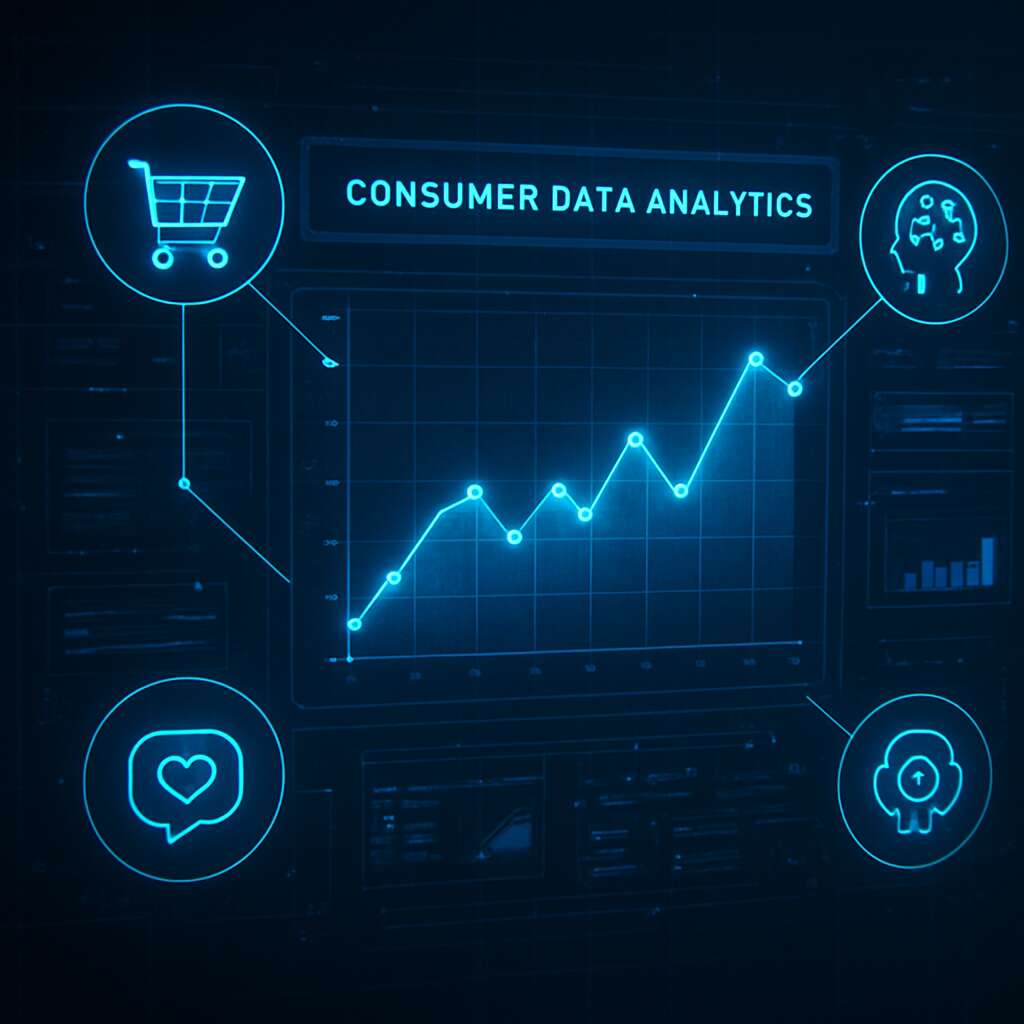
Understanding AI’s Role in Predictive Consumer Behavior
Defining Predictive Consumer Behavior – Overview of predictive analytics in consumer insights
In today’s ever-evolving marketplace, understanding and anticipating consumer needs has become more than an art—it’s a science driven by AI in Predictive Consumer Behavior. This technological evolution harnesses the power of predictive analytics to unlock patterns hidden in vast datasets, revealing the subtle intricacies behind consumer motivations. As businesses strive to stay ahead, the ability to forecast purchasing decisions and preferences through AI has transformed traditional marketing strategies into more proactive, personalized experiences.
Defining predictive consumer behavior involves exploring how advanced algorithms analyse historical interactions to create a detailed portrait of future actions. This isn’t merely about knowing what consumers have done, but about anticipating what they might do next with impressive accuracy. Techniques such as machine learning augment human intuition, offering insights that are both nuanced and actionable. By leveraging AI in Predictive Consumer Behavior, companies navigate the turbulence of shifting trends, capturing consumer attention long before competitors even notice the move.
- Pattern recognition
- Customer segmentation
- Real-time data analysis
Integrating these components allows for a far more refined understanding of future consumer actions—a vital advantage in a competitive landscape. This convergence of data and insight underscores the profound impact of AI on predictive analytics, transforming raw information into strategic foresight that shapes the future of consumer engagement.
Basics of Artificial Intelligence in Marketing – Introduction to AI technologies used in consumer analysis
Artificial Intelligence in marketing has revolutionised how companies understand consumer patterns. It’s no longer enough to track past purchases—AI in Predictive Consumer Behavior analyzes vast datasets to forecast future actions with precision. Using sophisticated algorithms, businesses can identify subtle shifts in consumer preferences before they become mainstream.
At the heart of this technology are tools like machine learning and pattern recognition, which sift through data to uncover insights previously hidden from human analysts. These systems break down complex customer data into manageable segments, allowing brands to personalize experiences effectively. Naturally, real-time data analysis plays a pivotal role, enabling immediate responses to emerging trends and customer needs.
- Customer segmentation to craft targeted marketing messages.
- Pattern recognition to predict upcoming purchasing decisions.
- Real-time data analysis to adapt strategies swiftly.
AI in Predictive Consumer Behavior isn’t just about understanding what consumers have done; it’s about anticipating what they will do next. This predictive capacity empowers businesses to stay one step ahead, making smarter decisions based on data-driven insights rather than intuition alone.
Historical Evolution of AI in Consumer Insights – Timeline of advancements and key breakthroughs
From the flickering dawn of artificial intelligence, the evolution of AI in Predictive Consumer Behavior has been nothing short of a mesmerizing journey through innovation and insight. In the early 2000s, the scene was set with rudimentary algorithms capable only of simple pattern recognition, which felt akin to glimpsing shadows on a wall, hinting at something greater looming beyond. As the years unfurled, breakthroughs in machine learning transformed these shadows into vivid, actionable predictions that could anticipate consumer needs with startling precision.
By the 2010s, the advent of neural networks and deep learning catalyzed a seismic shift, allowing AI systems to analyse data streams in real time and discern subtle shifts in consumer preferences before they even surfaced in overt behavior.
- Progressive refinement of customer segmentation techniques
- Enhanced accuracy in pattern recognition
- Rapid, real-time data analysis
Each milestone in this timeline propelled AI in Predictive Consumer Behavior closer to the realm of intuitive understanding, bridging the gap between human intuition and algorithmic prowess.
This historical thread underscores how AI’s capability to harness vast datasets—turning signals into stories—has revolutionized consumer insights, transforming the very fabric of marketing strategy from reactive to prospective. It’s a tapestry woven with innovation, unveiling trends that were once hidden, and charting new territories for businesses eager to stay ahead of the curve.
Key AI Technologies Driving Consumer Predictions
Machine Learning Algorithms – How machine learning models predict consumer preferences
In the labyrinthine corridors of consumer mindsets, machine learning algorithms act as the vigilant sentinels, extracting subtle patterns that evade casual observation. AI in Predictive Consumer Behavior harnesses these models to decipher intricate preference architectures rooted in seemingly inconspicuous data points. By continuously learning from evolving datasets—ranging from purchase histories to social media footprints—these algorithms shape a dynamic map of consumer intent, enabling brands to anticipate desires before they even surface.
Central to this process are neural networks and decision trees, intricately woven into predictive models that simulate human intuition but with the precision of raw data processing. As these models refine their predictions, they manipulate variables like seasonality, sentiment shifts, and cultural nuances, capturing consumer preferences that are often subconscious. To illuminate the complexity, consider a list of AI in Predictive Consumer Behavior technologies that power these insights:
- Deep learning models for sentiment analysis
- Clustering algorithms for segmentation
- Natural language processing to interpret consumer feedback
These technological marvels do more than just track; they predict, mapping the subtle terrains of consumer psychology with uncanny accuracy, transforming raw data into actionable intelligence for marketers and decision-makers alike. The interplay of these advanced AI algorithms ensures that predictive models not only reflect current preferences but evolve with the shifting tides of consumer behavior—making AI in Predictive Consumer Behavior an indispensable tool in the modern marketing arsenal.
Neural Networks and Deep Learning – Impact of advanced AI models on consumer data analysis
Neural networks and deep learning are at the forefront of AI in Predictive Consumer Behavior, revolutionising how brands interpret vast expanses of data. Unlike traditional models that rely on explicit rules, these sophisticated AI systems mimic human intuition by recognising complex patterns within consumer data. Their ability to process thousands of variables simultaneously allows for more nuanced predictions that reveal subconscious preferences.
Impactful AI technologies such as deep learning models for sentiment analysis and natural language processing are transforming raw data into an understanding of evolving consumer moods and attitudes. These tools help marketers decipher social media footprints, online reviews, and browsing patterns, turning scattered signals into coherent insights.
- Enhanced accuracy in predicting purchase intentions
- Refined segmentation based on behavioural nuances
- Real-time adaptation to shifting consumer sentiment
By harnessing neural networks and deep learning, AI in Predictive Consumer Behavior becomes a beacon illuminating the subtle, often subconscious preferences that shape consumer journeys. This is not just data analysis; it’s a dynamic approach that places brands one step ahead in bustling markets where understanding the human element amidst data complexity truly matters.
Natural Language Processing (NLP) – Analyzing consumer sentiment and behavior through language
In a world flooded with data, understanding the subtle whispers of consumer sentiment has become both an art and a science—particularly through AI in Predictive Consumer Behavior. One of the most refined tools in this arena is Natural Language Processing (NLP), which pierces the surface of spoken and written language to extract genuine emotional currents. It’s as if we’re tuning into the beneath-the-surface dialogues of a collective consciousness, revealing layers of consumer attitudes often hidden from plain sight.
NLP algorithms analyze language patterns with impressive nuance, recognizing shifts in tone, intent, and sentiment across social media footprints, reviews, and online conversations. Through this process, brands gain an intimate understanding of evolving consumer moods—an understanding that goes beyond simple demographics to the very psychology fueling decision-making. These insights are invaluable, especially when refined with sophisticated AI algorithms that interpret context and subtleties in natural language.
- Sentiment analysis: Deciphering positive, negative, or neutral emotions from textual data
- Behavioral predictions: Identifying emerging preferences or shifting values based on language use
- Trend spotting: Detecting cultural shifts or mood swings that influence consumer journeys
By harnessing these elements, AI in Predictive Consumer Behavior weaves raw words into a tapestry of understanding—illuminating subconscious influences and guiding strategic marketing endeavors that resonate on a deeply human level. It’s less about data for data’s sake and more about revealing the authentic voice of the consumer, one word at a time.
Predictive Analytics Platforms – Popular tools and software integrating AI for consumer insights
In the shadowy corridors of digital commerce, where every whisper of consumer thought echoes unseen, AI in Predictive Consumer Behavior emerges as a spectral guide—illuminating the unseen depths of human desire. It is a realm where data becomes more than mere numbers; it transforms into a hauntingly precise compass, revealing the hidden currents steering buying choices. The sophistication of predictive analytics platforms fuels this arcane craft, integrating AI with uncanny finesse to uncover patterns buried within the subconscious layers of language and behavior.
Among these instruments, some platforms stand as modern-day seers—powerful tools like Salesforce Einstein, Adobe Sensei, and SAS Analytics weave complex algorithms that forecast preferences with chilling accuracy. These platforms harness machine learning algorithms to anticipate shifts in consumer mood and emerging trends, teasing out anomalies before they manifest fully. As if deciphering an ancient script, they translate sprawling social conversations, reviews, and online footprints into meaningful insights that haunt the corridors of marketing strategy.
Computer Vision Applications – Utilizing visual data to understand consumer behavior
In an era where images speak louder than words, the application of computer vision within AI in Predictive Consumer Behavior unlocks a realm of possibilities that once seemed reserved for science fiction. By harnessing visual data, brands can decode subtle cues—facial expressions, gestures, and even eye movements—that betray authentic consumer reactions. This insight provides a more nuanced understanding of purchasing motivations, often hidden beneath conscious awareness.
For instance, by analyzing in-store foot traffic and product engagement through advanced visual analytics, businesses gain a more visceral sense of consumer attraction points. Such applications are transforming retail environments into living labs—where every glance and hesitation is registered and interpreted. The result? A sophisticated layer of predictive insights emerging from raw visual data that enhances traditional consumer analytics.
- Facial Expression Recognition: Monitoring emotional responses during product trials or advertisements.
- Gesture and Posture Analysis: Understanding consumer interest levels based on body language cues.
- Environmental Interaction Tracking: Observing how shoppers navigate and engage with visual merchandising displays.
This visual dimension of AI in Predictive Consumer Behavior empowers brands to craft targeted marketing strategies with surgical precision—epitomizing the potential of AI to reveal insights that are both subtle and profound. The fusion of AI and computer vision creates a spectral lens through which the unseen depths of consumer desire are illuminated, transforming passive observation into active prediction. It is in these shadowy corridors of data that the future of consumer insights is being rewritten, one pixel at a time.
Applications and Benefits of AI-Driven Predictive Consumer Behavior
Personalized Marketing Strategies – Tailoring content and offers based on predictive data
In a world where consumer choices unfold like intricate tales woven by unseen webs, AI in Predictive Consumer Behavior emerges as the maestro of this silent symphony. Imagine algorithms that don’t just observe but anticipate, guiding brands through the labyrinth of human desire and intent. This magic transforms raw data into vivid narratives, revealing patterns and preferences with uncanny accuracy. Such insights allow businesses to craft personalized marketing strategies that resonate deeply with each individual, almost as if they have a secret glimpse into their minds.
Personalized marketing strategies—tailored content, bespoke offers, and timely communications—are the fruits of harnessing AI in Predictive Consumer Behavior. By weaving predictive analytics into their fabric, companies ensure that every interaction feels both natural and meaningful. Instead of blanket campaigns, brands now engage consumers with precision, fostering loyalty and enhancing experience. As a result, marketing becomes not just about selling but about telling compelling stories that align perfectly with consumer aspirations. This thoughtful approach, driven by AI, transforms traditional advertising into a mystical art of connection and understanding.
Customer Segmentation and Targeting – Enhancing segmentation accuracy with AI insights
In the intricate dance of commerce, understanding the subtle rhythms of consumer preference remains the ultimate quest. AI in Predictive Consumer Behavior emerges as a masterful interpreter, whispering secrets between the beats of buying patterns and the silent desires shimmering just beneath the surface. It harnesses a symphony of sophisticated algorithms—each note tuned to reveal the unseen motives that drive choice—crafting a melody of insight that guides businesses through the labyrinth of human wants.
At the heart of this evolution lies customer segmentation and targeting, where AI profoundly elevates accuracy. By analyzing vast torrents of data—past purchase history, browsing habits, social interactions—the technology discerns distinct consumer archetypes with a finesse that would humble even the most seasoned marketer.
Elegant in its precision, AI in Predictive Consumer Behavior facilitates an ordered and layered segmentation process, allowing brands to identify micro-trends and niche preferences that were once obscured in noise. These refined segments enable tailored campaigns, fostering a connection that feels both intentional and personal, weaving brands seamlessly into the tapestry of each consumer’s life.
- Identification of subtle affinity groups based on behavioural clues
- Real-time adaptation of marketing messages to emerging trends
- Execution of hyper-targeted advertising that resonates and persuades
The benefit? Engagement becomes more than a transactional act; it transforms into an artful dialogue—a waltz where every step is accentuated by the nuanced understanding cultivated through AI’s predictive prowess. For companies navigating the complex ecosystems of modern consumer behavior, seamless and intelligent segmentation is no longer a luxury but an imperative—an unbroken thread stitched into the fabric of an empathetic, data-driven connection.
Churn Prediction and Customer Retention – Using AI to identify at-risk consumers and optimize loyalty
Businesses are increasingly turning to AI in Predictive Consumer Behavior to gain an edge in customer retention. By analyzing patterns in purchasing history, browsing habits, and social interactions, AI systems can identify consumers who are showing signs of disengagement long before they turn away. This proactive approach allows companies to intervene with personalised offers or tailored communication, transforming loyalty efforts from reactive to strategic.
Churn prediction is at the heart of this process. AI models leverage vast datasets to discern subtle signals indicating a customer’s likelihood to leave. Acting on these insights, brands can implement targeted retention initiatives, reducing customer turnover significantly. Engagement becomes less about generic messaging and more about a meaningful dialogue—one where understanding at-risk consumers is precise and perceptive.
One of the greatest benefits of AI in Predictive Consumer Behavior is the ability to execute hyper-targeted marketing campaigns. This means delivering messages that resonate deeply, based on individual preferences and behavioural clues. Retaining a customer then becomes an art—guided by data, driven by empathy—making loyalty a natural extension of personalized interaction.
Product Recommendations – Boosting conversion rates through predictive algorithms
In a marketplace where consumer preferences shift with the breeze of fashion and fad, AI in Predictive Consumer Behavior acts as the seasoned seer of retail strategy. Harnessing sophisticated algorithms, companies can now anticipate what a customer might want before they even realise it themselves. This innovative application of AI transforms ordinary product recommendations into a bespoke shopping experience, where each suggestion resonates on a personal level.
The ability to accurately analyze purchasing history, browsing habits, social interactions, and even subtle behavioral clues has led to a remarkable increase in conversion rates. Brands adept at utilising AI in Predictive Consumer Behavior can create hyper-targeted campaigns that feel less like marketing and more like a considerate gesture from an old friend. For instance, a precise consumer segmentation allows firms to sift through vast data pools, identifying niche preferences with surgical accuracy.
- Customer intent signals
- Behavioral clustering
- Personalised offers aligned with user journey
All of this results in highly relevant product recommendations that encourage browsing, engagement, and eventual purchase. When the right message lands in the right inbox at the right moment—it’s almost as if the brand has a secret window into each consumer’s subconscious. Utilizing AI in Predictive Consumer Behavior, companies turn data into a dialogue—an ongoing conversation that feels intuitive and genuine. It’s an elegant dance of data-driven insights and human empathy—delivering a more satisfying, singular shopping experience at every turn.
Demand Forecasting – Improving inventory and supply chain decisions with AI models
Predictive demand forecasting is revolutionising retail logistics and supply chain management in ways few expected. By harnessing AI in Predictive Consumer Behavior, companies can accurately anticipate inventory needs based on emerging trends and consumer preferences. This results in fewer overstocked items and reduced stockouts, aligning supply with real-world demand patterns with surprising precision.
Unlike traditional models, AI-driven demand forecasting sifts through vast datasets—ranging from purchase history to seasonal shifts—to generate nuanced predictions. This allows for more informed decisions about procurement and inventory control, ultimately reducing waste and increasing profitability.
A typical process involves:
- Analyzing real-time sales data to identify shifting patterns
- Monitoring social media and online chatter for trending products
- Adjusting inventory levels proactively based on predictive analytics
The benefits are tangible. Businesses become more agile; they can respond swiftly to market fluctuations and consumer behavior changes. The capacity of AI in Predictive Consumer Behavior to fine-tune demand forecasts means retail operations operate with greater efficiency, fewer disruptions, and improved customer satisfaction. When inventory aligns perfectly with consumer intent signals, supply chain decisions are no longer guesses, but insights driven by the best data available.
Enhanced Customer Experience – Creating more engaging and relevant consumer interactions
Imagine walking into a store where every interaction feels tailor-made, almost as if the shelves themselves understand your desires before you even voice them. The marvel of AI in Predictive Consumer Behavior transforms this fantasy into reality. By harnessing the subtle signals embedded in consumer data, businesses craft experiences that resonate deeply with individual preferences and anticipations. This isn’t just about sales; it’s about cultivating a relationship rooted in understanding and relevance.
The technology allows companies to analyze an array of customer interactions — from browsing habits and purchase history to online chatter and social media trends. Such insightful data guides personalized marketing strategies that feel intuitive rather than intrusive. For example, a fashion retailer might recommend a jacket that aligns perfectly with a customer’s recent search for winter wear, yet the AI in Predictive Consumer Behavior offers much more. It anticipates future needs, presenting items before the consumer even considers them, thus creating a browsing experience that feels both spontaneous and thoughtful.
A significant advantage of AI-driven personalization is its ability to foster engaging and memorable consumer interactions. When content and offers are customized precisely to an individual’s current shopping journey, it increases engagement and builds loyalty. Think about a targeted email campaign that reflects a customer’s latest interests, or a website interface that dynamically adapts to their shopping style. Businesses utilizing AI in Predictive Consumer Behavior report higher retention rates and happier customers because interactions feel less transactional and more conversational.
This adaptive approach extends into innovative applications such as sentiment analysis, where natural language processing (NLP) uncovers underlying consumer attitudes from vast datasets. By understanding the emotional tone behind online reviews or social media comments, companies can shape their messaging in ways that foster authenticity. Alongside it, AI’s mastery over personalized marketing strategies ensures every touchpoint feels uniquely crafted, transforming routine shopping into an engaging experience.
As AI models continue to refine their understanding of consumer behavior patterns, companies can seamlessly blend data-driven precision with human-centric storytelling. The result? An environment where consumer interactions aren’t simply reactive but deeply anticipatory, aligning perfectly with customer expectations and intentions. This is the essence of AI in Predictive Consumer Behavior — weaving technology and empathy into every touchpoint for a truly captivating customer journey.
Challenges and Future Trends in AI and Predictive Consumer Behavior
Data Privacy and Ethical Considerations – Balancing personalization with consumer privacy rights
As technology advances, the terrain of AI in Predictive Consumer Behavior becomes increasingly intricate and delicate. One of the most formidable challenges lies in safeguarding data privacy amidst the allure of hyper-personalization. Consumers yearn for tailored experiences, yet rightly demand control over their personal information. Balancing these desires requires a nuanced approach—one that respects privacy rights while harnessing AI’s potential to decode consumer patterns. Ethical considerations come to the fore, demanding transparency in how consumer data is gathered and used.
Future trends suggest a shift toward more sophisticated privacy-preserving techniques, such as federated learning, which allow AI models to learn from data without exposing sensitive information. An intriguing feature of AI in Predictive Consumer Behavior is its capacity to adapt dynamically, creating a seamless flow between personalization and privacy. As AI’s capabilities evolve—driven by developments in natural language processing and neural networks—the industry must also embrace a culture of responsibility. This ensures that predictive analytics continue to serve consumers’ best interests without crossing ethical boundaries.
An ongoing dialogue between innovation and regulation will shape this journey. In this evolving landscape, the challenge remains: how to push the boundaries of AI in Predictive Consumer Behavior while maintaining strict data privacy standards and ethical integrity? Solutions will likely involve a combination of regulatory frameworks, technological advancements, and a renewed focus on consumer trust—fueling a future where AI and ethics walk hand in hand.
Data Quality and Bias Mitigation – Ensuring accuracy and fairness in AI predictions
Accuracy and fairness in AI in Predictive Consumer Behavior remain ongoing challenges. If predictions are off or biased, trust erodes rapidly. Ensuring data quality is vital; poor inputs lead to unreliable outputs. Bias can stem from skewed training data, resulting in unfair targeting or misjudgment of consumer preferences. Authenticity of data sources is critical—quietly, small errors compound over time.
One emerging trend is the integration of bias mitigation techniques into AI models. Techniques like fairness-aware algorithms and balanced datasets help reduce disparities. When combined with rigorous validation, these methods improve prediction integrity. An ordered list of common hurdles includes:
- Data inconsistency
- Model bias amplification
- Overfitting or underfitting
- Limited representativeness of demographic groups
Future trends in AI in Predictive Consumer Behavior point toward smarter bias mitigation. Synthetic data generation and federated learning emerge as solutions that improve data fairness and privacy simultaneously. These advancements promise to make AI models more transparent and accountable. They also pave the way for more equitable consumer insights, fostering trust and compliance.
Developers are rushing to integrate fairness-first design principles. Technology such as explainable AI helps clarify how predictions are made—an essential for accountability. This is especially relevant as the industry grapples with balancing innovation and regulation. As models become more sophisticated, the emphasis on data integrity will only intensify, ensuring predictions serve consumers fairly and accurately.
Integration with Existing Systems – Overcoming technical hurdles in deployment
Implementing AI in Predictive Consumer Behavior is not without its hurdles. Many companies face technical challenges when integrating these complex models into existing systems. Compatibility issues with legacy infrastructure often lead to delays and increased costs, making deployment a delicate process. Systems need to communicate seamlessly, but data formats, platforms, and processes can differ vastly from one organisation to another.
One significant obstacle is ensuring the stability and scalability of AI models across varying datasets and consumer segments. To address this, organizations are increasingly adopting a multilayered approach. For example, they might use
- modular architecture for easier upgrades
- automated validation tools to detect biases early
to smooth out these deployment bumps. The goal is to create a flexible framework capable of handling real-time data while maintaining prediction accuracy.
Looking ahead, future trends in AI in Predictive Consumer Behavior point toward more sophisticated solutions like federated learning and synthetic data generation. These innovations help overcome privacy concerns and improve model fairness without sacrificing data richness. Such advances are shaping an environment where AI models become more transparent and easier to audit, fostering credibility with consumers and regulators alike.
Emerging Trends and Innovations – Future developments shaping predictive consumer analytics
As the relentless tide of consumer data swells, the waves of innovation in AI in Predictive Consumer Behavior threaten to reshape our understanding of market dynamics. Future trends hint at advancements like federated learning, a technique that allows models to learn from decentralized data without compromising privacy. This ensures brands can analyze authentic consumer insights while respecting individual privacy rights—an equilibrium that often feels like chasing shadows in the mist.
Emerging innovations such as synthetic data generation promise to fill gaps where real-world data is scarce or sensitive, enabling more comprehensive and fair consumer analytics. These breakthroughs will not only refine prediction accuracy but also enhance model transparency, fostering trust among consumers and regulators. Such developments are propelling AI in Predictive Consumer Behavior toward a realm where ethical considerations are woven into the very fabric of predictive models, making them more human-centric and ethically sound.
- Increasing adoption of federated learning for privacy-preserving insights
- Growth of synthetic data to mitigate bias and data scarcity
- Enhanced interpretability of AI models for greater transparency
Meanwhile, the advent of explainable AI tools permits businesses to illuminate the decision paths of complex algorithms, transforming opaque models into trusted companions in predictive consumer analytics. As these innovations unfold, the horizon reveals a landscape where AI in Predictive Consumer Behavior becomes not just smarter, but more ethically grounded and accessible, paving the way for more meaningful engagement with consumers across the UK and beyond.
The Role of AI Ethics in Consumer Data – Building trust and accountability in AI-driven insights
In the race to understand consumers before they even know themselves, the role of AI in Predictive Consumer Behavior is undeniably transforming the game. Yet, as the technology advances, so do the challenges — especially around ethics, transparency, and trust. Consumers and regulators alike are scrutinizing how their data is used, demanding accountability and fairness in AI-driven insights.
Building trust isn’t just an ethical obligation; it’s a strategic imperative. Transparent models that explain their decision paths foster stronger relationships and lessen scepticism. That’s why businesses are increasingly adopting explainable AI tools, making complex algorithms more accessible and understandable. Transparency in AI in Predictive Consumer Behavior isn’t just a trend; it’s the foundation upon which loyalty is built.
Yet, potential pitfalls remain. Without careful oversight, bias can seep into predictions, skewing results and risking brand reputation. To navigate these turbulent waters, organizations must prioritize ethical AI practices, embedding privacy and fairness into their core strategies. Engage in open dialogues with consumers, clarify data usage, and ensure compliance with evolving regulations. In doing so, brands will carve pathways through the fog of uncertainty, ensuring AI in Predictive Consumer Behavior becomes a trustworthy compass rather than an opaque enigma.