
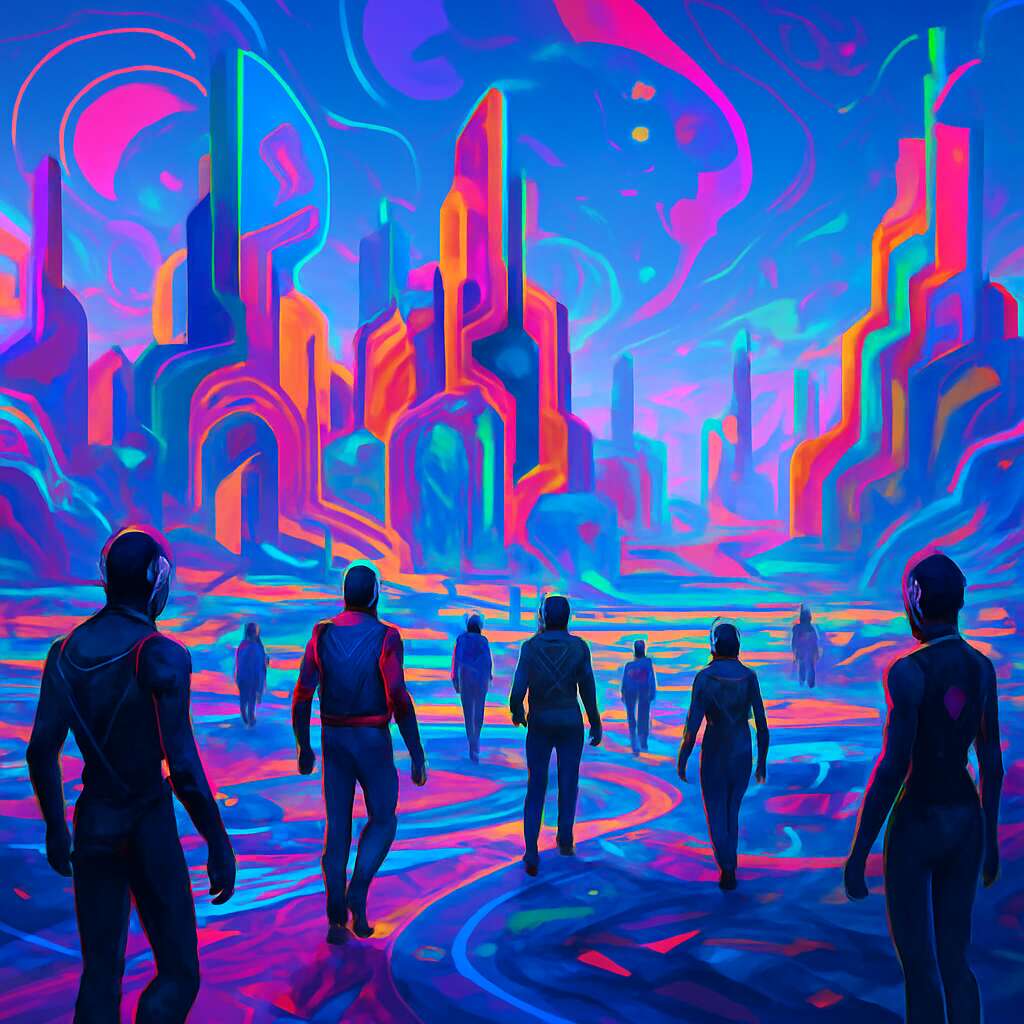
The Evolution of Video Game Creation with AI
Understanding AI-Generated Content
The evolution of video game creation has taken an astonishing leap into the realm of the unforeseen. AI-Generated Video Games are rewriting the script—no more relying solely on human imagination; machines are now co-authors of digital worlds. The rise of AI technology makes it possible to craft immersive experiences at a lightning-fast pace, transforming what used to take years into mere months, or even weeks.
Gone are the days when game development was a painstaking process reserved for large teams drowning in spreadsheets and caffeine. With AI-generated content, developers can generate complex landscapes, character dialogues, and dynamic storylines with a few clever prompts. A typical game in this brave new world may feature:
- Procedurally generated environments
- Unique character interactions powered by deep learning
<li Adaptive narratives tailored to player choices
The fusion of creativity and artificial intelligence has not only accelerated production timelines but also introduced an entirely new layer of unpredictability that keeps players guessing. The integration of AI into video game creation underscores a paradigm shift—one where game designers are no longer limited by conventional storytelling or graphics. Instead, they are harnessing algorithms to forge worlds that evolve in real-time, promising an era of games that are truly one-of-a-kind experiences.
Types of AI Used in Game Generation
The evolution of video game creation has been nothing short of revolutionary, with AI-Generated Video Games at the forefront of this technological renaissance. Traditional development—an arduous process that often stretched years—has been transformed into an astonishingly rapid cycle thanks to advances in artificial intelligence. These innovations allow creators to craft sprawling worlds, complex characters, and dynamic storylines that adapt in real-time, all with minimal manual input.
At the core of this transformation lie various types of AI used in game generation. Procedural generation algorithms play a pivotal role, enabling the creation of intricate environments that feel both expansive and organic. Language models, such as GPT-based systems, facilitate immersive dialogues and narrative branching, giving each player’s experience a unique flavor. Machine learning techniques help optimise character animations and gameplay mechanics, making the virtual worlds more believable and engaging. When combined, these AI types form a formidable toolkit that is reshaping what it means to develop a game in the 21st century.
Benefits of AI-Generated Video Games
The landscape of video game creation has been irrevocably altered by the rise of AI-Generated Video Games, casting a shadowy glow over traditional methods. These innovations whisper promises of infinite worlds, where every corner feels carved from the darkness of the unknown. With AI, developers can craft sprawling, immersive environments that breathe and evolve with each player’s step—no longer confined by the limitations of manual design. The art of storytelling transforms into a living entity, capable of branching into unpredictable yet captivating narratives.
As the technology continues to mature, the benefits of AI-Generated Video Games become increasingly evident. They allow for personalization on a scale that was once unimaginable, wrapping players in bespoke experiences tailored to their choices. This meta-narrative complexity isn’t just for show; it deepens emotional engagement, pulling gamers deeper into the abyss of their virtual worlds. It’s a haunting, mesmerizing evolution in game design—one that blurs the line between creator and creature, beckoning us ever further into a realm of endless, shadowy possibilities.
Challenges and Limitations
Revolutionising the creative process, AI-Generated Video Games are pushing the boundaries of what’s possible in game design. As the technology matures, it faces a series of challenges that cannot be ignored. The intricacy of crafting believable worlds and compelling narratives often clashes with the current limitations of AI algorithms. Sometimes, elements in AI-generated content can feel disjointed or surreal — a ghostly echo of human intuition still desperately needed to guide development.
One of the biggest hurdles is maintaining coherence across sprawling, dynamic environments. Without careful oversight, AI can generate content that feels inconsistent or superficial. Developers also grapple with computing power requirements, as complex AI models demand significant resources, limiting scalability and accessibility. These challenges underline an essential truth: even with rapid advancements, AI-Generated Video Games still require human artistry to craft truly haunting, immersive experiences.
In exploring the evolution of game creation, it’s fascinating to observe how the process has shifted from handcrafted artistry to a ghostly dance with machines. This transition introduces unique limitations—such as AI’s tendency to overfit or produce repetitive patterns—that developers continue to wrestle with. Keeping AI aligned with players’ unpredictable desires remains a challenge, as fidelity in storytelling and world-building is paramount. The journey toward truly innovative AI-generated content is ongoing, and the shadows cast by these limitations serve as both a warning and a beacon for future breakthroughs.
Key Technologies Powering AI-Generated Video Games
Procedural Content Generation (PCG)
At the heart of AI-Generated Video Games lies a fascinating array of technological marvels, revolutionising how worlds are created and stories unfold. One such cornerstone is Procedural Content Generation (PCG), a process that equips developers with the ability to craft expansive, immersive environments with minimal manual effort. This technology enables the creation of sprawling landscapes, intricate dungeons, and dynamic ecosystems that feel both organic and unpredictable.
What makes PCG stand out in AI-Generated Video Games is its reliance on sophisticated algorithms that simulate natural patterns. These algorithms can generate everything from terrain textures to complex narratives, ensuring each gameplay experience remains fresh. Often, the algorithms employ techniques such as fractals, noise functions, or neural networks. Integrating these methods, developers can produce endless variations of game elements that surprise even seasoned players.
To facilitate seamless content creation, many AI tools leverage machine learning models trained on vast datasets of existing game environments and assets. Processes involve
- generative adversarial networks (GANs)
- deep learning frameworks
- reinforcement learning algorithms
that enhance the richness and realism of generated materials. The result? AI-Generated Video Games with worlds that adapt and evolve, capturing the imagination of players across the globe. This innovation isn’t just changing how games are made; it’s inspiring a new era where creativity and technology intertwine seamlessly.
Machine Learning and Neural Networks
When considering the technological backbone of AI-Generated Video Games, machine learning and neural networks stand out as transformative forces. These advanced algorithms enable games to craft worlds that are not only interactive but also uniquely tailored to each player’s experience. Deep learning models analyze vast amounts of data, allowing AI to generate complex environments and narratives with minimal manual input. This process reminds us that each game becomes a living entity, capable of evolving in ways that defy traditional design.
Neural networks, in particular, simulate the way human brains process information, providing AI with the ability to learn from patterns and improve over time. Implementing these models in game development involves techniques like reinforcement learning, which allows virtual worlds to adapt dynamically based on player choices. This means AI-Generated Video Games can feature unpredictable, yet coherent scenarios that enhance immersion and replayability.
Incorporating AI Technologies
- Generative adversarial networks (GANs) that produce realistic textures and assets
- Neural networks trained on extensive datasets of existing game environments
- Reinforcement learning algorithms that refine game complexity based on player engagement
By integrating these machine learning tools, developers push the boundaries of what’s possible—creating games that not only entertain but evolve as living stories, fostering a more personal connection between players and their digital worlds. The rise of AI-Generated Video Games heralds an era where artificial intelligence doesn’t just support game design but becomes an active partner in shaping experiences entirely rooted in adaptive, intelligent technology.
Natural Language Processing in Games
Imagine a game world told in a language that only artificial intelligence can perfectly translate—a language that listens, learns, and responds uniquely to each player. Natural Language Processing (NLP) has become an integral part of AI-Generated Video Games, enabling characters and narratives to evolve through dialogue that feels authentic and spontaneous. This technology doesn’t just generate pre-scripted responses but understands context, tone, and even subtle emotional cues, creating a seamless and immersive experience for players.
By harnessing NLP, developers can craft dynamic storylines where every interaction feels natural, much like conversing with a human. This opens up new avenues for storytelling—players aren’t confined to fixed dialogues but instead shape the course of their adventure with organic, unscripted exchanges. Techniques such as sentiment analysis and contextual awareness allow virtual characters to adapt their responses, making each gaming session deeply personal and engaging.
- Real-time understanding of player input
- Adaptive conversations tailored to individual choices
- Enhanced immersion through realistic character interactions
In the realm of AI-Generated Video Games, natural language processing elevates the gaming experience from mere entertainment to an active, emotional journey. It’s this blending of human and machine communication that transforms simple stories into living, breathing worlds—places where every word holds weight and every decision leaves a mark, echoing the profound connection between players and the evolving digital universe.
Real-Time AI Adaptation
Within the shadowed corners of digital worlds, AI-Generated Video Games stand as a testament to the evolving symphony of technology and imagination. The secret to their eerie realism lies in sophisticated real-time AI adaptation—an intricate dance of algorithms that breathe life into virtual realms. These systems listen and interpret player input with uncanny precision, enabling characters to respond dynamically and authentically. It’s as if the game itself becomes a living entity, responding with the subtlety of a seasoned storyteller.
At the heart of this transformation is a labyrinth of interconnected technologies. Techniques such as sentiment analysis and contextual awareness play vital roles, allowing AI to understand not just what players say, but how they say it. This layered comprehension creates an environment where each decision, each whisper of the protagonist’s voice, alters the course of the narrative. These advancements weave the fabric of narrative threads that adapt fluidly to individual choices—an immersive experience driven by AI-Generated Video Games.
For developers, harnessing this evolving technology involves leveraging complex systems that include
- deep neural networks
- machine learning models
capable of real-time adaptation. Such systems enable virtual characters to respond with a richness that transcends scripted dialogue, making each session hauntingly unique. The novel approach to game design—where artificial intelligence molds worlds responsive to human emotion—paves the way for a new era of interactive storytelling, elevating AI-Generated Video Games from mere escapism to a visceral, emotional voyage.
Impact on Game Design and Development Processes
Streamlining Creative Workflows
The impact of AI-generated video games on the landscape of game design and development processes is nothing short of revolutionary. In a realm where creativity constantly pushes boundaries, AI-driven tools serve as both catalysts and collaborators, shortening the creative cycle while amplifying scope. Developers no longer wait months for assets or narrative elements; instead, AI algorithms generate complex environments, intricate storylines, and dynamic character behaviours in real-time, streamlining workflows that once demanded extensive manual effort. This shift enables studios to focus more on narrative depth and player experience rather than time-consuming production tasks.
Game studios are increasingly adopting procedural content generation (PCG) techniques, which are empowered by sophisticated AI systems. This allows for the creation of sprawling worlds and unique player journeys without sacrificing coherence or quality. An illustrative list of benefits includes:
- Reducing repetitive work through automation of asset creation
- Implementing natural language processing to craft more immersive dialogues
- Supporting real-time AI adaptation that personalises gameplay experiences dynamically
As a result, the development process becomes a more fluid, organic enterprise—fostering innovation while diminishing the friction associated with traditional game design. AI-generated video games are redefining how developers approach the intricate dance of balancing creative vision with technical feasibility, leading to a more streamlined workflow that encourages experimentation and rapid iteration. In this brave new world, AI is no longer merely a tool but an active partner in breathing life into digital worlds, transforming both the process and the promise of game creation itself.
Innovative Gameplay Experiences
AI-generated video games are reshaping the very foundation of game design and development, leading to a new era of innovative gameplay experiences. These games leverage sophisticated algorithms that adapt and evolve, introducing a level of dynamism previously thought impossible. Instead of static worlds, players can now explore environments that change based on their actions, offering personalized and immersive experiences. This rapid responsiveness is changing how developers approach storytelling and interaction, making each gameplay journey unique.
One significant advantage is the ability to craft complex narratives and intricate characters without requiring extensive manual input. AI-driven systems can generate varied dialogue, support nuanced character behaviors, and develop adaptive storylines that respond to player choices. This creates a more organic gameplay loop that feels less scripted and more natural. As a result, players are engaged in experiences that feel deeply personal and alive, transforming traditional game design into a fluid, ever-evolving process.
- Procedural generation allows for expansive worlds that are both coherent and richly detailed.
- Natural language processing facilitates more immersive interactions between players and NPCs.
- AI-driven adaptation personalizes gameplay, ensuring each player’s journey is unique and engaging.
These advances profoundly impact how game studios develop content, emphasizing flexibility and experimentation. With AI-generated video games leading the way, designers no longer need to constrain their creativity within manual limits; instead, they can push boundaries and deliver innovative, engaging gameplay experiences that evolve in real-time. This new approach changes the game layer itself, making production more efficient while opening avenues for unprecedented creativity.
Economic and Production Implications
AI-Generated Video Games have wrought a profound shift in the realm of game design and development, transforming a once-static craft into a living, breathing art form. The very fabric of production now pulses with the unpredictable rhythm of machine intelligence, allowing creators to build worlds that seem to evolve in the shadows of the player’s path. The moral landscapes and narrative arcs are no longer stitched by human hands alone but are woven dynamically by AI algorithms that adapt and grow with each engagement.
This revolutionary process also encompasses economic and production implications. Traditional game development often teeters on lengthy, resource-heavy workflows, yet with AI-generated content, studios can streamline content creation and reduce costs significantly. Instead of endless manual coding, the focus pivots toward refining what AI can generate in real-time, heightening experimentation and pushing boundaries.
- Expansive, coherent worlds that dynamically respond to player choices.
- Streamlined workflows that optimise time and labour.
- Enhanced storytelling through nuanced NPC interactions supported by natural language processing.
In this shadowy landscape, creative teams find themselves liberated from constraints that once limited their vision, venturing into uncharted realms of experimentation and innovation. As AI-Generated Video Games become a staple, the industry moves toward a future where the only limits are those of imagination itself — all while reshaping the economic fabric of game production in the process.
Potential for Personalized Gaming
As AI-Generated Video Games evolve, their impact on game development processes is nothing short of revolutionary. No longer confined by linear storytelling or static environments, these games allow designers to craft worlds that adapt organically, reflecting the choices and behaviours of players in real time. This shift compels creators to rethink traditional workflows—embracing a more fluid, dynamic approach that integrates AI as a co-creator rather than just a tool.
The potential for personalized gaming lies at the heart of this transformation. AI algorithms analyze player preferences, habits, and emotional responses to tailor experiences that feel uniquely intimate. By weaving nuanced NPC interactions with natural language processing support, developers can foster a sense of genuine connection and immersion. Imagine a universe that evolves based on your moral choices, or characters that respond with intelligence and depth reflective of your personality—a hallmark of AI-Generated Video Games that redefines what it means to play.
- Increased narrative complexity that responds to individual player journeys.
- Enhanced emotional engagement fueled by intelligent storytelling and adaptive environments.
- Unprecedented avenues for experimentation, offering gamers personalized worlds that mirror their aspirations and fears.
Ethical and Artistic Considerations
Impact on game design and development processes heralds a new dawn, where the traditional blueprint of game creation bends under the influence of AI-Generated Video Games. Instead of rigid, pre-scripted narratives, designers are now faced with a living canvas, where each decision can ripple across the digital universe, reshaping entire worlds in response to player agency. This shift calls for a seamless integration of generative AI tools that act not merely as assistants but as co-creators in the creative process.
Developers must now navigate a landscape that demands agility and adaptability. The need for real-time adjustments and ever-evolving environments places new emphasis on flexible workflows. Ethical and artistic considerations take centre stage, as creators wrestle with questions about authenticity, representation, and artistic integrity in an AI-driven realm. Balancing automated generation with human sensibility becomes paramount, ensuring that AI-enhanced worlds remain both captivating and morally conscious.
- Maintaining artistic coherence amid endless AI-generated variations.
- Ensuring ethical standards by preventing bias and promoting diversity in AI-driven narratives.
Future Trends and Opportunities in AI-Generated Gaming
Emerging AI Technologies and Innovations
As AI technology continues to evolve at an astonishing pace, the future of AI-Generated Video Games holds incredible promise. Experts predict that emerging innovations will revolutionize the way developers craft immersive worlds and dynamic narratives, making experiences more personalized than ever before. Advances in real-time AI adaptation will allow players to influence game environments in unpredictable ways, creating a level of interaction previously thought impossible.
One exciting trend is the development of more sophisticated procedural content generation (PCG) techniques, ensuring that each gaming experience is uniquely tailored to individual players. This opens up a realm of opportunities for game designers to explore uncharted creative territories. The integration of new AI architectures, such as generative adversarial networks (GANs) and reinforcement learning, could further refine the ability of AI-Generated Video Games to present novel challenges and storytelling methods that adapt seamlessly as players progress.
Potential for Fully Automated Game Development
The horizon of AI-Generated Video Games is expanding at an extraordinary rate, transforming the boundaries of what’s possible in digital entertainment. Future trends point toward fully automated game development, where artificial intelligence handles tasks ranging from narrative design to environment creation with minimal human intervention. This evolution hints at a future where game studios could produce hyper-personalized, richly detailed worlds in a fraction of the current timeframe.
One compelling opportunity lies in integrating advanced AI architectures—such as generative adversarial networks and reinforcement learning—that enable the creation of ever more immersive and adaptive gaming experiences. As these technologies mature, AI-Generated Video Games will not only ensure higher levels of customization but also foster innovative gameplay styles that respond dynamically to player choices.
The drive toward automation also opens avenues for scaling production without sacrificing quality, which could revolutionise the economics of game development. With AI-Generated Video Games at the forefront, the landscape of interactive entertainment is poised to become more inventive, engaging, and accessible than ever before.
Impact on Gaming Communities and Ecosystems
As AI-Generated Video Games continue to evolve, a remarkable transformation is underway within gaming communities and ecosystems. These innovations foster a new level of connectivity, where players no longer just participate but become co-creators of their digital worlds. A striking aspect of this shift is the emergence of hyper-personalized experiences—tailored narratives, environments, and challenges crafted dynamically by sophisticated algorithms. This phenomenon redefines how players engage with virtual realms, fostering a profound sense of ownership and immersion.
Future trends suggest AI-Generated Video Games will deepen community interaction through shared, adaptive worlds where user-generated content flourishes. Such environments encourage collaboration and competition alike, creating vibrant ecosystems that thrive on continuous innovation. The potential for community-driven storytelling, where players’ choices influence the evolution of the game universe, exemplifies this frontier. As these systems mature, game ecosystems will become more diverse, inclusive, and responsive to the desires of their audiences. One intriguing facet is the rise of emergent gameplay styles, driven by AI’s capacity to craft unpredictable yet engaging scenarios—keeping communities captivated and curious.
Within this expanding realm, game studios and multiplayer ecosystems might implement a numbered list of developments:
- Enhanced social interactions through AI-moderated environments that foster safe, creative exchanges.
- Dynamic content updates powered by AI, ensuring longevity and freshness in online communities.
- Player data informing personalized narratives that echo the unique preferences of individual gamers.
Undoubtedly, the fusion of AI technology with multiplayer aspects will forge ecosystems where players’ collective feedback shapes ongoing development, creating a symbiotic relationship between creators and consumers. It’s a captivating chapter in AI-generated gaming, promising immersive experiences where community engagement becomes more organic and meaningful than ever before.
Regulatory and Ethical Frameworks
The trajectory of AI-Generated Video Games is shifting towards a future defined by ethical stewardship and robust regulation, shaping how these immersive experiences evolve within society. Stakeholders are increasingly advocating for frameworks that balance innovation with accountability, addressing concerns over data privacy, player safety, and artistic integrity. As AI technology becomes more sophisticated and widespread, the urgency to establish clear standards grows.
Emerging trends suggest that adaptive regulatory models will need to keep pace with technological advancements. These models could include guidelines for transparency in AI decision-making processes and mechanisms to prevent bias or exploitation within AI-Generated Video Games environments.
Potential developments might feature
- ethical review boards dedicated to AI content creation
- industry-wide standards for player data protection
or the integration of consent protocols for customized gaming experiences. Keeping these frameworks flexible is essential, given the rapid pace of innovation and the unpredictable ways AI might be harnessed in video game development. The challenge lies in fostering creativity while ensuring ethical boundaries are respected, an endeavor that requires collaboration between developers, regulators, and players themselves.
Conclusion: Shaping the Future of Gaming
The horizon for AI-Generated Video Games is shimmering with possibilities that promise to redefine how stories unfold and challenges are met. As AI continues to evolve, the potential for these digital worlds to become more immersive and personalized grows ever more tantalising. One exciting avenue lies in the integration of adaptive storytelling techniques, which could utilise machine learning to craft narratives that respond seamlessly to each player’s choices, creating a uniquely tailored gaming experience.
Amidst these innovations, new ethical and regulatory landscapes will shape development pathways. Stakeholders are aligning behind industry standards that promote transparency, safeguard player data, and uphold artistic integrity. This harmonious blend of technological advancement and ethical responsibility is poised to guide the future of AI-Generated Video Games, where the line between creator and consumer blurs into a dynamic dialogue.
- Advanced procedural generation engines will likely become more sophisticated, allowing developers to generate entire worlds with minimal manual input, reducing costs while increasing content diversity.
- AI will enable real-time emotional profiling, offering players adaptive challenges that respond to their gaming style, heightening engagement in ways previously thought impossible.
- The industry could see the emergence of autonomous development studios driven by AI, capable of creating complex, narrative-rich titles with limited human oversight—raising questions and opportunities alike.
In the midst of these breakthroughs, conversations about regulatory frameworks will intensify. Setting standards for AI-generated content, ensuring ethical practices, and defining ownership rights in these continually adapting digital ecosystems are just some challenges that lie ahead on the path to a new era of gaming. As these trends unfold, the promise of AI-Generated Video Games is not just about technology—it’s about weaving human creativity with machine intelligence to unlock experiences that are richer, more diverse, and profoundly engaging.