
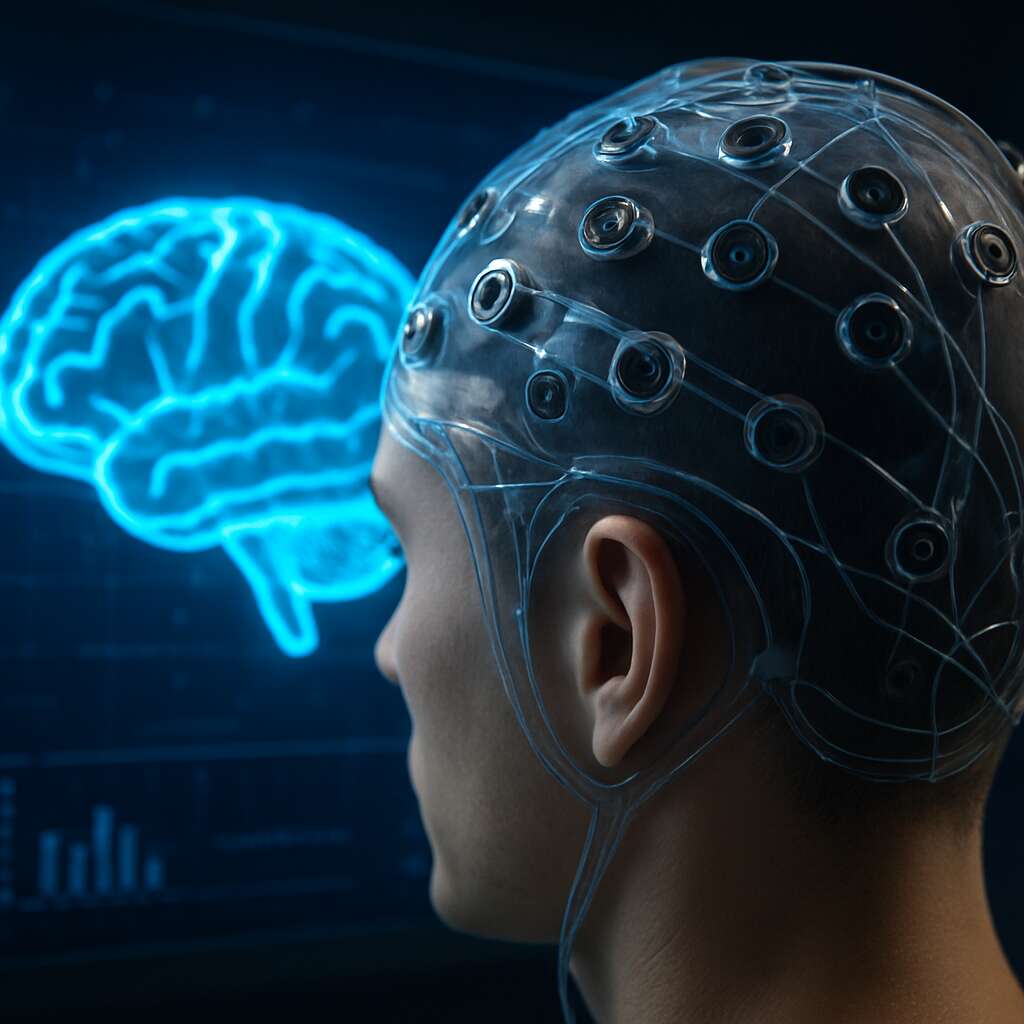
Overview of Brain-Computer Interface Technology
Definition and Basic Concepts – Understanding what Brain-Computer Interface (BCI) technology entails and its primary functions.
Imagine stirring the silent depths of the mind into harmonious conversation with machines—that is the poetic promise of Brain-Computer Interface Technology. At its core, this groundbreaking innovation seeks to decode the enigma of neural signals, translating thought into action with astonishing precision. It’s a domain where biology intertwines with technology, illuminating pathways that once seemed solely within the realm of science fiction.
Understanding what Brain-Computer Interface Technology entails involves recognizing its primary function: establishing a direct communication link between the brain’s electrical activity and external devices. This connection is forged through sensors that detect neural firing patterns, which are then processed, transformed, and used to control computers, prosthetics, or other assistive technologies. This seamless exchange fosters a new dialogue—one that unlocks pathways to restore mobility, facilitate communication, or even augment human cognition.
The essence of Brain-Computer Interface Technology lies in its ability to bridge the intangible realm of thoughts with tangible outcomes, making visible the latent potential of the most complex organ—our brain. In doing so, it redefines what is possible in human-machine interaction and whispers the promise of a future where the mind truly becomes the control panel for innovation.
Historical Development – Tracing the evolution of BCI from early research to modern applications.
The journey of Brain-Computer Interface Technology is a captivating tapestry woven with scientific daring and imaginative leaps. It all began in the mid-20th century, when pioneers first explored the potential of recording neural signals directly from the brain. Back then, the goal was simple yet ambitious: create a system capable of translating electrical activity into commands. The early experiments, often conducted on animals, laid the groundwork for a rapidly evolving field that would eventually reach human applications.
By the 1990s, breakthroughs in neural signal processing and miniaturisation of sensors transformed Brain-Computer Interface Technology from laboratory curiosity to practical tool. The advent of non-invasive methods, like EEG-based systems, opened new avenues for remote control and communication without the need for invasive surgery. Today, the field’s evolution is marked by a host of innovative applications:
- Assistive devices for individuals with paralysis
- Neuroprosthetics that restore lost functions
- Enhanced virtual reality environments
As each milestone was crossed, the conversation shifted from quaint experiments to serious discussions about human augmentation and rehabilitation. From its humble beginnings to its current status as a multidisciplinary marvel, the evolution of Brain-Computer Interface Technology continues to inspire and challenge our notions of interaction—and perhaps, what it means to be truly connected.
Types of Brain-Computer Interfaces – Exploring invasive, semi-invasive, and non-invasive BCI systems and their distinctions.
At the heart of Brain-Computer Interface Technology lies a fascinating spectrum of systems, each meticulously designed to bridge the intricate dance between the human mind and digital devices. These systems can be broadly classified into invasive, semi-invasive, and non-invasive categories, each with its unique allure and set of capabilities.
Invasive Brain-Computer Interface Technology involves implanting electrodes directly into the brain tissue. This method offers unparalleled accuracy and richness of neural data, making it the preferred choice for neuroprosthetics and complex restoration of lost functions. It’s a realm where pioneering scientific daring pushes the boundaries of what thought and technology can achieve.
Semi-invasive systems, such as those utilizing subdural electrodes, rest delicately beneath the skull but do not require full penetration of the brain tissue. These strike a balance between the invasiveness of traditional methods and the convenience of non-invasive options, opening pathways for advanced research with reduced surgical risk.
On the opposite end of the spectrum, non-invasive Brain-Computer Interface Technology employs sensors placed on the scalp—like electroencephalography (EEG)—to detect neural signals without any surgical intervention. This approach has become the gateway for assistive devices, communication tools, and immersive virtual reality applications. While it sacrifices some fidelity compared to invasive methods, it offers a safer, more accessible route into the vast realm of neural control.
Core Components and Architecture – Detailed overview of sensors, signal processing units, and communication modules.
At the heart of Brain-Computer Interface Technology lies a sophisticated symphony of interconnected components, each performing a vital role in translating the language of the mind into digital expression. Imagine sensors acting as vigilant sentinels, quietly capturing the faint whispers of neural activity with remarkable sensitivity. These sensors—whether scalp-mounted, subdural, or implanted—are the gateways through which neural signals begin their journey.
Beneath the surface, signal processing units serve as neural interpreters, filtering and amplifying this delicate data to reveal meaningful patterns. This stage involves intricate algorithms that decode the electrical pulses of thought, transforming chaos into clarity. Once it’s been processed, communication modules act as the message carriers, relaying commands to external devices or systems—be they computers, prosthetics, or immersive environments.
- Sensors: Capture brain signals with precision
- Signal processing units: Decode neural activity into actionable data
- Communication modules: Transmit interpreted signals seamlessly to external devices
Understanding this architecture illuminates how Brain-Computer Interface Technology is truly a marvel of modern innovation—an elegant dance of hardware and software working in harmony to bridge the gap between mind and machine. As each layer amplifies the potential of neural insights, the pathway toward more natural, intuitive control becomes ever clearer, pushing the boundaries of what human brains and digital systems can achieve together.
Applications of Brain-Computer Interfaces
Medical and Healthcare Uses – Utilizing BCI for neuroprosthetics, rehabilitation, and managing neurological disorders.
In the world of medical innovation, Brain-Computer Interface (BCI) technology stands as a beacon of hope for many living with neurological challenges. Its application in neuroprosthetics, for instance, allows individuals with paralysis to regain a semblance of autonomy by translating brain signals into real-world actions. Imagine a patient’s intention to grasp a glass effortlessly turning into a seamless motion—such feats highlight BCI’s transformative potential.
Beyond restoring basic functions, BCI technology plays an instrumental role in neurological disorder management. Patients battling conditions such as Parkinson’s or stroke often undergo rehabilitation programs that incorporate brain-computer interfaces, facilitating neural retraining and recovery. This integration accelerates neural regeneration and enhances the efficacy of conventional therapies.
- Individuals with motor disabilities benefiting from neuroprosthetics.
- Patients engaged in targeted neural recovery for stroke rehabilitation.
- People managing chronic neurological disorders through ongoing signal modulation.
Assistive Technologies – Supporting individuals with paralysis or disabilities through adaptive BCI devices.
In a world where the boundary between mind and machine blurs, Brain-Computer Interface Technology emerges as a luminous thread weaving hope into the fabric of daily life. For individuals grappling with paralysis or complex disabilities, adaptive BCI devices act as enchanted bridges—allowing their thoughts to command devices that once seemed out of reach. Imagine controlling a wheel chair, robotic limb, or communication device solely through the power of intention. This gentle yet profound connection offers a new realm of autonomy and self-expression.
The magic of Brain-Computer Interface Technology lies in its ability to translate neural signals into meaningful actions, making it an indispensable tool in assistive technology. For example, some systems employ non-invasive sensors that detect brain activity and convert it into commands without inserting anything into the body, creating a seamless interface between thought and action. Such innovation fuels the hope that every individual, regardless of physical limitations, can participate fully in the world around them.
- Minimal invasiveness enhances safety and comfort for users.
- Enhanced signal processing ensures accurate and responsive control.
- Compatibility with various assistive devices amplifies independence.
With each new development in brain-computer interface technology, the tapestry of possibility expands. From controlling prosthetic limbs to enabling communication for those with speech impairments, the role of adaptive BCI devices continues to grow. In transforming neural intentions into tangible actions, this technology redefines what it means to connect mind and machine with grace and precision—paving the way for a future where disabilities no longer define the limits of human potential.
Research and Neuroscience – Advancing understanding of brain functions and cognitive processes.
Brain-Computer Interface Technology isn’t just about helping people; it’s transforming how we understand the human mind. Recent research reveals that studying neural signals through BCI systems has unlocked new insights into brain function and cognitive processes. This evolving field helps scientists decipher how different parts of the brain communicate and adapt, offering a window into the intricacies of human thought and behaviour.
By continuously refining the way neural data is captured and interpreted, BCI research sheds light on neural plasticity—the brain’s ability to reorganise itself. This knowledge not only advances neuroscience but opens opportunities to develop targeted treatments for conditions like stroke or traumatic brain injury. As we probe into cognitive processes using Brain-Computer Interface Technology, we uncover layers of mental activity that were once hidden behind a veil of complexity.
Some of the most promising applications include:
- Deciphering the neural basis of language and memory
- Understanding decision-making pathways
- Mapping brain regions involved in attention and perception
- Identifying neural patterns linked to certain behaviours
- Monitoring brain health over time through non-invasive methods
- Designing personalised neuro-interventions based on detailed insights into brain activity
The integration of Brain-Computer Interface Technology into neuroscience research continues to push the boundaries of our understanding. It turns abstract neural signals into tangible knowledge, enabling researchers and clinicians to explore cognitive mechanisms with unprecedented clarity. This dynamic intersection of technology and neuroscience promises to open new frontiers, where the mysteries of the human mind are gradually unraveled and comprehended in ways we never could have imagined before.
Gaming and Entertainment – Integrating BCI for immersive gaming experiences and interactive entertainment.
Picture immersing yourself in a video game where your thoughts shape the virtual world before your eyes. Brain-Computer Interface Technology is making this a tangible reality, transforming gaming and entertainment into experiences once confined to science fiction. By directly connecting the mind to digital systems, BCI enhances user engagement in ways that traditional interfaces simply cannot match.
Imagine controlling a game solely with your mental focus, with no need for controllers or voice commands. This seamless interaction opens new avenues for interactive entertainment, allowing players to unlock their full potential in virtual realms. Such applications are not just about fun; they also pave the way for innovative therapeutic techniques and immersive storytelling.
Games utilizing BCI often incorporate features like real-time emotional feedback and adaptive difficulty levels, creating a personalized experience that evolves with the gamer’s mental state. As developers experiment with brainwave monitoring, users can enjoy a more intuitive and emotionally resonant interface—making the experience profoundly immersive and uniquely tailored.
- Enhanced virtual reality experiences driven by neural signals
- Real-time adaptation based on user cognitive load
- Interactive entertainment that responds to emotional feedback
The integration of Brain-Computer Interface Technology into entertainment is still in its infancy, but its potential to revolutionize how we play and experience media is undeniable. It’s an exciting horizon — where technology and creativity collide to redefine entertainment into something more visceral, engaging, and profoundly human. The future of gaming may very well lie in the silent language of our minds.
Military and Security – Employing BCI for training, communication, and operational efficiency.
In the shadowy corridors of modern warfare and security, Brain-Computer Interface Technology emerges as a quiet yet revolutionary sentinel. Its application in military and security domains does not merely hint at a future of enhanced capabilities — it reshapes the very fabric of operational efficiency and strategic communication. Imagine soldiers equipped with neural interfaces that allow swift, silent command exchange, bypassing the chaos of radio chatter. This neural communication can streamline command chains, cutting through the noise of battlefield disorder.
One promising frontier lies in training. BCI systems can simulate high-stress scenarios, enabling drill exercises that adapt in real time to a soldier’s cognitive load and emotional state. This dynamic feedback cultivates resilience and sharpens decision-making under pressure. For instance, real-time emotional feedback during simulated combat ensures that soldiers maintain optimal mental states, fostering superior performance when it matters most.
- Enhanced communication channels that function directly from brain to brain, eliminating the need for manual inputs.
- Training modules that adapt on the fly, based on neural responses.
- Operational efficiency gained via rapid information processing and command execution.
Through BCI, security agencies are exploring innovative methods for operational control, surveillance, and response coordination. Imagine a security officer instantaneously controlling multiple surveillance drones using just thought patterns — a seamless integration of man and machine that enhances situational awareness. Such applications exemplify how Brain-Computer Interface Technology acts as an invisible force multiplier, amplifying human capabilities without the burden of traditional interfaces.
The potential of Brain-Computer Interface Technology in military and security realms continues to unfold, promising a new paradigm where the essence of strategic advantage is encoded within neural pathways. It’s a glimpse into a future where mind and machine are woven into the very act of safeguarding our world — whispering stories of innovation in the language of thought.
Technologies and Innovations in BCI Development
Sensor Technologies – Advances in EEG, MEG, implanted electrodes, and emerging nanotechnologies.
Recent advances in sensor technologies have propelled Brain-Computer Interface Technology into a new era of precision and effectiveness. Non-invasive systems like electroencephalography (EEG) are becoming more refined, offering higher resolution and more rapid data acquisition. Meanwhile, magnetoencephalography (MEG) sensors, once confined to research institutions, now showcase promising developments that enhance signal clarity and spatial accuracy.
Invasive methods, such as implanted electrodes, unlock a deeper understanding of neural activity, making Brain-Computer Interface Technology more robust and reliable for medical applications. Pioneering nanotechnology-based sensors are emerging as game-changers, capable of detecting neural signals with unprecedented sensitivity at a cellular level. These innovations enable more nuanced insights into cognitive states, paving the way for future breakthroughs.
To get a sense of the evolving landscape, consider the layered complexity of sensor systems in Brain-Computer Interface Technology:
- Advanced EEG caps that combine comfort with high channel density
- Next-generation MEG devices that are portable and less cumbersome
- Implanted electrodes with biocompatible materials that improve longevity
- Nanotechnologies capable of interfacing seamlessly at the nanometer scale
Signal Processing and Machine Learning – Enhancing decoding accuracy through sophisticated algorithms.
Amid the labyrinthine corridors of mind and machine, signal processing and machine learning carve pathways as intricate as neural networks themselves. The evolution of Brain-Computer Interface Technology hinges upon the delicate art of decoding the silent language of the brain—an orchestration of electrical whispers that, once understood, opens portals to unimaginable realms. Sophisticated algorithms, tailored to interpret these subtle cues, can distinguish a twitch of the finger from a vivid visualisation with remarkable precision, transforming thought into action in real time.
Envision a system where neural signals are filtered through layers of complex machine learning models, each enhancing the clarity and accuracy of brain signal decoding. This is no longer science fiction but a catalytic feature of modern Brain-Computer Interface Technology. The layered complexity of signal processing units ensures that even the faintest neural emanations are caught and interpreted accurately, enabling seamless communication between mind and machine.
To elevate the precision of these interfaces further, developers weave elements such as:
- Deep learning models that adapt dynamically to individual neural patterns
- Neural decoding algorithms optimizing decoding accuracy
- Real-time data processing enabling rapid response times
- Harnessing machine learning algorithms that refine themselves over continuous use, creating an adaptive feedback loop
- Integrating advanced signal processing techniques that filter out noise and enhance the fidelity of neural signals
- Developing intuitive interfaces that evolve alongside user cognition, making Brain-Computer Interface Technology more intuitive and responsive than ever before
This nexus of machine learning and signal processing breathes vitality into Brain-Computer Interface Technology, forging a path toward not only better medical therapies but also immersive applications in gaming, entertainment, and security. The artistry lies in algorithms that learn from the brain’s own language, translating neural intent into command with a fidelity that borders on art. Such innovations don’t just interpret signals—they breathe life into technology born from the most intricate architecture known—the human mind.
Wireless BCI Systems – Developing portable, real-time communication interfaces.
Wireless Brain-Computer Interface Systems are revolutionising how we connect to machines, rendering traditional cords and bulky hardware relics of a bygone era. The goal? Developing portable, real-time communication interfaces that seamlessly integrate into daily life. These advancements allow users to operate devices or communicate with their environment without being tethered, opening new horizons for accessibility and convenience.
The most compelling feature of wireless BCI technology is its potential for mobility. Imagine a system small enough to fit into a sleek headset or a lightweight patch, yet powerful enough to interpret neural signals accurately in real time. This portability does not sacrifice performance; instead, it amplifies versatility, whether for medical rehabilitation, gaming, or augmented reality experiences.
A critical element in these systems is their ability to process neural data on the fly. By integrating advanced sensors like high-density EEG or emerging nanotechnologies, developers ensure signals are captured with unprecedented fidelity. Coupled with sophisticated algorithms, these systems can distinguish subtle neural activity, translating thought into action instantaneously.
- Real-time data transmission via secure wireless protocols
- Compact hardware designed for everyday wearability
- Adaptive algorithms that learn from individual neural patterns
Such innovations herald a new chapter where Brain-Computer Interface Technology becomes truly unobtrusive and accessible outside clinical or laboratory settings. Ingeniously designed wireless systems stand to catalyse applications in healthcare, gaming, security, and beyond, transforming the way humans interact with technology in a world ever more reliant on seamless connectivity.
Integration with Artificial Intelligence – Creating intelligent BCI systems capable of adaptive responses.
Imagine a world where your thoughts translate instantly into commands, where artificial intelligence seamlessly interprets your neural signals to create responsive, intuitive systems. This isn’t the stuff of science fiction—it’s rapidly becoming a reality through *Brain-Computer Interface Technology*. Innovations in this domain are pushing the boundaries of what’s possible by integrating sophisticated AI algorithms that elevate BCI systems from mere signal processors to intelligent, adaptive agents.
By embedding AI into BCI development, researchers are creating systems capable of learning and tailoring responses based on individual neural patterns. These intelligent BCIs can distinguish subtle variations in brain activity, enabling more accurate and faster interpretation of user intent. Imagine a system that doesn’t just decode signals but anticipates needs, adjusting its responses as your neural responses evolve over time. That’s the essence of adaptive BCI technology—dynamic, personalized, efficient.
- Real-time neural data analysis driven by machine learning
- Personalized algorithms that adapt to user-specific neural signatures
- Enhanced decoding accuracy for complex cognitive tasks
Developers are leveraging these advancements by integrating adaptable AI modules that continually refine their understanding of brain signals. This integration results in BCI systems that can support a wide array of applications—from neuroprosthetics and rehabilitation to immersive gaming and security protocols. Each step forward in *Brain-Computer Interface Technology* unlocks new levels of interaction, offering an almost uncanny responsiveness that blurs the line between human cognition and machine action.
Material Science and Biocompatibility – Innovations in biocompatible sensors and implant materials.
Imagine a future where your mind seamlessly communicates with machines—no screens, no controllers, just thought itself driving action. At the heart of this revolution lies **Brain-Computer Interface Technology**, where material science and biocompatibility innovations are transforming what’s possible. The pursuit of creating sensors and implant materials that coexist peacefully within the human body has led to stunning breakthroughs that push boundaries beyond mere functionality.
Recent advancements in sensor technologies—such as ultra-sensitive EEG, MEG, and nano-engineered implanted electrodes—are paving the way for more accurate, durable, and minimally invasive BCI devices. These innovations are not just about sensitivity, but also about ensuring long-term compatibility within neural tissue. The development of biocompatible materials minimizes immune responses, ensuring that implants remain stable and functional over extended periods, thus allowing users to experience more natural and consistent neural interfacing.
- Biodegradable sensors for temporary applications
- Nanomaterials that mimic brain tissue conductivity
- Flexible, conforming implants that adapt to neural curvature
Every element in BCI development demands meticulous attention to material science. For instance, recent research focuses on integrating graphene and other nanostructured substances, which offer extraordinary electrical and mechanical properties. These materials not only improve signal fidelity but also promote better integration with neural tissue, reducing rejection risks and increasing longevity. The evolution of implant materials exemplifies a pursuit to make **Brain-Computer Interface Technology** safer, more effective, and capable of supporting complex cognitive tasks.
Challenges and Future Trends in Brain-Computer Interface Technology
Technical and Scientific Barriers – Addressing signal fidelity, durability, and system scalability.
While Brain-Computer Interface Technology has made remarkable strides, there are persistent challenges hampering its full potential. One major obstacle lies in maintaining signal fidelity. Brain signals are inherently complex and prone to interference, making it difficult to decode accurate information reliably. Addressing this requires the development of more precise sensors and advanced signal processing algorithms.
Durability also remains a concern, particularly for invasive BCI devices that must operate within the brain over extended periods. Materials that sustain biocompatibility without degrading pose a significant scientific barrier. This durability is essential for long-term applications, especially in medical and assistive technologies. Addressing these issues could lead to more resilient, long-lasting systems.
System scalability adds another layer of complexity. As Brain-Computer Interface Technology advances, integrating multiple channels and expanding the system’s capacity becomes increasingly challenging. Critical factors include ensuring real-time responsiveness and minimizing latency across larger networks. A strategic focus on modular design and scalable architectures will be vital.
- Enhanced signal fidelity for accurate brain activity interpretation.
- Innovative materials to improve durability and biocompatibility.
- Scalable architectures to handle increased data throughput and integration.
Ethical and Privacy Concerns – Navigating data security, consent, and potential misuse.
As Brain-Computer Interface Technology continues its inexorable march toward integration into our daily lives, the issues of ethics and privacy emerge as pivotal, uncharted territories. While the allure of seamless neural communication captivates minds across the globe, beneath that shimmering surface lurks a labyrinth of moral quandaries and security dilemmas. The delicate dance of safeguarding personal neural data becomes paramount; in a landscape where thoughts could one day be hacked or manipulated, the stakes are impossibly high.
There exists a pressing need to navigate questions of consent with unwavering precision. How do we ensure that individuals maintain full control over their mental information? Without rigorous data security measures, the risk of potential misuse escalates. Imagine malicious actors wielding decoded brain signals for coercion or espionage—an unsettling prospect that underscores the importance of robust encryption protocols and transparent governance frameworks.
Implementing these safeguards must be complemented by an ethical vigilance that anticipates future scenarios. As advances in Brain-Computer Interface Technology accelerate, unforeseen applications and misapplications will inevitably materialise, demanding proactive oversight. Balancing innovation with responsibility is not just prudent—it is a moral imperative in this brave new world of neurotechnology.
Regulatory and Approval Processes – Understanding FDA, EMA, and other regulatory frameworks.
Navigating the uncharted waters of regulatory and approval processes is an essential step in the widespread adoption of Brain-Computer Interface Technology. As this field progresses, the diverse landscape of regulatory frameworks—ranging from the United Kingdom to Europe and beyond—poses both challenges and opportunities.
The Food and Drug Administration (FDA) in the United States and the European Medicines Agency (EMA) exemplify the rigorous standards that innovations must meet before entering clinical and consumer markets. These agencies evaluate not only safety and efficacy but also long-term durability and potential misuse risks associated with Brain-Computer Interface Technology. The classification of BCI systems as either medical devices or neurotechnologies influences the approval pathway; invasive BCIs, for instance, often undergo a more stringent process than non-invasive systems, reflecting their delicate nature.
A critical factor in this approval process involves comprehensive safety testing, transparent clinical trials, and adherence to ethical standards that prioritize patient rights and data privacy. The process sometimes includes an ordered list of phases:
- Preclinical research for initial safety validation
- Clinical trials to evaluate functionality and patient outcomes
- Regulatory review and post-market surveillance
As regulators grapple with emerging trends—such as AI integration within Brain-Computer Interface Technology—frameworks are evolving to accommodate innovation without compromising safety. While the UK’s Medicines and Healthcare products Regulatory Agency (MHRA) plays a crucial role locally, international collaboration remains vital, ensuring cohesive standards across borders.
Navigating these approval processes might seem labyrinthine but remains an unavoidable facet of bringing revolutionary neurotechnology to those who need it most. Staying ahead in this landscape demands an adaptive outlook, keen understanding of evolving policies, and unwavering commitment to responsible innovation.
Potential Future Developments – Emerging trends such as hybrid BCI systems and direct brain-to-brain communication.
The horizon of Brain-Computer Interface Technology is shimmering with possibilities that seem plucked from the realm of dreams. As researchers peel back the layers of complexity, emerging trends illuminate a path toward revolutionary applications. Among these, hybrid BCI systems stand out—an artful fusion of invasive and non-invasive components designed to enhance precision while maintaining safety. Such systems dance between the delicate layers of neural signals, harnessing the strengths of each approach.
A captivating element gaining momentum is direct brain-to-brain communication. Imagine a network in which minds share thoughts seamlessly, bypassing traditional sensory channels. This tantalising idea pushes the boundaries of what Brain-Computer Interface Technology can achieve, hinting at a future where empathy and understanding extend beyond spoken language or gestures.
Yet, alongside these innovations, numerous challenges persist. Signal fidelity, system scalability, and long-term durability are still pressing issues. The rapid evolution of sensor technologies—think nanotechnologies and advanced EEG—propels the field forward. Future developments could see the integration of AI-driven algorithms that decode complex neural patterns with unprecedented accuracy, making brain-machine symbiosis even more intuitive and responsive.
- Hybrid BCI systems that combine different technological modalities for optimal performance
- Direct brain-to-brain communication, transforming human interaction
- Continued refinement of nanotechnologies and signal processing algorithms
- Enhanced integration of AI for real-time adaptive responses
- Unified global standards for regulatory approval as innovations cross borders
The journey of Brain-Computer Interface Technology is an odyssey at the cusp of transforming human potential. With each breakthrough, the allure of a future where minds connect effortlessly continues to ignite the imaginations of scientists and dreamers alike.
Market Adoption and Commercialization – Factors influencing the integration of BCI into mainstream products and services.
The path to mainstream adoption of Brain-Computer Interface Technology remains riddled with compelling challenges and tantalizing opportunities. As much as neural interfaces promise to revolutionize industries ranging from healthcare to gaming, their integration into everyday products and services faces hurdles that are as intricate as the brain itself.
Signal fidelity continues to be a foremost obstacle. Ensuring consistent, high-quality neural data capture outside controlled lab environments demands advancements in sensor technologies and signal processing algorithms. Long-term durability of invasive and semi-invasive components also warrants attention, especially for applications requiring lifetime operation.
On the commercial front, regulatory approval acts as a formidable gatekeeper. Navigating complex frameworks such as the FDA or MHRA involves stringent testing and validation, which can slow down innovation’s pace. Still, industry players are exploring specific pathways for accelerated approval, aiming to bring Brain-Computer Interface Technology to market faster.
As integration accelerates, user acceptance hinges on safety and ethical considerations. The potential for data misuse and Privacy concerns present hurdles that industry leaders are striving to address through transparent standards.
Fostering collaboration becomes a critical piece of the puzzle—an organized effort to establish unified global standards for regulatory approval. This piece of the puzzle becomes vital in paving the way for more widespread commercial deployment, especially as devices grow in sophistication and scope.
A rapid evolution in sensor technologies—such as miniaturized nanotechnologies and advanced EEG systems—is already redefining what’s possible. Parallel developments in artificial intelligence enable real-time decoding of neural signals, making Brain-Computer Interface Technology more responsive and intuitive. This intersection of hardware and software innovation indicates a future where seamless, adaptive interfaces could revolutionize human interaction.
The specifics of market readiness depend on multiple factors—cost, safety, reliability, and user experience. For instance, the feasibility of portable, wireless BCI systems will influence their potential adoption beyond clinical environments. Consumer electronics companies intuitively see the promise, but widespread commercial penetration hinges on overcoming current technical barriers.
Overall, the journey to the mass-market integration of Brain-Computer Interface Technology is anything but straightforward. Yet with each breakthrough—be it in nanotech, signal processing, or AI-driven decoding—the realm of possibility expands. As research accelerates, it’s clear that overcoming these challenges holds the key to unlocking a future where human minds connect in ways we have yet to fully comprehend.