
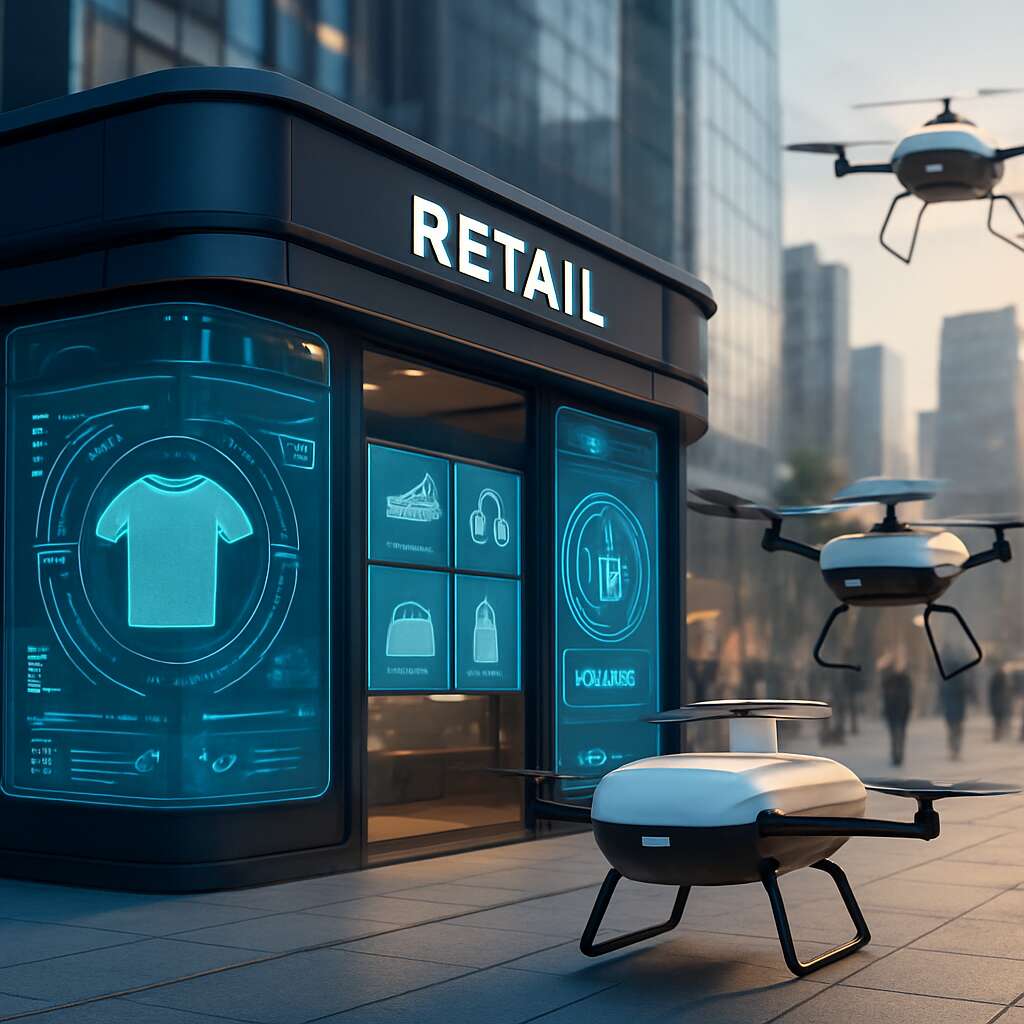
Overview of Autonomous Commerce Technology
Introduction to Autonomous Commerce – Defining autonomous commerce and its significance in modern retail
In the rapidly evolving realm of retail innovation, Autonomous Commerce Technology stands as a testament to the relentless pursuit of efficiency and human-like decision-making. It embodies a future where machines not only execute tasks but understand the very fabric of market dynamics, consumer behaviour, and operational intricacies. This technology aims to create self-sufficient systems capable of managing inventory, processing transactions, and even adapting to shifting consumer preferences without human intervention.
Autonomous Commerce technology introduces a paradigm where artificial intelligence and automation converge seamlessly, transforming traditional retail into something profoundly more intelligent. Its significance lies in its ability to refine supply chain logistics, personalise customer experiences, and optimise sales strategies without sacrificing speed or accuracy. As this technology matures, it challenges ethical boundaries and prompts deeper questions about human roles within automated ecosystems.
Some of the core components of Autonomous Commerce Technology include:
- Real-time data analytics for consumer insights
- Self-learning algorithms that enhance operational efficiency
- Automated inventory management systems
- Smart checkout processes to minimise friction
Historical Evolution – Trends and technological advancements leading to autonomous systems
Autonomous Commerce Technology didn’t appear overnight; it’s the result of a fascinating evolution driven by relentless innovation and a dash of digital daring. In the early days, retail automation was mostly confined to barcode scanners and basic inventory software. Fast forward to today, and we’re witnessing machines that can intuitively adapt to consumer behaviour, powered by real-time data analytics and machine learning. The journey has been marked by significant technological advancements—think smart sensors, IoT-enabled devices, and sophisticated self-learning algorithms—that lay the groundwork for fully autonomous systems in retail.
Over the past decade, trends in autonomous systems have gained momentum. Retail giants and startups alike now race to integrate autonomous commerce solutions, forever changing how inventory management and customer experience intersect. One can even consider the rise of autonomous checkout processes, where frictionless shopping becomes the new normal. The triumph of Autonomous Commerce Technology lies in its ability to combine these emerging trends into a seamless, intelligent ecosystem that continuously refines itself—much like a shopper learning to pick the fastest checkout lane!
Core Components – Key technologies powering autonomous commerce, including AI, IoT, and robotics
At the heart of autonomous commerce technology lies a symphony of interconnected systems, each playing a vital role in orchestrating seamless retail experiences. The core components of this innovative domain blend the precision of Artificial Intelligence (AI), the interconnected web of the Internet of Things (IoT), and the dexterity of robotics—each a pillar supporting the grand edifice of autonomous commerce technology.
Artificial Intelligence infuses systems with a kind of digital intuition, allowing machines to predict and adapt to consumer behaviour with uncanny accuracy. Its intelligent algorithms sift through vast quantities of data, learning and refining their responses moment by moment. Meanwhile, IoT-enabled devices act as vigilant sentinels—smart sensors that monitor inventory levels, track customer movements, and communicate instantaneously across a decentralized network.
- Robotics brings the physical dimension to this digital ballet—automated checkout kiosks, warehouse robots sorting goods with precision, and delivery drones ascending like mechanical falcons.
Each component synergistically weaves into the fabric of autonomous commerce technology—creating an ecosystem that is self-sustaining, responsive, and remarkably intuitive. This integration allows retail spaces to evolve into smart environments where automation and human ingenuity coalesce, redefining the very essence of modern commerce.
Applications and Use Cases of Autonomous Commerce
Retail and E-commerce Integration – Automated storefronts, virtual shopping assistants, and personalized recommendations
In the realm of retail innovation, Autonomous Commerce Technology weaves a tapestry of seamless interaction, transforming the way consumers engage with brands. Imagine a storefront where products are not just displayed but orchestrated by intelligent systems, automatically updating inventories and responding to fluctuating demand—no human hand needed. These automated storefronts captivate with their fluidity and precision, offering shoppers an immersive experience that feels almost alive.
Virtual shopping assistants, empowered by Autonomous Commerce Technology, serve as perceptive guides—whether through chat interfaces or augmented reality—personalising suggestions with uncanny intuition. They transform solitary browsing into a social dialogue, making each customer feel uniquely understood. Personalized recommendations, derived from sophisticated data analysis, become poetic in their relevance, ensuring every item feels like it was curated solely for that individual.
By integrating these applications, retail spaces evolve into autonomous ecosystems where technology anticipates needs and adapts in real time. This fluid, intuitive interface between man and machine exemplifies the astonishing potential inherent in Autonomous Commerce Technology—a revolution wrapped in the guise of effortless convenience.
Supply Chain Automation – Warehouse robotics, inventory management, and logistics optimization
In an era where speed and efficiency define retail success, Autonomous Commerce Technology has begun transforming supply chain management into a ballet of precision and innovation. Warehouse robotics, a cornerstone of this evolution, tirelessly navigate vast storage spaces, selecting and packing items with an almost human-like dexterity. These intelligent machines minimize errors, reduce turnaround times, and allow staff to focus on higher-value tasks—an everyday miracle for logistics teams working under tight deadlines.
Inventory management, powered by Autonomous Commerce Technology, has taken on a new level of sophistication. Through real-time data analysis and IoT-enabled sensors, these systems maintain optimal stock levels, preventing both surplus and shortages. When combined with logistics optimization tools, companies gain a seamless flow from warehouse to customer, ensuring deliveries are punctual and costs are controlled. This convergence of advanced robotics and data-driven decision-making exemplifies how autonomous systems are reshaping the very fabric of supply chains.
- Streamlined warehousing processes through the deployment of autonomous mobile robots.
- Smart inventory tracking using IoT sensors and AI algorithms for accurate, real-time updates.
- Enhanced logistics planning that dynamically responds to demand fluctuations, reducing delays and costs.
These applications stand as a testament to how Autonomous Commerce Technology is not just about automation but about creating a resilient, adaptive ecosystem—one where every link in the supply chain is optimized to meet the pace of modern commerce. As retail demands continue to evolve, the role of autonomous systems in supply chain automation becomes increasingly vital, providing efficiency that feels almost effortless to the end consumer.
Autonomous Payment Systems – Contactless transactions, blockchain-enabled payments, and financial security
Imagine walking into a bustling city market, where every stall seems to anticipate your needs before you ask—products ready, payments seamless, and security impenetrable. This vibrant scene is increasingly mirrored in the digital realm through Autonomous Commerce Technology. One compelling application is autonomous payment systems that revolutionize how consumers transact, making contactless payments faster and more secure than ever. With the integration of blockchain-enabled payments, transactions gain an added layer of transparency and fraud prevention, ensuring customer trust remains intact.
In retail environments, these autonomous payment systems eliminate long checkout queues, crafting smoother shopping experiences that feel almost effortless. For instance, AI-driven payment terminals can recognize customers, authenticate purchases via biometric data, and process payments in a matter of seconds. A simple tap or scan joins the fabric of autonomous systems—reducing friction and elevating customer satisfaction.
- Contactless transactions using NFC technology
- Blockchain-enabled payments for enhanced transparency
- Seamless integration with mobile wallets for quick checkout
Security remains a guiding principle here. Autonomous Commerce Technology employs advanced encryption algorithms, one-of-a-kind blockchain protocols, and real-time fraud detection to protect every transaction. As the world gravitates toward frictionless commerce, the role of autonomous payment systems becomes increasingly central—creating a financial ecosystem that is resilient, transparent, and tailored to meet the pace of modern retail demands.
Customer Experience Enhancement – Interactive kiosks, robot concierges, and immersive shopping environments
Step into a world where retail sensations blur the line between science fiction and reality. Autonomous Commerce Technology isn’t just a buzzword — it’s shaping how consumers experience shopping in ways that feel almost supernatural. Interactive kiosks, robot concierges, and immersive virtual environments are transforming brick-and-mortar stores into futuristic hubs of convenience. These applications turn mundane shopping trips into engaging journeys, where technology anticipates your needs before you even voice them.
Imagine walking into a store where a robot concierge greets you by name, offers tailored product recommendations, and guides you through an immersive shopping environment. Customer engagement skyrockets when AI-driven systems deliver personalized experiences, creating a sense of human touch combined with robotic efficiency. As this technology evolves, more retail spaces incorporate autonomous commerce technology to facilitate seamless, frictionless interactions. For instance, some stores employ interactive kiosks that not only provide information but also enable self-checkout through biometric authentication.
- Enhanced customer service through AI-driven assistance
- Immersive virtual environments for product exploration
- Automated in-store checkout processes
From virtual fitting rooms to autonomous shopping assistants, the innovations are endless. These advancements not only elevate the customer experience but also streamline operations, ensuring that every touchpoint feels intuitive and effortless. The integration of autonomous commerce technology into retail creates an environment where technology seems to read your mind, anticipating your shopping desires and transforming traditional retail into a dynamic, interactive experience that feels almost alive.
Technology Infrastructure and Enablers
Artificial Intelligence and Machine Learning – Data-driven decision making and predictive analytics
The backbone of autonomous commerce technology lies deep within a web of sophisticated infrastructure—an unseen tapestry woven with the threads of artificial intelligence and machine learning. In the shadows of this digital labyrinth, data-driven decision making begins to breathe, transforming chaos into order through predictive analytics that whisper secrets long before they unfold. Like a ghostly sentinel, these systems scrutinize endless streams of information, discerning patterns that elude the untrained eye.
Harnessing the dark arts of AI and machine learning enables autonomous commerce technology to evolve continuously, learning from each transaction and interaction. This allows for real-time inventory optimization and personalised customer experiences that seem almost prophetic. Sometimes, a simple algorithm can anticipate needs before they even surface, creating an environment where data becomes both keeper and prophet.
- Real-time analytics
- Predictive customer behavior modeling
- Automated inventory management
All of this is enabled by a resilient, layered technology infrastructure that functions seamlessly—an unseen force driving autonomous commerce into an era where human oversight becomes a whisper of the past.
Internet of Things (IoT) – Smart sensors, connected devices, and real-time tracking
Autonomous Commerce Technology hinges on a resilient, layered technology infrastructure that enables seamless and real-time operations across retail ecosystems. This sophisticated network isn’t visible to most but acts as the unseen backbone that fuels innovation in modern retail. At the heart of this infrastructure are advanced connectivity solutions that ensure data flows unimpeded, allowing autonomous systems to operate with minimal human intervention.
Internet of Things (IoT) plays a vital role in this digital symphony. Think smart sensors, connected devices, and real-time tracking—these elements gather and transmit data at lightning speed, transforming raw information into actionable insights. For retail, this might mean smart shelves that alert staff when stock is low or sensors that monitor temperature-sensitive goods to prevent spoilage.
- Smart sensors provide precise inventory levels across multiple locations, reducing human error.
- Connected devices facilitate real-time tracking of shipments, ensuring transparency from warehouse to doorstep.
- Data collected via IoT feeds into predictive models, allowing for anticipatory decision-making that keeps shelves stocked and customers satisfied.
When integrated into the fabric of autonomous commerce, these enablers allow for a fluid environment where inventory management and customer interactions are orchestrated with robotic precision. It’s a world where real-time analytics and IoT are not merely auxiliary, but foundational, forming an ecosystem that evolves continuously—sometimes almost intuitively—driven by the subtle cues captured by intelligent devices. In many ways, this invisible architecture is the engine powering the autonomous commerce technology revolution, quietly transforming commerce into an art of persistent, data-driven excellence.
Robotics and Automation Hardware – Autonomous vehicles, robotic arms, and automated checkout counters
Imagine a retail landscape where robots and autonomous systems operate smoothly behind the scenes, quietly orchestrating every transaction and movement. That’s the promise of autonomous commerce technology—a seamless blend of robotics and automation hardware that is transforming the way businesses serve customers. At its core, this technology relies on intelligent machines such as autonomous vehicles, robotic arms, and automated checkout counters, all designed to handle tasks traditionally performed by humans with greater precision and efficiency.
Robotic arms, for instance, are now commonplace in warehouses, meticulously sorting and managing inventory at lightning speed. Automated checkout counters eliminate long lines, offering customers a frictionless shopping experience. Autonomous vehicles, on the other hand, are revolutionising logistics, ensuring timely delivery with minimal human oversight. These innovations demonstrate how hardware enablers of autonomous commerce technology work together to create a continuously evolving environment where operational costs are lowered, and customer satisfaction is heightened.
Sometimes, these systems are integrated into a straightforward sequence, like this:
- Robotic arms pick and place products with precision, reducing errors.
- Autonomous vehicles deliver goods from warehouses directly to stores or customers.
- Automated checkout counters streamline the purchase process and minimise staff needs.
Such advancements are a testament to how robotics and automation hardware are underpinning the expansion of autonomous commerce. When combined with the data-driven capabilities of artificial intelligence, they enable retail environments that feel almost intuitive, where physical automation complements digital precision. This symbiotic relationship not only accelerates operational workflows but also sets a new standard in customer experience, all thanks to the backbone of intelligent machinery—an integral component of autonomous commerce technology.
Data Security and Privacy – Securing autonomous systems and safeguarding customer information
As autonomous systems become more prevalent in retail, securing the backbone of this technology is more critical than ever. Autonomous commerce technology relies heavily on a resilient and sophisticated technology infrastructure that can withstand evolving cyber threats and protect sensitive customer data. Without robust data security measures, the very foundations of automation risk vulnerabilities that could compromise consumer trust and operational integrity.
Safeguarding customer information involves layered security protocols, encryption techniques, and vigilant monitoring systems. The integration of machine learning algorithms helps detect anomalies in real-time, thwarting potential breaches before they occur. To ensure seamless operation, businesses often implement standards such as GDPR compliance, which enforces stringent data privacy regulations.
To bolster these efforts, many companies adopt a multi-faceted approach that emphasizes:
- Continuous security updates and patches to software systems
- Secure authentication methods for system access
- Regular audits of data handling processes
- Encryption of transactions across autonomous payment systems
As autonomous commerce technology expands, the importance of maintaining customer trust through transparency and data privacy cannot be overstated. This commitment to security creates a level of confidence that encourages shoppers to embrace automated retail environments, knowing their personal information remains protected amidst technological advancement. Ultimately, securing autonomous systems paves the way for sustainable growth and innovation in the evolving landscape of retail automation and autonomous commerce technology.
Cloud Computing and Data Storage – Scalable infrastructure for autonomous commerce platforms
Behind every seamless autonomous shopping experience lies an intricate web of technology infrastructure designed to handle vast data flows and complex operations. Cloud computing forms the backbone of autonomous commerce technology, offering the scalability needed to accommodate fluctuating demand and expanding product ranges. With cloud-based data storage, businesses can effortlessly expand their digital footprint, ensuring real-time access to critical information without missing a beat.
In an era where consumer expectations are rising rapidly, the importance of a resilient, flexible infrastructure cannot be overstated. Scaling up or down becomes immediate, with cloud solutions providing the agility needed to respond swiftly to market changes. This adaptability supports the proliferation of features such as virtual storefronts, automated inventory management, and autonomous payment systems. To streamline these advancements, many enterprises deploy
- distributive cloud architecture
- high-performance data centres
- advanced encryption techniques
— all integral enablers of autonomous commerce technology that safeguard against cyber threats and ensure the security and integrity of customer data.
As autonomous commerce continues to evolve, the fusion of cloud computing and robust data storage not only enhances operational efficiency but also lays the foundation for future innovations. The seamless integration of these enablers ensures that retailers can maintain competitive edge, delivering an unbroken, immersive shopping journey—one where technological infrastructure is the silent powerhouse supporting every automated interaction.
Future Trends and Challenges
Emerging Technologies – 5G connectivity, edge computing, and augmented reality integrations
The horizon of Autonomous Commerce Technology is shimmering with promising innovations, yet it also whispers of substantial challenges. As 5G connectivity unfurls its swift, unbounded threads across the digital fabric, the potential for real-time data transfer and seamless customer interactions intensifies. Edge computing acts as the vigilant guardian, processing vast streams of information close to the source, reducing latency and elevating operational efficiency.
Integrating augmented reality into autonomous systems creates immersive shopping experiences, blurring the lines between physical and virtual worlds. Retail environments equipped with AR integrations allow consumers to visualize products in their own space or test apparel virtually, transforming conventional concepts of shopping.
Driving these advancements are dynamic future trends, yet they are not without hurdles. Data security and privacy emerge as delicate yet paramount considerations. As Autonomous Commerce Technology continues to evolve, balancing technological innovation with robust safeguards remains a challenge — one that will shape the path ahead.
Regulatory and Ethical Considerations – Legal frameworks, ethical AI deployment, and consumer rights
As Autonomous Commerce Technology continues its relentless march forward, the future teeters on the precipice of intricate regulatory landscapes and ethical debates that threaten to reshape its trajectory. The need for comprehensive legal frameworks becomes increasingly urgent in a realm where autonomous decision-making intersects with consumer rights, data privacy, and accountability. Without such guardrails, the very fabric of consumer trust risks unraveling amidst unchecked innovation.
Ethical AI deployment, in particular, stands as a delicate dance—balancing algorithmic transparency with the imperative to prevent bias and discrimination. As autonomous systems gather and analyse an avalanche of personal data, the safeguarding of individual privacy assumes a paramount role. Investors, policymakers, and technologists alike grapple with reconciling rapid development with moral responsibility.
A curated hierarchy of considerations emerges:
- Legal integrity—crafting laws that keep pace without stifling creativity.
- Consumer rights—ensuring transparency and consent remain sacrosanct in automated transactions.
- Ethical AI—designing algorithms that reflect societal values and fairness.
Balancing these elements is more than a matter of compliance; it is a nuanced pursuit of societal harmony within the unyielding tide of technological advancement. Prevailing challenges emphasize that, in creating autonomous commerce ecosystems, instituting rigorous regulations and ethical standards is not optional but foundational. This ongoing dialogue shapes the evolution of Autonomous Commerce Technology into a domain where innovation and integrity exist in symmetrical tension.
Operational Challenges – System reliability, integration complexities, and maintenance requirements
As autonomous commerce technology continues to evolve at a breathtaking pace, operational challenges are more intricate than ever. System reliability is paramount, yet maintaining flawless performance amidst the complex web of interconnected components remains a formidable task. When automated systems operate seamlessly, the customer experience is elevated; but any glitch can ripple quickly, shaking trust and disrupting transactions.
Integration complexities also demand seasoned finesse. Merging cutting-edge AI, IoT devices, and robotic hardware into existing retail ecosystems requires meticulous planning. Unforeseen incompatibilities can arise, leading to delays and increased maintenance requirements. For businesses venturing into autonomous commerce technology, managing these hurdles is part of the journey toward a truly autonomous retail future.
- Managing system reliability to ensure continuous uptime.
- Navigating integration complexities across diverse technological platforms.
- Addressing ongoing maintenance needs to keep autonomous systems at peak performance.
As these hurdles are overcome, the path to operational excellence becomes clearer. Yet, it’s essential to stay adaptive, as evolving standards and technological breakthroughs continually reshape what’s possible. In this landscape, the resilience and flexibility of autonomous commerce technology infrastructure will determine whether the vision of fully autonomous retail can be brought into tangible reality.
Market Adoption and Consumer Acceptance – Drivers of adoption, resistance factors, and change management
In the dynamic realm of retail evolution, market adoption of autonomous commerce technology is a phenomenon woven with both promise and challenge. While the allure of frictionless shopping experiences and streamlined logistics captivates industry leaders, resistance from traditionalists and concerns over privacy cast lingering shadows. Change management becomes a delicate dance—navigating consumer trust while illuminating the tangible benefits of innovation.
Customer acceptance hinges on transparency and perceived value, yet skepticism about automation’s impersonal touch persists. To transcend this, companies are adopting storytelling that highlights security and convenience, transforming initial resistance into curiosity and exploration.
Driving these shifts are factors such as technological literacy and cultural readiness. As more consumers encounter digital innovations, their comfort with autonomous commerce technology grows. Still, a careful, human-centric approach remains indispensable in cultivating long-term loyalty. Perspectives suggest that, as adoption accelerates, so too will the ecological footprint of retail, pushing the technology’s reach into new markets and demographics.
For businesses charting this voyage, understanding the nuanced tapestry of consumer sentiment and technological readiness is fundamental. Balancing innovation with ethics and consumer rights will be the compass guiding autonomous commerce technology into the fabric of everyday transactions.