
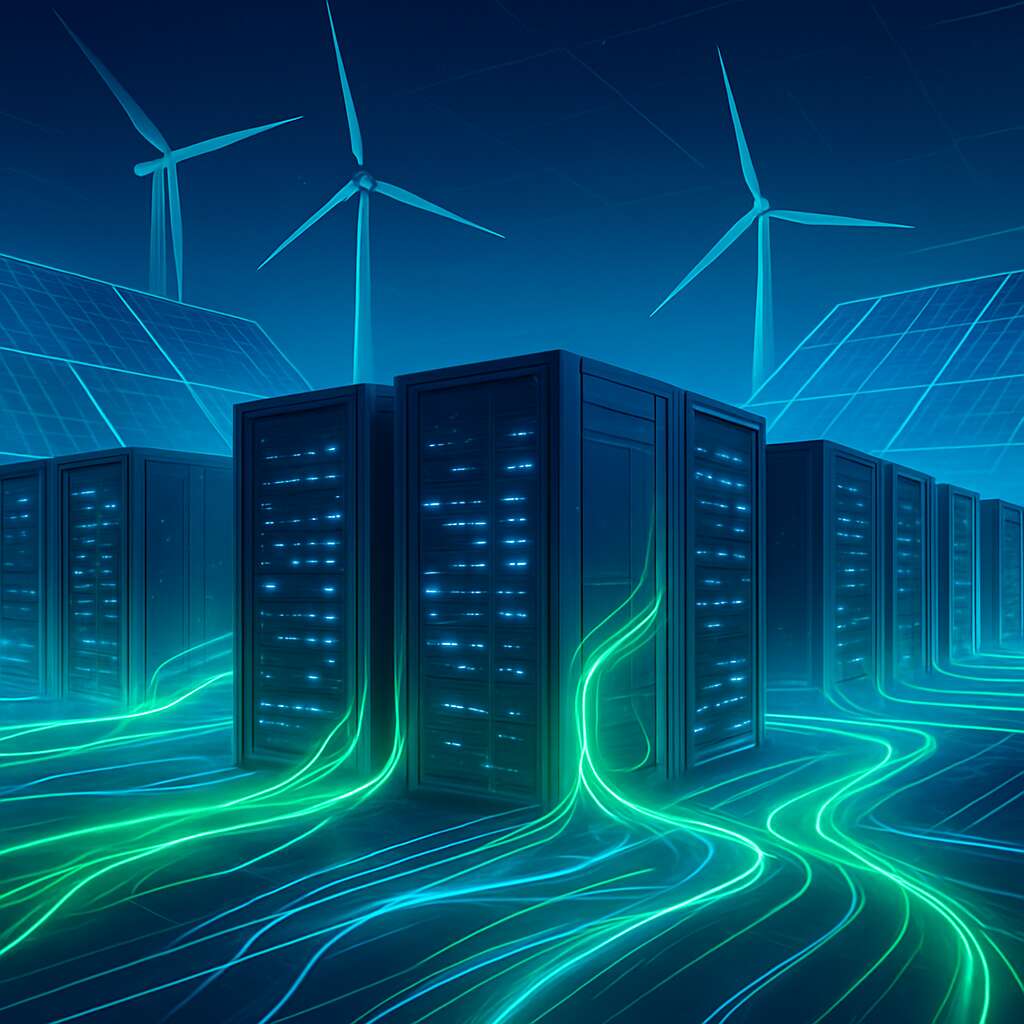
Energy Sources for AI Data Centers
Renewable Energy Integration – Utilizing solar, wind, and hydro power to supply AI infrastructure
As the demand for AI infrastructure skyrockets, the conversation shifts from sheer computational power to sustainable energy solutions. Energy technology for AI infrastructure is no longer a secondary consideration but a fundamental pillar in creating resilient, eco-friendly data centers. Harnessing renewable energy sources—solar, wind, and hydro power—paves the way for a future where AI innovations do not come at the expense of environmental health.
Solar farms dotted across the countryside can provide daytime power, while offshore wind turbines offer a steady stream of energy regardless of cloud cover. Hydropower, known for its consistency and low emissions, complements these sources beautifully. Transitioning to renewable energy within AI data centers isn’t merely a trend; it’s a strategic shift that echoes a societal quest for a more sustainable footprint.
A thoughtful integration of these energy sources—such as a hybrid system—ensures continuous operation even during periods of low renewable generation. It’s a dance of nature and technology, where Energy technology for AI infrastructure serves as a testament to our collective aspiration to harmonize progress with preservation.
Fossil Fuels and Transition Strategies – Role of traditional energy sources and methods for transitioning to cleaner options
While renewable energy draws a lot of attention, the role of traditional energy sources like fossil fuels remains significant in the current landscape of AI infrastructure. These sources have historically provided the backbone of global power grids, offering reliable, high-volume energy supply. Yet, reliance on fossil fuels comes with mounting environmental concerns—air pollution, carbon emissions, and resource depletion aren’t challenges to overlook. The question is — how do data centers shift from this dependency to sustainable solutions?
Transition strategies focus on phased integration methods. Many operators are adopting hybrid models, blending existing fossil fuel infrastructure with cleaner energy options. This approach allows continuous operation during the transition, while gradually decreasing fossil fuel reliance. An effective strategy might involve:
- Investing in renewable power purchase agreements (PPAs)
- Upgrading energy efficiency systems within data centers
- Implementing energy storage solutions that balance fluctuations in renewable generation
Such methods are instrumental in reducing carbon footprints and aligning with global sustainability goals. The evolving role of energy technology for AI infrastructure ensures a valuable, pragmatic pathway from fossil fuels to cleaner energy, serving both business continuity and environmental health.
Energy Storage Solutions – Batteries, flywheels, and other storage systems to ensure reliable power supply
In the quest to ensure resilience and sustainability, energy technology for AI infrastructure stands as a beacon of innovation and pragmatism. As data centers become more vital to our digital ecosystem, the challenge remains: how can they maintain a reliable power supply while embracing greener energy alternatives? The answer often lies in sophisticated energy storage solutions, pivotal for managing the variable nature of renewable sources. Batteries, flywheels, and other advanced systems provide a buffer, smoothing out fluctuations and guaranteeing uninterrupted operation—crucial attributes for AI infrastructure excellence.
These storage systems aren’t mere backups but vital components of an integrated energy strategy. Batteries, especially lithium-ion variants, are fine-tuned to deliver rapid responses to demand surges. Flywheels, harnessing kinetic energy, excel in providing quick bursts of power with minimal degradation over time. Some installations also explore flow batteries or compressed air energy storage, broadening the toolbox for resilient AI data centers. The evolution of energy technology for AI infrastructure fosters a symphony of reliability and sustainability—an elegant solution in a complex world.
Geographical Considerations – Locating AI centers in regions with optimal renewable energy resources
In the sprawling tapestry of digital prowess, where artificial intelligence intertwines with every facet of modern life, the demand for resilient and sustainable energy sources for AI data centers has never been more pressing. Geographical considerations play a pivotal role in shaping the future of energy technology for AI infrastructure, acting as the silent architects of a greener, more efficient world. Regions blessed with abundant renewable resources become prime real estate for the next generation of AI hubs, harnessing natural advantages that transform the energy landscape.
Imagine slips of land bathed in perpetual sunlight, rolling wind turbines whispering across hilltops, or riverways coursing with relentless hydro potential—all reminders that the optimal location for AI infrastructure transcends mere proximity to urban centers. Such locations maximize the harnessing of renewable energy, reducing reliance on fossil fuels and aligning with the broader pursuit of sustainability. To determine these ideal sites, experts evaluate factors such as wind speeds, solar irradiance, and hydro capacity—crafting the perfect stage for the intricate dance of energy technology for AI infrastructure.
- Site-specific weather patterns
- Availability of natural water flows
- Proximity to existing renewable energy networks
By selecting locations with these favorable conditions, data centers can significantly lower their carbon footprint while ensuring the uninterrupted operation essential for AI workloads. In this symphony of natural assets and technological innovation, the geographical placement of AI data centers becomes a defining feature of their ability to leverage energy technology for AI infrastructure, blending ecological harmony with industrial efficiency.
Hybrid Energy Systems – Combining multiple energy sources for optimal efficiency and resilience
Conventional wisdom suggests that relying solely on a single energy source is a bit like betting on a one-horse race. When it comes to AI infrastructure, the reality is far more sophisticated—and far more exciting. Hybrid energy systems—those clever combinations of solar, wind, and hydro—are changing the game. With the capacity to tap into multiple renewable energy sources, these systems deliver a level of efficiency and resilience that single-source setups simply can’t match.
Picture your AI data center powered by a carefully orchestrated mosaic of sunshine during the day, wind whipping through turbines at night, and river currents providing a steady flow of hydro energy. This layered approach ensures that the AI infrastructure remains operational even when one energy source temporarily falters. For instance, a hybrid energy system might use solar panels for daytime power, complemented by wind turbines that spin up after sunset, with hydro providing a reliable backbone. Such versatility minimizes downtime and aligns with the broader goals of sustainable innovation.
- Optimizes energy supply by balancing intermittent sources like solar and wind with steady hydro power
- Reduces reliance on fossil fuels, lowering carbon footprints for AI data centers
- Enhances grid stability, preventing unexpected outages that could crash complex AI workloads
With the continued evolution of energy technology for AI infrastructure, adopting hybrid systems isn’t just a trend but a strategic imperative. It’s a smart way to stay resilient, adaptive, and ahead of the curve in a world where digital demands never sleep and sustainability is no longer optional.
Energy Efficiency Technologies in AI Infrastructure
Advanced Cooling Systems – Innovations in cooling to reduce energy consumption in data centers
Energy technology for AI infrastructure is transforming how data centers manage heat. Advanced cooling systems are no longer just about temperature regulation—they’re about reducing energy consumption significantly. With innovations like liquid cooling, hot aisle containment, and free cooling methods, data centers can operate more efficiently. These technologies consume less power and cut down on emissions, aligning with the push for greener AI infrastructure.
One notable trend in energy technology for AI infrastructure involves the use of direct-to-chip cooling, which targets heat at the source. This approach decreases the need for large-scale air conditioning and refrigeration systems, leading to dramatic energy savings. Additionally, evaporative cooling techniques exploit natural environmental conditions, and their clever integration can lower cooling energy demands by up to 50%. Implementing these innovations requires careful design, but the payoff in sustainability and cost reduction is substantial.
- Liquid cooling systems
- Hot aisle containment
- Free cooling with ambient air
Energy-Efficient Hardware – Utilizing low-power processors and server components
As AI continues to permeate every facet of modern life, the demand for energy-efficient hardware in AI infrastructure has become more pressing than ever. The evolution of energy technology for AI infrastructure is not just about reducing operational costs; it’s about reimagining how our machines consume power. Cutting down on unnecessary energy waste is paramount, especially as data centers scale up at an unprecedented rate.
Utilizing low-power processors and server components allows data centers to operate more sustainably, minimizing their carbon footprint while maintaining high performance. This shift isn’t simply about swapping out hardware; it’s about embracing innovation that prioritizes energy-conscious design, from architecture to processing cores. The focus on energy-efficient hardware enables AI infrastructure to meet dual goals — enhanced performance and lower energy consumption.
Some organizations are adopting ordered approaches such as:
- Implementing energy-efficient processors that operate at lower wattages but deliver competitive computational power.
- Deploying server components engineered for optimal energy use without sacrificing reliability.
The integration of such hardware is transforming how data centers approach sustainability, demonstrating that reducing energy demands is not just feasible but also profitable.
Green Building Design – Architectural strategies for minimizing energy use
Creating energy-efficient AI infrastructure isn’t just about hardware choices; it’s equally about architectural strategies that minimize energy use from the ground up. Green building design for AI data centres emphasizes passive cooling, natural ventilation, and optimized layout to reduce reliance on energy-intensive cooling systems. Sometimes, even simple adjustments like building orientation can significantly decrease heat gain, lowering cooling demands and conserving energy.
Incorporating energy technology for AI infrastructure often involves adopting structural elements such as high-performance insulation and reflective roofing materials—these can slash indoor cooling needs in warmer months. Beyond the physical structure, integrating renewable energy sources like solar panels directly into building design ensures the infrastructure harnesses clean power at every turn. Smart facility management systems further refine energy consumption by dynamically adjusting lighting, climate control, and processing loads based on real-time data.
- Natural light optimization reduces artificial lighting needs.
- Strategic placement of equipment improves airflow and heat dissipation.
Monitoring and Optimization Tools – Real-time energy consumption tracking and management systems
In the fast-evolving domain of Energy Technology for AI Infrastructure, ensuring that energy consumption remains lean and efficient has never been more critical. Smart monitoring tools are transforming the way data centres manage their power footprint, turning what once seemed like black magic into an exact science. Real-time energy consumption tracking allows operators to fine-tune operations on the fly, preventing waste before it happens and avoiding the all-too-common scenario of servers streaming cat videos in the dark—metaphorically, of course.
State-of-the-art management systems harness the power of machine learning algorithms to provide actionable insights. These systems analyze vast amounts of operational data, enabling precise adjustments to lighting, climate control, and processing loads. For instance, a simple dashboard can alert operators when a cooling unit is running unexpectedly or when airflow is compromised by poorly placed equipment.
- Implementing automated controls that respond dynamically to workload fluctuations
- Integrating sensor networks to enhance data accuracy and responsiveness
- Utilising predictive analytics to prevent energy-wasting anomalies before they occur
It’s quite amusing how a few well-placed sensors and a robust software platform can turn a power-hungry data centre into an energy-wise operation, all within the realm of Energy Technology for AI Infrastructure. With these innovations, companies are no longer flying blind—they’re steering their power consumption with the finesse of a seasoned pilot. That’s smarter energy management in action—saving energy, manpower, and, most importantly, the planet’s patience.
Load Balancing and Power Management – Techniques for optimizing energy distribution across infrastructure
Optimizing the flow of electricity across AI infrastructure isn’t just a matter of mere distribution; it’s an intricate dance that marries precision with intuition. In the realm of Energy Technology for AI Infrastructure, load balancing and power management techniques serve as the conductor, ensuring every part of the digital orchestra receives just the right amount of energy at exactly the right moment. This clever orchestration minimizes wastage and prolongs the lifespan of hardware, making energy consumption more sustainable and cost-effective.
Innovative solutions involve dynamic power management algorithms that adjust based on workload demands. For instance, smart grids can prioritize critical processes while gently shutting down or throttling non-essential operations. To facilitate this, some organizations employ a mix of sophisticated hardware, such as phase-change memory and low-power processors, creating an ecosystem where energy is used wisely without compromising performance.
Consider the following approach which has gained traction in the energy-efficient landscape:
- Implementing adaptive load balancing systems that respond seamlessly to workload shifts.
- Utilising real-time monitoring tools to identify power anomalies before they become costly issues.
- Applying predictive analytics to forecast energy demand and optimize distribution accordingly.
This way, AI centres in the United Kingdom can manage their power supply more intelligently—smoothly adjusting energy distribution to match fluctuating demands with minimal waste. Such strategies reflect a deeper understanding of how to harness technologies that elevate energy efficiency for AI infrastructure, transforming complex power networks into finely tuned, responsive systems that respect both technological needs and environmental considerations.
Innovative Energy Technologies Supporting AI Growth
Fuel Cell Technology – Using fuel cells as a clean and reliable power source
Fuel cell technology stands out as a pioneering innovation in energy technology for AI infrastructure. Its ability to generate clean, reliable power without reliance on traditional grid sources makes it a game-changer for data centers and AI operations. Unlike conventional electricity generation, fuel cells produce minimal greenhouse gases, aligning with the increasing demand for sustainable solutions.
One of the key strengths of fuel cells lies in their flexibility and efficiency. They can operate continuously, providing a stable energy supply critical for maintaining the integrity of AI systems. For regions with limited renewable energy resources, fuel cell technology offers a resilient backup, ensuring that AI infrastructure remains resilient against power outages. As the push for greener solutions intensifies, integrating fuel cells into hybrid energy systems creates a seamless balance of power sources, optimizing both cost and environmental impact.
Implementing fuel cell technology in AI infrastructure emphasizes a strategic focus on innovation and sustainability. This approach not only enhances energy security but also fosters long-term operational efficiency in the rapidly evolving landscape of artificial intelligence. As more data centers and AI facilities adopt this cutting-edge energy technology, the future of smart, eco-conscious AI infrastructure becomes undeniably brighter!
Wave and Tidal Energy – Potential for harnessing ocean energy for AI data centers
Energy technology for AI infrastructure is evolving at a rapid pace, with ocean energy emerging as a promising frontier. Tidal energy, in particular, offers a reliable and sustainable power source that can operate continuously—perfect for data centers seeking resilient, eco-friendly solutions. With global tidal power capacity expected to surpass 15 GW by 2030, harnessing ocean energy could revolutionize how AI systems are powered.
Tidal energy’s predictability sets it apart from other renewable sources, making it well-suited for critical infrastructure. Its integration into hybrid energy systems enhances overall resilience and reduces dependence on traditional fossil fuels. Such systems may combine tidal power with wind and solar, ensuring a steady, diversified energy portfolio that supports large-scale AI operations.
Implementing tidal energy for AI infrastructure involves specialized technology development. From underwater turbines to sophisticated conversion stations, these innovations facilitate stable, low-emission power. As the demand for sustainable AI infrastructure grows, ocean energy stands out as a game-changing component of global energy strategy—delivering not just power, but long-term environmental benefits.
Energy Harvesting Techniques – Capturing ambient energy for powering low-consumption devices
In the shadows of innovation, energy whispers its secrets—each pulse and ripple hinting at a new era for AI infrastructure. As the realm of energy technology for AI infrastructure evolves, harnessing ambient sources becomes not just a possibility but an imperative. Ambient energy harvesting techniques, like capturing the faint whisper of electromagnetic waves or vibrational energy, enable the powering of low-consumption devices with a ghostly precision that feels almost mystical.
These subtle energies, often hidden beneath our awareness, can sustain sensors, IoT nodes, and other critical components embedded within vast AI systems. Imagine a web of unseen power sources, silently fueling the backbone of intelligent infrastructure without the need for traditional grid reliance! Technologies such as energy scavenging from ambient radio frequencies or piezoelectric materials open new doors into sustainable innovation.
- Ambient light energy harvesting from UV and infrared spectra
- Vibration and motion energy scavenging from structural movements
- Radio frequency energy capture for remote sensor networks
The dance of these invisible forces marks a shift—transforming how AI data centers and infrastructure sustain themselves amidst the darkness. Such innovations in energy technology for AI infrastructure challenge the old notions of dependence, whispering promises of a future where even the tiniest flicker of energy sustains the colossal machinery of intelligence—endlessly resilient, eternally haunting.
Wireless Power Transfer – Emerging methods for delivering energy without cables
In the shadowy depths of modern innovation, a quiet revolution stirs—one where energy whispers faintly yet profoundly, offering new pathways for AI infrastructure. The art of harnessing ambient energy is transforming how we perceive power, making it almost mystical in its subtlety. As the realm of Energy Technology for AI Infrastructure advances, emerging methods of wireless power transfer have begun to carve out a new frontier—an invisible bridge that shuns cables and embraces the elegance of electromagnetic waves floating freely through space.
This technology supports the proliferation of AI systems by delivering energy directly to sensors, IoT nodes, and edge devices without physical connection. Imagine a landscape where tiny devices draw power from the ambient radio frequency signals emitted by distant broadcast stations or mobile networks. Such innovations rely on sophisticated energy harvesting techniques, ensuring seamless operation in even the most isolated corners of expansive AI ecosystems.
- Wireless power transfer harnesses resonant magnetic coupling to deliver energy across distances with unparalleled efficiency, reducing the dependence on traditional power grids.
- Capacitive and inductive coupling methods create steadfast bridges of energy that can sustain distributed AI sensors, forming a network woven by ethereal currents.
- In tandem, far-field wireless charging extends these capabilities, allowing distant devices to remain energized amid the ceaseless ebb and flow of ambient energy sources.
In this eldritch dance of unseen forces, energy technology for AI infrastructure becomes a vessel of resilience, longevity, and innovation. The silent symphony of vibrational energy, electromagnetic ripples, and ambient light fuels a future where AI systems are not merely dependent on static power sources but thrive amidst the intangible currents that envelop our digital kingdoms. As the quest for sustainable, cable-free power accelerates, the boundary between the physical and the mystical blurs—ushering in a new epoch of ambient energy mastery.
Nano-scale Energy Storage – Next-generation storage solutions at microscopic levels
As artificial intelligence continues to weave itself into every facet of modern life, the demand for innovative energy solutions intensifies. Top-tier energy technology for AI infrastructure isn’t just about powering data centers; it’s about embedding resilience and sustainability into the very fabric of digital evolution. Amid this landscape, nano-scale energy storage emerges as an astonishing frontier—next-generation storage solutions that operate at microscopic levels, promising unprecedented precision in energy delivery for AI systems.
Imagine tiny, highly efficient batteries residing within sensors and edge devices, capable of harvesting ambient energy to sustain operations without the fuss of traditional power sources. This miniaturization goes beyond mere convenience—it’s about creating a universe of autonomous, self-sufficient AI nodes that can thrive even in the most remote environments. The sheer potential of nano-scale energy storage transforms how we perceive the bounds of energy infrastructure, allowing AI to extend its reach into the uncharted corners of the physical world.
One of the most compelling aspects of such microscopic energy solutions is their ability to seamlessly integrate with ambient energy harvesting techniques—like capturing vibrational energy from even the faintest movement or harnessing residual electromagnetic signals. This dance between energy harvesting and nano-scale storage creates a resilient ecosystem where devices operate longer and with less reliance on large-scale power grids. When paired with other innovations like wireless power transfer, these tiny reservoirs amplify the capability of AI infrastructure to operate sustainably and independently.
- Precision energy management at the microscopic level
- Enhanced device longevity through ambient energy harvesting
- Reduced dependency on traditional energy grids
- Improved resilience in remote or inaccessible locations
This technological leap symbolizes more than a mere convenience; it signifies a profound shift in how AI ecosystems are designed—leaner, more adaptable, and inherently aligned with sustainable development goals. With the integration of nano-scale energy storage, energy technology for AI infrastructure evolves from bulky, static systems to fluid, dynamic networks of tiny, self-sustaining power units. As the quest for smarter, greener AI advances, this microscopic innovation paves the way for truly autonomous machines that breathe life into the concept of ambient energy mastery—an elegant, invisible ballet of energy flowing seamlessly beneath the surface of our digital world.
Future Trends in AI Infrastructure Energy Technology
Decentralized Energy Grids – Distributed power systems with microgrids for AI facilities
In the evolving realm of Energy Technology for AI Infrastructure, decentralization emerges as both a promise and a challenge—like a shimmering constellation of interconnected microgrids that promise resilience and autonomy. These distributed power systems are transforming the landscape, allowing AI data centers to operate with unprecedented flexibility. Imagine microgrids as vibrant ecosystems, seamlessly integrating local renewable energy sources and acting as guardians against grid failures.
Future trends point toward the proliferation of hybrid energy systems, where wind turbines hum alongside solar arrays, weaving a delicate tapestry of sustainable power. This innovative approach not only enhances reliability but also reduces dependence on traditional energy sources. As AI infrastructures grow more complex, decentralized energy grids will become the backbone, enabling smarter load balancing and energy management. By harnessing nanoscale energy storage solutions and exploring oceanic energy harvesting—wave and tidal energy—this landscape is poised for a dramatic transformation.
In such a dynamic ecosystem, the strategic deployment of renewable power, advanced cooling innovations, and energy harvesting techniques will coalesce, setting a new benchmark in the pursuit of sustainable AI infrastructure. This evolution in Energy Technology for AI Infrastructure unlocks a future where resilience and resourcefulness walk hand in hand across the UK’s technological horizon.
AI-Driven Energy Management – Leveraging AI itself to optimize energy consumption patterns
As AI infrastructure continues to advance at breakneck speed, a new frontier in Energy Technology for AI Infrastructure is taking shape—one where AI itself becomes the master of energy optimization. Imagine an intelligent grid that learns, adapts, and predicts energy demands with uncanny precision. This AI-driven energy management creates an almost supernatural synergy, ensuring that data centers consume only what is necessary, cutting waste like a razor-sharp blade.
By deploying advanced algorithms, these systems can dynamically adjust energy loads, seamlessly orchestrating renewable sources such as solar and wind, while maintaining reliability. This intelligent orchestration not only conserves resources but also anticipates grid fluctuations, preventing outages before they even happen.
- Real-time monitoring of energy consumption patterns
- Proactive redistribution of power based on predictive analytics
- Integration of nanoscale energy storage solutions for peak shaving and emergency reserves
This isn’t science fiction. It’s a glimpse into the future where AI in energy management becomes the invisible hand guiding the evolution of sustainable AI infrastructure. As regional energy landscapes evolve, the intelligent application of energy technology for AI infrastructure promises to redefine efficiency—shaping a resilient, resourceful, and smart future for the United Kingdom’s data centers.
Regulatory and Policy Developments – Impact of energy policies on AI infrastructure deployment
The relentless evolution of energy policy in the United Kingdom signals a seismic shift that could redefine the deployment of AI infrastructure. As the government presses for decarbonization and sustainable development, resulting regulations increasingly influence how AI data centers are conceived, built, and operated. Stringent standards on emissions, energy efficiency mandates, and the promotion of renewable energy sources serve as catalysts for integrating advanced energy technology for AI infrastructure. These policies not only encourage innovation but also create a landscape where compliance and strategic planning must intersect seamlessly.
The impact of these regulatory frameworks exerts an almost gravitational pull, compelling stakeholders to rethink location strategies—favoring regions rich in renewable energy potential—and accelerate the adoption of hybrid energy systems. Yet, amidst this balancing act, the development of decentralised energy grids emerges as a pivotal trend, empowering microgrids that foster resilience and flexibility. Such distributed models resonate with the UK’s ambitious targets, steering AI infrastructure towards an interconnected, sustainable future.
Further, innovations like smart regulatory compliance tools ensure that energy management gravitates toward real-time monitoring and optimization. These systems anticipate evolving policy landscapes, introducing a layer of adaptive fortification that could spell the difference between marginal compliance and industry leadership. As fuel cell technology matures and wave or tidal energy harnessing becomes more economically viable, the regulatory environment will indubitably influence their integration into energy technology for AI infrastructure, ultimately shaping a future where AI’s energy demands are met with precision and conscience.
Emerging Materials and Technologies – Use of new materials for better energy efficiency and storage
As the demand for high-powered AI infrastructure surges across the UK, the role of emerging materials and technologies in energy technology for AI infrastructure becomes more critical than ever. Breakthroughs in material science are paving the way for revolutionary energy storage solutions that promise higher efficiency and longer lifespan, transforming the way data centers manage their power needs. Innovative options like nano-scale energy storage devices promise to drastically reduce footprint while increasing capacity, an essential step toward sustainable AI development.
One of the most fascinating developments is the advent of advanced materials designed specifically for energy efficiency. Solid-state batteries and new nano-composites for supercapacitors are not only reducing energy loss but also enabling rapid charging—an invaluable trait for AI centers that demand uninterrupted power. These materials open avenues for integrating energy harvesting techniques, capturing ambient energy from sources like electromagnetic waves or even environmental vibrations, further diminishing reliance on grid power.
Amidst these innovations, new energy harvesting materials stand out, enabling AI infrastructure to be more self-sufficient. For instance, flexible photovoltaic composites can be embedded into the very architecture of data centers, harnessing sunlight more effectively than traditional panels. Coupled with cutting-edge wireless power transfer methods, these developments promise seamless energy delivery, potentially revolutionizing how AI data centers operate in diverse geographical regions.
- Advancement in nano-materials for storage enhances capacity while reducing physical mass.
- Development of new composites improves the resilience of energy systems in harsh environments.
- Emergence of flexible, transparent solar materials integrates renewable energy directly into building design.
- Next-generation supercapacitors enable rapid load balancing, vital for handling fluctuating AI workloads.
These innovations underscore a broader shift towards smarter energy technology for AI infrastructure—an evolution rooted deeply in materials science and augmented by the application of AI itself. As future trends indicate, the integration of such novel materials will not only enhance energy efficiency but also streamline deployment strategies, making AI infrastructure more resilient, sustainable, and adaptable to the UK’s ambitious climate targets and energy policies.
Sustainable Lifecycle Management – Designing for energy efficiency from manufacturing to disposal
As the UK accelerates its journey towards a smarter, more sustainable digital economy, the role of Energy Technology for AI Infrastructure becomes increasingly central. With data centers expanding rapidly and AI workloads demanding unparalleled power reliability, designing for a sustainable lifecycle that encompasses manufacturing, operation, and disposal is no longer optional — it’s imperative. Advances in materials science and innovation are paving the way for energy systems that are not only more efficient but also aligned with environmental responsibility.
Future trends point toward the integration of eco-conscious design principles, emphasizing energy efficiency at every stage of AI infrastructure development. By prioritizing low-impact manufacturing processes and embracing circular economy practices, industry leaders are redefining what sustainable AI infrastructure entails. Energy-efficient hardware and smart cooling systems reduce energy consumption over the lifespan of data centers, while modular designs facilitate easier upgrades and disposal with minimal environmental footprint.
In this evolving landscape, technologies like nano-scale energy storage and advanced composites are transforming storage capacities, enabling data centers to operate with less physical mass and more resilience. As these innovations become mainstream, energy systems will increasingly incorporate renewable sources, integrating seamlessly into building architectures with green building design principles. The use of flexible solar materials and environmental energy harvesting methods exemplifies the shift toward self-sufficient infrastructures that minimize dependency on traditional power grids.
To truly understand the future of Energy Technology for AI Infrastructure, one must look beyond hardware and consider the entire lifecycle management. Sustainable design practices will emphasize not only energy efficiency but also the regenerative capacity of materials used. This does not merely involve the adoption of new tech but requires a systemic approach—integrating
- decentralized energy grids
- renewable energy sources
- smart monitoring tools
—to create resilient, adaptable AI ecosystems that respect both technological demands and planetary boundaries.
As digital transformation continues, the convergence of innovative energy solutions with AI-driven management tools heralds a new era—one in which energy technology for AI infrastructure is synonymous with sustainability, resilience, and operational excellence. Embedding sustainability into every facet of lifecycle management, from manufacturing to end-of-life disposal, becomes the foundation for future-proof AI systems capable of thriving within the UK’s ambitious climate and energy targets.