
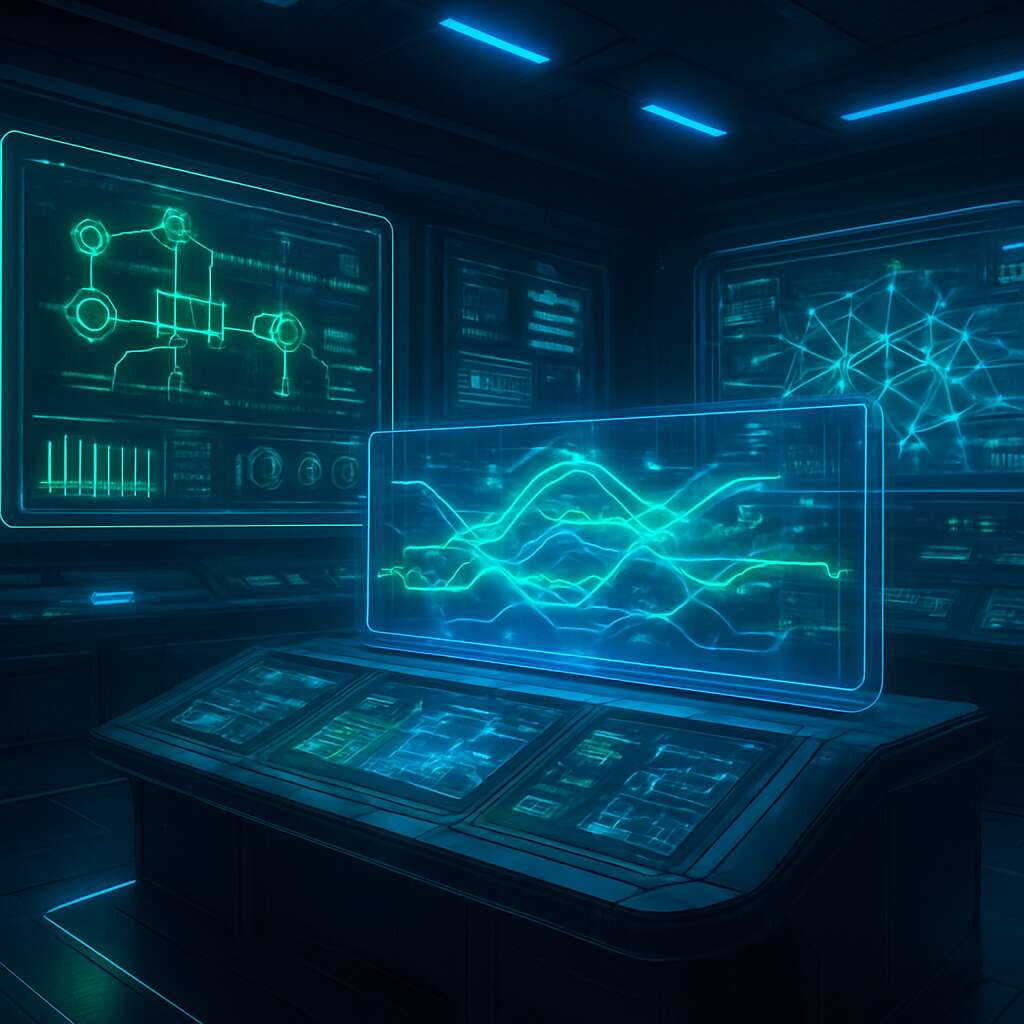
Introduction to AI-Powered Energy Grid Balancing
Overview of Energy Grid Management – Understanding traditional grid balancing methods and their limitations
In the intricate dance of energy, the traditional energy grid management approach has long relied on manual adjustments and real-time data monitoring to keep supply and demand in harmony. These methods, though foundational, often struggled to adapt swiftly to the unpredictable ebb and flow of renewable sources like wind and solar. As a result, some regions faced increased risk of outages or inefficiencies, sparking a need for innovation.
Enter AI-Powered Energy Grid Balancing—an enchanting evolution that harnesses the analytical prowess of artificial intelligence to orchestrate the grid with unprecedented finesse. Instead of static rules, this system learns from patterns, predicts fluctuations, and dynamically redistributes energy flows. It’s like having a maestro guiding a symphony, ensuring every note of electricity aligns perfectly with consumption demands.
Through real-time data analysis, AI-driven solutions can recognize the signals of imbalance before they manifest, enabling preemptive adjustments. This approach signifies a step beyond reliance solely on traditional methods, weaving technology into the core of energy management for a more resilient and efficient network.
Role of Artificial Intelligence in Modern Grids – How AI technologies are transforming energy distribution
In the evolving landscape of energy management, AI-Powered Energy Grid Balancing stands out as a beacon of innovation. This transformative approach harnesses artificial intelligence’s analytical capabilities to refine how we distribute power across regions. Imagine a system that not only reacts to fluctuations but anticipates them—shaping a future where energy flows are harmoniously synchronized with demand.
At the heart of AI-Powered Energy Grid Balancing lies machine learning algorithms that analyze real-time data, identifying subtle signals before imbalance occurs. This preemptive capacity ensures that energy grids remain resilient, even amidst the unpredictable nature of renewable sources.
- Predictive analytics for demand fluctuations
- Dynamic redistribution of energy in response to grid signals
- Enhanced stability and reduced outages through intelligent adjustments
This elegant dance of technology and utility not only minimizes inefficiencies but also elevates the entire energy ecosystem. As AI continues to refine its understanding of grid behavior, AI-Powered Energy Grid Balancing emerges as the linchpin in securing a sustainable and reliable energy future for the United Kingdom and beyond.
Benefits of AI Integration in Grid Operations – Efficiency, reliability, and sustainability improvements
In an era where energy demand grows exponentially and renewable sources introduce new unpredictability, AI-Powered Energy Grid Balancing emerges as a lynchpin of resilience. This sophisticated integration of artificial intelligence transforms traditional grid operations, allowing for real-time adjustments and predictive insights that preempt instability before it manifests.
The profound advantage of AI-powered solutions lies in their capacity for predictive analytics. By continuously analyzing vast streams of data, machine learning algorithms anticipate demand fluctuations with remarkable precision. This foresight enables dynamic redistribution of energy, ensuring that supply aligns seamlessly with consumption patterns. As a result, grid reliability increases while outages diminish—paving the way for a more sustainable energy ecosystem.
Integrating AI into grid management isn’t just about reactive responses; it’s about designing energy systems that think ahead. The flexibility and intelligence offered by AI-powered energy grid balancing ultimately cultivate an environment where efficiency, reliability, and sustainability foster a resilient future for the United Kingdom’s energy landscape.
Core Technologies Driving AI-Based Grid Balancing
Machine Learning Algorithms and Models – Types of algorithms used and their applications in prediction and regulation
Deep within the labyrinth of modern energy systems, the core technologies driving AI-powered energy grid balancing unfold like a dark symphony of unseen forces. Central to this are machine learning algorithms—mystical constructs that analyze vast streams of data to predict consumption patterns and orchestrate real-time regulation. These algorithms breathe life into the grid, allowing it to adapt seamlessly to fluctuating demands with a whisper of intelligence that seems almost prophetic.
Types of algorithms used in AI-powered energy grid balancing include neural networks, decision trees, and reinforcement learning models. Neural networks excel in forecasting energy consumption by recognizing intricate patterns buried within historical data, enabling grid operators to prepare for surges or vanishing demands before they emerge. Decision trees, with their straightforward logic, assist in making swift regulation decisions, ensuring stability amid chaos. Reinforcement learning stands as the most enigmatic—an agent that learns from its own actions, refining its strategies to optimize the distribution of power with an almost sentient sense of purpose.
By harnessing these sophisticated models, the energy grid becomes akin to a living, breathing organism—reactive and resilient. The integration of such algorithms in AI-powered energy grid balancing not only elevates efficiency but also weaves sustainability into its very fabric, guiding the darkened corridors of energy management with precision and eerie foresight.
Data Collection and Sensor Networks – Role of IoT devices and big data in real-time monitoring
At the dawn of this era of innovation, the resilience of energy systems hinges on the silent symphony of data swirling through unseen corridors. The core of AI-Powered Energy Grid Balancing relies on an intricate web of data collection and sensor networks, where IoT devices play a starring role. These tiny sentinels constantly monitor energy flows, environmental factors, and system health, providing a real-time pulse of the grid’s vitality. The relentless stream of information fuels the intelligence needed to respond swiftly and precisely, turning chaos into harmony.
To truly grasp the magnitude of this marvel, consider that these networks generate gigabytes of data daily—each byte a vital note in the melody of sustainable energy management. Harnessing this data requires sophisticated big data analytics, transforming raw signals into actionable insights. By weaving sensor data into predictive models, AI algorithms can anticipate demand surges or identify vulnerabilities before they manifest into crises. This interconnected ecosystem ensures that AI-Powered Energy Grid Balancing remains adaptive and robust, transforming traditional grids into entities that seem almost alive, with an innate ability to learn and evolve.
Predictive Analytics for Energy Demand and Supply – Forecasting consumption patterns and renewable generation
In the pursuit of an era where energy flows with both elegance and precision, forecasting consumption patterns and renewable generation emerges as the heartbeat of AI-powered energy grid balancing. This process hinges on advanced predictive analytics that sifts through mountains of real-time data, unveiling shifts in demand before they become apparent. With the aid of sophisticated models, operators can anticipate surges—be it on a chilly winter evening or a sunny summer afternoon—and adjust supply seamlessly.
One of the silent marvels behind this orchestration is the integration of machine learning algorithms. These algorithms ingrain themselves into the fabric of the grid, discerning subtle trends that would otherwise evade human attention. Through an array of models—ranging from neural networks to ensemble methods—they adapt dynamically, ensuring the stability and sustainability of energy distribution. When paired with sensors and IoT devices, these tools construct a predictive mosaic, guiding the AI-Powered Energy Grid Balancing process with uncanny accuracy.
By harnessing these technological marvels, energy systems evolve into entities that not only respond but proactively shape their own futures. For a nation like the United Kingdom, where renewable energy sources are expanding rapidly, this capacity to forecast accurately becomes indispensable. It turns raw data into a symphony of supply and demand, orchestrated to meet the needs of today and anticipate the promises of tomorrow.
- Forecasting consumption patterns
- Predicting renewable energy generation
- Leveraging machine learning models
- Utilizing big data analytics
Automation and Control Systems – Automated decision-making processes in grid management
At the heart of AI-powered energy grid balancing lies a suite of core technologies that redefine how grids are managed. Automated decision-making systems are no longer optional; they are the backbone of modern energy management. These systems analyze incoming data streams in real-time, allowing instant responses to fluctuations in demand or renewable generation. The ability to make split-second decisions minimizes inefficiencies and prevents outages, turning chaos into harmony within the energy landscape.
Seamless integration of control systems powered by artificial intelligence transforms traditional grid operations. These systems utilize a layered architecture that combines sensors, big data analytics, and machine learning algorithms to dynamically adapt. For example, an unordered list helps illustrate the key components:
- Real-time data collection from IoT sensors
- Automated load balancing algorithms
- Adaptive control modules for rapid response
This interconnected web creates a predictive and autonomous environment, ensuring energy supply matches demand with exceptional precision. As the technology evolves, the complexity of these control systems grows, enabling an unprecedented level of grid resilience and efficiency—hallmarks of advanced AI-powered energy grid balancing.
Edge Computing in Energy Grids – Decentralized processing closer to data sources for faster response
In the shadowed corridors of energy management, where chaos and order dance an eternal ballet, a new sentinel emerges—edge computing. This core technology breathes life into AI-powered energy grid balancing by decentralizing processing power, pulling it closer to the data’s source. As the electrical universe pulsates unpredictably, milliseconds become the currency of survival. Edge computing ensures that decisions are made with ruthless immediacy, bypassing the sluggish corridors of central servers.
Picture a web of IoT sensors scattered across the grid—each a vigilant eye detecting tremors in demand and supply. As data surges and ebbs, the layered architecture of AI-enabled control manifests at the fringes. This streamlined approach facilitates
- faster response times
- improved resilience
- enhanced reliability
—each element intertwined in an autonomous symphony, responding to fluctuations before the call even registers in the control room.
Through decentralized processing, the ancient vulnerabilities of traditional grids fade into obscurity. We are witnessing the dawn of an era where AI-powered energy grid balancing is no longer a distant promise but an imminent reality. In this spectral landscape, edge computing acts as the unseen conductor—crafting harmony from the chaos of modern energy demands.
Implementation Strategies and Challenges
Integration with Existing Infrastructure – Steps for seamless AI adoption in current grid systems
Implementation of AI-Powered Energy Grid Balancing within existing infrastructure demands a nuanced approach—one that respects the intricacies and resilience of current systems while embracing technological innovation. Integration isn’t merely a technical upgrade; it’s a transformative process that requires careful planning and strategy. One of the initial steps involves conducting a comprehensive assessment of the current grid’s architecture, identifying points where AI can be seamlessly embedded without disrupting core operations.
Transitioning to AI-powered energy grid balancing involves phased rollout strategies that prioritize interoperability. Consider deploying sensor networks that facilitate real-time data acquisition, laying the groundwork for predictive analytics and automated decision-making. It can be helpful to follow these steps:
- Assess existing infrastructure capabilities and identify integration points.
- Develop customized AI models tuned to specific grid needs.
- Implement edge computing for decentralized processing, reducing latency.
- Ensure rigorous testing phases to validate AI-driven controls before full deployment.
Of course, this journey is fraught with challenges—such as compatibility issues with legacy systems and cybersecurity concerns. Overcoming these hurdles hinges on a clear understanding of both technical requirements and human factors, creating a harmonious coexistence of AI technology and traditional energy management practices. With deliberate, strategic steps, embracing AI-powered energy grid balancing becomes less an upheaval and more an evolution—paving the way for a smarter, more resilient future.
Data Privacy and Security Considerations – Safeguarding information amidst increased connectivity
In a realm where electricity pulses through veins of steel and silicon, safeguarding data privacy and security becomes an art as delicate as capturing the whisper of a breeze. As AI-powered energy grid balancing introduces unprecedented connectivity, it summons a new era of vulnerabilities—where every byte of information can be a gateway or a fortress. The challenge lies not just in deploying cutting-edge AI models, but in fortifying these digital arteries against intrusion and misuse.
Balancing innovation with caution, energy providers must adopt multifaceted strategies to counter cyber threats and protect sensitive data streams. Robust encryption protocols, layered authentication measures, and continuous monitoring serve as vigilant sentinels standing guard. To foster trust in this AI-driven revolution, transparency in data handling practices and clear governance policies are indispensable—ensuring that energy systems remain resilient amid the surge of intelligent automation.
Implementing these safeguards isn’t merely a technical necessity; it is an act of stewardship. Experts often recommend establishing formal frameworks—such as
- regular security audits
- cyber incident response plans
- comprehensive risk assessments
—to pre-empt threats and respond swiftly when breaches occur. As logistics of energy distribution grow more intertwined with digital threads, achieving harmony between operational efficiency and data sanctity becomes an ongoing quest—one that must be navigated with vigilant precision in the era of AI-powered energy grid balancing.
Handling Unpredictable Renewable Inputs – Adjusting algorithms to manage variable energy sources
Handling the unpredictable dance of renewable inputs remains one of the most intricate moments in AI-powered energy grid balancing. As wind whispers and the sun’s rays shift with the whims of weather, algorithms must adapt like a chameleon in a storm. These fluctuating sources introduce an element of chaos that challenges even the most sophisticated control systems. To tame this wild variability, developers are increasingly turning to predictive analytics, which forecast renewable generation with uncanny precision, paving the way for smoother integration.
Adjusting algorithms becomes a delicate art—fitting the mosaic of energy flows into a harmonious rhythm. Often, this involves implementing
- adaptive machine learning models
- real-time sensor data
- instantaneous decision-making
to anticipate shifts before they ripple through the grid. This approach ensures that supply aligns with demand, even when nature’s unpredictability throws a curveball. The challenge lies not just in prediction, but in reacting swiftly, balancing efficiency with resilience.
In practice, many energy providers deploy layered control systems—think of them as digital sentinels—that continuously monitor renewable outputs and dynamically recalibrate energy flows. These systems employ automation to adjust, smoothening the jagged peaks and troughs of renewable generation. As the landscape of energy distribution grows more complex, the art of AI-powered energy grid balancing hinges on this dance of anticipation and agility, transforming chaos into cadence amidst the pulsating heartbeat of renewable sources.
Scalability and Flexibility – Designing adaptable AI solutions for future growth
As renewable energy sources continue to surge, ensuring the scalability and flexibility of AI-powered energy grid balancing systems becomes more critical than ever. These systems must adapt swiftly to evolving demand patterns and expanding infrastructure, all while maintaining optimal performance. Designing truly adaptable AI solutions involves forward-thinking architecture that supports future growth without sacrificing stability.
One effective implementation strategy is to develop modular AI components that can be seamlessly integrated or upgraded as the grid evolves. This layered approach allows energy providers to add new features or expand capacity without a complete overhaul. These adaptable solutions are vital for navigating the unpredictable landscape of renewable sources and increasing load demands.
Flexibility can be further reinforced through layered control systems that dynamically recalibrate based on real-time grid conditions. The use of predictive analytics combined with machine learning models helps anticipate future load fluctuations, making the system agile in the face of uncertainty. This delicate dance between scalability and flexibility not only safeguards the energy infrastructure but also paves the way for smarter, more resilient grids—powered by AI-Powered Energy Grid Balancing.
Regulatory and Policy Frameworks – Navigating compliance and standards in AI-driven energy management
Implementing AI-Powered Energy Grid Balancing involves navigating a complex interplay of technological, regulatory, and infrastructural challenges. While the promise of smarter, more reliable grids is compelling, ensuring compliance with evolving policies demands meticulous planning and strategic foresight. Stakeholders must stay ahead of the curve by understanding standards that govern data privacy, security, and system interoperability, which are constantly shifting in today’s regulatory landscape.
One effective approach is to adopt phased integration strategies, which include thorough testing and validation to meet rigorous compliance benchmarks. As the landscape evolves, adaptable legal frameworks are necessary to accommodate innovations like blockchain for secure data transfer or IoT devices for enhanced sensor networks. This layered approach reduces risk while aligning with national and regional policies on renewable integration and grid resilience. Simply put, regulatory frameworks often act as both guardrails and catalysts for deploying AI-powered solutions that respect privacy and uphold safety standards.
Challenges are inevitable—yet, they present opportunities for collaboration among regulators, technology developers, and energy providers. Engaging in open dialogue helps shape policies that not only regulate but also incentivise the evolution of AI-powered energy grid balancing, creating a resilient foundation for future infrastructure. The shared goal? Seamless integration that balances innovation with accountability, ensuring energy security for communities across the United Kingdom and beyond.
Future Prospects and Innovations in AI Energy Grids
Emerging Technologies and Trends – Advances like quantum computing and AI integration
Emerging technologies like quantum computing are poised to unlock transformative potential in AI-powered energy grid balancing. By harnessing the superposition and entanglement principles inherent in quantum mechanics, future AI algorithms could perform complex energy flow optimizations at unprecedented speeds. This leap would allow grid operators to respond instantly to fluctuations, ensuring stability even amid the unpredictable nature of renewable sources.
AI integration is also paving the way for unprecedented innovations in real-time data analytics, often combining edge computing and sensor networks. These advancements enable decentralized decision-making, reducing latency and increasing resilience. A natural progression involves incorporating blockchain for enhanced data security and transparency—a critical aspect when managing sensitive user information and grid controls.
As these emerging technologies take shape, the trend points towards a more adaptable, predictive, and autonomous energy management landscape. The fusion of quantum computing and AI-powered energy grid balancing heralds a future where sustainability and efficiency are no longer competing priorities but seamlessly integrated.
Decentralized Energy Resources and Microgrids – Enabling localized balancing and energy trading
Envision a future where energy flows not just respond to demand but anticipate it with uncanny precision—where localized microgrids transform the energy landscape into an intricate ballet of supply and demand managed by cutting-edge AI algorithms. With the proliferation of decentralized energy resources (DERs), a new echelon of flexibility emerges, challenging the traditional centralized grid model. These microgrids, often harnessing renewable inputs like solar panels and wind turbines, become autonomous nodes capable of energy trading and balancing independently—an elegant dance of autonomous decision-making powered by AI.
As the sophistication of AI-powered energy grid balancing deepens, the integration of blockchain technology offers a new layer of transparency and security—crucial when managing sensitive grid control data and user privacy. Decentralized processing via edge computing accelerates responses, ensuring real-time adjustments that match the volatility of renewable energy sources, while facilitating seamless coordination among multiple microgrids that serve local communities or specific sectors.
- Localized balancing units optimize energy distribution at the community level, reducing reliance on distant centralized stations.
- Energy trading platforms enabled by AI foster competitive markets at microgrid scales, encouraging renewable adoption and consumer involvement.
The trend steers toward an energy ecosystem where autonomous microgrids operate fluidly, learning from historical data and sensor inputs, and dynamically adjusting via predictive analytics. This not only enhances resilience but also aligns with the overarching goal of integrating sustainable energy sources without jeopardizing grid stability. As these innovations unfold, the horizon broadens—heralding a landscape where AI-powered energy grid balancing provides a future that is inherently smarter, more adaptable, and profoundly interconnected.
Role of Blockchain in Energy Transactions – Ensuring transparency and security in data sharing
As the pursuit of sustainable energy intensifies across the UK, the role of AI-Powered Energy Grid Balancing is transforming the very fabric of our power systems. This innovation doesn’t just react to fluctuations; it anticipates them with a prescience that borders on the extraordinary. Imagine a grid that dynamically adapts, orchestrating energy flows with a finesse that rivals a master conductor—every note accounted for, every slack precisely filled.
The integration of blockchain technology within AI-Powered Energy Grid Balancing introduces a new dimension of transparency and security. Transactions—be they micro-trades or larger energy exchanges—become immutable, allowing stakeholders to trust that their data and contributions are safeguarded. This layered security is fundamental when managing sensitive grid control data amid an increasingly interconnected environment.
- Decentralized processing accelerates response times, making real-time adjustments to the volatile renewable inputs more feasible than ever.
- Distributed ledger innovations enable seamless, tamper-proof records of energy transactions, fostering trust and encouraging participation in community microgrids.
By weaving blockchain into the fabric of AI-Powered Energy Grid Balancing, we craft an ecosystem where decentralization and security coalesce, creating an infrastructure resilient enough to handle the influx of prosumers and decentralized energy resources. Transparency becomes a catalyst for consumer involvement, forging pathways to innovative energy markets that are as fluid as they are secure. This integrated approach paves the way for an energy future that is not just smarter but fundamentally more trustworthy, harmoniously blending technology with human ambition.
Environmental Impact and Sustainability Goals – Contributing to carbon reduction and renewable adoption
As the UK accelerates toward a greener future, the race to reduce carbon emissions gains unprecedented momentum. One of the most promising pathways lies within AI-Powered Energy Grid Balancing, an innovation that harmonizes renewable resources with consumer needs in real time. This technology not only mitigates the environmental footprint but also reimagines how communities interact with energy, fostering a sense of shared responsibility and sustainability.
Future prospects for AI-Powered Energy Grid Balancing are truly inspiring. With ongoing advancements, we will see smarter algorithms capable of improving grid resilience and incorporating more decentralized energy resources. Innovations such as integrating AI with quantum computing could revolutionize energy forecasting, enhancing accuracy and efficiency. These breakthroughs promise a future where energy systems become not only more sustainable but also more equitable and accessible.
The environmental impact of these developments is equally profound. By optimizing the flow of renewable energy, AI-powered solutions directly contribute to carbon reduction targets. As the UK commits to achieving net zero, the integration of AI in grid management aligns perfectly with sustainability goals. Community microgrids, powered by decentralized energy resources, exemplify how localized balancing can reduce transmission losses, decreasing the overall ecological footprint. This shift towards distributed generation means cleaner air, healthier ecosystems, and a more resilient energy network tailored for a climate-conscious world.
Besides environmental benefits, the societal implications are substantial. Deploying adaptive AI solutions creates pathways for innovative energy markets that are fluid and competitive. For instance, listing micro-trades in energy exchanges through blockchain ensures transactiveness is transparent and secure, encouraging more prosumers to participate actively. This democratization of energy markets fosters community engagement and drives a collective effort to transition to renewable sources.
The trajectory of AI-powered energy systems paints a compelling picture of a sustainable, trustworthy, and equitable energy landscape. As technology continues to evolve, so too does our capacity to harmonize human ambition with environmental stewardship—paving the way toward a greener tomorrow.
Global Adoption and Case Studies – Insights from leading countries and innovative projects
As nations stride boldly into a future illuminated by renewable energy, the horizon teems with promise—and challenge. The story of AI-Powered Energy Grid Balancing emerges as an epic chapter, where innovation and necessity entwine to forge a sustainable tomorrow. Across the globe, pioneering projects showcase this burgeoning technology’s ability to orchestrate a symphony of solar, wind, and hydro resources, harmonizing fluctuating inputs with the pulse of consumer demand.
Leading countries such as Germany and South Korea have already begun weaving AI into their grid management systems, crafting intelligent platforms that adapt in real-time to the ebb and flow of energy. These bold ventures do not merely optimize; they pioneer decentralized energy resources and microgrids that shape a more resilient, community-centered energy landscape. Imagine micro power trading platforms, empowered by blockchain, enabling prosumers to participate in energy markets with transparency and security—these are the authentic expressions of AI-powered energy systems transforming lives.
The discoveries and innovations are endless. As the global stage advances, nascent technologies such as quantum-enhanced AI algorithms are quietly revolutionizing energy forecasting, pushing the boundaries of prediction accuracy to levels once deemed impossible. These developments herald a future where energy systems are not only more sustainable but more equitable, inviting a chorus of voices and communities into the shared responsibility of environmental stewardship.
This unfolding narrative of AI-powered energy grid balancing continues to inspire hope. It exemplifies an era where technology elevates human ingenuity, fostering a world where every watt harmonizes with nature’s rhythm and every community gains a voice at the table. Be it through visionary projects or cutting-edge research, the future of intelligent grid management promises a tapestry woven with innovation, responsibility, and the relentless pursuit of a greener planet.