
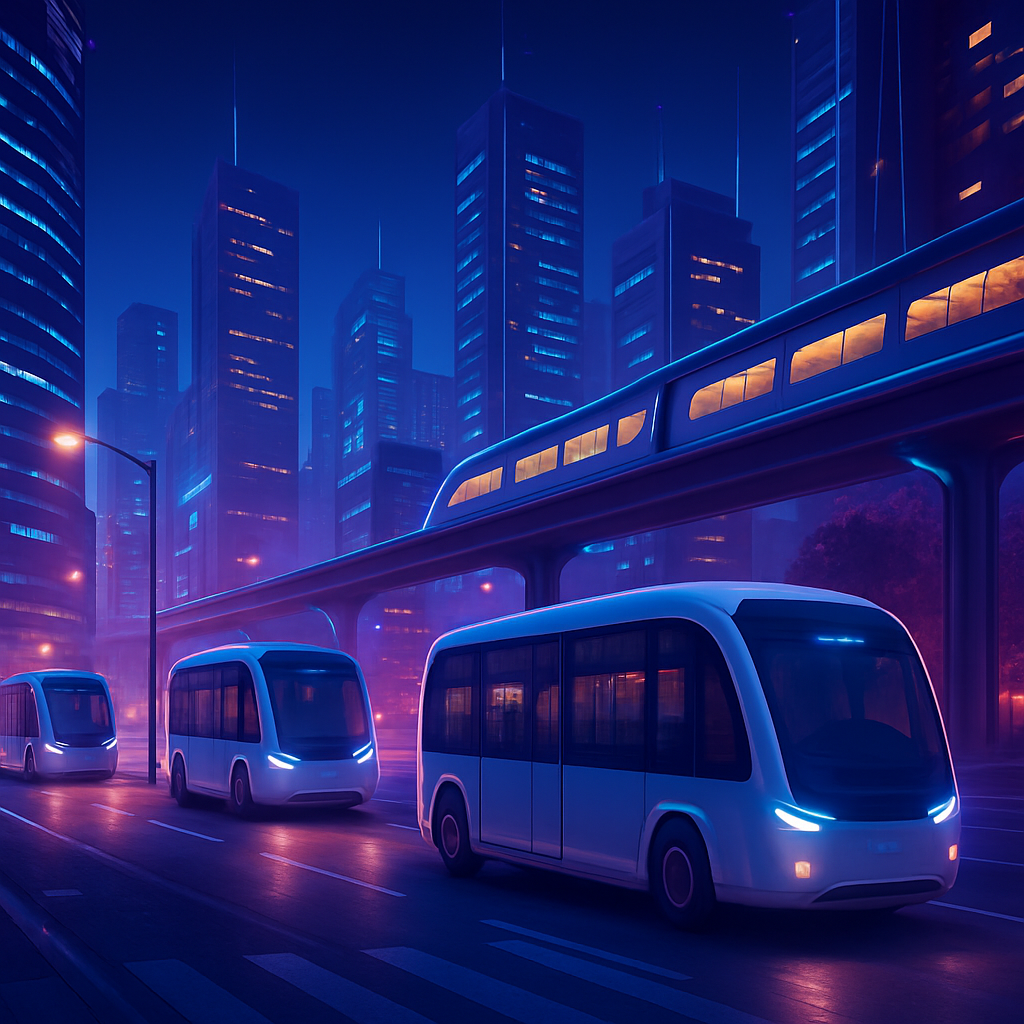
Introduction to AI-Powered Public Transport Systems
Overview of AI Integration in Public Transport – Exploring how artificial intelligence is transforming transit operations
AI-Powered Public Transport Systems are revolutionising how cities manage mobility. By integrating sophisticated artificial intelligence technologies, transit authorities can optimise routes, schedules, and vehicle utilization, creating more efficient and passenger-friendly experiences. This transformation isn’t just about convenience; it’s about making public transport smarter and more adaptable to the needs of urban populations.
As AI becomes more embedded in public transit, it enhances operational efficiency through real-time data analysis and predictive maintenance. Transit agencies can respond swiftly to fluctuating demand and troubleshoot issues before they escalate. This seamless flow of information is paving the way for autonomous vehicles and smart ticketing systems that adjust dynamically to passenger flow, making the entire system more reliable and user-centric.
- Real-time monitoring of vehicle locations
- Automated scheduling based on demand patterns
- Predictive maintenance to reduce downtime
The integration of AI in public transport is not just a technological upgrade; it’s a fundamental shift towards smarter, more sustainable cities. With AI-Powered Public Transport Systems at the forefront, urban mobility is entering an era of unprecedented efficiency and adaptability.
Historical Evolution of Public Transportation Technologies – From manual scheduling to AI-driven automation
Public transportation has come a long way from the days of horse-drawn carriages and hand-typed schedules. As cities expanded and congestion became the norm, it became clear that manual scheduling was no longer enough to keep everything moving smoothly. Fast forward to today, and the evolution of public transport technologies is nothing short of spectacular. Enter AI-Powered Public Transport Systems—a game-changing convergence of data science, automation, and urban planning that promises to make transit smarter, safer, and more responsive.
This technological transformation didn’t happen overnight. It’s the result of decades of incremental advancements—from the first automated fare collection to real-time vehicle tracking. Modern system innovations now encompass real-time monitoring of vehicle locations, automated scheduling based on demand patterns, and predictive maintenance that keeps the fleet fit and ready. Think of it as giving transit a brain, so it can think on its wheels without human intervention. And with the rise of AI-powered solutions, the future of urban mobility becomes not just more efficient but downright insightful.
Benefits of AI in Urban Mobility – Enhancing efficiency, safety, and user experience
AI-Powered Public Transport Systems are transforming urban mobility, offering real solutions for increasingly congested cities. By integrating intelligent algorithms, these systems analyze vast amounts of data to make transit operations more efficient and responsive. For example, AI can optimize routes in real time, reducing delays and improving punctuality—an advantage that both passengers and operators value highly.
Safety also sees considerable improvement with AI-driven systems. Automated monitoring detects anomalies or potential hazards quickly, enabling swift intervention. This not only increases passenger safety but also enhances operational reliability. Plus, with constantly evolving machine learning models, public transport can adapt dynamically to changing demand, making the experience seamless for users.
Some of the standout benefits of AI in urban mobility include:
- Enhanced scheduling accuracy based on demand patterns
- Predictive maintenance to lower downtime
- Smarter passenger information systems for better user experience
As cities continue to grow, deploying AI-Powered Public Transport Systems becomes a strategic investment in creating smarter, safer, and more sustainable urban environments. These innovative systems promise to redefine how people move around in the UK and beyond, setting new standards in mobility efficiency and passenger satisfaction.
Core Components of AI-Powered Transit Systems
Real-Time Data Collection and Analysis – Utilizing sensors and IoT devices for live updates
Imagine a city where buses and trains seem to have a sixth sense—anticipating delays, adjusting routes on the fly, and communicating with passengers in real-time. That’s no sci-fi fantasy; it’s the charm of AI-powered public transport systems. At the heart of these smart systems lies real-time data collection and analysis, turning raw sensor information into actionable insights. Sensors embedded in vehicles and station infrastructure gather a constant stream of data—think GPS signals, temperature sensors, and passenger counters—all whispering updates about current transit conditions.
This torrent of information feeds into sophisticated algorithms that analyze patterns, predict congestion, and suggest dynamic scheduling adjustments. The magic here is that these insights are delivered instantly, allowing transit operators to manage everything from vehicle dispatch to safety protocols with unprecedented agility. To keep things straightforward, here’s a quick look at core components involved in this seamless data dance:
- Live location tracking via GPS and IoT sensors
- Sensors monitoring vehicle health and passenger flow
- Data integration platforms aggregating diverse sources
- Real-time analytics dashboards for decision-makers
Mixing these elements, AI-powered public transport systems transform raw data into a symphony of efficiency. It’s like having a transport maestro orchestrating the entire network with digital finesse, making urban mobility not just smarter but also smoother and more responsive than ever.
Autonomous Vehicles in Public Transit – Self-driving buses and shuttles for urban routes
Imagine stepping onto a bus that seems almost alive, responding to your presence and the rhythm of the city itself. This is no fantasy; it’s the reality of AI-powered public transport systems transforming urban mobility. The seamless integration of autonomous vehicles into these systems relies on advanced core components that enable sharp precision and fluid adaptability.
At the core are autonomous vehicles—self-driving buses and shuttles that navigate the city with a blend of sophisticated sensors and machine learning. These vehicles are equipped with an array of sensory technologies, such as LIDAR, cameras, and ultrasonic sensors, allowing them to interpret their environment in real-time and react instantaneously. This sensory synergy creates a dynamic driving experience that feels almost prescient.
Supporting these vehicles are advanced control systems that orchestrate their movements with uncanny accuracy. These systems harness data from sensors embedded in infrastructure and vehicles, forming a foundation upon which intelligent routing and scheduling decisions are made. To facilitate smooth operation, the following core components are essential in AI-powered public transport systems:
- High-resolution GPS and IoT sensors for precise location tracking
- Onboard cameras and LIDAR for environmental awareness
- Robust data integration platforms aggregating sensor and traffic data
- Automation algorithms for route optimisation and safety management
This interconnected web of technology allows autonomous vehicles to adapt in real-time, loading passenger data, traffic conditions, and road hazards into their decision-making matrices. The complexity is woven into a fabric that feels inherently intuitive—yet is rooted in raw, processing power. AI-powered public transport systems are not just about traveling; they are about creating an ecosystem where mobility becomes an extension of human intent, orchestrated by precise, intelligent machines.
AI-Driven Scheduling and Routing – Optimizing routes based on demand and traffic conditions
At the heart of AI-Powered Public Transport Systems lies a symphony of intelligent coordination—an orchestration that ensures each vehicle moves with purpose and precision. To achieve this, advanced AI-driven scheduling and routing modules analyse an ever-changing tapestry of demand, traffic, and environmental factors. It’s as if a digital conductor harmonises each element in real-time, guiding vehicles through the urban cacophony with effortless grace.
Imagine a route that adapts mid-journey to unexpected road closures or surges in passenger demand. This fluidity is made possible through sophisticated algorithms that continuously evaluate live data streams, recalibrating routes and schedules instantaneously. Such an approach not only guarantees the punctuality expected of cutting-edge transportation but also optimizes resource allocation, reducing idle times and enhancing passenger satisfaction.
- Real-time demand analysis based on passenger loading patterns and ticketing data
- Traffic condition updates from IoT sensors and connected infrastructure
- Dynamic rerouting to circumvent congestion or roadworks
- Adjustments in schedule frequency to match fluctuating passenger flow
What truly exemplifies the magic within AI-powered public transport is how these elements intertwine, creating a seamless, responsive network. It’s as though each bus or shuttle is guided by an unseen hand that anticipates needs, ensuring the city’s pulse remains steady and resilient. This fluidity underscores the transformative power of AI in shaping the future of urban mobility.
Passenger Analytics and Personalization – Predicting user preferences to improve service
At the heart of AI-Powered Public Transport Systems lies a profound understanding of human behaviour and its unpredictable nature. Passenger analytics and personalization are the silent architects shaping a future where travel feels less like a chore and more like a tailored experience. By peeling back the layers of transit data—from ticketing records to boarding patterns—these systems gain a nuanced insight into passenger preferences. Such insights enable the creation of smarter, more responsive corridors of urban mobility.
Imagine knowing precisely when a commuter prefers to travel or which routes cause the most congestion for certain parts of the city. The system can then adapt, offering personalized journey options or optimized schedules that align with real-world demand. By integrating these predictive models, AI-Powered Public Transport Systems move beyond static timetables toward a realm where service becomes an extension of individual routines, rather than an ordeal.
- Predictive analytics for user preferences
- Customized notifications and travel suggestions
- Dynamic adjustments to routes based on user demands
This convergence of technologies enhances both the efficiency and humanity of public transportation, transforming it into a service that feels intuitive and mindful—a true reflection of the needs of its users. Personalization, powered by data-driven insights, encourages deeper trust and engagement with the transit network, setting the stage for a new chapter in urban mobility driven by AI-Powered Public Transport Systems.
Implementation Challenges and Solutions
Data Privacy and Security Concerns – Protecting user information in AI systems
In the realm of AI-Powered Public Transport Systems, one of the most whispered about concerns is data privacy and security—because nothing screams “fun” quite like hackers and rogue data breaches messing with your morning commute. As cities rapidly implement AI-driven systems, safeguarding passenger information becomes a top priority. A single slip-up could turn a smooth ride into a nightmare of stolen identities or manipulated schedules.
Balancing innovation with safety presents a labyrinth of challenges. Implementation hurdles, such as integrating legacy infrastructure with the latest AI technology, can feel like trying to teach an old dog new tricks. Yet, innovative solutions are emerging. From encryption techniques to anonymization practices, transit agencies are deploying layered security approaches.
- End-to-end data encryption
- Regular security audits
- AI system transparency
- Strict access controls
These measures help ensure that user information remains shielded from prying eyes while preserving the seamless functionality of AI-Powered Public Transport Systems. At the heart of this technological revolution, safeguarding privacy isn’t just a compliance checkbox but a fundamental pillar supporting the trust needed for widespread adoption.
Integration with Existing Infrastructure – Ensuring compatibility with legacy transit networks
Integrating AI-Powered Public Transport Systems into existing infrastructure can feel like trying to shoehorn a spaceship into a bicycle shed. Legacy transit networks often operate on outdated technology that’s more museum piece than modern marvel. The challenge lies in ensuring compatibility without causing a system crash or, worse, a full-blown transit tantrum.
One of the biggest hurdles is bridging the technological chasm. Think of trying to connect a vintage horse-drawn carriage to a sleek, electric hyperloop. To navigate this digital dilemma, transit agencies are deploying layered solutions. This can involve deploying middleware that acts as a translator, enabling old hardware to communicate fluently with AI systems.
Public transport modernization demands a strategic approach. Think of a step-by-step plan—like a meticulously crafted recipe, but for software integration. From upgrading sensors to installing new communication protocols, the process is painstaking yet rewarding.
- Retrofitting legacy hardware with smart sensors
- Implementing secure API connections
- Running parallel systems during phased rollouts
These steps help mitigate operational risks while ensuring that AI-Powered Public Transport Systems blend seamlessly with pre-existing infrastructure. It’s a delicate dance—balancing innovation with practicality—yet those who master it find their transit networks transformed from clunky to clever with minimal fuss.
Cost and Funding Considerations – Budgeting for high-tech upgrade investments
Implementation of AI-Powered Public Transport Systems often faces a significant obstacle: the cost and funding required for high-tech upgrades. Upgrading aging infrastructure with the latest AI technology isn’t cheap. It demands careful budgeting and strategic financial planning. Transit agencies must evaluate available resources and explore diverse funding streams.
One common solution is phased implementation, allowing gradual investment to spread costs over time. Public-private partnerships often play a vital role, providing an injection of capital while fostering innovation. As part of budgeting considerations, agencies need to account for not only equipment costs but also ongoing maintenance and security expenses.
Here’s a typical approach to managing these challenges:
- Prioritise essential upgrades based on impact and feasibility.
- Seek government grants and subsidies dedicated to transportation modernization.
- Leverage innovative financing options like bonds or green investment funds.
Smart budgeting combined with targeted funding strategies makes AI-Powered Public Transport Systems more attainable. Without prudent financial planning, however, transforming transit networks from conventional to cutting-edge could remain just a distant dream. It’s a delicate balancing act—investing wisely today to ensure the future of urban mobility.
Technical Limitations and Reliability Issues – Addressing system failures and maintenance needs
Yet, amidst the promise of progress, shadows loom in the form of technical limitations and reliability issues that threaten to undermine the very fabric of AI-Powered Public Transport Systems. System failures—sudden, inexplicable, and often unpredictable—can derail schedules and induce chaos in a city’s pulse. For the operator, each glitch feels like a ghostly whisper from a machine that once promised flawless harmony. Maintaining these complex systems becomes an ongoing battle, a dark dance of troubleshooting and recalibration. The cost of downtime becomes starkly apparent, threatening the fragile balance between innovation and practicality.
Addressing these challenges requires a meticulous approach. Implementing redundant systems and rigorous testing protocols can act as a safeguard against ruinous failures. Equally vital is establishing a dedicated maintenance regime—one that anticipates wear and tear before calamity strikes. To navigate these murky waters, many agencies turn to:
- Real-time monitoring sensors that catch anomalies before they escalate
- Predictive analytics that forecast potential breakdowns
- Rapid response teams ready to repair and recalibrate in the dead of night
Reliability, after all, is the cornerstone of trust in AI-Powered Public Transport Systems, where even a small lapse can ripple across a city’s arteries, turning efficiency into chaos. Managing this delicate landscape demands more than technology; it calls for a vigilant eye and an unwavering commitment to operational integrity. Without these safeguards, the future of en pointe urban mobility risks being shrouded in the fog of uncertainty and technical despair.
Regulatory and Policy Frameworks – Legal aspects surrounding autonomous and AI-enabled transit
Implementation of AI-Powered Public Transport Systems does not come without hurdles. Regulatory and policy frameworks often lag behind technological advancements, creating a complex web of legal challenges. In many cases, laws surrounding autonomous vehicles and AI-enabled transit are either ambiguous or non-existent, leaving operators navigating uncharted legal territory.
Addressing these issues requires more than just technological solutions; it demands a collaborative effort between policymakers, transit authorities, and technology developers. Streamlined regulations can facilitate smoother deployment and operation, but they must also ensure safety and protect passenger rights.
The process of establishing this legal landscape can be broken down into steps. For example:
- Assess existing regulations to identify gaps and ambiguities.
- Engage stakeholders through public consultation to shape balanced policies.
- Implement pilot programs under clear legal guidelines to test and refine frameworks.
Ongoing dialogue between regulators and technology providers ensures that AI-Powered Public Transport Systems can flourish within a sound legal context. The challenge lies in balancing innovation with safety, privacy, and accountability—an intricate dance that shapes the future of urban mobility.
Future Trends and Innovations in AI Public Transit
Integration with Smart City Initiatives – Creating interconnected urban environments
The future of urban mobility hinges on more than just innovation—it’s about creating interconnected ecosystems where every component seamlessly communicates. AI-Powered Public Transport Systems are at the forefront of this transformation, enabling cities to evolve into truly smart environments. These systems harness the power of predictive analytics, real-time data, and autonomous vehicles, resulting in a transit infrastructure that adapts dynamically to demand and traffic patterns.
Next-generation AI integration will likely feature intelligent hubs connecting various modes of transit, allowing for data-driven decision-making down to the individual passenger level. An emerging trend involves the development of AI-driven prioritisation systems that optimise traffic flows and reduce congestion, making even the most complex urban environments more livable. In this landscape, AI-powered solutions are not mere add-ons but become the backbone of a resilient, efficient public transport network that advances the broader smart city initiative.
Advancements in Machine Learning Algorithms – Enhancing predictive capabilities and adaptability
As artificial intelligence continues to evolve, the future of AI-Powered Public Transport Systems is becoming increasingly aligned with the unpredictable rhythm of human life. Machine learning algorithms stand at the frontier of this transformation, refining their predictive capabilities with each iteration. These advancements allow transit systems to dynamically adjust, anticipating passenger flow and traffic fluctuations before they even manifest.
Fascinatingly, the next wave of innovation involves layered neural networks that can analyze vast data sets—contextualizing patterns that were once invisible to human planners. As a result, AI systems can produce highly adaptive routing models, aligning services with real-world demand with an almost prescient precision. These developments, often encoded in architectures like reinforcement learning, are allowing public transport to operate not just reactively but proactively, transforming the commuter experience into one of fluid, intuitive movement.
The integration of AI-powered solutions also paves the way for more personalized insights into individual transit needs. Passenger analytics powered by these systems offer a granular view—tailoring routes, schedules, and service levels to match user preferences. It’s this layered understanding that cultivates a sense of human-centric transit, where technology enhances the natural flow of daily life instead of disrupting it.
Among emerging innovations, one stands out—an ordered approach to intelligent traffic management, encompassing AI-driven prioritisation systems. These algorithms optimize traffic signals and transit flow, reducing congestion and improving punctuality. When embedded into the fabric of urban environments, they foster a quieter, safer, more predictable passage through crowded streets.
The potential of AI-powered public transport systems doesn’t rest solely on predictions and routing. When these systems grow smarter, they also become more resilient. They learn from failures, adapt maintenance schedules, and anticipate system vulnerabilities, fortifying the network against disruptions. It’s this continuous cycle of learning and adaptation that makes AI not just a tool but a fundamental component of modern transportation infrastructure.
Sustainable and Eco-Friendly Transit Solutions – Reducing emissions through optimized routing
As cities grow increasingly congested, the push for sustainable, eco-friendly transit solutions becomes more urgent. AI-Powered Public Transport Systems are leading the charge toward reducing emissions through optimized routing and efficient management. Imagine buses and trains that leverage real-time data to select the most environmentally friendly routes, minimizing fuel consumption and air pollution.
In future iterations, layered neural networks will analyze vast datasets, making routing decisions that prioritize low-emission pathways without sacrificing service quality. These innovations can adapt to changing traffic patterns and passenger demand on the fly, offering cities a pathway to greener mobility.
An often-overlooked benefit lies in the potential to cut carbon footprints significantly, transforming public transport into an instrument for climate action. As AI systems grow more sophisticated, expect a proliferation of transit networks that not only serve millions but do so with a gentle respect for the environment — a testament to technology’s promise when aligned with ecological responsibility.
Passenger Engagement and Interactive Experiences – Using AI for personalized onboard services
In the swiftly evolving realm of urban mobility, AI-Powered Public Transport Systems are not merely a futuristic concept—they are sculpting tangible interactions that redefine how commuters experience daily transit. As cities grapple with congestion and the mounting demands of sustainable mobility, the next era of passenger engagement hinges on personalized onboard services powered by sophisticated artificial intelligence. These systems promise intuitive, real-time adaptations tailored to individual preferences, turning routine journeys into bespoke experiences.
Imagine transit vehicles where AI dynamically adjusts offering—integrating localized data, historical travel patterns, and even mood sensors to craft a seamless journey. Passengers could receive personalized route suggestions, tailored next-stop alerts, or entertainment options aligned with their interests, transforming everyday commutes into moments of connection and comfort. Such innovative features enhance user satisfaction without sacrificing operational efficiency, leveraging deep learning to anticipate needs before passengers articulate them.
Layered neural networks will play a transformative role in future iterations of AI-Powered Public Transport Systems, analyzing multisource datasets to generate hyper-personalized service layers. This talent for predictive adaptation ensures that transit networks not only respond to current demand but also anticipate future preferences—whether that’s adjusting lighting, climate control, or audio ambient settings based on individual profiles. This level of intelligent personalization fosters a deeper psychological engagement, forging a sense of trust and loyalty that elevates public transit from mere necessity to preferred lifestyle choice.
- Interactive touchpoints that recognize returning passengers and customize experiences accordingly
- Real-time feedback collection to refine service quality on the fly
- Integration of voice-activated commands to facilitate user interaction without distraction
The mosaic of future innovations is poised to elevate interaction from basic informational displays to immersive, emotion-sensitive interfaces. As AI systems gain nuanced understanding of passenger behaviors and preferences, they will serve as both facilitators of efficient transit and creators of comfort—drastically enhancing user engagement. The ultimate vision is one where every journey embodies a tailored narrative, deeply rooted in the promise of AI-Powered Public Transport Systems to evoke a more human-centric urban mobility experience.
Global Adoption and Case Studies – Examining successful implementations worldwide
The momentum behind AI-Powered Public Transport Systems is unmistakable, transforming crowded urban centers into interconnected hubs of efficiency. Cities worldwide are pioneering innovative solutions—ranging from smart ticketing to real-time passenger flow management—which showcase the remarkable potential of artificial intelligence in reshaping how people navigate their environments. What’s inspiring is witnessing these systems not merely respond to demands but anticipate them, creating a symphony of seamless, personalized experiences that feel almost intuitive.
Countries like Singapore and cities such as London are leading the charge with successful implementations. For example, London’s contactless payment systems integrated with AI analytics enable real-time adjustments to service frequency, significantly reducing wait times. Similarly, in Seoul, AI-driven predictive maintenance has minimized disruptions, ensuring smoother journeys. These case studies exemplify how scalable AI-Powered Public Transport Systems deliver tangible improvements, offering a glimpse into a future where public systems are as adaptable as they are reliable.
As technology continues to evolve, expect to see increased adoption of such innovations across global transit networks. Intelligent routing algorithms, integrated multisource datasets, and emotion-sensitive interfaces are transforming everyday commuting into moments of comfort and connection. Cities embracing these advancements signal a decade of transit evolution—where AI shapes not just transport but also the social fabric of urban life.