
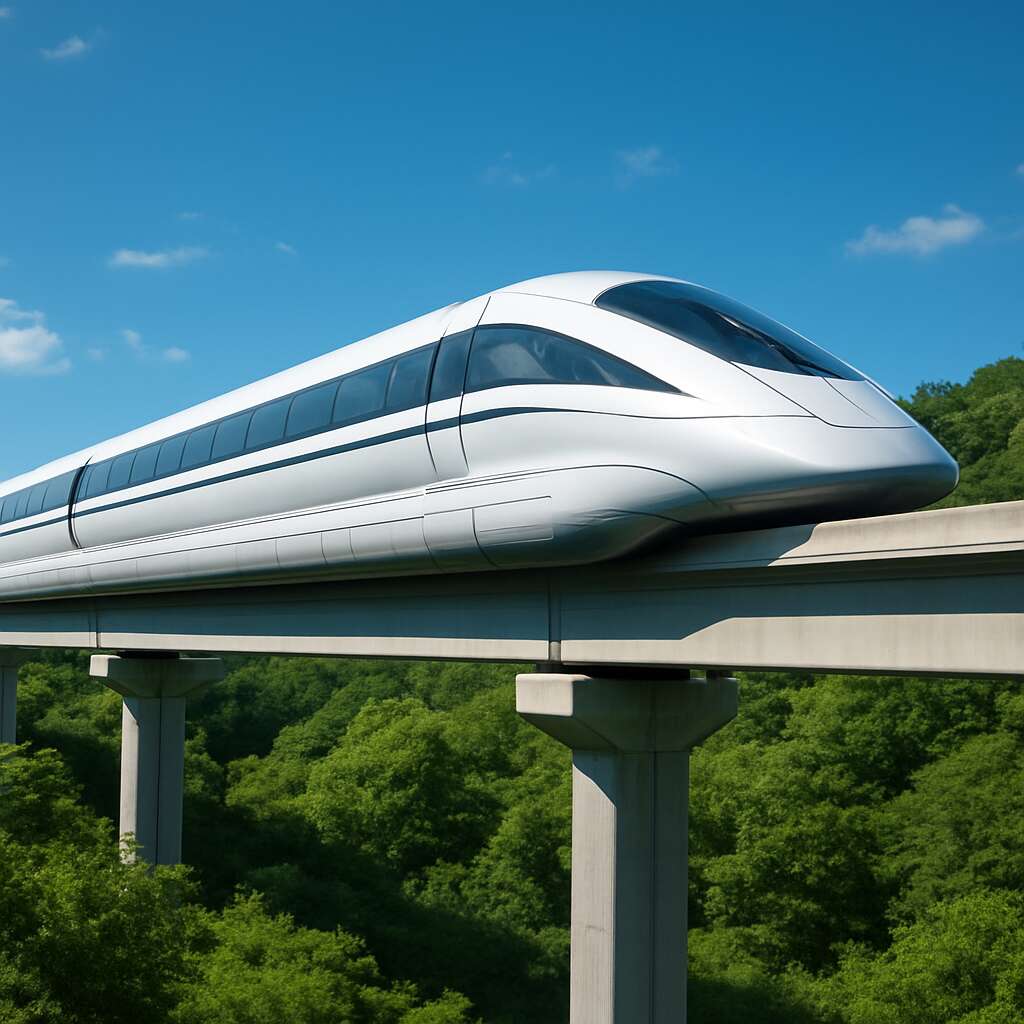
Current Landscape of Hyperloop and Maglev Technologies
Overview of Hyperloop Technology – History, development, and core principles of Hyperloop systems
Hyperloop / maglev train expansion projects are reshaping the boundaries of high-speed transportation, capturing the imagination of engineers and futurists alike. These innovative systems combine groundbreaking physics with visionary engineering to create travel experiences once confined to science fiction. Hyperloop technology, in particular, has a storied history that dates back to the early 21st century when Elon Musk popularized the concept of a vacuum tube train capable of reaching supersonic speeds. Its core principles hinge on reduced air resistance and magnetic levitation, allowing for unprecedented velocity with minimal energy consumption.
Maglev trains, standing for magnetic levitation, use powerful electromagnets to lift and propel cars along dedicated tracks, bypassing traditional friction. Today, this technology is seeing global expansion through ambitious projects—such as the planned routes in the United Kingdom—that aim to revolutionize how we think about connectivity. As these Hyperloop / maglev train expansion projects continue to develop, they promise to redefine urban and intercity transportation networks, connecting regions faster and more sustainably than ever before. Evolving alongside societal shifts toward sustainable mobility, these projects embody a pursuit of innovation that marries efficiency with environmental consciousness.
Introduction to Maglev Trains – How maglev trains operate and their technological components
Maglev train technology stands as a marvel of modern engineering, embodying a pursuit of frictionless, high-speed travel. These magnetic levitation systems have been quietly transforming the transportation landscape, with their core components—electromagnets, guidance rails, and sophisticated control systems—working in harmony. Unlike traditional trains that rely on wheels and rails, maglev trains float just above their tracks, dramatically reducing resistance and allowing for smoother, swifter journeys.
This phenomenon of levitation relies on powerful electromagnets that generate a magnetic field strong enough to lift the train, while simultaneously propelling it forward through controlled electromagnetic forces. In practice, maglev trains achieve astonishing speeds, rivaling the fastest aircraft, yet operate with greater energy efficiency and minimal noise pollution. As countries like the United Kingdom envision expanding their high-speed rail network, maglev train expansion projects become integral to this vision, promising a future of ultra-fast, sustainable urban connectivity.
These projects reveal a layered approach involving technology such as static and dynamic magnets, linear motors, and advanced track designs. From innovative infrastructure to cutting-edge propulsion systems, each element contributes to creating a seamless travel experience. For example:
- Electromagnetic suspension systems that ensure stability and smooth levitation
- Linear motors that eliminate the need for traditional mechanical transmission
- Precision guidance systems for maintaining optimal track alignment
Maglev trains and Hyperloop / maglev train expansion projects form the vanguard of transportation evolution, weaving a narrative of elegance and efficiency in motion. As these projects unfold across the United Kingdom and beyond, they pave the way for an era where speed meets sustainability, crafting journeys that are breathtaking both in design and purpose.
Comparison of Hyperloop and Maglev – Key differences, advantages, and limitations of each system
As the world accelerates toward a new era of transportation, the contrast between Hyperloop and maglev train expansion projects becomes increasingly compelling. Both systems exemplify the pursuit of frictionless, high-speed travel—yet they embody distinct technological philosophies and promise different experiences. While maglev trains have long demonstrated their practicality through operational networks, Hyperloop systems ignite the imagination with visions of near-supersonic travel in vacuum-sealed tubes.
Maglev trains shine in their proven reliability and scalability, with their electromagnetic suspension systems and linear motors providing smooth, sustainable journeys. Hyperloop, on the other hand, touts advantages such as potential speeds exceeding 700 miles per hour, thanks to its low-pressure tube environment that minimizes air resistance. This allows Hyperloop / maglev train expansion projects to cater to diverse regional needs—from urban transit corridors to intercity links—each system offering unique benefits tailored to their applications.
Of course, there are limitations. Maglev trains face high infrastructure costs, and their extensive guidance systems demand meticulous maintenance. Conversely, Hyperloop’s nascent technology still requires significant development to achieve commercial viability. Despite these challenges, both form an essential part of the future landscape of ultra-fast transportation, weaving innovation into the fabric of everyday life. The question remains: which system will dominate the next chapter of high-speed rail evolution?
Global Adoption Trends – Current countries invested in Hyperloop and maglev projects
The current momentum behind Hyperloop and maglev train expansion projects signals a transformative shift in how societies envision speed and connectivity. Countries around the globe are investing heavily to be at the forefront of this high-speed revolution. China, Japan, South Korea, and Germany stand out as pioneers, pioneering regional and intercity corridors that could redefine travel norms. In the UK, ambitious plans are underway to integrate maglev train expansion projects into existing networks, aiming to overcome congestion and environmental concerns.
While maglev trains have a demonstrated track record of commercial viability and operational reliability, Hyperloop systems remain in the experimental stage, yet they ignite a sense of boundless possibility. Countries are exploring their potential through innovative pilot projects, with the United States and the United Arab Emirates leading the way in Hyperloop aspiration. The race to develop sustainable, ultra-fast transportation reflects a collective desire to push past conventional limits and unlock human potential.
As these technologies evolve, their geographic footprint grows—each country evaluating which system aligns best with their infrastructural, economic, and societal needs. Whether integrating Hyperloop / maglev train expansion projects into urban transit hubs or intercity corridors, the aspiration is clear: revolutionizing travel to match the relentless pace of modern life.
Market Size and Economic Impact – Financial forecasts and economic implications of new rail systems
The global market for Hyperloop / maglev train expansion projects is gaining serious momentum, with projections suggesting staggering economic impacts over the next decade. As countries pour billions into ultra-fast transport innovations, the market size for these advanced rail systems is expected to grow exponentially. Industry analysts estimate the Hyperloop / maglev train expansion projects could contribute hundreds of billions of dollars to the economy, creating jobs, stimulating manufacturing, and reshaping supply chains.
The financial forecasts reveal an optimistic landscape—one where these cutting-edge systems do more than liven up transportation; they could truly transform national economies. In Japan and Germany, for instance, ongoing investments are already demonstrating that maglev technology offers not just efficiency but long-term cost savings. Meanwhile, Hyperloop projects in the U.S. and the UAE are still in the experimental phase but carry the promise of unlocking new economic corridors.
- Massive infrastructure investments
- Job creation in high-tech sectors
- Reduction in travel time and operational costs
Given these promising trends, it’s clear that Hyperloop / maglev train expansion projects are not merely technical pursuits—they are catalysts for economic vitality that could forever change how we think about speed and connectivity.
Major Expansion Projects Worldwide
Hyperloop Projects in North America – Notable initiatives, companies involved, and progress updates
North America’s rail renaissance is quietly accelerating, and Hyperloop / maglev train expansion projects sit at its vanguard. An impressive consortium led by Virgin Hyperloop has made notable strides, with test tracks in Nevada and promising plans for passenger routes between major metropolitan hubs. Companies like Virgin Hyperloop and Hyperloop Transportation Technologies (HyperloopTT) are spearheading these advancements, pushing the boundaries of what high-speed transit can achieve.
Progress updates reveal that, despite regulatory hurdles, the practical application of Hyperloop / maglev train expansion projects is inching closer to reality. Noteworthy initiatives aim to halve travel times between Los Angeles and San Francisco, while other corridors explore connecting the East Coast to the Midwest. These ambitious projects encapsulate North America’s desire to redefine urban mobility and showcase the potential of magnetic levitation technology—an elegant dance of physics and engineering that promises to reshape the future of rail.
Maglev Extensions in Asia – Leading projects in China, Japan, and South Korea
Across the vast tapestry of Asia’s technological innovation, maglev train expansion projects stand as shimmering beacons of progress. China’s relentless pursuit of high-speed rail mastery has propelled the development of the Shanghai Maglev, which currently races at speeds of up to 268 miles per hour—an eloquent testament to the enduring allure of magnetic levitation. Meanwhile, Japan’s maglev ambitions extend beyond the Shinkansen’s legacy, with the magnetic train line planned to connect Tokyo and Osaka in just over an hour, revolutionising long-distance travel in the country.
- China spearheads multiple maglev initiatives, aiming to connect key cities with cutting-edge infrastructure that resonates with the nation’s vision of rapid urban integration.
- Japan’s Chuo Shinkansen aims to demonstrate the astonishing potential of maglev technology, with test tracks pushing the boundaries of speed and safety.
- South Korea’s ongoing projects reflect a sophisticated understanding of maglev systems, blending innovation with sustainability to create seamless transit corridors.
From the bustling streets of Seoul to the sprawling metropolises of China, the focus on Hyperloop / maglev train expansion projects captures Asia’s ambitious push toward future mobility. These technological marvels do more than merely connect cities; they forge pathways to the dreams of a seamless, interconnected world, where high-speed transit becomes an art of physics and poetry combined.
European Hyperloop and Maglev Plans – Upcoming corridors and government involvement
Across the European continent, government-led Hyperloop and maglev train expansion projects are transforming visions of ultra-fast transit into tangible realities. Countries like Germany, France, and the United Kingdom are pioneering corridors that aim to revolutionize connectivity, reduce travel times, and set new standards in sustainable mobility. These ambitious initiatives are driven by a keen desire to address urban congestion while supporting economic growth through innovative infrastructure investments.
For instance, the UK’s proposed Hyperloop corridor connecting London to Birmingham exemplifies how regional governments are actively engaging with private partners to accelerate development in this sector. Similarly, Germany’s plans for high-speed maglev lines to link Berlin with other major cities highlight the nation’s commitment to leveraging magnetic levitation technology for seamless corridor expansion. These efforts often involve intricate collaborations, where public funding intersects with private expertise, creating a fertile ground for transforming public transportation networks into futuristic transit corridors.
- The European Union’s tolerance for experimentation fuels these widespread efforts, aiming to integrate Hyperloop / maglev train expansion projects into national and transnational transportation strategies.
- Moreover, strategic investments are focused on developing corridors that not only connect major urban centres but also support regional development, demonstrating a broader commitment to equitable access and environmental sustainability.
The future of European high-speed rail appears vividly intertwined with the evolution of Hyperloop and maglev technologies. Governments are increasingly recognizing these systems’ potential to redefine mobility, embedding them in long-term infrastructure planning. As cities across Europe envision a network of ultra-fast transit corridors, the pace of technological and legislative momentum suggests we are approaching a new era in transit evolution—one where Hyperloop / maglev train expansion projects will become central to shaping the continent’s transportation landscape.
Innovative Startups and Partnerships – Emerging players and collaborations shaping the industry
Across the globe, a quiet revolution is unfolding, powered by innovative startups and groundbreaking partnerships that are shaping the future of high-speed transit. The arena of Hyperloop / maglev train expansion projects is teeming with ambitious ventures and strategic collaborations designed to make our travel dreams—fast, clean, and efficient—a reality. In North America, firms like Virgin Hyperloop and Hyperloop Transportation Technologies are testing the boundaries with prototypes that could someday whisk commuters at near-supersonic speeds. Meanwhile, Asian heavyweights like JR Central and China’s CRRC are advancing maglev extensions that already blur the line between science fiction and daily commute.
What stands out in this race? A colorful mix of industry disruptors working alongside traditional infrastructure giants, like those forming alliances with governments eager to pioneer the next era of transportation. Here’s a quick glance at some game-changing players:
- Hyperloop startups harnessing vacuum tube technology for ultra-fast travel.
- States and nations investing in public-private partnerships to fund ambitious maglev projects.
- Multinational collaborations aiming to accelerate technological innovation and commercial viability.
This convergence of inventive startups and thoughtful collaborations is the catalyst for some impressive Hyperloop / maglev train expansion projects. As these ventures transition from blueprint to track, the potential to redefine regional connectivity and create economic ripples is practically palpable. With competition heating up in this arena, expect the pace of progress to accelerate—getting us closer to a world where travel times shrink to a fraction of what they once were.
Project Challenges and Barriers – Technical, regulatory, and financial obstacles faced globally
Major Hyperloop / maglev train expansion projects around the world face a range of persistent challenges that could slow progress if not addressed. Technical hurdles remain, such as developing reliable vacuum tube systems for Hyperloop and achieving precise levitation control for maglev trains. These innovations demand not only cutting-edge engineering but also rigorous testing to ensure safety and consistency.
Regulatory barriers can prove equally daunting. Governments often lack specific policies overseeing high-speed train systems, creating delays in approvals and permitting. A fragmented regulatory environment complicates cross-border projects, prolonging timelines.
Financial obstacles also stand in the way. The enormous capital required for infrastructure, coupled with uncertain return on investment, makes funding a constant concern. Public-private partnerships are often necessary but can be hampered by misaligned expectations or political shifts.
- Securing long-term funding sources
- Navigating complex safety regulations
- Overcoming engineering limitations
All these barriers underscore that scaling Hyperloop / maglev train expansion projects demands patience and strategic planning. As these initiatives evolve, addressing these challenges will be crucial to unlock their transformative potential in global transit.
Future Prospects and Technological Advancements
Next-Generation Hyperloop Concepts – Speed, safety, and sustainability improvements
In the boundless pursuit of transporting humanity faster, smarter, and greener, future prospects for Hyperloop / maglev train expansion projects shimmer like constellations in a night sky. Imagine a world where speed transcends imagination—where hyperloop systems, hurtling through vacuum tubes, could reach speeds beyond 700 mph, rendering the journey from London to Edinburgh in under an hour. These next-generation concepts are not merely about blistering velocity; they bring with them a promise of safety as precision damping and advanced sensors pair to create nearly foolproof systems. Sustainability takes center stage as energy-efficient maglev trains continue to lower carbon footprints, blending cutting-edge magnetic levitation with eco-conscious design.
As technological advancements unfold, innovative design philosophies emerge—featuring lighter materials, smarter safety protocols, and AI-integrated controls. The evolution of Hyperloop / maglev train expansion projects emphasizes a future where transportation redefines boundaries, connecting continents with whisper-like quietness and a minimal environmental footprint. With a focus on resilience, these systems aim to transcend current limitations, bringing a new dawn of mobility that is swift, secure, and sustainable.
Maglev Tech Innovations – Materials, control systems, and energy efficiency
Rapid technological progress hints at a future where maglev train expansion projects will transform the way we think about transportation. Innovations in materials, control systems, and energy efficiency are driving these advancements forward at lightning speed. Lightweight composites, for example, are making maglev trains more aerodynamic and sustainable, reducing drag and power consumption. Advances in control systems, such as AI-driven diagnostics and precision damping, enhance safety and reliability, paving the way for hyperloop and maglev systems to operate seamlessly at unprecedented speeds.
Energy efficiency remains a cornerstone of future hyperloop / maglev train expansion projects. Magnetic levitation technology inherently minimizes friction, yet ongoing research focuses on optimizing power usage and integrating renewable energy sources. Some projects are experimenting with superconducting magnets and energy recovery systems to further reduce environmental impact. This evolution isn’t just about faster transit; it’s about smarter, cleaner systems that redefine green mobility on a global scale.
- Emerging materials improve longevity and performance of key components.
- Control system integration with AI ensures real-time adjustments for safety and efficiency.
- Energy-efficient designs incorporate renewable sources and energy recovery technologies.
The race to develop hyperloop and maglev train expansion projects is also driven by new control paradigms, making these systems more adaptive and resilient. The combination of lightweight materials and cutting-edge control algorithms promises a future where travel is not only faster but also safer and less disruptive to the environment. As these innovations mature, the potential for connecting continents and cities with whisper-quiet, ultra-fast rail systems grows ever more tangible. This is truly a new chapter in transportation technology, where speed, safety, and sustainability come together seamlessly.
Integration with Urban Infrastructure – Smart cities and multimodal transportation links
As urban landscapes become increasingly crowded, the integration of hyperloop and maglev train expansion projects into smart city design emerges as a transportation revolution. Cities are no longer just places of residence—they are interconnected hubs that demand seamless, multimodal transportation links to thrive in this era of rapid mobility. Imagine stations that serve as gateways not only to local transit but also as nodes in a global network of ultra-fast rail corridors. These elevated corridors will be embedded within the urban fabric, connected via intelligent transit hubs that facilitate smooth transfers between hyperloop, maglev, and traditional transit systems.
Smart infrastructure equipped with AI-driven sensors and communication networks enhances operational efficiency and user experience across transportation sectors. The incorporation of hyperloop and maglev technology into urban planning promises a future where travel times shrink dramatically, reducing congestion and environmental impact. Cross-disciplinary collaborations are paving the way for resilient, adaptive systems that learn from real-time data—making these projects more resilient against disruptions and capable of adjusting to fluctuating demand.
- Enhanced connectivity between cities and suburbs
- Streamlined multimodal transit hubs
- Integration with existing rail and road networks
This vision isn’t just theoretical; forward-looking urban centers are actively embedding hyperloop and maglev train expansion projects into their plans, recognizing that the future of mobility depends on harmonious tech integration. Cities will soon transform from isolated nodes into interconnected ecosystems where speed, sustainability, and adaptability are paramount—heralding a new chapter of human mobility driven by innovation and strategic infrastructure development.
Sustainability and Environmental Impact – Green energy sources and ecological considerations
Future prospects for Hyperloop and maglev train expansion projects spark visions of a transformed transportation landscape—where speed and sustainability collide in a futuristic dance. As advancements in magnetic propulsion and vacuum tube technology accelerate, these systems are inching ever closer to mainstream reality. With ongoing innovations—like improved materials for lower weight and increased energy efficiency—the potential for ultra-fast, eco-friendly transit becomes less science fiction and more impending breakthrough.
In the sustainability arena, green energy sources are poised to redefine how hyperloop and maglev trains operate. Solar panels nestled along elevated corridors, wind turbines adjacent to transit hubs, and the integration of renewable power ensure these projects minimize ecological footprints. Ecological considerations, ranging from urban greenery to wildlife corridors, are also being woven into project planning, echoing a commitment to harmonious development.
- Use of clean energy sources like wind, solar, and hydroelectric power
- Implementation of eco-conscious construction practices
- Development of recyclable and lightweight materials for infrastructure
What’s clear is that these technological strides aren’t happening in a vacuum—they are aligning with global efforts to curb emissions and promote sustainable urban living. The race for hyperloop and maglev train expansion projects isn’t just about speed; it’s about orchestrating a cleaner, greener future while navigating complex technical and ecological challenges. As innovation continues to forge ahead, the promise of ultra-fast, environmentally friendly transit becomes tantalizingly close—propelling humanity into a new era of mobility that’s as smart as it is speedy.
Regulatory and Policy Developments – Standards, safety protocols, and governmental support
The race for Hyperloop / maglev train expansion projects is accelerating faster than a commuter stuck in London rush hour. Governments and private investors alike are lining up to fund the next big leap in transportation, confident that speed and sustainability can go hand in hand. Regulatory and policy developments are not only keeping pace but are beginning to lay down the rules for a future where ultra-fast, eco-friendly transit becomes commonplace. Standards surrounding safety protocols and technical certifications are being drafted with a gusto that suggests compliance is almost as swift as the trains themselves.
That said, a well-regulated framework is vital to prevent spectacular meltdowns—both literally and figuratively. To keep things moving smoothly, some countries are crafting ambitious policies that incentivize green energy use and eco-conscious construction practices. As a result, we see a natural synergy between innovation and legislation in the realm of Hyperloop / maglev train expansion projects. Governments worldwide are stepping up support, providing grants, clarifying legal hurdles, and even consulting industry leaders to make these futuristic visions a tangible reality.
A rapid iteration of this regulatory landscape is the development of safety standards—crucial for public confidence and operational integrity. Some countries are adopting a phased approach: pilot tests followed by rigorous safety audits, building a regulatory scaffold that evolves with new technological advancements in materials, control systems, and energy efficiency. This dynamic dance of technology and policy design ensures Hyperloop and maglev systems not only meet but exceed current safety expectations, paving the way for widespread adoption.
As technological capabilities advance, so too does the complexity of aligning them within the existing infrastructure. The ongoing dialogue between regulators, innovators, and urban planners guarantees that Hyperloop / maglev train expansion projects are not just pipe dreams but are poised to become the backbone of smarter, greener cities. With each regulatory milestone, we come closer to turning science fiction into a fast, safe, and sustainable commuting reality.
Investment Opportunities and Industry Impact
Emerging Markets for Hyperloop and Maglev – Regions with high potential for expansion
The horizon shimmer with promise as hyperloop / maglev train expansion projects unfold across the globe, revealing vast terrains of economic potential. Regions rich in emerging markets stand at the precipice of transformation, their landscapes painted with visions of swift, silent journeys that transcend traditional limitations. These ambitious endeavors ignite investment opportunities not solely rooted in transportation but woven into the very fabric of economic vitality and trade vitality.
In tandem, these cutting-edge rail systems carve corridors into burgeoning industries—bridges for commerce, tourism, and innovation—fostering industry impact that resonates deeply within local economies. Areas poised for expansion, such as Southeast Asia, the Middle East, and parts of Eastern Europe, hold immense promise for hyperloop and maglev projects. Governments and private entities see these ventures as catalysts—heralding a new era where futuristic speed and sustainable mobility intertwine, ready to propel these regions into an era of unparalleled connectivity and growth.
Investment Trends and Stakeholders – Venture capital, government funding, and corporate investments
The race to redefine transportation boundaries has never been more electrifying. As hyperloop / maglev train expansion projects continue to accelerate across regions primed for transformation, investment opportunities are emerging in ways previously unimagined. Governments, private investors, and innovative startups are eyeing these ventures not just as infrastructural upgrades but as catalysts for economic renaissance, especially in emerging markets where connectivity can unlock unprecedented growth.
Venture capital firms are increasingly drawn to hyperloop / maglev train expansion projects, recognizing their potential to revolutionize logistics and commuter travel. Public funding schemes often act as a preliminary spark, with governments seeing these systems as strategic enablers for regional development. The collaboration between tech giants and local entrepreneurs fuels a symbiotic push that amplifies industry impact, transforming transit corridors into bustling hubs of trade, tourism, and innovation.
- Government grants and subsidies facilitate early-stage development.
- Private equity firms and corporate entities invest in scalable, sustainable technologies.
These investments are fueling a wave of industry impact that extends beyond mere transportation. As prestigious projects unfold in regions like Southeast Asia, the Middle East, and Eastern Europe, they serve as blueprints for future megaprojects. Stakeholders seek to harness the advanced control systems, materials, and energy efficiencies embedded within hyperloop / maglev train expansion projects, ensuring each venture not only pushes technological boundaries but also aligns with eco-friendly mandates.
The trend indicates a shift toward multimodal integration, where hyperloop / maglev train expansion projects become vital linchpins within modern urban infrastructure. Smart city initiatives benefit profoundly, with these systems creating seamless, high-speed links that reduce congestion and carbon footprints. As the industry evolves, stakeholder engagement—from local governments to global investors—will continue to shape the horizon of hyperloop and maglev mobility, illustrating a future where speed, safety, and sustainability are no longer dreams but standard fare.
Commercial Viability and Business Models – Revenue streams, pricing strategies, and user adoption
Amid the shadows of progress, investment opportunities in Hyperloop / maglev train expansion projects are unearthing new pathways in the transportation labyrinth. These ventures promise not just faster journeys but the dawn of an era where mobility becomes a whispering ghost in the night—almost intangible but profoundly transformative. Stakeholders from venture capital to governments are vying to claim these corridors of innovation, sensing that the future’s pulse beats strongest where speed and sustainability collide.
Business models centered on Hyperloop / maglev train expansion projects reveal a landscape rich with revenue streams and strategic pricing strategies. Ticket sales, freight logistics, and premium services shape a complex web of user adoption, where early engagement often hinges on seamless multimodal integration. Yet, what truly fuels this technological renaissance is the whispered promise of environmental harmony—sustainable energy sources powering these corridors in ways that purge traditional transportation’s shadows.
- Passenger fares crafted to reflect speed, comfort, and ecological metrics.
- Freight contracts securing lucrative, long-term cargo agreements.
- Ancillary revenues from on-board services, retail outlets, and premium memberships.
As these revenue streams intertwine, the commercial viability of Hyperloop / maglev train expansion projects steadily emerges into focus. The industry’s dark allure—speed that shatters norms and energy efficiencies that whisper silent rebellion against pollution—draws eager investors. The evolution of business models suggests a future where user adoption accelerates as urban corridors become high-octane arteries of commerce and cost-efficiency, turning once-imaginary corridors into living, breathing veins of economic vitality.
Economic and Social Benefits – Job creation, urban development, and improved mobility
Investment opportunities in Hyperloop / maglev train expansion projects are reshaping the very fabric of transportation infrastructure across the globe. As urban areas become ever more congested, the allure of near-instantaneous travel and sustainable mobility attracts an eclectic mix of venture capitalists, private investors, and governments eager to redefine connectivity. These projects symbolize more than technological marvels; they embody a vision for a future where rapid transit intersects seamlessly with environmental responsibility.
Economic and social impacts ripple outward, fostering job creation and catalyzing urban development. From construction to operation, the development of high-speed Hyperloop / maglev train expansion projects offers a fertile ground for employment and innovation. Cities could see a renaissance of livability, with enhanced access to employment hubs and new opportunities for social inclusion.
- Urban regeneration and infrastructure modernization
- Job opportunities across engineering, manufacturing, and service sectors
- Enhanced regional connectivity and economic vitality
The social fabric stands to gain from improved mobility, reducing commute times and lowering carbon footprints—an elegant dance of progress and sustainability.
The infusion of foreign investments and governmental support further fortifies the industry’s position. As countries like the UK explore Hyperloop / maglev train expansion projects, they unlock avenues for attracting international finance. These endeavors promise a new way of celebrating mobility—fast, reliable, and eco-friendly—transforming the everyday journeys of millions. The impact stretches beyond the economy, hinting at a future where transportation infrastructure becomes an engine of social cohesion and urban innovation.
Risks and Future Outlook – Market uncertainties, technological hurdles, and long-term prospects
Humankind’s relentless pursuit of transportation innovation teeters on the precipice of a new epoch—one where Hyperloop / maglev train expansion projects do not merely serve as technological marvels but as harbingers of profound societal transformation. As investment interest surges, the strategic deployment of these high-speed transit systems acts as a catalyst not only for economic dynamism but also for urban resilience in an increasingly congested world. The landscape is fertile with opportunity, yet riddled with uncertainties—each new project revealing a tapestry of potential, challenges, and the promise of the extraordinary.
Amidst the ambitious visions, market uncertainties cast shadows and highlight the need for meticulous risk assessment. The high capital costs, lengthy development timelines, and evolving regulatory landscape create a complex arena where technology’s untested components intersect with policy hurdles. The long-term prospects for Hyperloop / maglev train expansion projects must balance the lure of revolutionary transit against the pragmatic realities of deployment. Stakeholders weigh the risks of technological obsolescence, infrastructural integration complexities, and fluctuating political commitments, all of which could temper the pace of industry growth.
- Technical Hurdles: Resolving issues surrounding safety, energy efficiency, and material durability remains paramount—each obstacle demanding innovation and patience.
- Financial Stability: Securing consistent funding streams amidst fluctuating market confidence and international competition necessitates strategic alliances and diverse revenue models.
- Regulatory Frameworks: Developing universal standards while navigating local policy landscapes remains an arduous journey that could either accelerate or obstruct progress.
Despite these hurdles, the horizon remains luminous with promise. Projects such as Hyperloop in North America and maglev extensions across Asia illustrate how governmental backing and private enterprise converge to shape tomorrow’s infrastructure. The future is laden with prospects that defy the limitations of conventional rail systems—embracing speed, environmental sustainability, and urban revitalization as central tenets. For investors and innovators alike, the landscape of Hyperloop / maglev train expansion projects beckons as a crucible of long-term value and industrial evolution. Yet, navigating these uncharted waters requires resilience, vision, and an unwavering belief in the transformative power of high-speed transit on the world’s future corridors.