
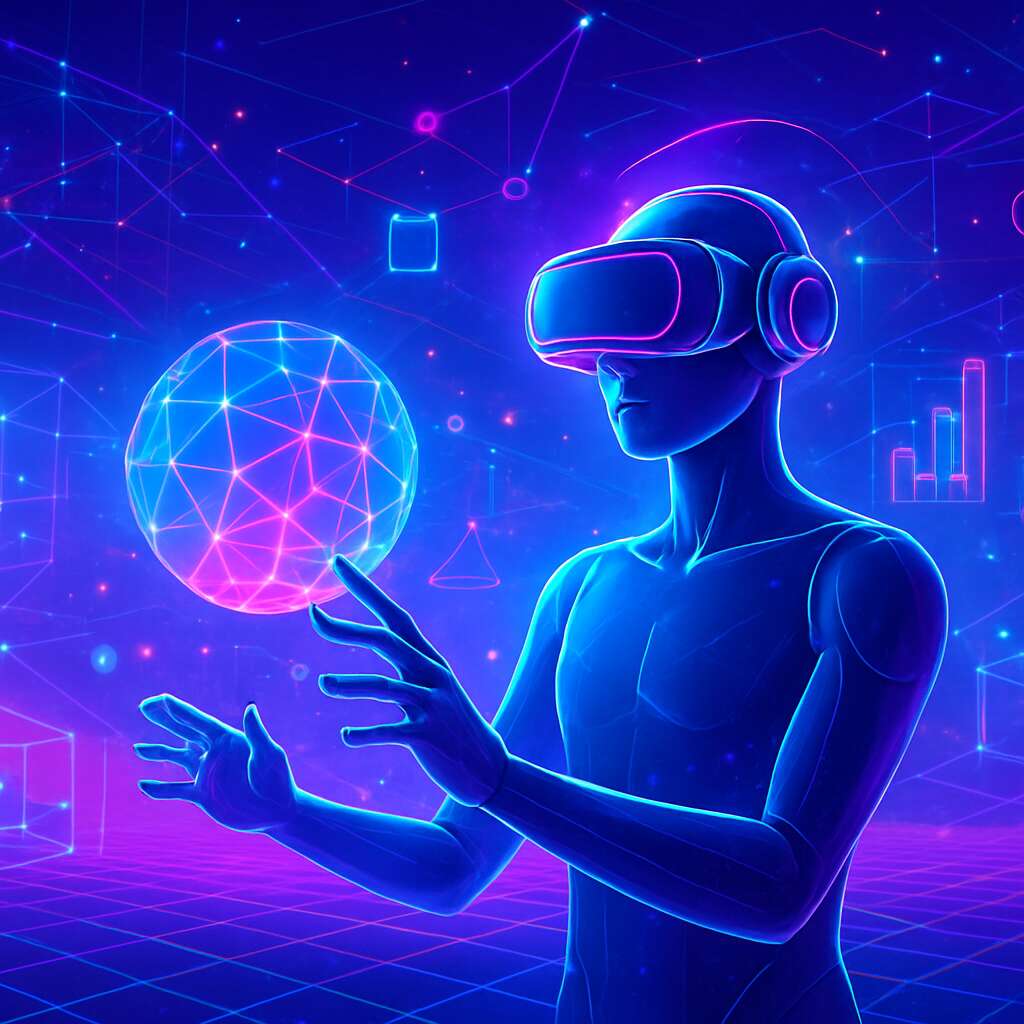
Role of Artificial Intelligence in Virtual World Creation
AI-driven Content Generation – How AI automates and enriches the development of virtual environments and assets
The scene in the metaverse is only as vibrant as the pixels and programming behind it, and AI in Metaverse Development is revolutionising how these virtual worlds come to life. Imagine a virtual landscape where assets are crafted with less human effort but with more creative flair, thanks to AI-driven content generation. Instead of slogging through repetitive tasks or relying solely on human artists, developers now harness AI to automate environment creation, generate realistic characters, and even design immersive interactions that captivate users. This isn’t some distant sci-fi fantasy; it’s happening now, with AI tools enabling rapid prototyping and dynamic content updates that keep virtual worlds fresh and engaging.
Take a leap further, and you’ll see an intriguing hierarchy of AI-powered features that streamline the development process: from procedural content creation to intelligent NPCs that adapt based on user behaviour. As the backbone of AI in Metaverse Development, these innovations make virtual environments more lifelike and responsive than ever before. With the right balance, artificial intelligence transforms the creative potential of developers into immersive universes, setting a new standard for what’s possible in digital realms.
Intelligent Avatar Design – Leveraging AI for realistic and adaptive virtual characters
In a realm where pixels paint dreams and code constructs reality, the role of AI in Metaverse Development cannot be overstated. Take a breath and consider this: virtual worlds populated exclusively by AI-driven avatars already surpass the clunky, static characters of yesteryear. Intelligent avatar design is transforming digital landscapes into bustling hubs of life, interaction, and personality.
By harnessing AI, developers craft realistic and adaptive virtual characters that respond fluidly to user behaviour. These AI-powered avatars exhibit nuanced expressions, contextual conversations, and even learn from interactions—making each encounter unique and engaging. No longer mere static skins, they are now evolving digital personas, seamlessly integrating social and cultural cues that mirror human authenticity.
- Adaptive Learning: Avatars refine their responses based on user engagement, creating a more immersive experience.
- Realistic Animation: AI algorithms generate natural movements and facial expressions that elevate virtual interaction.
- Diversified Personalities: Customisable personalities allow for a more varied and authentic virtual community.
All of these elements combine within AI in Metaverse Development to craft immersive worlds where virtual characters do more than simply exist—they evolve, surprise, and interact with a life of their own. The future of digital realms hinges on this synthesis of art and algorithm, promising worlds as vibrant and unpredictable as the human mind itself.
Procedural Environment Development – Using AI algorithms to create expansive, dynamic worlds
Amidst the sprawling expanse of digital worlds, the role of AI in Metaverse Development is akin to an unseen architect shaping the terrain beneath our virtual feet. Recent advancements reveal that procedural environment development, driven by sophisticated AI algorithms, can generate expansive and dynamic worlds that never cease to surprise. Imagine vast landscapes that evolve with each interaction, filled with sprawling cities, mystical forests, and endless horizons—all crafted by the power of artificial intelligence.
By harnessing AI, developers write the code like incantations that breathe life into the virtual realm. These algorithms simulate natural phenomena such as weather patterns, terrain formation, and even the flow of time, creating immersive experiences that feel authentic. Instead of static environments, AI in Metaverse Development produces living worlds, where every element responds to user behaviour and environmental shifts. This technological marvel fosters worlds where exploration is unbounded, and every corner holds a new story waiting to unfold.
To further enhance such environments, some AI systems use the following techniques:
- Procedural terrain generation, crafting complex landscapes without manual input.
- Adaptive environment algorithms that modify ecosystems based on user interaction.
- Real-time world evolution, where landscapes and cities morph fluidly, grounded in AI-driven simulations.
It’s this extraordinary interplay of art, science, and algorithm that transforms static digital realms into living tapestries—a perfect canvas where AI in Metaverse Development weaves worlds as unpredictable and enchanting as the stories we tell. Unleashing AI’s potential in environmental design is paving the way for metaverse experiences that are not merely lived through but profoundly felt, unlocking the limitless magic of virtual universe creation.
Natural Language Processing for Interaction – Enhancing user interaction with AI-powered conversational agents
Nothing beats the thrill of conversing with a virtual being that actually understands you—minus the awkward small talk or the dreaded robotic tone. That’s where **AI in Metaverse Development** wields its linguistic magic, weaving natural language processing (NLP) into the fabric of digital worlds. These AI-powered conversational agents transform passive environments into lively realms where dialogue flows as effortlessly as in a lively pub chat.
Through NLP, users can interact on a human level, asking questions, issuing commands, or just shooting the breeze with virtual companions. Unlike earlier eras of clunky chatbots, AI in Metaverse Development allows for nuanced understanding—catching sarcasm, deciphering context, and adjusting responses accordingly. Imagine effortlessly navigating sprawling virtual cities or mystical forests while chatting with AI characters that seem to have a mind of their own.
To make interactions even more organic, developers employ techniques like sentiment analysis and contextual awareness, ensuring virtual conversations feel natural rather than scripted. Incorporating these features in immersive environments enhances user engagement, making the digital universe genuinely feel alive. It’s AI’s way of proving that even in the virtual world, a good chat can make all the difference—turning passive spectators into active participants of an enrapturing shared experience.
AI-based Personalization in the Metaverse – Customizing experiences using machine learning techniques
Artificial intelligence is revolutionising the way digital worlds are shaped, with AI in Metaverse Development creating truly immersive and highly personalised experiences. By harnessing machine learning techniques, developers can fine-tune environments to resonate uniquely with each user. This level of customization transforms ordinary virtual spaces into dynamic realms where every interaction feels tailored and authentic.
Using advanced algorithms, AI can learn user preferences and behavioural patterns to craft environments that adapt in real-time. For instance, virtual landscapes adjust their lighting, soundscapes, or even narrative flow based on individual engagement levels. This personalised approach not only enhances user immersion but also ensures sustained interest as each journey feels uniquely theirs.
Incorporating AI in Metaverse Development also involves creating sophisticated user profiles, which inform the system about a person’s likes, dislikes, and interactive habits. As a result, virtual experiences become more intuitive. A curated sequence of content, gaming scenarios, or social interactions unfolds smoothly—bringing a sense of natural flow to the entire digital universe.
- Seamless personalization allows users to feel truly at home within expansive virtual worlds.
- Continuous learning algorithms refine their responses, making interactions increasingly refined and relevant over time.
- This process ensures that each virtual encounter feels less like an automated experience and more like engaging with a thoughtful, attentive companion.
Ultimately, the role of AI in Metaverse Development extends beyond automation. It crafts a compelling narrative of human-AI collaboration, where digital spaces evolve alongside user expectations. This personalised AI-driven approach affirms that the future of the Metaverse isn’t just about vast worlds, but worlds that resonate on a deeply human level.
AI and Real-time Simulation – Enabling realistic physics and behaviors in virtual spaces
AI in Metaverse Development is transforming how virtual worlds feel and behave, introducing a new level of realism and interactivity that was once thought impossible. At its core, artificial intelligence enables the creation of virtual spaces where physics and behaviors respond with startling authenticity. This means environments react in real time, matching the unpredictable nature of real-world interactions.
Realistic physics simulations in the metaverse are now achievable through advanced AI algorithms that model gravity, collision, and fluid dynamics. These elements aren’t just visual effects but integral parts of the environment—affecting everything from objects to avatars’ movements. For example, AI-driven physics can simulate the weight of an object or the ripple effect of water, heightening immersion.
In addition, AI in Metaverse Development helps craft virtual behaviors that adapt to user actions, creating a seamless experience. Dynamic behavior modeling allows avatars and environmental elements to respond authentically. Here’s how:
- Adaptive NPC behaviors that change based on user interaction
- Real-time environmental modifications responding to user presence
- Physically accurate simulations that enhance believability
This continuous refinement fosters environments that feel genuine, making it easier for users to lose themselves in the digital realm. Realism isn’t just about graphics; it’s embedded in the environment’s physical laws and behavioral responses, guiding users through immersive stories that feel convincingly real. As AI in Metaverse Development advances, these simulations will become more detailed, precise, and tailored to individual interaction patterns—shaping the future of digital worlds into truly living, breathing entities.
Enhancing User Experience and Engagement through AI
Personalized Virtual Environments – Adapting worlds and content based on user preferences
When immersed in the metaverse, personalization morphs from a feature into the very fabric of the experience. AI in Metaverse Development opens the doorway to worlds finely tuned to individual preferences, creating realms that seem almost alive with anticipation. Each user’s journey becomes a unique story, reshaping environments and content seamlessly as they explore. Instead of static landscapes, imagine virtual spaces that adapt in real time—bustling cities morphing to reflect your style, tranquil beaches changing hue with your mood, or interactive art that responds to your emotional cues.
This enchantment isn’t achieved by chance but through the careful weaving of machine learning models and natural language understanding—powerful tools in AI in Metaverse Development. By harnessing these technologies, developers can craft personalized virtual environments that foster genuine engagement. Users no longer passively traverse; they co-create, influence, and breathe life into their surroundings, making every moment an enchanting interaction tailored just for them.
AI-powered Avatars and NPCs – Creating believable, responsive virtual characters
Artificial intelligence is revolutionising the way we experience the Metaverse, and nowhere is this more apparent than in enhancing user engagement through AI-powered avatars and NPCs. These characters aren’t mere digital puppets; they possess a near-human believability that transforms virtual worlds into living, breathing entities. When crafted with sophisticated AI in Metaverse Development, these virtual characters adapt seamlessly to user actions, emotions, and dialogue—making each interaction feel authentic and unpredictable.
Imagine walking through a digital city where every NPC responds with natural nuance, senses your mood, and offers conversations that feel genuinely spontaneous. This isn’t fantasy—it’s the result of intricate AI algorithms that imbue virtual characters with responsiveness, personality, and the ability to co-create immersive stories alongside users. For developers, creating such believable characters involves leveraging advanced machine learning and natural language understanding—technologies that are redefining what’s possible in virtual worlds.
Incorporating AI-powered avatars and NPCs in Metaverse Development is a game-changer for user engagement. These virtual entities act as guides, entertainers, and even collaborators, adding layers of realism to interactions. As a result, users become active participants, influencing their environment in ways never before feasible. This dynamic interaction creates a sense of presence, forging deep emotional connections within the digital landscape. The fidelity of these characters not only mesmerises but also heightens the overall experience, transforming passive exploration into an active, co-creative adventure.
Automated Content Moderation – Ensuring safe and inclusive metaverse spaces with AI tools
Creating a safe and inclusive metaverse space depends heavily on AI in Metaverse Development. As virtual environments expand, ensuring user safety becomes increasingly vital to foster trust and engagement. AI-powered content moderation tools act as vigilant gatekeepers, scanning vast volumes of user-generated content to detect harmful or inappropriate material in real time. This not only preserves the integrity of the digital space but also reassures users that their interactions are protected and respectful.
Rather than relying solely on human moderators, which can be limited by scale and subjective bias, advanced AI algorithms analyze context, detect offensive language, and identify malicious behaviour swiftly and objectively. For a thriving digital community, this dual approach of technological precision combined with human oversight fosters a truly inclusive metaverse where everyone feels valued.
- Automated filtering of offensive content and spam
- Detection of harassment and abusive behaviours
- Enforcing community standards and policies seamlessly
As developers refine AI in Metaverse Development, they focus on creating adaptive moderation systems that learn from new interactions, ensuring persistent safety and inclusivity. The AI tools continuously evolve, enabling virtual worlds to remain welcoming environments where user engagement is encouraged without compromising security. This progression guarantees that users immerse themselves fully, confident in the integrity of their digital surroundings.
AI-based Feedback Systems – Gathering and analyzing user data to refine virtual experiences
Engagement thrives on what users feel and experience in the metaverse. With AI in Metaverse Development, this experience can be finely tuned in real time. AI-based feedback systems gather and analyze user data to understand preferences and behaviour. This allows virtual environments to evolve seamlessly, creating worlds that feel personally crafted for each individual.
By leveraging feedback mechanisms, developers can continuously refine virtual experiences. Users are no longer passive but active participants whose interactions shape the digital space around them. These systems detect patterns, flag potential frustrations, and adapt content, ensuring engagement remains steady and meaningful.
Integrating this level of responsiveness fosters a vibrant community. As users feel heard and see their input reflected, interaction becomes more natural and immersive. AI in Metaverse Development transforms static worlds into living, breathing ecosystems that adapt and grow with the community’s needs. It’s not just about creating virtual environments; it’s about crafting experiences that resonate deeply with users—turning fleeting visits into lasting engagement.
Immersive Interaction Techniques – Incorporating gestures, voice, and AI-driven behavioral responses
Virtual worlds are no longer static, pixelated playgrounds; they’re becoming dynamic ecosystems where user engagement hinges on sophisticated AI in Metaverse Development. Imagine speaking to an avatar that responds not just with canned dialogues but with genuine behavioral responses — all driven by immersive interaction techniques. AI-powered gestures, voice commands, and emotional cues transform how users interact, creating a sense of presence that feels almost uncanny.
Incorporating natural language processing and AI-driven behavioral responses means interactions are smoother, more intuitive, and downright addictive. Developers often employ a clever mix of
- gesture recognition
- voice modulation
- emotional analytics
to craft rich, immersive experiences that captivate users from their first click to their hundredth visit. These features turn mundane digital exchanges into compelling conversations, making the metaverse feel less like a brittle simulation and more like a living, breathing entity.
What’s truly revolutionary is how these interactions foster a vibrant community. As users see their input reflected through responsive NPCs and avatars, engagement doesn’t just happen — it evolves naturally, almost as if the virtual environment breathes alongside them. AI in Metaverse Development becomes more than a backend tool; it transforms into a creative partner, shaping worlds that adapt to human behaviour instead of standing frozen in time. This symbiosis ensures that the metaverse remains a place where innovation and personal connection flourish, making every visit memorable and meaningful.
Gamification and AI – Designing engaging, adaptive games within the metaverse
Enhancing user experience within the metaverse hinges on crafting environments that captivate and entertain. AI in Metaverse Development introduces the possibility of integrating gamification techniques, transforming passive exploration into engaging, adaptive adventures. When designers incorporate AI-powered game mechanics, worlds become living entities that respond to player actions with unpredictable yet logical feedback, fostering a sense of discovery and achievement.
Imagine worlds that adapt difficulty, narratives, and rewards based on individual preferences, turning each session into a personalised odyssey. Interactive elements such as quest systems, virtual challenges, and reward mechanisms are seamlessly woven into the fabric of these environments. AI-driven systems analyze user behaviour in real-time, ensuring that each interaction feels deliberate and rewarding.
This adaptive approach makes gameplay more immersive, encouraging prolonged engagement. With AI in Metaverse Development, developers cultivate social interactions by designing virtual spaces where communities flourish through shared missions or collaborative tasks. These features harness AI’s versatility to create an ecosystem of continual novelty, transforming the metaverse from a static digital realm into a captivating social universe.
Technical Innovations Powered by AI in Metaverse Infrastructure
Artificial Intelligence for Real-time Rendering – Optimizing visual fidelity and performance
In a digital era where virtual worlds grow more intricate and immersive by the day, the role of AI in Metaverse Development becomes undeniably transformative. One of the most striking innovations is the application of AI for real-time rendering, which redefines how visual fidelity and performance converge within these complex spaces. Unlike traditional rendering techniques, AI-powered algorithms can dynamically optimise graphics, ensuring seamless interactions even on devices with limited processing power. This allows developers to create virtual environments that are not only stunning but highly responsive, maintaining fluidity amidst vast, detailed landscapes.
AI models such as neural networks analyze scene complexity on the fly, intelligently adjusting detail levels to prevent lag while preserving detail where it matters most. Some implementations incorporate machine learning to deliver adaptive visual effects, further enriching user engagement through heightened realism. These advances in real-time rendering exemplify how AI in Metaverse Development is elevating virtual reality from simple simulation to authentic, living ecosystems. As these techniques mature, we can expect increasingly lifelike virtual worlds that respond instantly to user input, making the immersive experience more natural and compelling than ever before.
Incorporating AI for real-time rendering is also pivotal when managing extensive virtual environments. Techniques such as procedural generation, combined with AI-driven optimizations, enable the creation of expansive worlds without sacrificing visual richness or performance. This balancing act represents a fascinating convergence of artistry, technology, and human experience, as AI ensures that the visual environment behaves and responds as organically as the physical universe. It’s an exciting time—where AI in Metaverse Development is not merely augmenting graphics but fundamentally redefining how we conceptualise and interact with virtual spaces.
Adaptive Network Management – Using AI for efficient data transfer and latency reduction
Amidst the vast digital landscape of the metaverse, seamless data transfer and minimal latency stand as pillars of an immersive experience. AI in Metaverse Development has begun to revolutionise infrastructure by enabling adaptive network management — transforming the way virtual worlds communicate and evolve. Traditional network systems, often static and rigid, struggle to handle the fluctuating demands of vast, interconnected environments. AI models, however, continuously analyse network traffic, adjusting bandwidth allocation and routing protocols in real time.
This intelligent approach ensures that virtual interactions remain fluid and responsive, even during peak usage. It’s akin to a rural road that widens and narrows based on traffic, preventing congestion and delays. To emphasise the significance of this innovation, consider the following:
- Dynamic load balancing that prevents lag spikes during multiplayer gaming sessions.
- Optimised data streaming, reducing buffering in high-definition virtual concerts or live events.
- Predictive analytics that foresee network bottlenecks, allowing preemptive adjustments.
By integrating AI into network management, developers can design metaverse experiences that feel truly alive — as organic and responsive as the rural fields that shift with the seasons. The ability of AI in Metaverse Development to facilitate such adaptability underscores its role in shaping compelling, frictionless digital worlds. With the continuous evolution of AI-driven network management, virtual environments are poised to become even more resilient and user-centric, echoing the resilience found in the heart of rural communities where resourcefulness turns obstacles into opportunities.
AI in Blockchain Integration – Securing digital assets and transactions within the metaverse
Amidst the sprawling tapestry of virtual worlds, cryptic codes and shimmering pixels no longer suffice to secure the digital treasures within. AI in Metaverse Development is forging unprecedented pathways by integrating blockchain technology to safeguard assets with the precision of a guardian’s gaze. This fusion emboldens the metaverse’s backbone, transforming it into a sanctuary of trust where all transactions shimmer with inviolability.
Using AI-driven algorithms, the intricate architecture of blockchain networks becomes ever more resilient, automatically detecting anomalies and thwarting potential breaches before they materialise. This intelligent fortification ensures that digital assets remain truly protected, allowing creators and users alike to engage with unwavering confidence.
In this enchanted realm, a new level of security emerges through an array of innovative features:
- Automated validation of transactions, easing user experience while maintaining stringent safeguards
- Decentralized identity verification, reducing reliance on central authorities and strengthening privacy
- Smart contracts that execute seamlessly, triggered by AI analysis of transaction context, ensuring transparency and fairness
Harnessing AI in Metaverse Development for blockchain integration is akin to weaving an unbreakable spell—binding the hive of digital interactions with an enchanted shield. It embeds the metaverse with a fortress of trust, ensuring that every treasure, be it a virtual avatar or rare digital collectible, remains deeply protected in the swirling magic of decentralised security. This symbiosis of AI and blockchain promises an era where user confidence and digital integrity flourish hand in hand, turning fantastical visions into a secure and harmonious reality.
Autonomous Asset Management – Managing virtual economies and digital property with AI
In a realm where digital economies shimmer with boundless potential, managing virtual assets demands a mastery that transcends traditional boundaries. Harnessing AI in Metaverse Development introduces a new era of autonomous asset management, where digital property and virtual currencies are orchestrated with an almost magical precision. AI algorithms actively monitor, evaluate, and optimise the flow of assets, turning complex virtual economies into well-tuned symphonies of balance and growth.
Imagine a universe where AI-driven systems seamlessly perform tasks such as transaction validation, fraud detection, and real-time asset valuation—all without human intervention. This level of automation creates a landscape of unparalleled efficiency, where digital assets are not just protected but nurtured through intelligent, self-sustaining ecosystems. As AI in Metaverse Development evolves, the line between virtual wealth and tangible trust becomes increasingly indistinct.
To illustrate the elegance of this technological ballet, consider a few essential features that transform virtual economies into vibrant, self-managed worlds:
- Decentralised asset custody, combining transparency with security
- Automated liquidation and reinvestment of virtual assets based on market signals
- Predictive analytics that forecast economic shifts within the metaverse, enabling proactive adjustments
- Smart contract maintenance that ensures transactions execute faithfully without manual oversight
All these innovations fuel the intricate dance of value within the digital universe, propelled by AI in Metaverse Development. It empowers creators and users to navigate these virtual spaces with confidence, knowing that an intelligent guardian manages their treasures. This symbiotic relationship transforms the metaverse into a living, breathing economic entity—an enchanted metropolis where every asset is under the vigilant eye of innovative AI systems. The horizon beckons with possibilities where virtual property management becomes as intuitive and dynamic as the worlds it inhabits, all orchestrated by the unseen hand of AI in Metaverse Development.
AI-enhanced Security Protocols – Preventing fraud, hacking, and ensuring user safety
As digital realms expand exponentially, the importance of unwavering security within the metaverse becomes strikingly clear. AI in Metaverse Development is revolutionising the way virtual environments safeguard assets, protect user identities, and maintain operational integrity. Cutting-edge AI-powered security protocols serve as the invisible guardians, continuously monitoring for signs of malicious activity. These systems employ sophisticated algorithms that detect anomalies in transaction patterns, flag potential hacking attempts, and thwart fraud before they can penetrate the virtual fabric of the metaverse.
One compelling innovation is the implementation of AI-driven real-time threat detection, which swiftly responds to emerging vulnerabilities. Instead of reactive responses, these intelligent systems proactively shape security measures. For instance, AI algorithms analyse vast streams of data—identifying suspicious behaviours with remarkable precision— and enforce adaptive security measures on the fly. This escalation of automation makes intrusion attempts increasingly difficult to succeed, reshaping the landscape of virtual security in unprecedented ways.
In practice, AI in Metaverse Development relies on a layered approach to ensure safety. Security features like:
- Dynamic anomaly detection
- Automated authentication protocols
- Continuous behavioural analysis
form the backbone of resilient security measures. These elements work symbiotically to create an ever-vigilant shield, capable of evolving with the threat landscape. It’s this sophistication that allows users to explore, interact, and create within the metaverse, assured their digital assets and identities are protected by intelligent, self-adjusting security systems.
By embedding AI into the core infrastructure of the metaverse, developers forge a near-impenetrable digital fortress. The real magic lies in the ability to anticipate threats before they materialise—an endeavour driven by intelligent algorithms that learn and adapt. As the realm of AI in Metaverse Development matures, the future of virtual safety hinges on these advancements, shaping a digital universe where innovation and security go hand in hand, almost as if guarded by an unseen, vigilant sentinel.
Predictive Maintenance and Analytics – Monitoring and maintaining metaverse hardware and software systems
As the digital universe expands with perplexing speed, the underlying infrastructure must evolve with an almost prophetic foresight. AI in Metaverse Development introduces a new paradigm in predictive maintenance and analytics—transforming the way virtual ecosystems sustain themselves amidst relentless growth. At its essence, this tecnología harnesses advanced machine learning algorithms to anticipate breakdowns, streamline updates, and ensure system resilience before faults manifest visibly.
Artificial intelligence meticulously observes hardware and software performance, employing pattern recognition to identify subtle anomalies that escape traditional diagnostic methods. This process isn’t merely reactive; it is inherently preemptive, weaving a protective fabric that safeguards virtual assets from degradation and downtime. Embracing a layered approach, AI-driven predictive models analyse data streams from interconnected servers, rendering operational insights with remarkable precision.
- Continuous data collection from virtual infrastructure components
- Real-time analysis to detect early signs of hardware or software fatigue
- Automated alerts prompting preemptive interventions
This symbiosis of monitoring and automated response signifies the evolution of self-healing systems, where AI in Metaverse Development anticipates potential crises before they escalate—a feat that traditional methods cannot match. It is this acuity that enables developers to maintain a seamless user experience, even as environments grow increasingly dense and complex.
Analytics embedded within AI in Metaverse Development not only predict hardware failure but also optimise resource distribution, ensuring that the plethora of expansive digital worlds remains perpetually synchronized. The result is a dynamic, adaptive infrastructure—one that learns from ongoing operations, refines its parameters, and anticipates vulnerabilities with uncanny accuracy. This almost clairvoyant capability instills a confidence so vital in hyper-realistic virtual realms where continuity is king.
By integrating this layered predictive strategy, the metaverse architecture becomes a living organism—evolving and adjusting in tandem with the digital ecosystem it sustains. Such innovations redefine the boundaries of virtual environment management, setting the stage for a new era where AI in Metaverse Development does not merely support but actively sustains the integrity of digital worlds with relentless intelligence.
Future Trends and Challenges of AI in Metaverse Development
Emerging AI Techniques in Virtual Reality – Exploring advancements like generative models and deep learning
The metaverse landscape is evolving rapidly, and AI in Metaverse Development continues to shape its future in unexpected ways. As advancements like generative models and deep learning become more sophisticated, virtual worlds are set to become even more immersive and responsive. These emerging AI techniques enable developers to craft worlds that adapt dynamically to user behavior, creating environments that feel truly alive.
In the realm of natural language processing for interaction, conversational AI agents are increasingly demonstrating human-like responsiveness, enriching user engagement. Meanwhile, neural networks are powering real-time rendering, ensuring high-fidelity visuals without sacrificing performance. Integrating AI in blockchain security within the metaverse can also prevent fraud and protect digital assets, which is becoming a necessity as virtual economies expand. Yet, these innovations bring challenges—particularly around ensuring ethical AI use and managing computational demands, which remain hurdles. As AI in Metaverse Development advances, the focus must remain on balancing technical potential with responsible implementation.
Ethical Concerns and AI Bias – Addressing fairness, privacy, and consent issues
As our digital ventures become more sophisticated, the future of AI in Metaverse Development invites us to grapple with a paradox: unparalleled innovation tempered by ethical quandaries. A striking 70% of industry insiders acknowledge that ethical AI use remains the greatest obstacle to fully realising the metaverse’s potential. While the allure of creating limitless, immersive worlds is tempting, the fine line between technological marvel and moral conundrum demands cautious navigation.
Addressing AI bias and privacy concerns in the metaverse is paramount. Developers must anticipate that this ever-expanding virtual realm could inadvertently mirror societal prejudices if fairness isn’t diligently coded into algorithms. Furthermore, safeguarding user privacy in environments where data is continuously harvested and analysed is no trivial matter—it’s a delicate dance of consent and transparency. There’s an inherent risk of digital exploitation if these issues are left unchecked, which diminishes trust and stalls broader adoption.
In the quest for innovation, transparency may take a backseat as AI in Metaverse Development continues to evolve rapidly. The challenge lies in aligning AI-driven virtual environments with societal values, ensuring they remain inclusive and respectful. Some industry leaders advocate for the establishment of ethical standards—an ordered list of principles that govern AI’s application in virtual worlds to prevent bias and uphold democratic ideals:
- Implementing fairness protocols that identify and mitigate bias;
- Ensuring user privacy by design, not as an afterthought;
- Securing explicit user consent before collecting personal data;
- Promoting equitable access to virtual experiences across diverse demographics;
- Establishing oversight bodies to audit AI behaviour and uphold industry standards.
Yet, despite these ambitions, the challenge of computational demands persists. Balancing AI’s capacity to create responsive, dynamic worlds with the need for then-cutting-edge hardware becomes a dance of resource allocation and technological innovation. For AI in Metaverse Development to truly flourish, solutions must be as ethically sound as they are technologically advanced, forging a pathway where progress doesn’t come at the expense of moral integrity or social responsibility.
Scalability and Infrastructure Challenges – Managing growth and computational demands
Managing growth within AI in Metaverse Development presents a unique challenge—scaling virtual worlds without overwhelming computational resources. As these immersive environments expand, the demand for processing power and data bandwidth escalates exponentially. Ensuring seamless user experiences requires a delicate balance between expanding infrastructure and maintaining high-performance standards.
One emerging trend involves the deployment of adaptive network management systems that intelligently allocate resources based on real-time user activity. These systems can dynamically adjust data transfer rates and reduce latency, creating smoother interactions in vast, complex virtual spaces. Yet, this innovative approach demands sophisticated algorithms capable of predicting user behaviour and optimizing network flow on the fly.
Tech developers are eyeing future breakthroughs like distributed cloud computing and edge AI solutions—powerful tools that enable AI in Metaverse Development to grow without sacrificing speed or fidelity. As these virtual realms become more expansive, infrastructure challenges will continue to test developers’ ingenuity. Navigating these hurdles requires a relentless focus on scalable architecture, where the pursuit of technological advancement intertwines seamlessly with the realities of computational demands.
Interoperability with Other Technologies – Integrating AI with AR, IoT, and 5G networks
As the metaverse continues to evolve from mere digital flirtation into a sprawling tapestry of virtual realities, one area remains both tantalizing and fraught with potential: interoperability with other technologies. In the realm of AI in Metaverse Development, the future isn’t just about creating isolated worlds, but about weaving a seamless digital fabric where augmented reality (AR), Internet of Things (IoT), and 5G networks coalesce into a synchronized symphony. What’s clear is that such integration promises unprecedented fluidity in user experience, turning virtual environments into living, breathing ecosystems.
Real-time communication between disparate systems presents a novel challenge. Imagine an AR headset interacting flawlessly with IoT devices embedded in your home, while 5G ensures rapid data transfer—each element performing sua sponte without missing a beat. The key to this success? Developing AI-powered algorithms that can understand and adapt to the complexities of these technologies, ensuring that virtual worlds are not siloed, but interconnected across a myriad of physical and digital layers.
One cannot ignore the role of these linkages in shaping future AI in Metaverse Development. They facilitate immersive interaction techniques—gestures, voice commands, even behavioral responses—that feel more natural than ever before. It’s here that the beauty of interoperability truly shines, converting the metaverse from an isolated playground into a truly integrated digital universe.
Regulation and Governance of AI Use – Developing standards for responsible AI deployment
As the digital cosmos expands, the promise of AI in Metaverse Development dances like a beacon in the night, illuminating pathways toward greater responsibility and integrity. Yet, with every shimmering possibility comes the weight of governance. Developers and stakeholders are tasked with constructing standards that uphold fairness, privacy, and safety, creating a scaffold where AI-driven worlds can flourish without shadowy corners.
The future of AI in Metaverse Development hinges on formulating informed, adaptive regulations that evolve alongside technological advancements. This ongoing process involves fostering transparency around AI algorithms—ensuring they are free from bias and designed with inclusivity in mind. It’s a delicate ballet requiring collaborative efforts across industries, governments, and civil society.
As the metaverse becomes an increasingly interconnected realm, the challenge lies in balancing innovation with ethical safeguards. Transparency in AI deployment can serve as the foundation for trust, while innovative governance models might employ AI itself to monitor adherence to these standards. An open dialogue about ownership rights, consent, and data privacy will define the moral compass guiding AI in Metaverse Development.
In this quest, establishing common standards and norms isn’t merely a technical necessity; it is a moral imperative. Developing frameworks that articulate responsible AI use can prevent misuse, mitigate risks, and foster a safe virtual environment where imagination and integrity coexist, powering the intricate fabric of the metaverse we aspire to build.
AI and Human-AI Collaboration – Envisioning future roles of AI alongside human creators
As the metaverse continues to morph from a nebulous concept into a sprawling digital cosmos, the future of AI in Metaverse Development promises a riveting dance between human creativity and machine intelligence. Rumour has it that by 2030, more than 60% of virtual worlds will harness some form of artificial intelligence—an astonishing figure that hints at where we’re headed. But amid this technological renaissance, mounting challenges demand a keen eye and a deft touch.
One particularly intriguing frontier is human-AI collaboration. Imagine a world where creators don’t just program virtual environments but engage in a dynamic tango with AI-powered tools that adapt and learn in real time. This collaboration could lead to truly organic virtual spaces, where AI not only facilitates content generation but also becomes an active co-creator. We’re venturing into an era where AI in Metaverse Development isn’t merely about automation but about fostering symbiotic partnerships, enriching the boundaries of human imagination.
Yet, this partnership comes with its own set of hurdles. As AI systems become more embedded in virtual worlds, issues of scalability and ethics arise. Will AI-driven avatars and NPCs simulate humans convincingly without crossing uncomfortable lines of ethical ambiguity? The challenge is balancing innovation with responsible deployment—pushing the frontier without forsaking moral integrity. The ongoing development of AI in Metaverse Development must grapple with transparency, bias mitigation, and ensuring inclusivity—topics that, if neglected, risk tarnishing the credibility of these digital realms.
Drawing on these emerging trends, we can anticipate a future where AI doesn’t just serve as a tool but evolves into an intelligent agent within virtual environments. Its presence could manifest through adaptive narrative experiences, personalised interactions, and even autonomous asset management systems that orchestrate complex economies and digital property rights. As AI continues to evolve, so too does the potential for human creators to work alongside intelligent agents—each enhancing the other in a seamless, symbiotic fashion.
While the road ahead is strewn with challenges like infrastructure demands and interoperability issues, what’s clear is that AI in Metaverse Development is poised to redefine digital interaction itself. Those future roles of AI—serving both as creative assistant and vigilant overseer—highlight an intriguing chapter of technological evolution, one where human ingenuity and artificial intelligence coalesce into an unprecedented virtual symphony.