
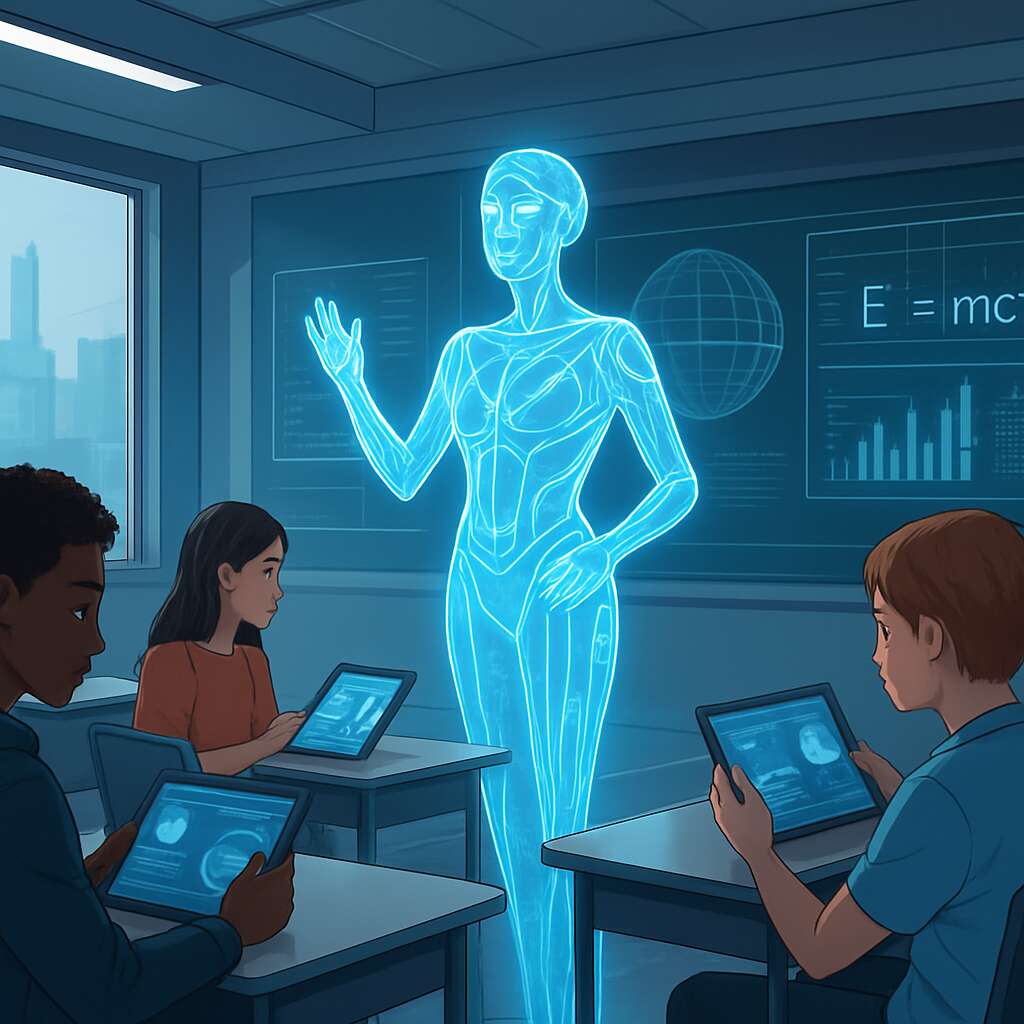
Advantages and Benefits of AI-Generated Virtual Teachers
Personalized Learning Experiences – Tailoring Education to Student Needs
AI-Generated Virtual Teachers are beginning to reshape education in ways many never imagined. Their ability to provide fully personalized learning experiences stands out as a game-changer—tailoring education to meet individual student needs. This means that learners no longer have to fit into a rigid, one-size-fits-all curriculum. Instead, AI-generated virtual teachers adapt in real time, responding to a student’s pace, comprehension level, and preferred learning style. A recent study indicates that students engaged with AI-powered educators can improve comprehension and retention rates significantly.
These virtual teachers can address diverse learning needs effortlessly, ensuring that each student progresses at their own rhythm. This personalized approach removes barriers to understanding and ignites genuine curiosity. Instead of a monotone lecture, students receive targeted feedback and encouragement precisely when needed. For example, AI-generated virtual teachers often incorporate a mix of visual aids, interactive exercises, and immediate assessments—creating a richer, more engaging learning environment that promotes deeper knowledge transfer.
- Flexible pacing tailored to individual student progress
- Immediate, personalized feedback that guides learning
- Access to extra resources aligned with student needs
Accessibility and Inclusivity – Supporting Diverse Learning Populations
Amidst the symphony of educational evolution, AI-Generated Virtual Teachers strike a resonant chord—particularly when it comes to accessibility and inclusivity. These digital educators are meticulously designed to support diverse learning populations, breaking down barriers that once rendered traditional classrooms monolithic. The beauty lies in their ability to adapt seamlessly to varying needs, ensuring that no student feels the weight of marginalisation or exclusion.
In practice, AI-Generated Virtual Teachers can be programmed to accommodate different learning styles, language proficiencies, and special educational requirements. For instance, students with sensory impairments or neurodiverse conditions now have a personalised learning environment tailor-made to their needs. This isn’t simply a matter of convenience but a revolution in equitable education; a promise that every learner, regardless of background or ability, can access quality instruction.
With the piling on of diverse learners, one might consider a list of benefits—such as:
- Flexible learning modules for neurodiverse students
- Language translation capabilities supporting multilingual classrooms
- Real-time adjustments that address individual comprehension levels
As AI-Generated Virtual Teachers continue to redefine educational inclusivity, the potential to foster a genuinely diverse and thriving academic ecosystem expands exponentially. It’s a future where tailored teaching isn’t merely a privilege but a universal standard—one that guarantees every student a fair shot at excellence while navigating the intricate tapestry of human learning.
Cost-Effectiveness and Scalability – Reducing Expenses and Expanding Reach
Scaling quality education without multiplying expenses is no longer a distant aspiration but an attainable reality, thanks to AI-Generated Virtual Teachers. These digital educators exemplify cost-effectiveness by drastically reducing the need for physical infrastructure and human resources—without compromising instructional quality. Schools and institutions can reallocate funds towards enriching content and advanced technological tools, creating a virtuous cycle of educational innovation.
The real marvel lies in their scalability. AI-Generated Virtual Teachers can seamlessly expand to accommodate burgeoning student populations, transcending geographical and logistical barriers. This agility ensures that even remote and underserved communities are no longer beyond reach.
A straightforward example of this scalability is the capacity to implement real-time, personalised assistance across multiple classrooms simultaneously. It’s an efficient means of expanding educational reach while maintaining a high standard of delivery, exemplifying how AI-Generated Virtual Teachers transform educational economics and accessibility into a harmonised symphony of possibilities.
Consistency and Availability – Ensuring Uniform Quality and 24/7 Access
In the realm of educational innovation, AI-Generated Virtual Teachers stand as paragons of unwavering consistency and tireless availability. These digital educators provide a steady, reliable source of instruction that is immune to fatigue or distraction—a feat no human can match. Their capacity to deliver uniform quality assurance ensures that every student receives a standard of education that leaves little room for disparity or oversight.
The beauty of AI-Generated Virtual Teachers lies in their 24/7 accessibility. Students in remote corners of the country, often hindered by logistical barriers, can now access high-quality tutorials at any hour of the day. This perpetual presence empowers learners to study at their own rhythm, unbound by the constraints of traditional classroom hours. Through this seamless availability, education becomes a living, breathing experience—one that adapts to the unique tempo of each individual.
Engaging with AI-Generated Virtual Teachers creates an environment where consistency and accessibility are woven into the very fabric of learning. Among these, a simple yet profound advantage is their capacity to provide continual support, echoing the enduring commitment to clarity and understanding that elevates the educational journey.
Technologies Powering AI Virtual Teaching
Artificial Intelligence and Machine Learning – Adaptive Learning Algorithms
In the shadowy corridors of technological innovation, AI-Generated Virtual Teachers emerge as silent sentinels guiding students through the labyrinth of knowledge. These entities are not mere simulations but intricate constructs powered by sophisticated artificial intelligence and machine learning. Their foundation rests upon adaptive learning algorithms—an arcane art that allows them to tailor educational encounters with uncanny precision. Every student becomes a unique constellation, their learning trajectory subtly steered by these unseen digital guides.
The beating heart of AI-Generated Virtual Teachers lies in advanced pattern recognition, enabling them to decipher student responses and adapt lessons in real time. This dynamic process ensures each pupil faces challenges suited to their mastery level, fostering an environment where curiosity blooms unrestrained. Such technology harnesses the magic of machine learning to transform traditional classrooms into realms of personalized discovery, unbound by human limitations yet guided by an unseen hand that adapts seamlessly to every learner’s needs.
Natural Language Processing – Interactive Conversations and Feedback
In an era where instant access and real-time interaction shape the future of education, AI-Generated Virtual Teachers stand at the forefront of this revolution. These digital entities are not just basic chatbots but sophisticated pedagogical tools powered by natural language processing (NLP). This technology allows AI-Generated Virtual Teachers to hold interactive conversations with students, transforming the classroom into a dynamic dialogue rather than a monologue.
Through advanced NLP, these virtual educators can understand and respond to student questions with nuance and context, creating an engaging and human-like learning experience. Feedback becomes fluid and personalised, helping students navigate complex concepts without delay. The magic of NLP ensures that AI-Generated Virtual Teachers interpret tone, intent, and even emotional cues—features that make virtual interaction feel surprisingly authentic.
- Real-time understanding of student responses
- Personalised feedback tailored to individual needs
- Adaptive dialogue that evolves with learner progress
Such integration of NLP into AI-Generated Virtual Teachers extends far beyond simple instruction, fostering an intuitive and seamless educational journey. As these virtual guides converse with clarity and precision, they transform classrooms into responsive ecosystems where curiosity is nurtured through engaging, authentic exchanges. This fusion of technology and pedagogy heralds a new dawn for educational engagement, all driven by the silent yet intelligent workforce of AI-Generated Virtual Teachers.
Speech and Vision Recognition – Multimodal Input Processing
As AI-Generated Virtual Teachers push into the classroom forefront, the integration of speech and vision recognition technologies unleashes a new level of educational immersion. These digital educators don’t just process words—they interpret tone, facial expressions, and gestures, creating a multimodal input processing system that makes interaction feel remarkably authentic. It’s as if the virtual teacher can read students’ minds and respond intuitively, transforming passive learning into an active dialogue.
In this realm, voice recognition isn’t merely about understanding spoken words; it’s about deciphering emotions in student responses, allowing for a nuanced approach that adapts in real time. Similarly, vision recognition enables the virtual teacher to observe body language and eye contact, tailoring feedback instantly. These combined modalities open an expansive frontier for AI-Generated Virtual Teachers, offering a seamless, layered comprehension of student engagement.
Consider the architecture behind this unstoppable force: multimodal input processing synthesizes data streams from speech and visuals, transforming raw inputs into meaningful insights. By harnessing such innovative technology, AI-Generated Virtual Teachers can respond with context-aware precision—responding to a confused glance or a hesitant voice—creating an ecosystem of learning that feels alive and personal. This interplay between speech and vision recognition cements the role of AI as the new virtual classroom maestro.
Data Analytics and Student Monitoring – Tracking Progress and Engagement
Behind the veil of the digital classroom, data analytics and student monitoring act as silent sentinels, quietly shaping the future of education. With AI-Generated Virtual Teachers at the helm, these systems are transforming raw data into a symphony of insight, revealing how each student engages with the material. Far from mere numbers, these insights become a blueprint for understanding individual momentum and areas needing gentle encouragement.
Tracking progress and engagement is no longer a mundane task. Instead, it paints a vivid tapestry of learning journeys—highlighting moments of triumph or hesitation. The magic lies in the layered layers of data that AI-Generated Virtual Teachers harness, revealing patterns invisible to the naked eye. By employing sophisticated algorithms, educators can uncover which concepts resonate most and adapt their approach with intuitive precision.
- Real-time dashboards display student activity, alerting educators to disengagement or confusion.
- Patterns of participation inform personalized interventions, making each lesson more responsive and humane.
- Engagement metrics help refine teaching strategies, creating a dynamic classroom environment.
All these elements coalesce, allowing AI-Generated Virtual Teachers to craft a nuanced portrait of the learning experience. As these systems collect and analyze data streams with delicate finesse, they enable a feedback loop that sustains motivation and curiosity. In a realm where every hesitation or spark of understanding is recorded and appreciated, education becomes a living, breathing organism—guided by human ingenuity and AI’s perceptive clarity.
Integration with Learning Management Systems – Seamless Educational Ecosystems
The integration of AI-Generated Virtual Teachers with learning management systems (LMS) designates a new era of seamless educational ecosystems. By embedding these intelligent entities into existing platforms, institutions create an environment where technology and pedagogy operate in harmonious tandem. This tight coupling allows for real-time data exchanges, ensuring that student progress and engagement metrics are immediately reflected in the curriculum adjustments.
Advanced API connections and open-source interfaces serve as the backbone of this integration. They facilitate smooth data sharing and interoperability, fostering an immersive experience for both learners and educators. To further enhance this, few systems employ AI-Generated Virtual Teachers coupled with cloud-based infrastructure—offering scalability that adapts effortlessly to growing student bodies and diverse educational contexts.
Incorporating tools like natural language processing bridges communication gaps, providing interactive conversations that simulate human tutors. The visual and speech recognition capabilities enable multimodal input processing, making the learning experience richer and more responsive. Here’s how these components coalesce:
- Robust data analytics dashboards display student activity at a glance
- Automated notifications flag disengagement or confusion patterns
- Personalized learning paths evolve based on real-time monitoring data
These technological advancements culminate in virtual teaching solutions that are not simply functional but also intuitive, fostering a responsive and engaging digital classroom experience. The mix of sophisticated algorithms and seamless LMS integration showcases the true potential of AI-Generated Virtual Teachers in transforming how education adapts to each learner’s journey.
Challenges and Ethical Considerations
Data Privacy and Security Issues – Protecting Student Information
While AI-Generated Virtual Teachers promise a revolutionary shift in education, navigating the labyrinth of data privacy and security issues remains a formidable challenge. At the heart of this technological marvel lies an immense amount of student information, which demands rigorous safeguarding. Without proper oversight, breaches could undermine trust and compromise sensitive data, making security protocols not just necessary but non-negotiable. Education institutions and developers must grapple with transparent data collection practices and robust encryption measures to ensure students’ personal details are shielded from malicious intrusion.
In this landscape, specific practices can significantly enhance safety, such as strict access controls and continuous security audits. To illustrate, some institutions are adopting layered security strategies to defend against cyber threats. It’s worth noting that as AI-Generated Virtual Teachers become more sophisticated, so too must the safeguards that protect students’ digital footprints. Only by prioritizing data privacy can the promise of personalized, accessible education truly flourish while maintaining the integrity of the learning environment.
Bias and Fairness in AI Algorithms – Ensuring Equitable Treatment
When it comes to AI-Generated Virtual Teachers, one thing’s for sure: they’re not just programmed to read from a script—they’re making decisions too. This raises eyebrows and sparks debates about bias and fairness in AI algorithms. If we’re not careful, these virtual educators could inadvertently perpetuate stereotypes or treat students unevenly, skewing the pursuit of equitable education.
Bias in AI-Generated Virtual Teachers often stems from the data they’re trained on. If that data is flawed or lacks diversity, the virtual instructs might favour certain learning styles while disadvantaging others. Ensuring fairness requires rigorous oversight—spotting and correcting biases before they influence lessons. Implementing transparent, balanced training datasets is not a luxury but a necessity.
- Developing diverse, representative training models
- Continuous monitoring for discriminatory patterns
- Regular audits by human educators to ensure fairness
In the quest for educational equity, the challenge is to prevent AI-Generated Virtual Teachers from becoming unintentional agents of bias. Only by integrating ethical considerations into AI development can we promise an inclusive learning environment that genuinely serves every student—not just the ones who fit a certain mold. After all, education’s goal should be fairness, not just efficiency or cost savings—and that means scrutinizing every line of code with a critical eye.
Dependence on Technology – Balancing Human and Virtual Instruction
Putting reliance solely on AI-Generated Virtual Teachers raises a question that cannot be ignored: where do the boundaries between human and machine truly lie? As these virtual educators become more sophisticated, so too does the dilemma of balancing their capabilities with ethical responsibilities. Dependence on technology in classroom settings introduces unforeseen vulnerabilities—mistakes or biases could slip through the cracks, yet the stakes are higher than ever when it involves shaping young minds.
In this delicate dance, the integration of human oversight remains vital. While AI-Generated Virtual Teachers excel at delivering structured content, aspects such as emotional intelligence, cultural sensitivity, and nuanced interpretation lie firmly in human territory. A layered approach—combining artificial intelligence’s precision with human judgment—can navigate the path forward more thoughtfully. It’s a topic that invites a pause for reflection: how much authority should we grant to these virtual instructors before their decisions impact educational fairness?
- Continuous human monitoring ensures that the technological algorithms align with ethical standards.
- Regular assessments gauge whether the AI-Generated Virtual Teachers are maintaining fairness and inclusivity.
- Establishing boundary protocols helps prevent overdependence, ensuring human educators stay central to the learning process.
Balancing these elements isn’t just about preserving traditional educational values—it’s about creating a resilient ecosystem where technology and pedagogy coalesce. The challenge remains: how do we prevent AI-Generated Virtual Teachers from becoming overly autonomous, risking unintended consequences? This question underscores the importance of ethical oversight and deliberate integration—ensuring these virtual educators serve as allies, not substitutes, in fostering an equitable, dynamic learning environment.
Quality Assurance and Accreditation – Maintaining Standards in AI-Driven Education
The rise of AI-Generated Virtual Teachers sparks a profound debate that reaches beyond simple technological fascination. As these virtual educators infiltrate classrooms, the question of maintaining academic integrity and ethical standards becomes more pressing than ever. With algorithms underpinning these systems often operating as black boxes, there is an inherent risk of unintentional bias influencing student outcomes. This raises a critical challenge: how do we ensure the fidelity of standards amid rapid automatisation?
Maintaining quality assurance and accreditation in AI-driven education requires vigilant oversight. Without rigorous benchmarks, the integrity of the learning process may become compromised. Establishing boundary protocols—restricting virtual teachers from overstepping their designated functions—serves as a safeguard against unapproved decision-making. Regular external assessments and continuous monitoring should be embedded into the deployment of AI-Generated Virtual Teachers to preserve educational standards. These measures enable institutions to identify discrepancies early, fostering accountability in a landscape increasingly reliant on technology.
Integrating subjective assessments and peer reviews complements quantitative data, ensuring the artificial intelligence aligns with pedagogical values and legal frameworks. If unchecked, AI-Generated Virtual Teachers risk propagating systemic inequalities or perpetuating subtle biases that could undermine trust in the educational system. As the adoption of AI accelerates, a unified approach combining technological precision with human oversight becomes essential to uphold integrity and fairness in learning environments.
Impact on Human Educators – Redefining Roles and Responsibilities
Even as AI-Generated Virtual Teachers revolutionize education, they pose complex challenges for human educators. One of the most pressing issues is how these virtual teachers redefine roles and responsibilities within classrooms. Teachers can no longer see themselves solely as knowledge providers but as facilitators of learning. The reliance on AI demands that educators develop new skills in overseeing AI algorithms and addressing ethical concerns.
A common concern is the risk of dependence on technology, which could diminish authentic teacher-student interactions. Without clear boundaries, AI-Generated Virtual Teachers may unintentionally propagate biases or overlook cultural nuances, making ethical oversight a must. This situation raises questions about accountability and how human educators adapt to oversee automated systems effectively.
- Maintaining trust in the educational process
can become complicated when virtual teachers supplement or, in some cases, replace human interaction. Educators must balance the efficiency of AI-Generated Virtual Teachers with the irreplaceable value of human judgment. It is these evolving responsibilities that will shape future teaching landscapes.
Future Trends and Innovations in Virtual Teaching
Integration of Virtual Reality and Augmented Reality – Immersive Learning Environments
Immersive learning environments are on the verge of a revolutionary transformation, propelled by the integration of virtual reality (VR) and augmented reality (AR). AI-Generated Virtual Teachers are now illuminating pathways into worlds once confined to the imagination—offering students a portal to explore history, science, and art in unparalleled ways. With the advent of these technologies, the classroom becomes a vibrant tapestry woven with sensory cues, three-dimensional exploration, and real-time interaction.
Imagine students wandering through ancient cities, manipulating molecules in a virtual lab, or witnessing the delicate dance of celestial bodies—all orchestrated seamlessly by AI-driven virtual tutors. The promise of such innovations lies in creating learning spaces that feel tangible and compelling, culminating in what I like to call immersive learning environments. As the boundary between digital and physical dissolves, the potential for AI-Generated Virtual Teachers to craft engaging, multi-sensory educational journeys continues to expand.
To enhance this experience, developers often implement multi-modal input processing—allowing students to interact using speech, gestures, or even eye movements. This enriches the learning process and fosters deeper engagement. The future landscape will see virtual teachers leveraging this synergy, transforming passive lessons into active quest-like adventures, where each student’s curiosity guides their exploration through augmented worlds. These innovations promise an education that is not only accessible but remarkably captivating.
AI-Driven Personalized Curriculum Development – Customized Learning Paths
Future trends in virtual teaching herald an era where AI-Generated Virtual Teachers will craft increasingly personalized learning pathways, ensuring education adapts to each student’s unique journey. Through sophisticated AI-driven algorithms, these virtual educators are set to tailor content dynamically, aligning seamlessly with individual learning styles and paces. Imagine curricula that evolve in real-time, responding to ongoing assessments and student engagement metrics.
One burgeoning innovation involves adaptive learning systems that not only modify difficulty levels but also curate supplemental resources based on students’ evolving interests. This targeted approach offers a refined, bespoke educational experience—more akin to a masterfully tailored suit than a one-size-fits-all garment.
In this landscape, AI-Generated Virtual Teachers will also utilize advanced natural language processing to facilitate fluid, conversational dialogues, making interactions feel less like instruction and more like mentorship. As these systems become more intuitive, the integration of multimodal input—voice, gestures, eye-tracking—will make learning feel organic and deeply engaging.
The future of virtual teaching is also anchored in continuous data analytics that refine curriculum pathways, ensuring early identification of learning gaps and personalized interventions. With ongoing innovations, the role of AI-Generated Virtual Teachers moves toward creating an educational environment where curiosity is not just triggered but nurtured with a bespoke touch that always feels accessible, responsive, and profoundly human.
Gamification and Engagement Strategies – Increasing Student Motivation
In an era where engagement is the currency of effective learning, the future of virtual teaching hinges on innovative strategies that ignite a student’s innate curiosity. As AI-Generated Virtual Teachers evolve, one cannot overlook the transformative potential of gamification and immersive engagement strategies designed to elevate motivation and foster a love for learning. According to recent studies, students who find lessons engaging are more likely to retain information and develop a lifelong passion for knowledge. This is where the blend of technology and creativity creates a tapestry of educational excellence.
Imagine classrooms where learning feels less like a chore and more like an adventure. AI-Generated Virtual Teachers are harnessing gamification to create immersive environments that reward progress, personalise challenges, and tailor experiences to individual interests. By incorporating elements such as story-driven quests, achievement badges, and interactive challenges, these virtual educators turn mundane lessons into dynamic journeys that captivate students’ attention and sustain their motivation.
- In the pursuit of increasing student motivation, reward systems are becoming more sophisticated, recognising effort through virtual accolades and progress levels.
- Adaptive narrative pathways adjust the difficulty and storyline based on student engagement metrics, ensuring each learner remains in a zone of optimal challenge.
Complementing gamification, augmented reality (AR) and virtual reality (VR) integrations with AI-Generated Virtual Teachers can transport students to ancient cities or distant planets, transforming abstract concepts into tangible experiences that evoke awe and wonder. This immersive content not only deepens understanding but also catalyses emotional investment in the subject matter. As learners navigate through these digital realms, their natural inclination to explore is effectively harnessed, making education feel like a personally curated adventure.
It’s fascinating to see how a nuanced application of engagement strategies can turn education into a magnetic pursuit. With AI-Generated Virtual Teachers at the helm, the potential for personalised, interactive, and inspiring learning journeys is truly limitless—an odyssey where motivation manifests through the seamless fusion of technology and human ingenuity.
AI Mentors and Peer Interaction – Fostering Collaborative Learning
As AI-Generated Virtual Teachers become more sophisticated, the future of virtual learning hinges on innovative ways to foster real human connection and collaborative growth. One exciting trend on the horizon is the integration of AI mentors that not only tailor learning paths but also serve as companions in a student’s educational journey. Imagine a virtual mentor who understands not just their academic progress, but the emotions that accompany challenges and triumphs alike—creating a truly empathetic learning environment.
Fostering peer interaction through AI-Generated Virtual Teachers can redefine collaborative learning. Virtual classrooms powered by AI enable students to engage in group projects, peer reviews, and dialogue that mimic real-world teamwork, regardless of geographical boundaries. These AI systems can facilitate structured group activities, assign roles based on individual strengths, and even monitor group dynamics to optimise cooperation.
- Dynamic discussion forums moderated by AI virtual teachers ensure meaningful exchanges, encouraging students to develop critical thinking while feeling supported.
- Innovative features such as virtual breakout rooms or collaborative whiteboards make remote teamwork more immersive and engaging.
- AI-Generated Virtual Teachers can suggest peer mentorship programs, matching students based on shared interests or academic needs to nurture a community of learners.
In this evolving landscape, AI-driven innovations serve as catalysts for a new kind of collective education—where technology amplifies the cultural richness of diverse student groups. It’s an intriguing shift, blending digital efficiency with an innate desire for shared human experience, making the classroom a vibrant hub of both individual achievement and communal growth. As these virtual teachers grow increasingly intuitive, they will continue to transform how we perceive and participate in learning—turning education into a collective adventure filled with inspiration and discovery.
Global Accessibility and Language Support – Breaking Geographical Barriers
The power of AI-Generated Virtual Teachers is reshaping the way education crosses borders. As global demand for quality learning grows, these virtual educators are breaking down geographical barriers and making education accessible to all. With advances in natural language processing, AI-Generated Virtual Teachers can now support multiple languages with near-native fluency, enabling students from diverse backgrounds to learn in their preferred tongue.
This linguistic flexibility fosters deeper engagement and inclusivity—crucial in today’s interconnected world. The integration of real-time translation features and multilingual voice recognition ensures students receive guidance without linguistic hurdles. Schools and institutions can now provide seamless, culturally responsive experiences that adapt to each learner’s linguistic needs without the logistical challenges traditionally involved in multilingual education.
- Live interpretation boosts comprehension
- Multilingual support encourages participation
- Expansion into underserved regions becomes practical
As the capabilities of AI-Generated Virtual Teachers expand, we can anticipate more sophisticated features that tailor education to cultural contexts and linguistic nuances. This evolution not only enhances the accessibility of learning but also ignites new opportunities for global collaboration and innovation—making education a truly borderless pursuit.