
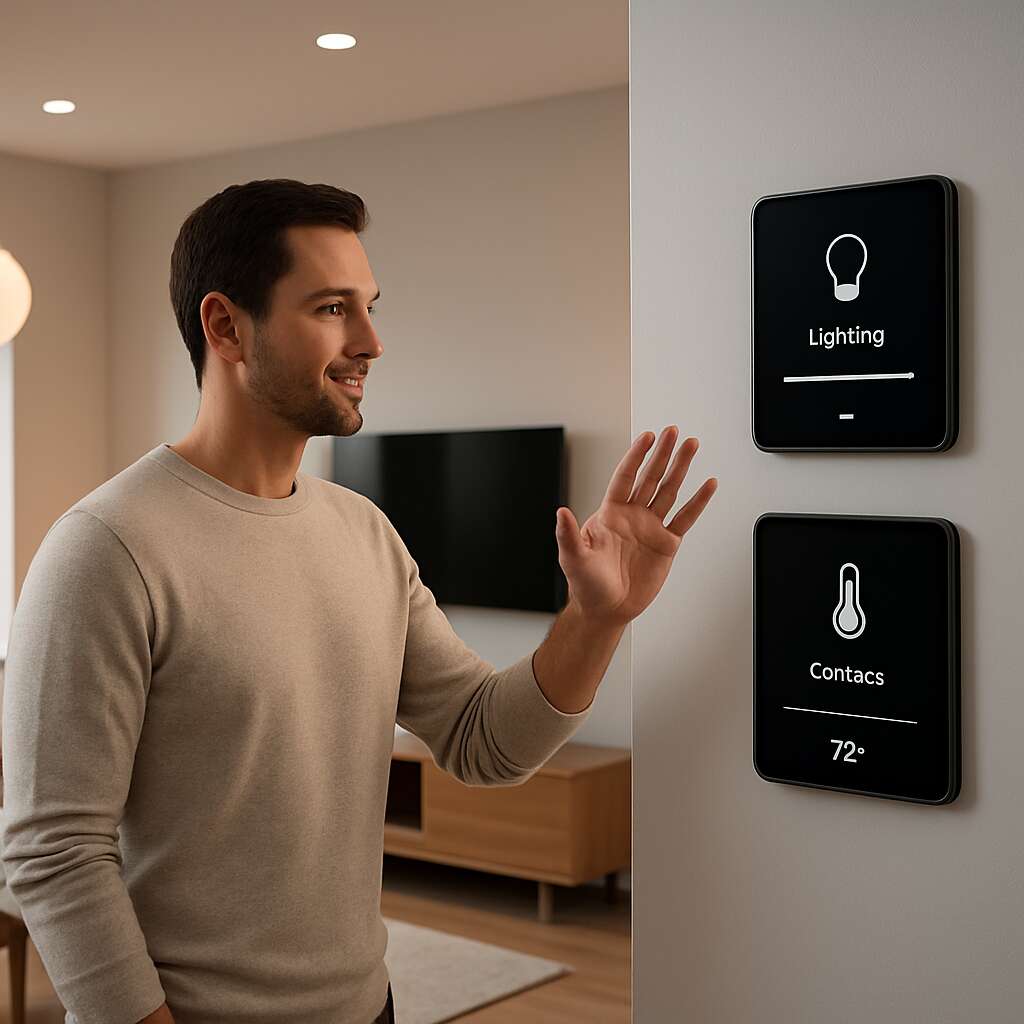
Types of Touchless Home Control Technologies
Gesture-Based Controls – Overview of gesture recognition systems, Common gestures and their functions, Hardware requirements for gesture controls, Advantages of gesture-based home automation, Limitations and challenges
Amidst the shadows of modern life, a whisper of the future stirs—touchless home controls, where simplicity meets the eerie elegance of technology. Gesture-based controls stand at the forefront of this mysterious domain, allowing occupants to command their environment with subtle movements, a silent language of the unseen. These systems rely on sophisticated gesture recognition, transforming hand motions into commands that can dim lights, open doors, or summon music, all without a single touch.
To achieve this seamless interaction, specialized hardware is required—infrared sensors, cameras, or ultrasonic devices that interpret the ghostly ballet of human gestures. A handful of common gestures, like a swipe to turn the lights on or a wave to activate the entertainment system, form the core vocabulary of gesture controls. The allure lies in their intuitive nature, offering a frictionless experience rooted in natural human motion.
Touchless home controls provide not only a sense of elegance but also offer advantages such as hygienic operation and aesthetic minimalism. Yet, they are not without limitations; lighting conditions, angle sensitivity, and false triggers can pose formidable challenges in real-world scenarios. Still, for those yearning to inhabit a space where technology responds to an instinctual gesture, these controls weave a shadowy thread into the fabric of modern living.
Voice Activation via IoT – Introduction to voice control systems, Popular voice commands for smart homes, Compatibility and integration with IoT devices, Benefits of voice-controlled home automation, Privacy and security considerations
Voice activation via IoT has transformed the way we interact with our living spaces, creating an atmosphere where commands are spoken, and everything obeys. In a realm where technology responds to our voice, the phrase “turn on the lights” or “play jazz” seamlessly triggers a cascade of smart devices—no buttons required. These voice-controlled systems are powered by a network of connected devices, allowing users to command everything from lighting to security cameras with a simple vocal cue.
Compatibility and integration with IoT devices is the backbone of effective voice activation systems for home automation. A variety of popular voice commands like “Set the thermostat to 22 degrees” or “Close the garage door” exemplify how intuitive and natural this touchless control becomes. To achieve smooth interoperability, these systems often link with smart speakers, hubs, or integrated smart assistants, creating a unified control ecosystem that enhances user experience.
Using voice commands for home automation not only offers unparalleled convenience but also promotes a hygienic environment—no need for physical contact. Homeowners relish the ability to multitask, making adjustments while their hands are busy or dirty. Yet, this ease of use comes with privacy considerations. Ensuring secure authentication and safeguarding personal data remains paramount, especially in a digital landscape that can be vulnerable to breaches. When operated responsibly, voice control via IoT introduces an elegant, touchless dimension to modern living spaces, where convenience and caution go hand in hand.
Infrared and Non-Contact Sensors – Types of sensors used in touchless controls, Applications in lighting, security, and climate, Installation and maintenance tips, Strengths and weaknesses compared to other methods
Touchless home controls (gesture, voice via IoT, not AI-driven) are revolutionising the way we manage our living spaces. Among the various methods, infrared and non-contact sensors stand out for their silent efficiency and practicality. These sensors use beams of infrared light or ultrasonic waves to detect movement or proximity without any physical contact, creating a seamless interaction with your environment.
Used in applications such as lighting, security, and climate control, these sensors allow us to turn on a room’s lights with a simple wave or adjust the thermostat as we walk by. Installation is straightforward—placing sensors near entry points or key areas enhances their responsiveness. Regular maintenance, like cleaning sensor lenses and ensuring unobstructed lines of sight, keeps these systems functioning at their best.
- Infrared sensors are particularly reliable in detecting heat signatures, making them ideal for security and motion-triggered lighting.
- Non-contact sensors excel in climate control, adjusting settings based on occupancy, which helps save energy and prolong HVAC system life.
While these touchless controls boast strengths like low latency response and minimal physical wear, they do have limitations. Infrared sensors may struggle with ambient heat sources or in bright sunlight, and non-contact ultrasonic sensors can sometimes produce false triggers due to background noise or pets moving nearby. Comparing these to gesture or voice controls within the realm of touchless home controls (gesture, voice via IoT, not AI-driven), they offer reliable, time-tested solutions that integrate smoothly into existing smart home setups—especially in rural homes where simplicity and durability are prized.
Implementation of Touchless Control Systems in Homes
Hardware Components Needed – Sensors, Microcontrollers, Connectivity modules, User interfaces
Creating a seamless atmosphere within modern homes hinges on the harmonious integration of hardware components that drive touchless home controls. Imagine a world where your fingertips don’t need to touch a surface, yet your home responds intuitively—this is where sensors, microcontrollers, and connectivity modules come into play. These elements form the foundation of gesture and voice activation systems, enabling effortless interaction without reliance on AI-driven technologies.
To implement touchless home controls effectively, a curated selection of hardware is essential:
- Infrared and non-contact sensors detect gestures and movements with precision.
- Microcontrollers such as Arduino or ESP32 orchestrate the commands, translating physical gestures or voice signals into actionable instructions.
- Connectivity modules like Wi-Fi and Zigbee facilitate smooth communication between devices and the central control system.
- User interfaces, which can be touchless switches or voice command interfaces, provide the gateway for residents to engage with the system effortlessly.
By combining these components with reliable wiring and power sources, homeowners can create intuitive, responsive environments tailored to their lifestyle—all powered through the enchantment of touchless home controls (gesture, voice via IoT, not AI-driven). This symphony of hardware ensures an unobtrusive yet intelligent home experience, transforming living spaces into harmonious sanctuaries of modern convenience.
Compatibility with Existing Smart Devices – Integrating touchless controls with smart lighting, thermostats, and security systems, Ensuring seamless interoperability
Integrating touchless home controls seamlessly into existing smart devices is akin to orchestrating a symphony without missing a beat. Modern homes already boast a plethora of smart lighting, thermostats, and security systems—each performing their solo routines. The challenge lies in ensuring these devices harmonise effortlessly with new gesture and voice-activated systems powered by IoT but not AI-driven. Compatibility isn’t just a buzzword; it’s the backbone of cohesive home automation.
To achieve this, one must consider sophisticated interoperability protocols. For example, smart lighting systems utilizing Zigbee or Z-Wave can link directly with touchless control modules, making a flick of the hand or a simple voice command light up a room. Thermostats, equipped with open APIs, can respond instantly to voice via IoT commands—without the convoluted need for artificial intelligence. Security systems, immersed in the same ecosystem, can activate or deactivate with intuitive gestures or spoken phrases—adding an extra layer of convenience.
- Devices that support common communication standards
- Open-source platforms for hassle-free integration
- Consistent network coverage to prevent lag or disconnection
By paying close attention to device compatibility and connectivity modules, homeowners can ensure their touchless controls operate smoothly across the entire smart home landscape. It’s not about reinventing the wheel but making devices talk effortlessly—proof that touchless home controls (gesture, voice via IoT, not AI-driven) can truly transform living spaces into intuitive sanctuaries.
Installation Best Practices – Placement and calibration of sensors, Voice system setup, Ensuring user accessibility and safety
Implementing touchless home controls (gesture, voice via IoT, not AI-driven) into a residence is an art that blends technical precision with a touch of magic. One of the most vital stages is sensor placement—strategically positioning infrared, ultrasonic, or capacitive sensors where they can unobtrusively detect gestures or hand movements. Proper calibration ensures these sensors respond reliably, avoiding false triggers that could turn a simple wave into a disruptive event.
Similarly, voice system setup demands meticulous attention, from microcontroller configuration to the integration of compatible connectivity modules. Synchronising voice commands with existing smart devices like thermostats and lighting systems guarantees a seamless symphony of control, each element responsive to a spoken phrase.
Safety remains paramount. User accessibility should be at the forefront; controls must be intuitive for all household members. To refine this harmony, some households opt for a simple, numbered process:
- Identify prime sensor locations aligning with daily movement patterns;
- Calibrate sensors to detect specific gestures without interference;
- Configure voice commands for natural interaction, ensuring clarity and recognition;
- Test safety protocols to prevent accidental activations;
- Ensure all devices are on stable networks to prevent lag or disconnection.
Every element—placement, calibration, and configuration—serves to craft an environment where touchless home controls become an invisible hand guiding daily life. By meticulously aligning these components, homeowners can confidently infuse their living space with an effortless elegance that embodies true modern comfort.
Benefits of Non-AI Touchless Home Controls
Enhanced Hygiene and Safety – Reducing contact with surfaces, Suitable for health-conscious households
In an era where cleanliness and safety have ascended to paramount importance, touchless home controls (gesture, voice via IoT, not AI-driven) offer a distinct advantage. By reducing contact with surfaces, these systems profoundly bolster hygiene standards within the household. Imagine seamlessly adjusting the lighting or altering the temperature without ever physically touching a switch or thermostat—an act that diminishes the proliferation of germs and bacteria lurking on commonly-touched surfaces.
Suits for health-conscious households, touchless systems act as silent guardians of well-being. Their ability to minimise physical interactions transforms mundane home management into an intuitive, sanitized experience. For those seeking increased safety without sacrificing convenience, leveraging touchless control options can significantly decrease the risk of cross-contamination, particularly in shared spaces or during flu seasons.
The application of infrared sensors and voice-controlled IoT devices creates an environment where safety and hygiene are seamlessly intertwined—elevating the standard of modern living.
Energy Efficiency – Automated lighting and climate control, Adaptive control based on presence tracking
Imagine a world where your home doesn’t require you to touch a single surface to turn on the lights or set the temperature. With touchless home controls (gesture, voice via IoT, not AI-driven), this isn’t just the realm of sci-fi anymore. These systems cleverly utilise infrared sensors and voice-activated devices, transforming mundane interactions into a marvel of hygiene and convenience.
One clear benefit of non-AI touchless home controls is their contribution to energy efficiency. Automated lighting and climate control adapt to your presence, reducing unnecessary power usage. For instance, a simple wave of the hand can turn on the hall lights, while a voice command adjusts the thermostat without a fuss.
- Presence detection ensures lights aren’t blazing in empty rooms
- Voice commands fine-tune temperature, avoiding energy waste
Thanks to these practical features, your home becomes a well-behaved energy-sipping marvel—albeit one with an attitude of high-tech sophistication. No longer do you need to leave devices on or fiddle with dials; instead, you harness the power of intuitive control to make your living space more efficient, all with minimal physical interaction.
User Convenience and Accessibility – Hands-free operation for disabled or elderly residents, Simplified user interaction
Beneath the shadowed façade of modern living, a quiet revolution stirs—one that whispers promises of unparalleled convenience and subtle sophistication. Touchless home controls (gesture, voice via IoT, not AI-driven) stand as silent sentinels, transforming mundane interactions into seamless rituals. These systems evoke a universe where a mere wave of the hand or a whisper is enough to command the sanctuary.
For those who seek accessibility and ease, the allure of hands-free operation is undeniable. Elderly residents and individuals with disabilities find liberation in this technology—no longer bound by physical constraints or fiddling with dials. Instead, they navigate their homes with a grace that echoes the mystique of night predators moving unseen through shadows.
In the realm of user experience, simplicity reigns supreme. Touchless home controls simplify interaction, eliminating the need for complex menus or physical contact. One can enumerate the elegance of this system—each sensor and voice command woven into the home’s fabric, responsive to your presence:
- Lights turn on with a gentle gesture or voice command.
- Thermostats adjust to preferred temperatures without physical touch.
- Security systems activate with a discreet motion or sound, keeping safety at your command.
This delicate dance of detection and response fosters a home environment that is both safe and finely attuned to its inhabitants. Privacy remains guard, even as the house listens and observes, committed to maintaining the delicate balance of trust and technology.
Within this gothic of innovation, touchless home controls via IoT cast a spell of comfort—an invisible hand that guides your space while acutely respecting your privacy. The power to manipulate lighting, climate, and security without physical contact becomes not just a convenience but a testament to human ingenuity. The shadows are alive, and now, so is the home—responsive, intuitive, and forever in tune with its master’s silent symphony.
Challenges and Limitations of Gesture and Voice IoT Controls
Environmental Interference – Impact of ambient light, noise, and obstructions on sensor performance
Amidst the allure of touchless home controls—gesture, voice via IoT that operate seamlessly without relying on artificial intelligence—lies an often underestimated challenge: environmental interference. Sensors that detect gestures or voice commands are exquisitely sensitive, but their performance can be significantly compromised by surrounding conditions. Bright ambient light can distort infrared sensors or cause misinterpretation of gestures, while excessive noise levels may confuse voice recognition systems, leading to frustration rather than convenience.
Obstructions or even irregularities in room layout also hinder sensor accuracy, sometimes rendering touchless home controls less reliable than expected. Instead of the fluid experience users anticipate, interruptions caused by environmental interference expose a notable limitation. For example, a clouded day or a congested room can cause flickering or unresponsive commands, making these control systems appear less dependable. Recognising these constraints emphasizes the importance of optimal sensor placement and calibration for reliable operation in real-world settings.
Accuracy and Responsiveness Issues – False triggers, latency in command execution
While the allure of touchless home controls—gesture, voice via IoT that operate seamlessly without relying on artificial intelligence—can transform daily routines into a fluid experience, they are not without their quirks. One of the most pervasive challenges lies in accuracy and responsiveness. These systems can be prone to false triggers, where a simple wave or voice command is misinterpreted as a different instruction, leading to frustration. Such miscommunications often stem from environmental factors that the sensors struggle to accurately interpret.
Latency is another concern—delays between performing a gesture or issuing a voice command and the system’s response can sometimes break the sense of immediacy that touchless home controls aim to provide. This lag might be caused by weak connectivity, sensor calibration issues, or interference from ambient conditions. For example, a poorly placed sensor might pick up stray movements or background noise, causing unintended commands. Small details matter greatly in these setups.
- False triggers due to overlapping gestures or ambient noise can cause systems to respond unpredictably.
- Latency issues disrupt smooth operation, making the system feel less ‘magical’ and more cumbersome.
Environmental interference such as bright sunlight, heavy noise, or obstructions in the line of sight further elevates these limitations. These interferences can distort sensor signals or cause misinterpretations, reducing overall reliability. When sensors are overwhelmed or obstructed, the promise of a truly smooth touchless experience diminishes, revealing the critical importance of precise sensor placement and calibration.
Despite these challenges, advancements in sensor technology and careful implementation can mitigate many of these issues. For those embracing touchless home controls (gesture, voice via IoT, not AI-driven), understanding these limitations underscores the need for meticulous design and realistic expectations—ensuring the journey toward smarter homes remains both enchanting and dependable.
Security Concerns – Unauthorized access risks, Data security for voice commands
Security concerns stand as a significant hurdle in implementing touchless home controls, especially those operating via IoT. Unauthorized access is a real risk—malicious actors can exploit vulnerabilities if home automation systems are not properly secured. For example, insecure networks or weak password protections make it easier for intruders to hijack voice commands or gesture controls, raising the potential for privacy breaches.
Data security for voice commands is another pressing issue. When sensitive commands are transmitted over the internet, they can be intercepted or recorded without permission. This raises questions about who holds the data and how it is protected.
Systems lacking rigorous authentication open doors to hacking attempts and unwarranted surveillance. To mitigate this, manufacturers must implement robust security protocols like encryption and multi-factor authentication. With touchless home controls (gesture, voice via IoT, not AI-driven), the security of data and access points is vital for fostering consumer confidence and safeguarding personal space.
Cost and Scalability – Initial setup expenses, Expanding system to multiple rooms
For many homeowners, the allure of touchless home controls (gesture, voice via IoT, not AI-driven) lies in the promise of seamless, effortless interaction. Yet, beneath this promise lurks a complex challenge—the financial and infrastructural costs that can inhibit widespread adoption. Initial setup expenses for gesture and voice-enabled systems can be formidable, often requiring specialized hardware and dedicated installation efforts. This financial barrier becomes even more pronounced when attempting to expand these systems throughout multiple rooms, as the cost scales linearly with each additional zone.
Installing touchless home controls across an entire residence is not a trivial expense. Beyond hardware investments, integration with existing smart devices necessitates a thoughtful approach—one that ensures compatibility and scalability. For households looking to retrofit or expand, this often means a significant financial commitment, which may limit accessibility to a niche demographic.
To simplify this growth process, some systems employ structured wiring or modular hardware components, but these also come with added upfront costs. The challenge revolves around balancing the expense against the tangible benefits of ease of use and hygiene, as well as the need for consistent performance across various environments.
- Initial investment in hardware and installation
- Costs associated with expanding to additional rooms or zones
- Expenses related to ensuring seamless interoperability with existing IoT devices
Given these factors, scalability often hinges on a home’s size and the homeowner’s willingness to commit resources. While touchless home controls (gesture, voice via IoT, not AI-driven) promise a future of intuitive automation, the barrier of upfront costs and system expansion remains a hurdle that many homeowners are weighing carefully. As the technology evolves, so too does the necessity for more affordable, flexible solutions that can bridge the gap between aspiration and practical realization.
User Learning Curve – Training residents to use gestures and voice commands effectively
The allure of touchless home controls (gesture, voice via IoT, not AI-driven) often paints a picture of effortless elegance—yet beneath the surface, a subtle challenge emerges. As homeowners seek to embrace the future of automation, the user learning curve becomes a silent guardian of success or failure. Mastering gestures, voice commands, and system interactions requires patience and adaptability, especially for those unfamiliar with such nuanced technology.
It is not merely about waving a hand or speaking a phrase; it involves understanding a system’s sensitivities and limitations. Resistance often forms when commands are misunderstood or ignored, fostering frustration rather than convenience. Some systems necessitate specific training sessions, or at times, a period of trial and error, before residents can truly harness their potential.
Within this landscape, a natural question arises: How does one bridge the gap between intuitive design and practical use? Training residents to efficiently use touchless home controls (gesture, voice via IoT, not AI-driven) often involves clear instructions and gradual familiarisation. In environments where multiple family members, with varying tech literacy, must operate the system, the learning curve can become a significant barrier.
One challenge is ensuring consistent responsiveness amidst environmental variables—ambient noise, lighting, or obstructions—that can interfere with sensor accuracy. It’s a delicate dance of calibration, requiring patience and attention to detail, especially when integrating touchless controls into existing smart devices. As these systems evolve, so do the expectations—yet the user’s comfort with gestures or voice commands remains pivotal to realising the promise of a contactless home.