
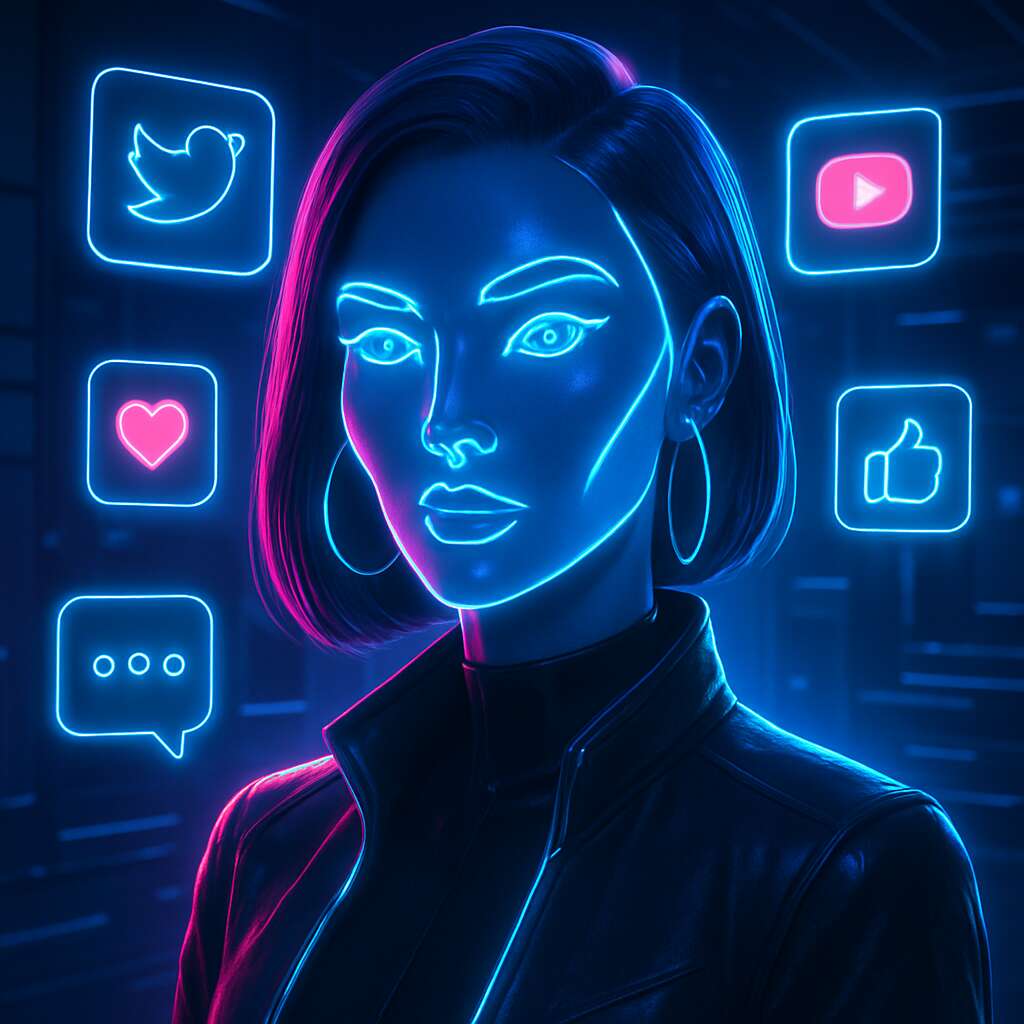
Understanding AI-Generated Influencers
What Are AI-Generated Influencers?
In a world where the line between reality and artificiality blurs like watercolor on canvas, AI-Generated Influencers emerge as digital muses that captivate our collective imagination. These virtual personas, meticulously crafted through advanced algorithms, embody a new wave of social presence, one that is both eerily authentic yet undeniably synthetic. They are the poets of pixels, conjured from lines of code, yet capable of sparking genuine engagement across social media platforms.
What makes AI-Generated Influencers so compelling is their ability to adapt and evolve with unprecedented speed, especially in navigating audience preferences and aesthetic trends. Instead of the traditional influencer, these digital entities can be reprogrammed, redesigned, and fine-tuned in moments, ensuring continuous resonance with followers. They are, in essence, a carefully curated blend of art and technology, transforming the landscape of digital influence.
- Unbounded creativity that pushes the boundaries of visual storytelling
- Constant availability, never requiring rest or breaks
- Personalisation at scale, crafting tailored content for diverse audiences
As the presence of AI-Generated Influencers expands across marketing strategies, it is vital for brands to understand the profound implications of this virtual revolution. Their virtual charisma doesn’t just challenge traditional norms but redefines what authentic engagement can look like in this brave new digital era.
Technology Behind AI Influencers
Understanding the technology behind AI-Generated Influencers involves peeling back the layers of an intricate digital tapestry—where artistry meets artificial intelligence. These virtual personas are crafted through a sophisticated blend of machine learning models, generative adversarial networks (GANs), and deep neural networks. It’s quite fascinating how these elements work in tandem to produce hyper-realistic images and personalities that seem almost palpable. The engine behind AI-Generated Influencers continually learns from vast datasets of visual and behavioral cues, enabling them to adapt seamlessly to emerging aesthetic trends.
One core aspect driving this evolution is the use of generative algorithms that simulate human creativity without human intervention. These algorithms can generate thousands of visual variations, fine-tune facial features, and even craft unique narratives that resonate with target audiences. To better grasp how this unfolds, consider these points:
- Advanced neural networks process enormous volumes of social media data, allowing AI-Generated Influencers to stay ahead of fleeting trends.
- Real-time learning mechanisms enable virtual personalities to evolve with audience preferences without requiring manual redesigns.
- Machine learning models improve over time, ensuring that the digital personas’ authenticity continues to grow—even as they remain entirely synthetic.
The magic lies in creating a virtual influencer that feels authentic yet is entirely manipulated through algorithmic precision. This tech-infused artistry pushes the boundaries of conventional digital storytelling and redefines how brands engage audiences in a landscape where imitation is no longer a mere possibility but a meticulously engineered reality. As AI-Generated Influencers become more pervasive, understanding these underlying technical processes becomes vital for anyone looking to navigate this brave new digital horizon.
Differences Between Human and AI Influencers
While AI-Generated Influencers may look eerily convincing, their differences from human influencers are profound yet fascinating. Unlike their human counterparts, these virtual personas operate behind a curtain of sophisticated algorithms, driven by neural networks that simulate human-like interaction. They can craft engaging content, but their emotional depth and spontaneity are often more calculated than authentic.
One striking distinction lies in their creation and evolution. Human influencers grow through real-world experiences, emotions, and unpredictable reactions. AI-Generated Influencers, on the other hand, continuously learn from vast datasets, refining their personas through machine learning models. This process allows them to stay ahead of fleeting trends, yet it also highlights how their growth is anchored in data-driven precision rather than organic life events.
- Real-time learning mechanisms enable dynamic adaptation to audience preferences.
- They lack genuine human emotion, but their digital expressions can appear vivid and relatable.
Interestingly, while humans bring imperfect charm to the screen, AI-Generated Influencers offer consistency, scalability, and an uncanny ability to engage across platforms. Both serve unique roles in digital storytelling, yet understanding these core differences illuminates how brands can strategically harness the power of virtual influencers—an exploration into a world where artificial meets aspiration.
History and Evolution of AI Influencers
The story of AI-Generated Influencers is a testament to how rapidly technology can transform industries. Born from the marriage of creative vision and advanced neural network algorithms, these virtual personas emerged from humble beginnings into complexity. Initially, AI-Generated Influencers were simple chatbots or static digital figures, but as artificial intelligence evolved, so did their capabilities. Their ability to adapt and learn in real-time has allowed them to forge a space in digital marketing and influencer culture that once seemed unimaginable.
As we trace the evolution of AI-Generated Influencers, it’s fascinating to see how datasets and machine learning have propelled their development. Early on, these digital characters relied heavily on scripted content, but now they dynamically respond to audience preferences, showcasing an impressive level of sophistication. The progression from static images to full-fledged, interactive virtual influencers underscores a relentless quest for authenticity that still makes many of us pause. It’s a journey rooted in innovation, where each new iteration reflects an ongoing pursuit of realism and engagement.
- Development of initial prototypes that mimicked human gestures and speech.
- Integration of deep learning models to refine personality traits and responses.
- Continuous feedback loops that allow AI-Generated Influencers to stay in sync with trending topics.
Benefits and Challenges of AI-Generated Influencers
Cost-Effectiveness and Scalability
In a world haunted by perpetual change, AI-Generated Influencers emerge as spectral figures of profitability and innovation. Their cost-effectiveness whispers promises of economic shadows cast over traditional influencer marketing, reducing expenses associated with human talents, studios, and logistics. The eerie allure of seamless scalability makes these digital entities a dark muse for brands seeking to multiply their presence across countless campaigns without the burden of fatigue or unpredictability.
Flexibility becomes a haunting advantage—AI-Generated Influencers can be tailored to evolve with spectral precision, catering to diverse audiences and niche markets. This multiplicity is often realised through an ordered list of benefits:
- Constant availability, undeterred by fatigue or scandals, maintains a steady drumbeat of engagement.
- Low incremental costs support rapid expansion into new realms, turning digital shadows into marketing spectres.
- Customization at an unparalleled level, allowing brands to craft digital personas that embody their essence in spectral detail.
Yet, with the allure comes the darker challenge of authenticity’s erosion. Skeptics murmur that these artificial phantoms risk sacrificing genuine human connection—a vital spell in branding’s haunted hall of fame. Balancing the spectral advantages of cost-effectiveness and scalability with the need for authentic resonance creates a delicate dance, reminiscent of shadow and light flickering in a forgotten chamber.
Customization and Personalization
In a landscape where authenticity often defines consumer loyalty, the customization capabilities of AI-Generated Influencers stand out as both a blessing and a conundrum. Their spectral precision allows brands to craft digital personas that resonate deeply with niche audiences, creating a connection that feels personal yet remains curated. This kind of tailored experience draws viewers into a carefully constructed world, where each interaction feels purposeful and engaging.
Flexibility is among the most alluring benefits, enabling AI-Generated Influencers to adapt instantly to changing trends or brand messaging. The capacity to personalize content at a granular level means brands can evoke specific emotions or cultural references, weaving seamlessly into diverse marketing campaigns. Yet, this comes with a challenge—while customization can foster genuine engagement, it risks superficiality if not handled with finesse. The balance between authentic resonance and programmed perfection is delicate, demanding constant vigilance to avoid crossing into artificiality’s trap.
- Tailored content designed to evoke specific user emotions
- Ability to adapt branding evolves with audience preferences
This duality—where the allure of limitless personalization meets the specter of superficiality—makes the use of AI-Generated Influencers a complex dance. Their ability to craft bespoke digital personas is a notable advantage, yet it demands meticulous attention to foster the same kind of emotional authenticity that human influencers offer naturally. Navigating this paradox is where true mastery in deploying AI-Generated Influencers lies, shaping digital identities that captivate without losing their spectral charm.
Authenticity and Audience Trust
AI-Generated Influencers have stepped into the digital realm like enchanted beings—crafted to captivate and persuade with spectral precision. Their ability to forge extraordinary authenticity, even within their artificial veneer, sparks both intrigue and skepticism. For brands, this creates a fascinating paradox: can pixels forge genuine trust? While some audiences are mesmerised by their tailored narratives, others remain wary of superficiality. The allure lies in their capacity for personalization, painting digital personas that evoke subtle emotions and foster perception of authenticity.
Building audience trust with AI-Generated Influencers hinges on their perceived transparency and consistency. A delicate balance must be maintained—too perfect, and they risk appearing mechanical; too imperfect, and they may seem unconvincing. Engaging viewers requires a nuanced approach, where every interaction subtly reflects human qualities. If this duality isn’t managed with finesse, the spectral charm can become a hollow imitation rather than a sincere connection. As a result, the true mastery of deploying AI-Generated Influencers involves fostering authenticity that resonates on a genuinely emotional level, transcending the artificial boundaries of their digital existence.
Ethical Considerations in AI-Influencer Marketing
As the realm of AI-Generated Influencers expands, ethical considerations emerge as a vital concern for brands, creators, and audiences alike. These virtual personas, while offering unparalleled flexibility and innovation, also pose complex moral questions about authenticity, manipulation, and transparency. There’s a fine line between engaging storytelling and deception, and navigating that line requires mindful stewardship. Companies must ensure their AI-Generated Influencers operate with integrity, especially when their influence can sway opinions or shape purchasing decisions.
Transparency often becomes the fulcrum of ethical issues in AI-Influencer marketing. Clear disclosures about whether influencers are human or AI-created can foster genuine trust, preventing the erosion of credibility. Balancing creativity with honesty, an ordered list can help clarify this delicate dance:
- Disclosure of AI origin to audiences
- Respecting user privacy in data handling
- Avoiding manipulative content that exploits emotional biases
Addressing these concerns head-on allows brands to harness the potential of AI-Generated Influencers ethically, ensuring both respect for audience intelligence and adherence to evolving regulations. As the influence of AI-Influencers grows, maintaining ethical standards becomes not just responsible but essential in preserving the societal trust that underpins digital engagement.
Potential for Bias and Misrepresentation
Even as AI-Generated Influencers revolutionize digital marketing, their potential for bias and misrepresentation looms like a shadow over their luminous promise. These crafted personas reflect and amplify human biases—racial, cultural, or gendered—embedded in the data they are trained on. Without vigilant oversight, hidden prejudices can seep into campaigns, subtly steering public perception in ways that threaten authenticity.
Ethical concerns around misrepresentation also extend to how convincingly AI-Generated Influencers mimic real personalities. The line between fascination and deception can blur, risking audience disillusionment if transparency falters. To navigate this labyrinth, brands should maintain a vigilant focus on transparency and fairness. An ordered list can clarify these oats in the grain of ethical storytelling:
- Ensuring AI-Generated Influencers do not perpetuate stereotypes
- Implementing rigorous bias detection protocols
- Maintaining honesty about the AI nature of the influencer
Addressing these pitfalls requires deep introspection and moral clarity—without which the illusion of innovation risks collapsing under the weight of its own unethical potential. As AI-Generated Influencers continue to reshape the landscape, their capacity for bias and misrepresentation remains one of the most enduring ethical battlegrounds in digital influence.
Popular Platforms and Tools for AI-Influencer Creation
Leading Software and Technologies
In the realm of AI-Generated Influencers, the choice of platforms and tools plays a pivotal role in crafting authentic digital personas. As the technology advances, a range of leading software now enables creators and marketers to generate highly customizable influencers with compelling visual and conversational abilities. These tools leverage sophisticated AI algorithms to streamline the creation process, making it possible to develop virtual personalities that resonate with targeted audiences.
Popular platforms for AI-Generated Influencers include marketplaces like ArtBreeder and Reface, which offer intuitive interfaces for designing unique virtual characters. Meanwhile, tools like Synthesia and Lumen5 facilitate the production of engaging video content, helping AI influencers appear more dynamic and natural. For those seeking comprehensive control over personality traits and branding, advanced AI software such as DeepBrain and StyleGAN provide robust solutions for fine-tuning digital influencers.
- Choosing the right platform depends on the specific goals, whether that’s creating iconic brand ambassadors or experimental social media personalities.
- Integrating these tools effectively can transform campaign strategies, enabling brands to deploy AI-Generated Influencers with precision and creativity across multiple digital channels.
Integrating AI in Social Media Campaigns
When it comes to crafting captivating AI-Generated Influencers, choosing the right platform can feel like selecting the perfect brush for a masterpiece—except this masterpiece is virtual, and the brush comes with a hefty dose of artificial intelligence. In the bustling world of AI-Generated Influencers, some platforms stand out as the Michelangelo’s chisels of digital persona creation.
Marketplaces like ArtBreeder and Reface are popular among digital artists and marketers alike for their intuitive interfaces and robust customization options. These platforms allow users to manipulate facial features, styles, and even expressions, creating influencers that feel less like pixels and more like authentic personalities. For a deeper level of control, tools like DeepBrain and StyleGAN offer advanced capabilities in generating hyper-realistic or surreal influencers, fine-tuning personality traits and visual branding with surgical precision.
Video content reigns supreme in social media campaigns—this is where tools like Synthesia and Lumen5 truly shine. They empower creators to produce engaging videos that make AI-Generated Influencers appear surprisingly natural and relatable, even integrating lip-syncing and nuanced expressions. It’s the kind of automation that makes traditional influencer marketing look dull by comparison.
Case Studies of Successful AI-Influencers
In the vibrant spectrum of AI-Generated Influencers, certain platforms stand as luminaries fueling this digital revolution. These tools do more than merely craft virtual personas; they are shaping personalities that captivate audiences in ways never before imagined. ArtBreeder, for example, presents a playground of creativity—its intuitive interface allows a whisper of a gesture or a hint of expression to bloom into a fully realised influencer. Reface, on the other hand, immerses users in the art of face-swapping and deepfakes, blurring the line between reality and virtual artistry.
For those craving hyper-realism or surreal artistry, DeepBrain and StyleGAN serve as masterful artisans. They allow for surgical precision in tailoring the influencer’s visual identity, imbibing them with traits that resonate authentically or enchantingly surreal. In the realm of video, Synthesia and Lumen5 elevate this craft, transforming static images into engaging narratives—lip-syncing, nuanced expressions, and lifelike movements breathe vitality into AI-Generated Influencers.
- ArtBreeder
- Reface
- DeepBrain
- StyleGAN
- Synthesia
- Lumen5
Case studies highlight how these platforms birthed influencers who command millions of followers overnight. Lil Miquela, a shining example in the world of AI-Generated Influencers, started as a digital creation and swiftly ascended as a cultural icon, blurring the sacred boundary between artificiality and authenticity. Such successes underscore how selecting the right tools and understanding their capabilities can turn virtual influences into formidable facets of contemporary marketing strategies.
Features to Look for When Choosing AI Tools
Choosing the right tools for creating AI-Generated Influencers is crucial in ensuring their success. The landscape offers a variety of platforms, each with unique features tailored to different needs. For those aiming for hyper-realistic influencers, tools like DeepBrain and StyleGAN excel at generating lifelike appearances that captivate audiences. If your focus is on creative versatility and surreal artistry, platforms such as ArtBreeder provide an intuitive interface for exploring endless visual possibilities.
When evaluating AI tools for influencer creation, look for features such as advanced customization options, high-resolution output capabilities, and seamless integration with social media channels. A few key features include:
- Facial expression control for emotional authenticity
- Background and scene adaptation for contextual relevance
- Automated lip-sync and gesture movements for video realism
- Compatibility with deepfake technologies like Reface for face-swapping
These features help ensure that the AI-Generated Influencers can resonate with audiences—whether through surreal artistry or hyper-realistic expression. Selecting a platform with the right combination of tools can turn virtual personalities into powerful marketing assets that genuinely engage followers.
Future Trends in AI Development for Influencers
As AI-Generated Influencers continue to inject a new realm of possibility into digital marketing, the variety of platforms available expands with inexhaustible innovation. The industry’s pulse beats strongly within remarkable tools like Replika, ArtBreeder, and Rosebud AI, each offering a distinct pathway to crafting virtual celebrities that enthral audiences across social channels. While some platforms excel at hyper-realistic rendering—delivering lifelike appearances that blur the boundary between virtual and reality—others cultivate surreal artistry, allowing creators to push the limits of imagination.
Future trends in AI development for influencers suggest an increasing sophistication and personalization, where AI-Generated Influencers will exhibit not only hyper-personalized facial expressions but also contextual awareness. This means AI tools will leverage natural language processing and advanced scene adaptation to generate seamless interactions with audiences. As facial expression control becomes more refined and gesture movements more natural, the line between human and machine continues to fade—raising intriguing questions about authenticity and engagement.
- Next-generation AI-Generated Influencers are projected to harness deeper emotional intelligence, enhancing their ability to resonate on a psychological level.
- Integrated deepfake technologies will make face-swapping and voice duplication more accessible, creating multi-dimensional influencer experiences that captivate followers.
- Multimodal AI platforms will enable simultaneous control of visual, auditory, and emotional cues—revealing a future where virtual personalities are indistinguishable from real humans in the digital sphere.
The evolution of AI tools for influencer creation signals a future where artistic expression, contextual adaptability, and hyper-realism coalesce, setting new benchmarks for digital branding. As these technologies mature, the landscape of AI-Generated Influencers promises to redefine engagement strategies, shaping an era where virtual personalities become not merely marketing assets but dynamic, emotionally rich entities that challenge our perceptions of authenticity and influence.
Impact on the Marketing and Advertising Industries
Changing Consumer Engagement Strategies
The rise of AI-Generated Influencers is reshaping how brands approach marketing and advertising strategies. Traditional influencer marketing relied heavily on human personalities whose authenticity could sometimes be difficult to verify. Now, with AI-Generated Influencers, companies can craft highly tailored, immersive campaigns without the unpredictability associated with human influencers. This shift allows marketers to redefine consumer engagement strategies by offering more consistent, scalable content that resonates with targeted audiences.
Brands are beginning to recognise that AI-Generated Influencers can deliver messaging at unprecedented speeds and scale. This innovation enables faster campaign iterations and dynamic personalization, which leads to more meaningful interactions. As consumers become more accustomed to digital experiences, integration of AI-generated personalities into social media campaigns is likely to become standard practice, revolutionising how brands communicate and connect in a crowded online universe.
Compliance and Regulatory Challenges
The proliferation of AI-Generated Influencers has unveiled a new set of compliance and regulatory challenges that marketers can’t afford to ignore. As these virtual personalities become embedded within social media campaigns, questions about transparency and audience authenticity take centre stage. Unlike traditional influencers, AI-Generated Influencers operate within a grey area, often blurring the lines between genuine endorsement and digital persona. This raises the necessity for new standards in advertising disclosures and ethical guidelines.
Regulatory bodies across the globe are beginning to scrutinise this burgeoning domain, prompting brands and creators to revisit their adherence to existing laws. In the UK, for example, the Competition and Markets Authority (CMA) emphasizes clarity in influencer advertising—an area that AI-Generated Influencers can complicate. One way to address these challenges involves implementing clear labeling policies, including straightforward declarations like “AI-Generated Influencer” or “Synthesized Persona.”
Balancing technological innovation with ethical governance remains an ongoing challenge. Some companies are adopting systematic approaches, such as establishing internal compliance frameworks or collaborating with legal experts to navigate the nuanced landscape of AI-influencer regulation. As the sector expands, consistent regulations will be vital to mitigate risks associated with misrepresentation, false advertising, and consumer deception. For those venturing into AI-Generated Influencers, understanding and proactively managing these compliance issues is not just advisable—it’s imperative.
Influencer Marketing ROI with AI
In a marketplace where authentic engagement often dictates campaign success, AI-Generated Influencers are redefining the parameters of influencer marketing ROI. As these virtual personalities seamlessly integrate into social media strategies, brands are witnessing a transformation in their advertising results—sometimes seeing increased reach and engagement at a fraction of the traditional costs.
The magic lies in the uncanny ability of AI-Generated Influencers to deliver highly targeted campaigns with precision and consistency. Unlike human counterparts, they don’t tire or demand time off, enabling continuous content creation and interaction. This consistency amplifies the reach and resonance of marketing messages, leading to a more tangible return on investment.
- Precision in targeting niche audiences
- Cost-effective scalability for large campaigns
- Enhanced analytics for real-time performance insights
As a result, marketers are increasingly viewing AI-generated influencers as strategic assets capable of delivering measurable ROI—an advantage that continues to grow as AI technology becomes more sophisticated and personalized. The integration of AI-Generated Influencers into campaigns isn’t just a trend—it’s a cornerstone of modern influencer marketing strategies aiming for maximal impact and efficiency.
The Future of AI-Generated Influencers in Branding
The marketing and advertising industries are witnessing an unprecedented shift with the rise of AI-Generated Influencers. These digital personalities are transforming how brands craft their messaging, reaching audiences with a level of precision that was previously unimaginable. Unlike traditional influencers, AI-Generated Influencers can adapt to emerging trends in real time, enabling marketers to stay ahead in a rapidly evolving digital landscape.
As the technology behind AI-Generated Influencers continues to mature, there’s an increasing focus on how these virtual entities can serve as long-term branding assets. Their ability to pixel-perfect customize content and maintain relentless consistency is redefining the very essence of modern advertising. For brands, this means a future where campaigns are not only more targeted but also more cost-effective and measurable.
With the integration of AI-Generated Influencers into social media strategies, the possibilities expand into areas like personalized storytelling and audience segmentation. Consider:
- Enhanced analytics capabilities for real-time campaign insights
- Greater scalability for global marketing efforts
As these influencers become more nuanced in their interactions, they are poised to play a pivotal role in shaping consumer engagement strategies. The future of branding will likely see AI-Generated Influencers spearheading creative innovation, delivering authentic yet curated connections that resonate deeply with diverse audiences.
Potential for Creative Innovation and New Campaigns
The potential of AI-Generated Influencers to revolutionise creative innovation in marketing and advertising is undeniable. As these virtual personalities become more sophisticated, they open the door to entirely new campaign concepts that blend technology and human creativity seamlessly. Companies are now experimenting with AI-Generated Influencers capable of crafting compelling narratives and engaging consumers in ways that felt impossible a few years ago.
With their ability to adapt instantly to emerging trends, AI-Generated Influencers enable marketers to develop dynamic campaigns on an unprecedented scale. They can deliver hyper-targeted messaging that resonates with diverse audiences, effectively challenging traditional boundaries.
- Personalized storytelling that feels authentic and relatable
- Scalable content deployment across multiple platforms
- Real-time audience engagement and interaction
Brands leveraging AI-Generated Influencers are breaking new ground, sharing innovative content that captivates without sacrificing authenticity. Each campaign becomes a sandbox for creative experimentation, with AI-driven entities providing fresh perspectives in the ever-evolving landscape of digital marketing.